 The 1980s independent comics boom produced some wonderfully strange concepts. Publishers were willing to experiment, creators were taking chances, and the Direct Market opened comic-shop shelves to books that might never have existed a decade earlier.
Few titles capture that period quite like Ex-Mutants.
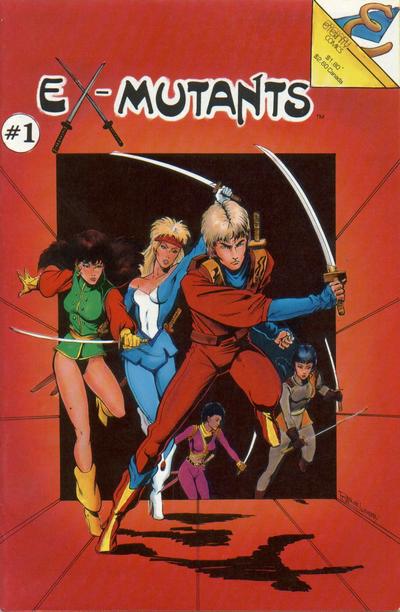
Created by writer David Lawrence, artist Ron Lim, and comics packager/editor David Campiti, Ex-Mutants debuted in 1986. The title was certainly designed to catch the eye of anyone familiar with Marvel’s mutant comics, but its central idea turned the usual mutant concept completely around. These weren’t humans becoming mutants. They were mutants who had been transformed back into humans.
The original Ex-Mutants takes place on a devastated future Earth following a catastrophic war. Radiation and environmental toxins have altered humanity so dramatically that horribly mutated people have become the norm.
Into this world comes Dr. Emmanuel Cugat, himself a three-eyed mutant scientist.
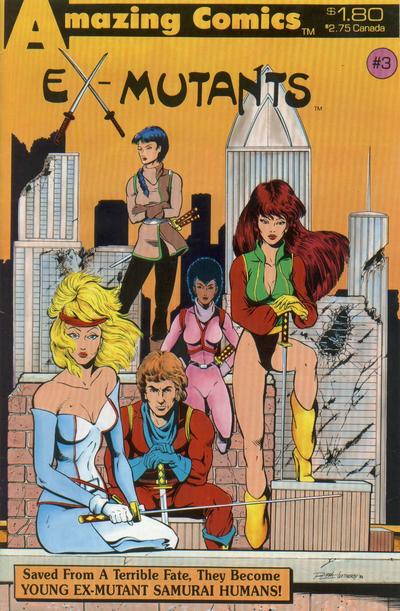
Cugat chooses five mutants, Belushi, Erin, Angela, Vikki and Lorelei, and uses genetic engineering to reconstruct their DNA. Instead of giving them fantastic superpowers, he does something much more unusual: he makes them physically human again.
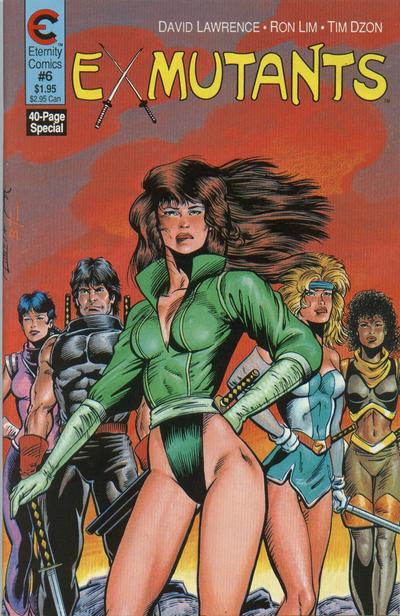 The five become the Ex-Mutants.
Cugat hopes they can serve as symbols that humanity might someday be restored. Unfortunately, surviving a post-apocalyptic wasteland filled with mutants, warlords and fanatics is considerably more complicated than simply looking human.
Among their early enemies was the grotesque Great Fred, while the team’s adventures eventually brought them into contact with the Wild Knights, a motorcycle gang attempting to rebuild civilization.
That gave Ex-Mutants an interesting mixture of genres. It was part superhero comic, part science fiction adventure, and part Mad Max-style post-apocalyptic survival story.
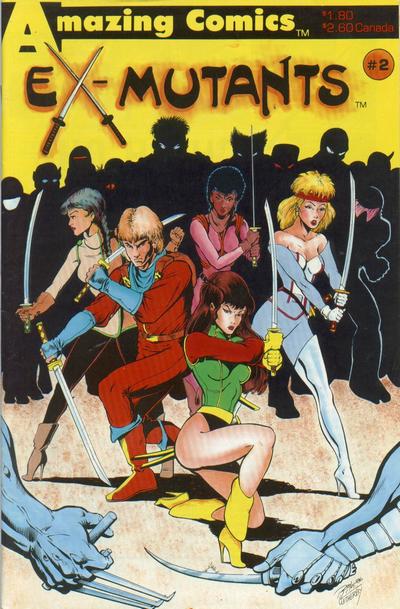
Before becoming Ex-Mutants, the project reportedly carried the deliberately outrageous working title Young Ex-Mutant Samurai Humans, a joke that combined several successful comic-book trends of the period into one name.
Fortunately, somebody shortened it.
The finished title was clever enough on its own.
At a glance, Ex-Mutants sounded like another mutant superhero book. The joke was that these characters were literally ex-mutants. Their mutation had been reversed.
It was a wonderfully simple hook and exactly the kind of high-concept premise that flourished during the black-and-white comics explosion.
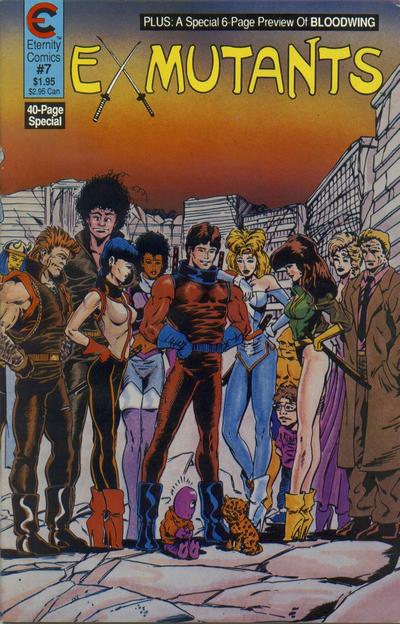 The publishing history of Ex-Mutants is almost as complicated as the fictional world itself.
The first issue appeared through Eternity Comics in 1986. An expanded edition was subsequently published through Amazing Comics, which continued the series through issue #5.
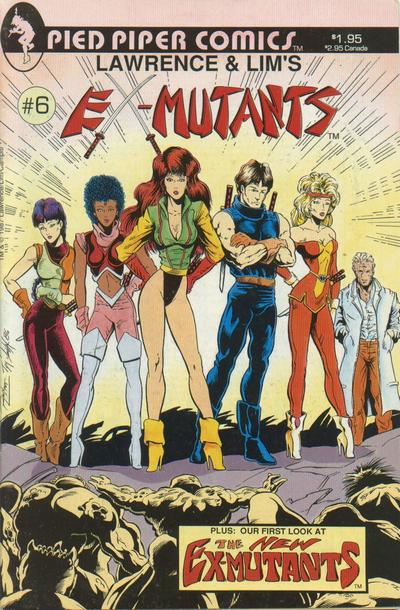
Contractual difficulties then caused Lawrence and Lim to move the property to Pied Piper Comics, where the series became Lawrence & Lim’s Ex-Mutants. Pied Piper continued the numbering and also published a solo Erin one-shot.
A legal dispute followed, and the property eventually returned to Eternity, by then associated with Malibu Comics.
For collectors, that makes the original run particularly interesting. Different portions of essentially the same franchise appeared under multiple publishers, with reprints and alternate editions further complicating the numbering.
One of the most interesting things about revisiting Ex-Mutants today is seeing early work from Ron Lim.
Lim would later become closely associated with Marvel Comics, particularly Silver Surfer, Infinity Gauntlet and the cosmic side of the Marvel Universe.
But before Thanos was collecting Infinity Gems, Lim was drawing mutated survivors wandering across the ruins of civilization.
His clean storytelling and developing superhero style were already visible in Ex-Mutants. In retrospect, the series provides an interesting snapshot of an artist shortly before becoming a major presence at Marvel.
Malibu and Eternity didn’t simply continue publishing Ex-Mutants. They expanded the concept into something considerably larger.
 The post-apocalyptic setting developed into a shared universe generally known as Shattered Earth.
From 1988 through 1990, Eternity published Ex-Mutants: The Shattered Earth Chronicles, which ran for 15 issues. The franchise also included an annual, a winter special, and Solo Ex-Mutants. Related titles included The New Humans, Wild Knights and Shattered Earth itself.
Long before interconnected independent comic universes became commonplace, Ex-Mutants had essentially grown into its own small publishing line.
The expanded mythology also allowed the creators to explore more of the devastated world beyond the original five characters.
The Wild Knights, for example, encountered the Red Kross, a genocidal religious cult led by a fanatic named Mercy, who wanted to use surviving nuclear weapons to finish destroying life on Earth.
These were not particularly subtle villains, but subtlety wasn’t necessarily what readers were buying Ex-Mutants for.
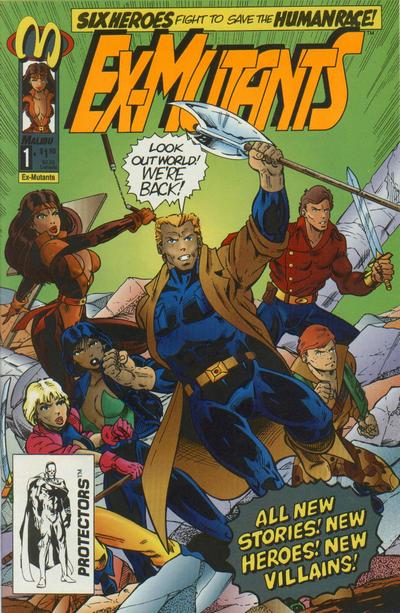
In 1992, Malibu resurrected the title with a complete reboot.
The fundamental idea remained: Earth had been devastated, and mutations had become commonplace. But the characters were replaced.
This time the Ex-Mutants consisted of six former mutants:
 Ackroyd, Shannon, Tanya, Bud, Piper and Dillon.
A cyborg scientist called Professor Kildare restored them to human form. Their principal enemy was Sluggo, a mutant warlord who ruled over other mutants and used them as slaves.
The rebooted Ex-Mutants ran 18 issues from 1992 to 1994 and became connected to Malibu’s wider Genesis continuity alongside titles including The Protectors and Dinosaurs for Hire.
The later issues moved increasingly into superhero territory as the characters crossed over with the rest of Malibu’s universe.
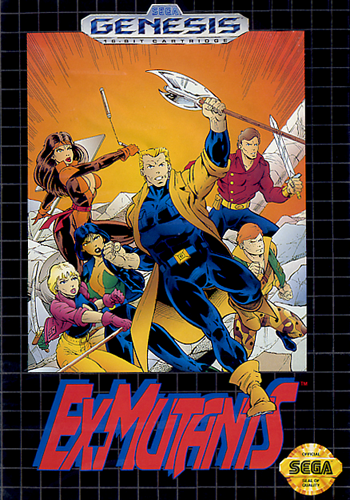
The 1992 revival also produced something relatively unusual for an independent comic property of the period: a Sega Genesis video game.
Developed by Malibu Interactive and published by Sega, Ex-Mutants was a side-scrolling action game based on the rebooted version of the comic. Players could control Ackroyd or Shannon while battling through Sluggo’s post-apocalyptic territory.
The objective involved rescuing the other Ex-Mutants and recovering genetically pure samples that could potentially help restore humanity.
 Whatever one thinks of the game itself, simply getting a Sega Genesis adaptation demonstrated how aggressively Malibu was trying to develop its characters beyond comics during the early 1990s.
There is something wonderfully specific about Ex-Mutants.
A scientist transforming mutants into attractive human adventurers so that they can wander through a radioactive wasteland battling bizarre villains sounds exactly like something created during the independent-comics explosion of the 1980s.
And that is part of its charm.
The series never became a cultural phenomenon like Teenage Mutant Ninja Turtles, but it survived multiple publishers, legal battles, reboots and changing comic-book markets. It generated spin-offs, developed a shared universe and even made the jump to video games.
More importantly, it helped showcase Ron Lim before he became one of Marvel’s best-known cosmic artists.
 Today, Ex-Mutants is an entertaining artifact from a period when the independent comics industry seemed convinced that almost any sufficiently interesting idea deserved a chance.
Sometimes those ideas disappeared after an issue or two.
Ex-Mutants lasted almost a decade.
For a comic about surviving the end of the world, that’s strangely appropriate.
About Author
