
Teenagers were in vogue in the 1940s, and were even something of a new concept.
After all, in the 19th century, with child labor still fairly prevalent, there weren’t any “teenagers,” only children and adults. The teen was a concept that developed alongside automobiles and high schools, really beginning to emerge in the 1920s.
Popular culture caught the vibe with characters such as Andy Hardy in the movies (beginning in 1937), Henry Aldrich on the radio (beginning in 1939), and Archie Andrews in comic books (beginning in 1941).
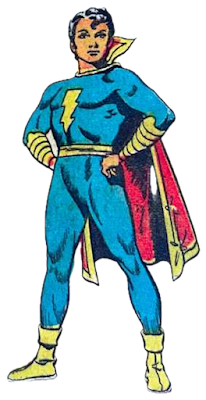 Two new concepts — the superhero and the teenager — had to intersect at some point, and that point was Captain Marvel Jr.
I’ve always suspected that we owe the existence of Superboy — and all the characters he inspired in turn, such as the Legion of Super-Heroes — to Captain Marvel Jr.
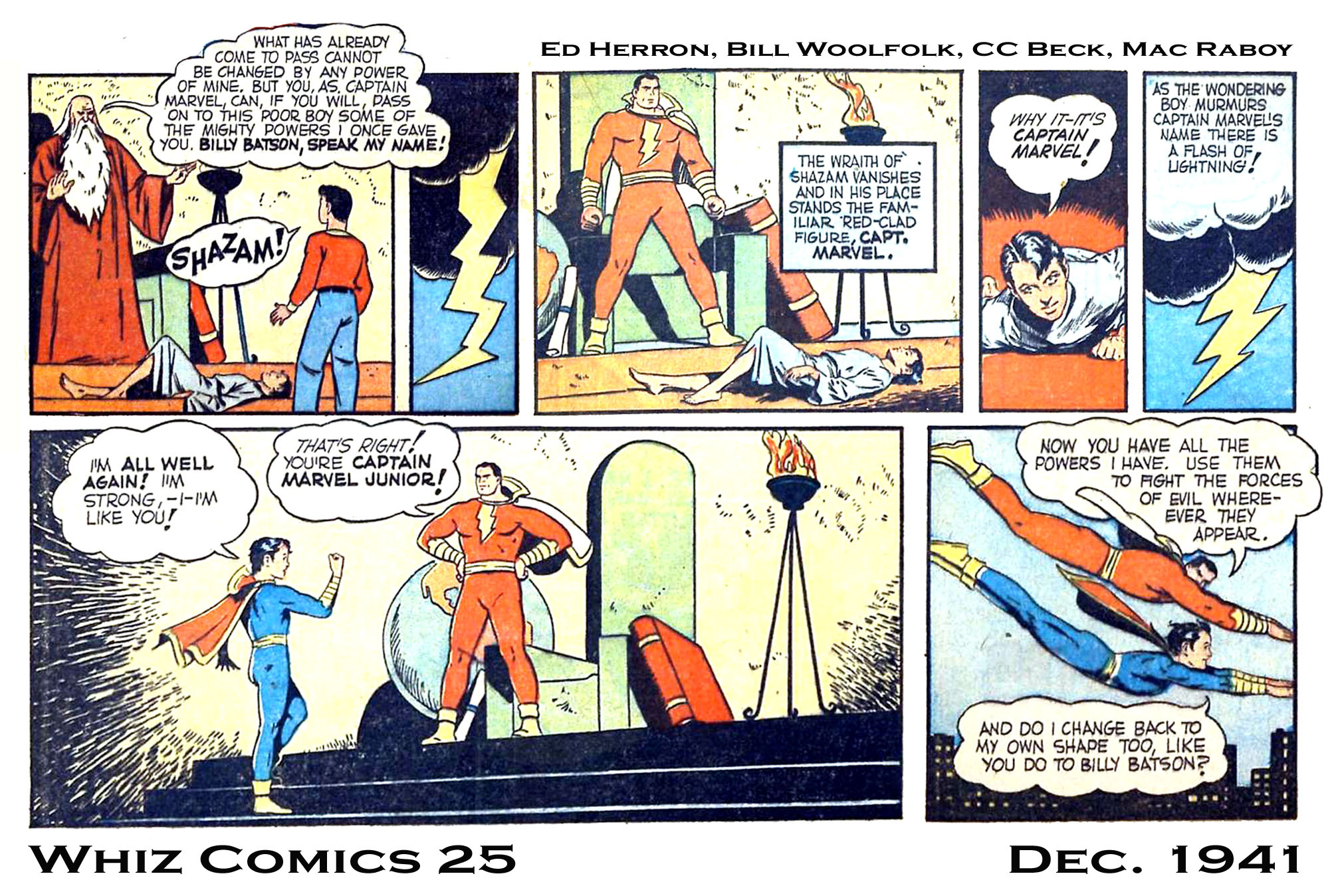
CMJ was the first caped, flying teenage version of a popular superhero, introduced in Whiz Comics 25 in December 1941, a good four years before Superboy debuted in More Fun Comics 101 (Jan.-Feb. 1945).
“Captain Marvel proved to be the most popular superhero character of the medium with his comics outselling all others, including those featuring Superman,” noted comics historian John Cimino. “In fact, Captain Marvel Adventures sold 14 million copies in 1944, and was at one point being published bi-weekly with a circulation of 1.3 million copies an issue (proclaimed on the cover of issue #19 as being the ‘Largest Circulation of Any Comic Magazine’).
“Part of the reason for this popularity included the inherent wish-fulfillment appeal of the character to children, as well as the humorous and surreal quality of the stories. Billy Batson typically narrated each Captain Marvel story, speaking directly to his reading audience from his WHIZ radio microphone, relating each story from the perspective of a young boy (now that was cool).”
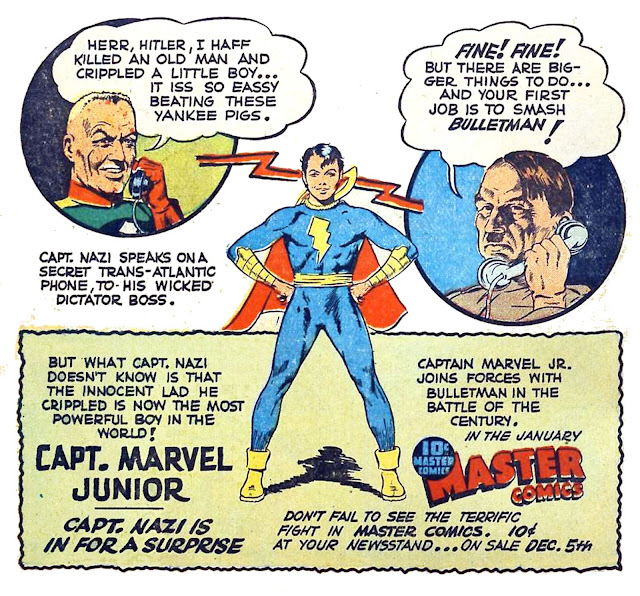
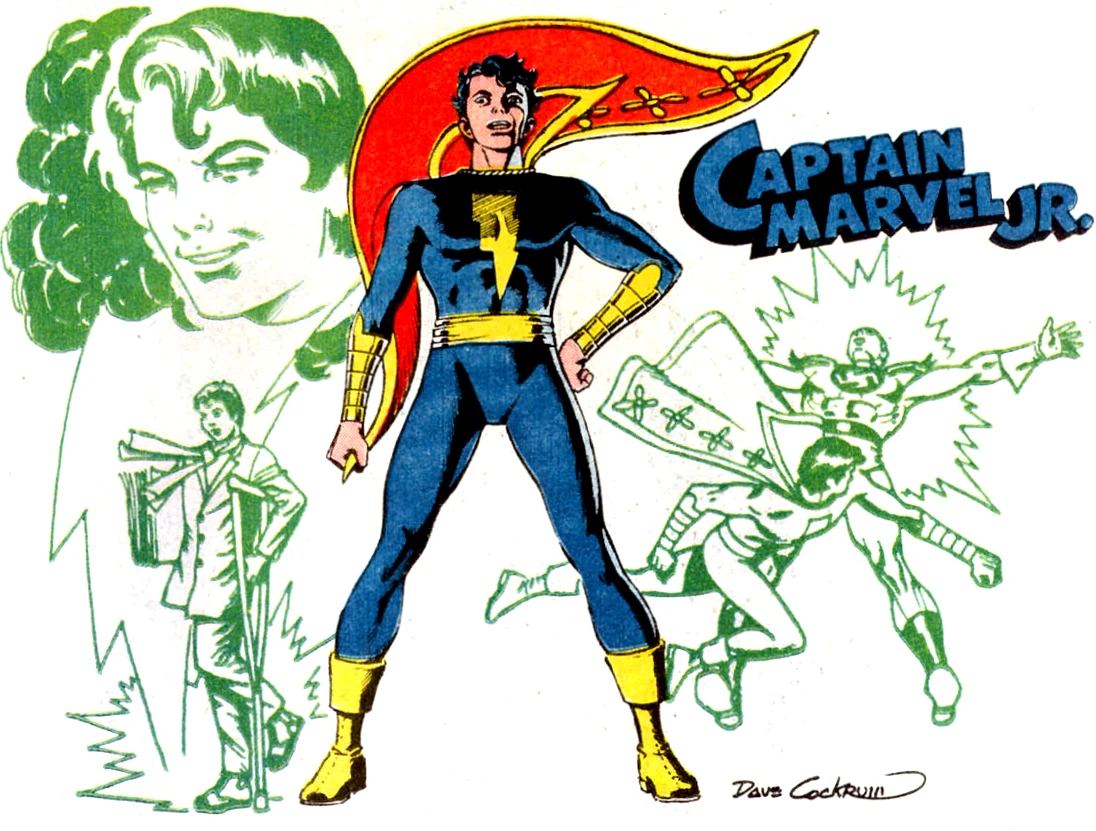
Captain Marvel Jr. also expressed the powerlessness-to-power theme, with Freddy Freeman a lame newsboy transformed by magic lightning into a flying superteen. That fantasy proved durable enough to outlast the character himself. Two decades later, the lame Dr. Don Blake would be transformed by magic lightning into the flying god Thor.
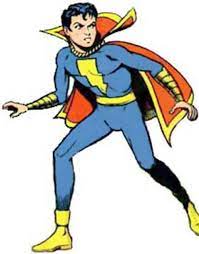 Because his magic words of transformation were his mentor’s name, CMJ became one of the few superheroes who couldn’t actually say his own name (Black Bolt and the mute Golden Age Daredevil would be others, I suppose).
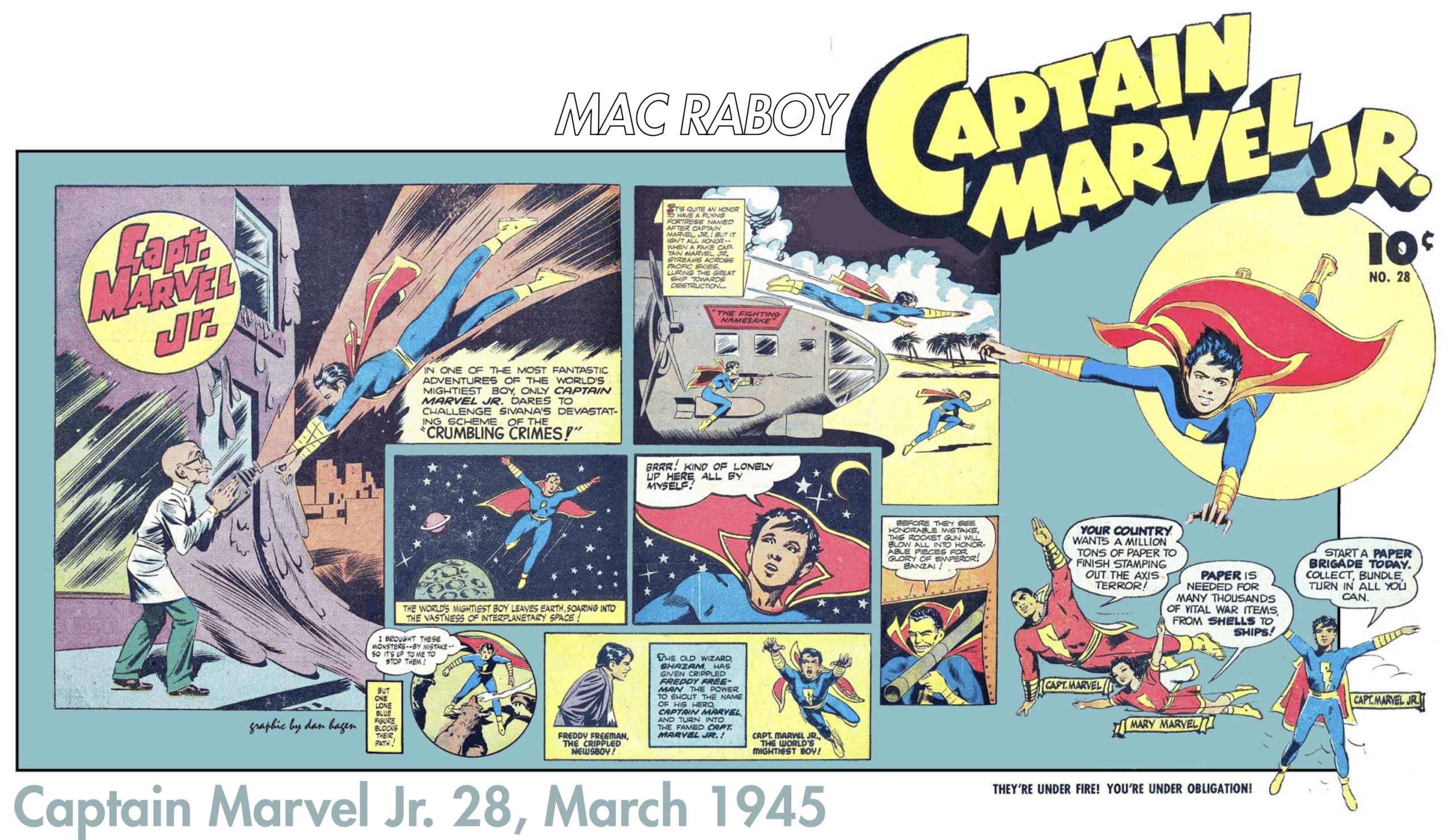
Mac Raboy’s art on the feature was a good decade ahead of its time, more illustrative than cartoony. His poses were graceful and lyrical, and his CMJ looked like an actual teenage boy, not just a small man.
The Fawcett stories sometimes contained surprisingly human touches. For example, in Captain Marvel Jr. 28 (March 1945), having destroyed Dr. Sivana’s building-crumbling ray and thwarted a Japanese saboteur disguised in his own costume, CMJ embarked on a flight into space to recover lunar rocks (which turned out to be moon monster eggs, drat the luck). Otto Binder penned the tale.
“Brr! Kind of lonely up here all by myself,” Captain Marvel Jr. thinks while soaring through the cold darkness of space, even as artist Bud Thompson provides a close-up of the teen to underline his sense of eerie isolation.
It’s not a thought that would ever have occurred to the stalwart, space-born Superboy.
About Author
