
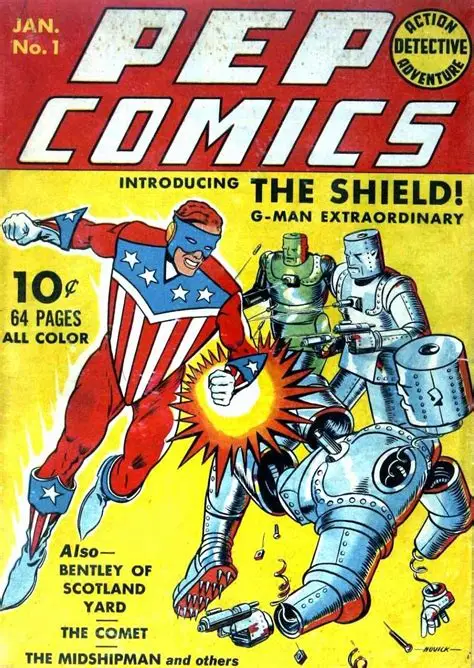
 For months now, Archie Comics has been archiving the Golden Age run of Pep Comics. Now, newer fans might shrug at these very different comic books compared to the ones they see at the comic shops every week. But, as die-hard fans know, other doesn’t mean bad.
No, not all these stories in Pep Comics are fantastically stand-out stories. But that can be said of any comic book. Still, if read within the context of the times, there are some good, solid stories. And, once Archie and the Riverdale Teens come along, some humorous stories that are still funny decades later.
I think one common theme that can be said over the decades is “Who would have thought?” Not that the statement gives anyone or company a free pass. But who would have thought that, after years of rejections, two twenty-three-year-olds from Ohio would finally see Superman appear in Action Comics? And, we all know what happened after that—both good and bad. Or who would have thought a fourteen-year-old boy would start writing Legion stories and one day become editor-in-chief at Marvel Comics?
 On my history podcast, I recently did a show on Stan Lee, which, in a way, explored that question while examining Lee’s career in the 1950s and 1960s. By the end of the 1950s, Lee was fortunate to have a job, especially since Atlas (later Marvel, once a new company!) almost went under in 1957. Who would have thought that the early days of the Silver Age would one day be? These were people trying to make a living, unsure how long comics would last.
Back to Pep Comics. Once Superman became a “who would have thought” hit, t—almost every publisher put out their heroes. MLJ, that’s what Archie was initially called, and the first patriotic hero—beating out Captain America by a few months—with The Shield in 1940 with Pep Comics #1.
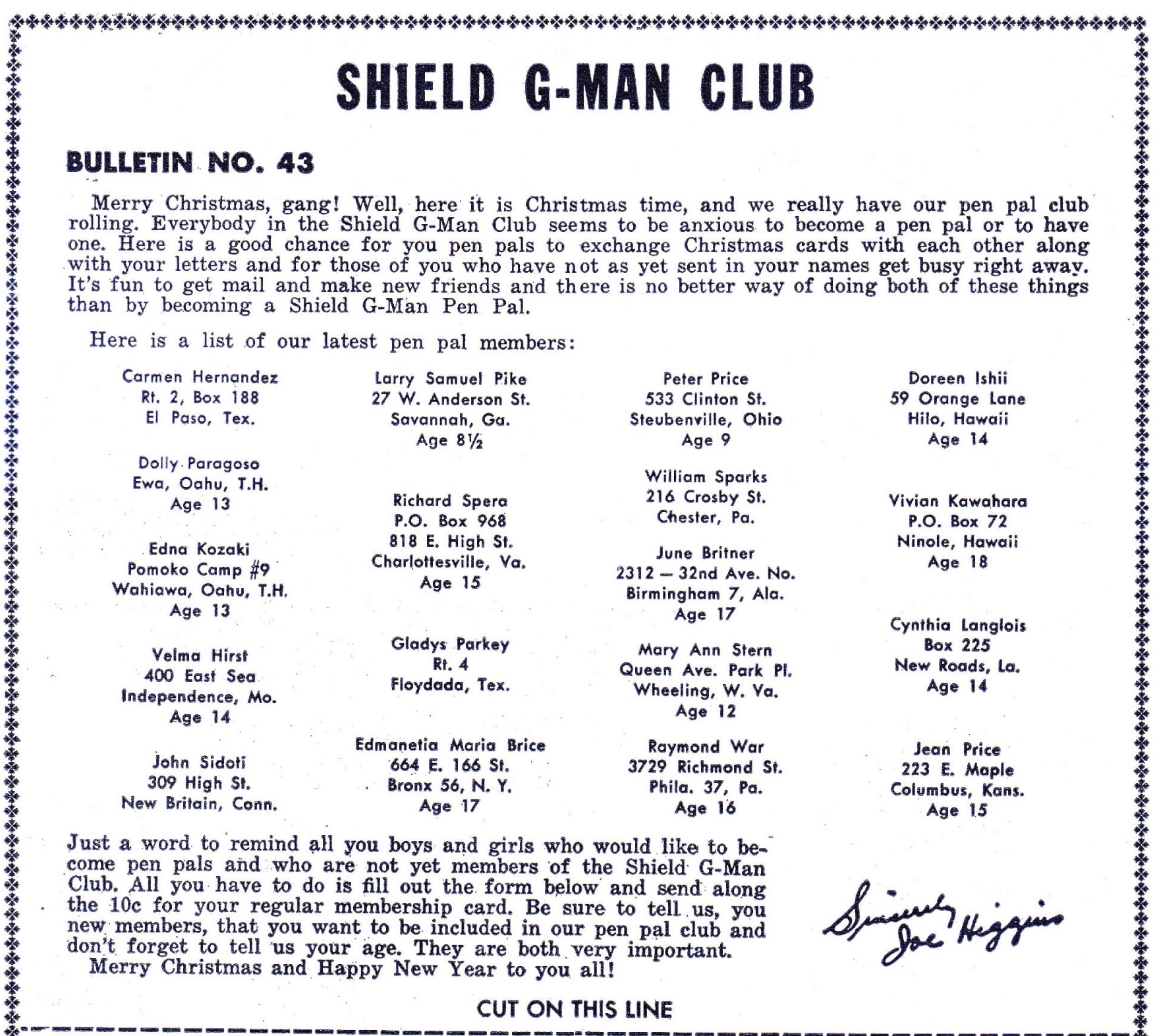
And like many heroes, Captain Marvel, Captain Midnight, and Superman —The Shield had their club: The Shield G-Man Club, which launched in Pep Comics #15. By sending in a 2¢ stamp found in Pep Comics #15, readers could become members of the Shield G-Man Club. In exchange, they received a membership card and a patriotic red, white, and blue pinback badge showcasing The Shield. The club stood for truth, justice, patriotism, and courage—ideals represented by the four stars on The Shield’s costume.

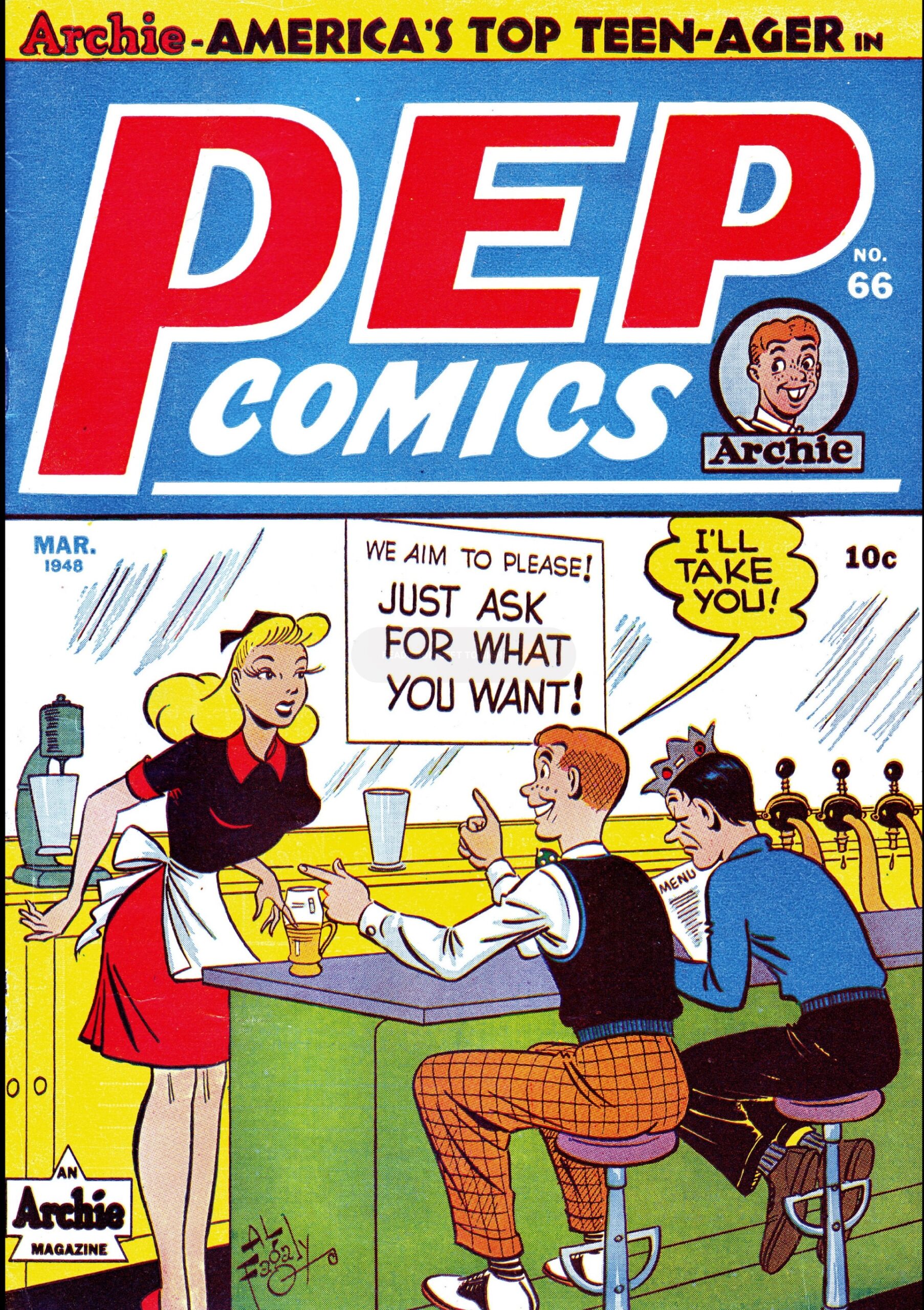
For the next few years, things continued as usual. Although no one knew it at the time, a seismic shift occurred between Pep Comics #65 and #66 in 1948. However, sharp fans might have already seen it coming, since The Shield made his last Golden Age appearance in Pep Comics #64.
Pep Comics #66 marked the formal transfer of the Shield G-Man Club to Archie Andrews, ushering in a new era focused on teen comedy rather than superhero adventures. Who would have thought a little story about teenagers buried in Pep Comics #22 would lead to the company changing its name to Archie Comics in 1946?

As a fan of comics, I have been reading those Golden Age Pep Comics and seeing how the rise of Archie and, unfortunately, the decline of MLJ’s Golden Age heroes, mainly for the history of it all. There’s a fantastic book for you if you want to know more about the heroes and the early days of Archie. The MLJ Companion is an in-depth reference guide that explores the entire history of Archie Comics’ superhero universe, which originated under the MLJ Magazines imprint. Authored by Rik Offenberger, Paul Castiglia, and Jon B. Cooke, this 288-page, full-color edition provides a comprehensive examination of iconic characters such as The Shield, Black Hood, Steel Sterling, Hangman, Mr. Justice, The Fly, and many more.
About Author
