
Online poker happens through a screen, sure, but the social part hasn’t gone anywhere. That’s basically what online poker chat etiquette comes down to — a chat box can make a table way more fun, let you celebrate a sick hand, or turn into a mess of tension after a bad beat. And since nobody can actually see each other, even a throwaway comment can land way harsher than you meant it.
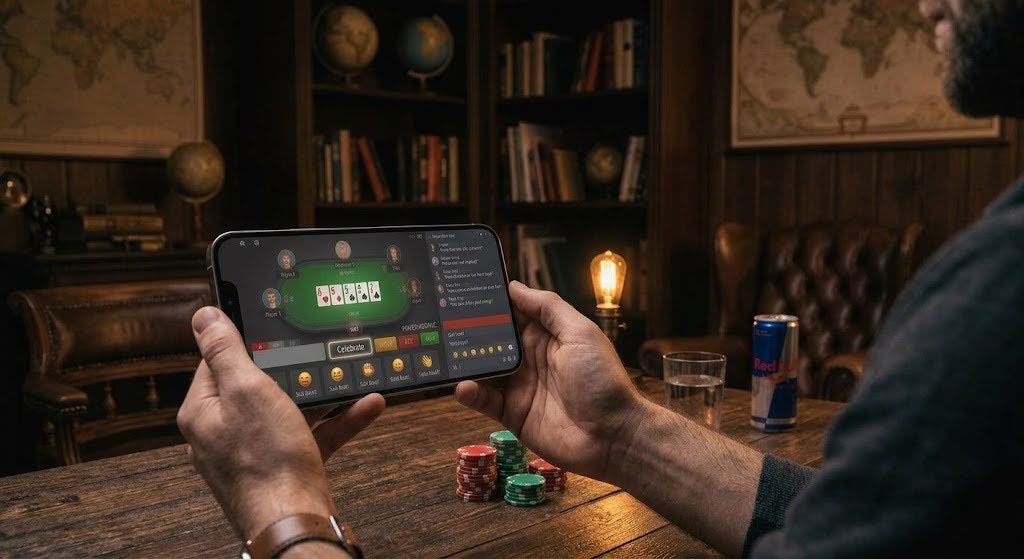
Good etiquette here isn’t just about being nice for the sake of it. It keeps games more enjoyable, cuts down on distractions, and makes talking to strangers at a table way less awkward. Knowing when to type something, what’s worth saying, and when to just leave it — that’s really what makes someone a decent player to sit across from.
Why Online Poker Etiquette Matters
Poker’s already stressful enough on its own — pressure, uncertainty, wild swings in either direction. You can make all the right decisions and still lose a huge pot, while someone else backs into a win with a hand they had no business playing. Throw hostile comments or a flood of messages into that mix and a totally normal game turns miserable fast.
Basically, etiquette gives everyone a baseline to work with. Nobody has to agree that a call was good — you’re allowed to think it was terrible — but how you communicate that is on you.
Doesn’t matter if it’s a cash game, a tournament, or some private table with friends — this holds either way. Whether you’re playing a local home game or playing BC Poker online, staying respectful keeps the vibe decent without softening the competitive edge one bit. And one nasty comment aimed at a single player doesn’t just stay contained to them — it can sour the whole table, especially once it starts feeling mocking, aggressive, or just repetitive.
Basic Poker Chat Rules
There’s no universal rulebook for chat at online tables, but a few habits go a long way:
- Skip the insults. Calling someone stupid or incompetent after a hand adds nothing.
- Don’t leak live-hand info. If you’ve folded, don’t discuss your cards or suggest what another player should do.
- Keep criticism out of the chat. An unusual decision doesn’t need an immediate negative reaction.
- Don’t flood the table. Repeated messages, celebrations, or complaints get distracting fast, especially in quick games.
- Lose without making it personal. Poker gets frustrating — a short chat break beats starting an argument.
These poker chat rules matter most at anonymous tables, where you may know nothing about the person on the other side of the screen. Good poker table manners online go beyond chat too — acting within a reasonable amount of time and avoiding unnecessary use of the time bank matter just as much as what you type.
The Online Poker Chat Box Has a Purpose
The online poker chat box can be useful when treated as a social feature rather than another competitive weapon. Players can greet others, congratulate someone on an interesting hand, or make occasional light conversation between rounds.
There is nothing wrong with showing personality at the table. The important distinction is between friendly interaction and communication designed to provoke a reaction.
For example, saying “nice hand” after losing a pot is harmless. Writing several angry messages because an opponent made a call you considered weak creates a very different atmosphere.
Deliberately provoking someone into making a rushed decision may feel clever, but it contributes little to a healthy playing environment. Poker already contains enough psychological pressure without turning the chat box into a tool for harassment.
Poker Sportsmanship Online
Poker sportsmanship online isn’t limited to traditional sports — poker has its own version, and a player can compete aggressively while still respecting everyone at the table.
The key is separating the result from the person. Winning a pot does not make someone superior, and losing one does not make someone incompetent. Poker outcomes are influenced by probability, strategy, timing, and decisions made over many hands.
Rather than typing “how could you possibly call that?”, ask yourself whether the call actually made sense over the long run. That shift turns frustration into something more useful — analysis.
This matters because poker rewards emotional control. Players who remain calm after both wins and losses are less likely to let a single hand affect their next decision.
When Silence Is Better
Not every table needs constant conversation. Sometimes the most appropriate form of online poker etiquette is simply not typing anything.
| Situation | Better approach |
| A player is thinking | Give them space |
| You lost a big pot | Wait before reacting |
| A hand is active | Do not reveal useful information |
| Someone makes an unusual play | Analyse it privately |
| The table is moving quickly | Keep messages short |
| An argument starts | Do not prolong it |
This does not mean poker chat should become completely formal. It means players should read the situation before pressing send.
Handling Rude Players
Most regular players eventually encounter someone who complains constantly, provokes others, or uses offensive language. Responding in the same tone usually makes the situation worse.
Ignoring the comments is often the simplest solution. If the platform provides mute, block, or reporting functions, those tools can be more effective than trying to win an argument through chat.
Players should also avoid assuming that every provocative comment deserves a response. Some people deliberately use chat to distract opponents. Giving them attention may be exactly what they want.
Poker Forum Etiquette
The same principles behind poker forum etiquette apply outside the table too. Poker forums and strategy communities can be useful places to analyse hands and learn from experienced players. They work best when disagreements remain focused on decisions rather than personalities.
When posting a hand history, provide enough context for others to understand the situation. If someone disagrees with your play, consider the reasoning before dismissing the criticism.
Useful discussions focus on questions such as:
- What ranges could each player realistically have?
- What information was available at the time?
- Was the decision profitable over many similar situations?
- Could a different line have produced a better result?
This type of discussion is more valuable than arguing about who “played badly.”
Creating a Better Online Poker Environment
Every player contributes to the atmosphere of an online table. One person cannot control how everyone behaves, but they can decide what they add to the conversation.
A player who stays respectful after losing, avoids revealing information, and gives opponents room to make decisions helps create a more comfortable environment for everyone. This is particularly relevant when recreational players may already feel nervous or inexperienced. At poker-bc.com, where players of all skill levels share the same tables, maintaining this kind of etiquette makes the game more enjoyable for the whole community.
Conclusion
Online poker etiquette is ultimately about knowing where competition ends and unnecessary hostility begins. Players can be ambitious, analytical, and competitive without turning the chat box into a source of conflict.
Respectful communication, sensible poker table manners, and good sportsmanship make games easier to enjoy and easier to concentrate on. Whether the table is quiet or full of conversation, the basic rule is simple: communicate in a way that does not interfere with the game or make other players regret sitting down.
In poker, the cards determine the result of a hand. The way players behave determines what kind of table they create.
About Author
