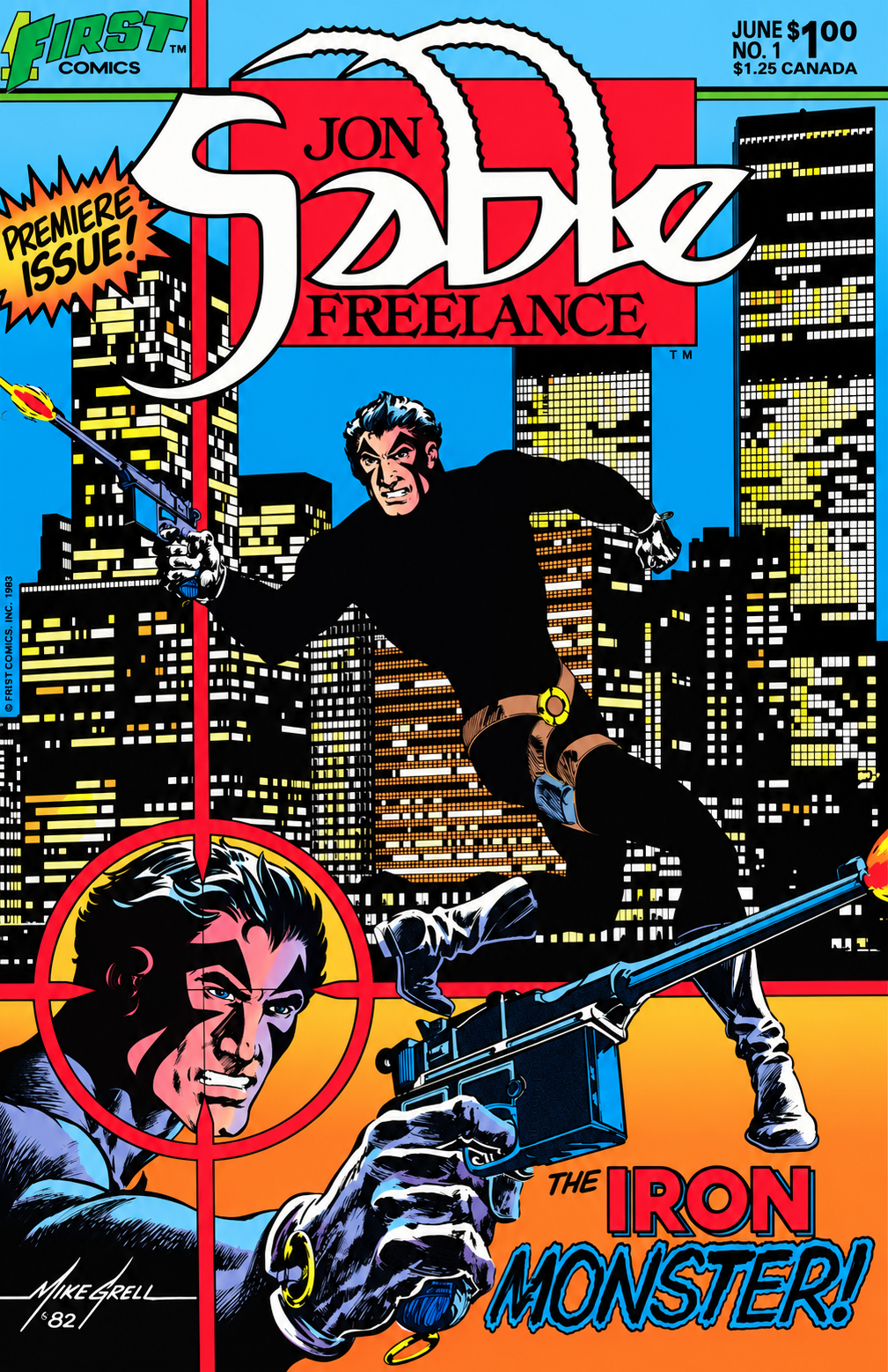
 Long before the modern comics market became crowded with creator-owned titles, Mike Grell’s Jon Sable, Freelance demonstrated just how successful a creator-owned adventure series could be.
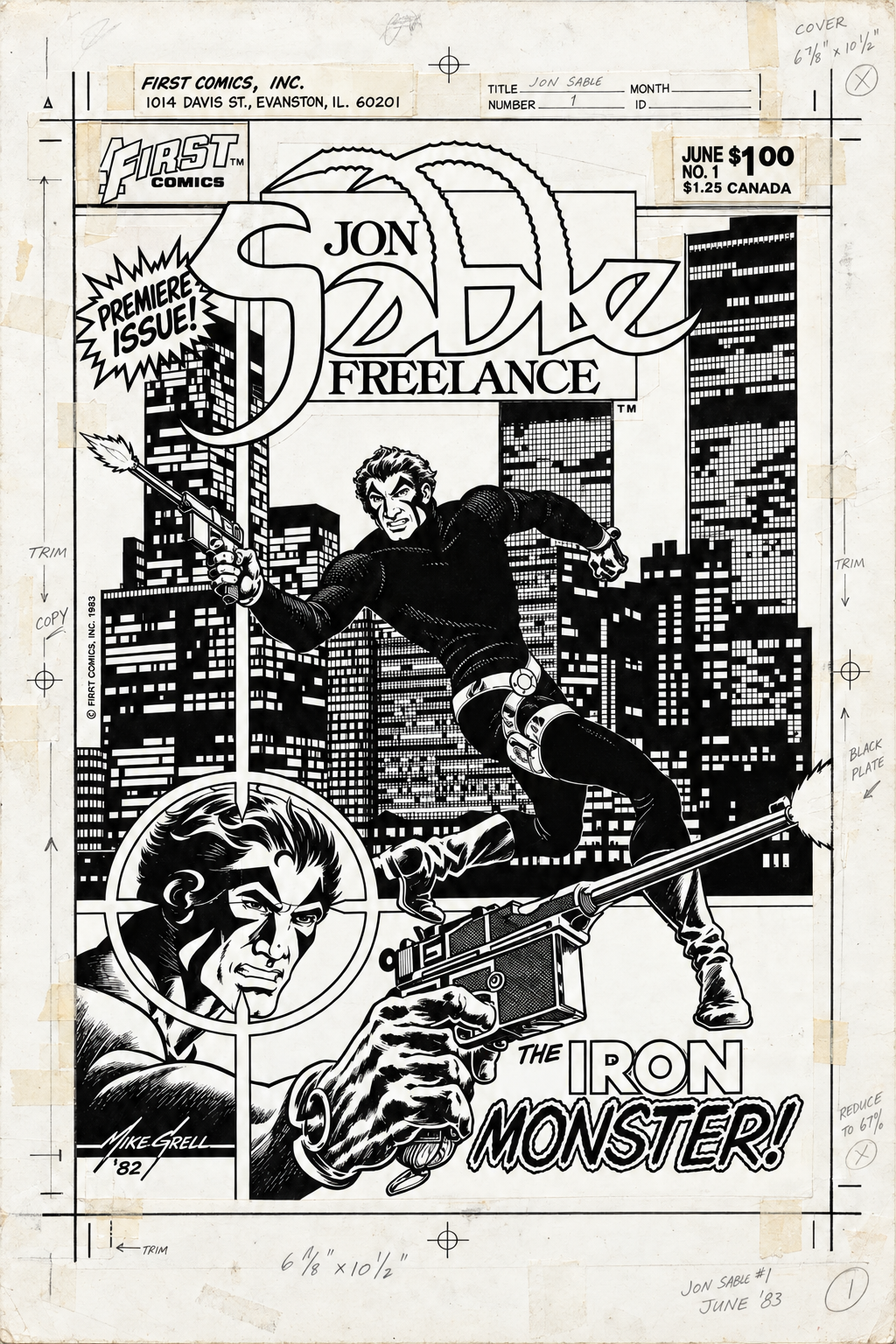
Part mercenary thriller, part detective story, and part international adventure, Jon Sable, Freelance debuted from First Comics in June 1983. The original series would run for 56 issues, becoming one of the signature titles of the independent-comics boom of the 1980s.
More than four decades later, Jon Sable remains one of Grell’s most enduring creations.
By 1983, Mike Grell was already well established in comics. His résumé included work for DC Comics and the creation of The Warlord, as well as his creator-owned science-fiction series Starslayer. With Jon Sable, Grell moved away from traditional superheroes and into a world of espionage, crime, mercenaries and international intrigue.
Grell has described the inspiration for Sable as drawing heavily from Ian Fleming’s James Bond novels and Mickey Spillane’s Mike Hammer, with some of the African material influenced by the writings of big-game hunter Peter Hathaway Capstick. Grell also incorporated elements informed by his own military experience.
The result was a protagonist who belonged as much to the tradition of pulp heroes and adventure novels as he did to comic books.
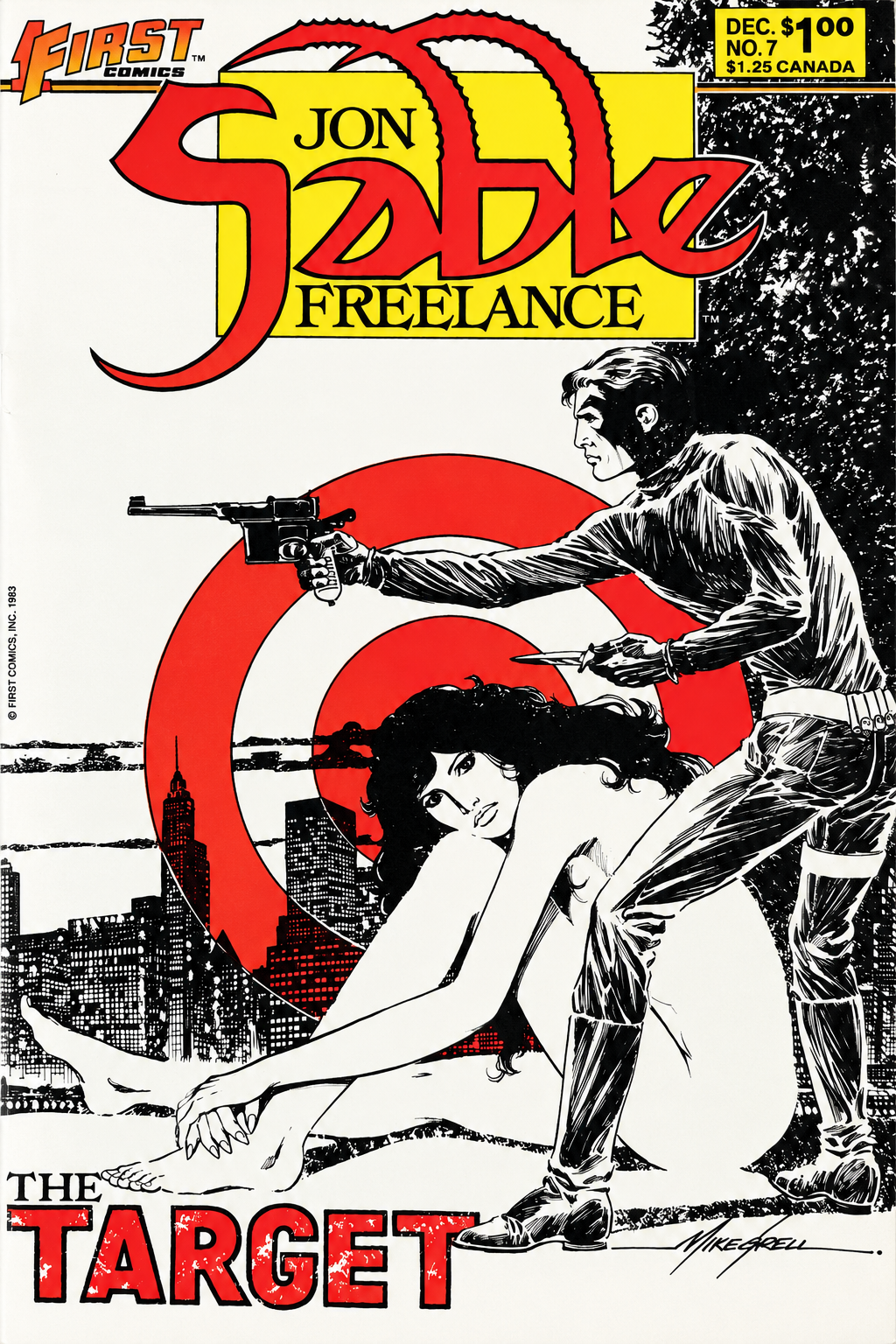
 He had no superpowers and generally did not fight costumed supervillains. He was a hunter, mercenary, bodyguard and troubleshooter whose greatest weapons were experience, intelligence and an extraordinary ability to survive.
But Grell gave his tough adventurer an unexpected second life.
Under the pen name B.B. Flemm, Sable was also the successful author of children’s books about leprechauns living in Central Park. The contrast between the dangerous mercenary and gentle children’s author became one of the character’s defining characteristics.
At the centre of Jon Sable’s story was a tragedy.
Sable had lived in Africa with his wife and children, but his family was murdered by ivory poachers. Their deaths sent him on a violent quest for revenge that ultimately left him with little reason to continue living.
Mike Grell later described Sable as a man whose life had been destroyed first by the murder of his family and then by the consequences of his own vengeance. Alcohol and self-destructive behaviour followed before danger gave him another reason to keep going.
That history gave Jon Sable, Freelance considerably more emotional weight than a simple adventure comic.
 Sable could shoot, fight and survive almost anything, but the character was frequently dealing with the psychological consequences of everything that had happened to him.
Characters such as literary agent Eden Kendall, artist Myke Blackmon and Sable’s friend and former coach Sonny Pratt helped build a supporting cast around him and provided connections to the comparatively normal life Sable was never completely able to regain.
Jon Sable, Freelance arrived at an important moment in comic-book history.
The expanding direct market had made publishers outside Marvel and DC increasingly viable, and Chicago-based First Comics became one of the most prominent independent publishers of the decade.
According to comics historian Don Markstein, Jon Sable, Freelance was particularly significant because it was First Comics’ first ongoing title built around a completely new character. Warp originated as a stage production, and E-Man had previously appeared at Charlton, while Jon Sable was created specifically as something new.
The first issue carried a June 1983 cover date.
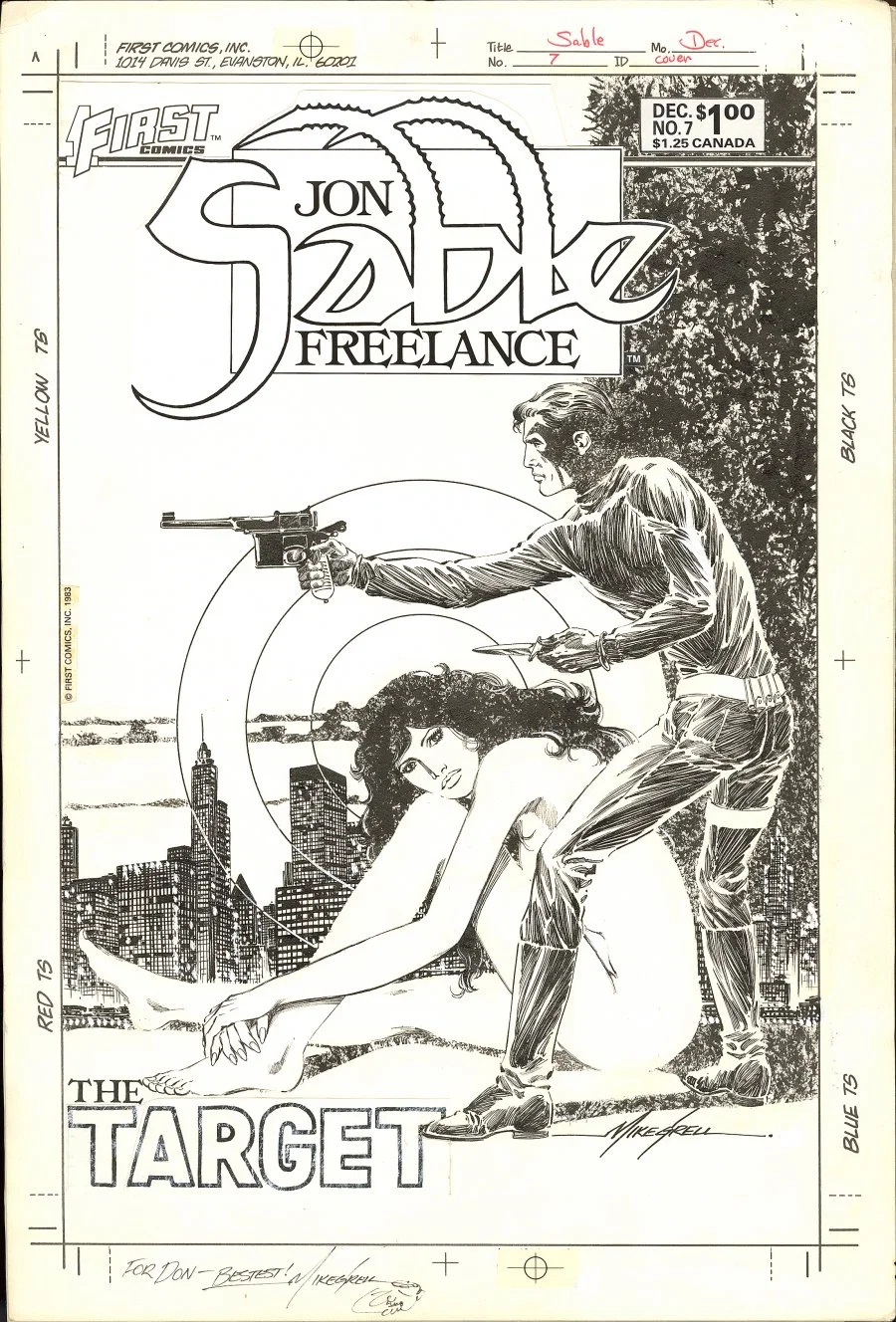 Grell initially handled virtually every aspect of the feature, writing and drawing Sable while establishing a distinctive combination of realistic action, adult relationships, political intrigue, and globe-spanning adventure.
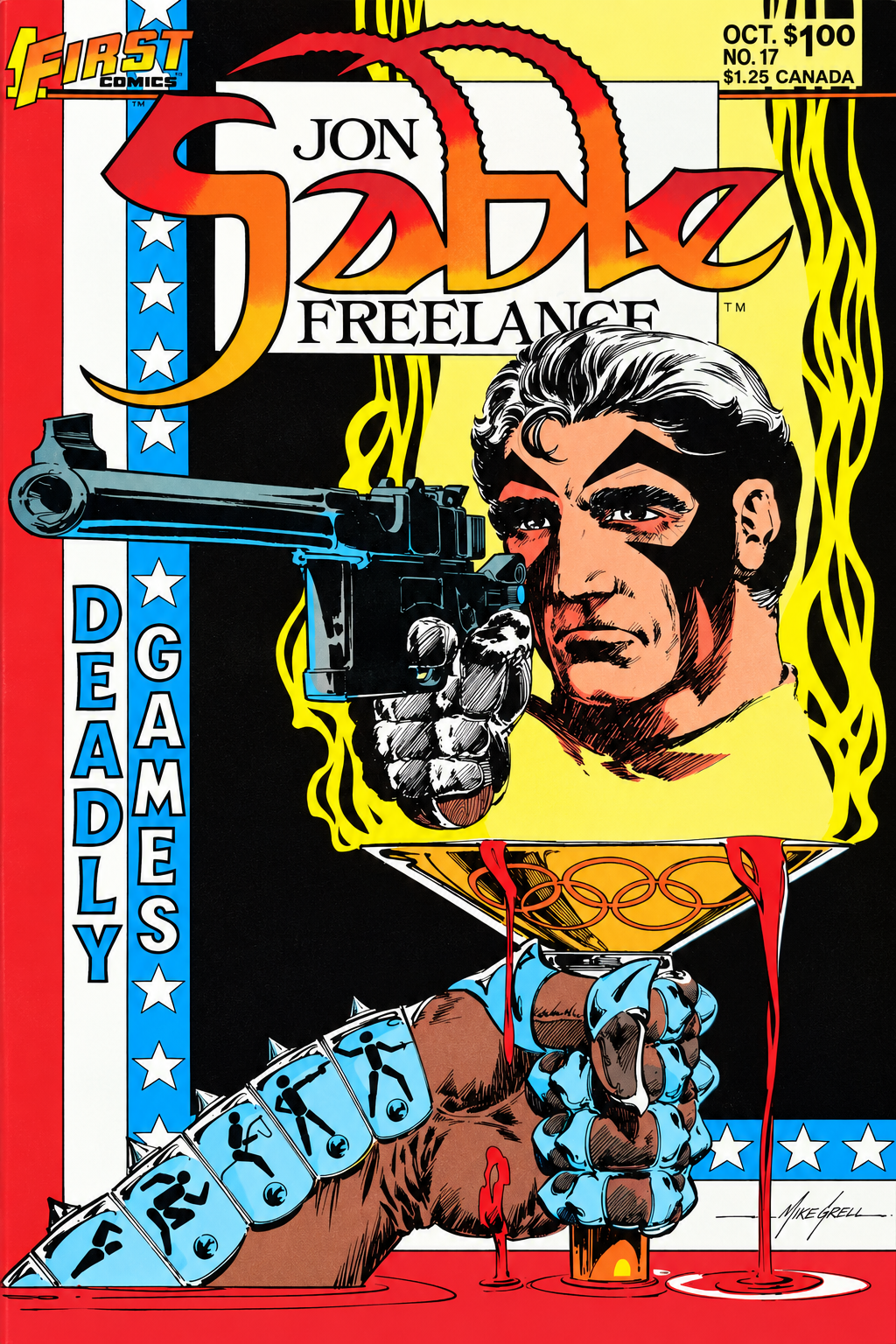
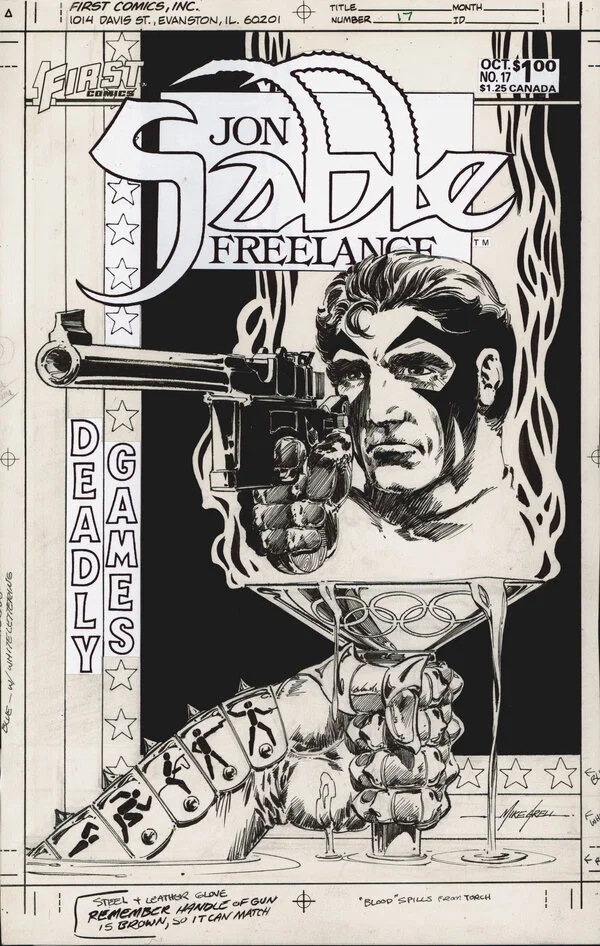
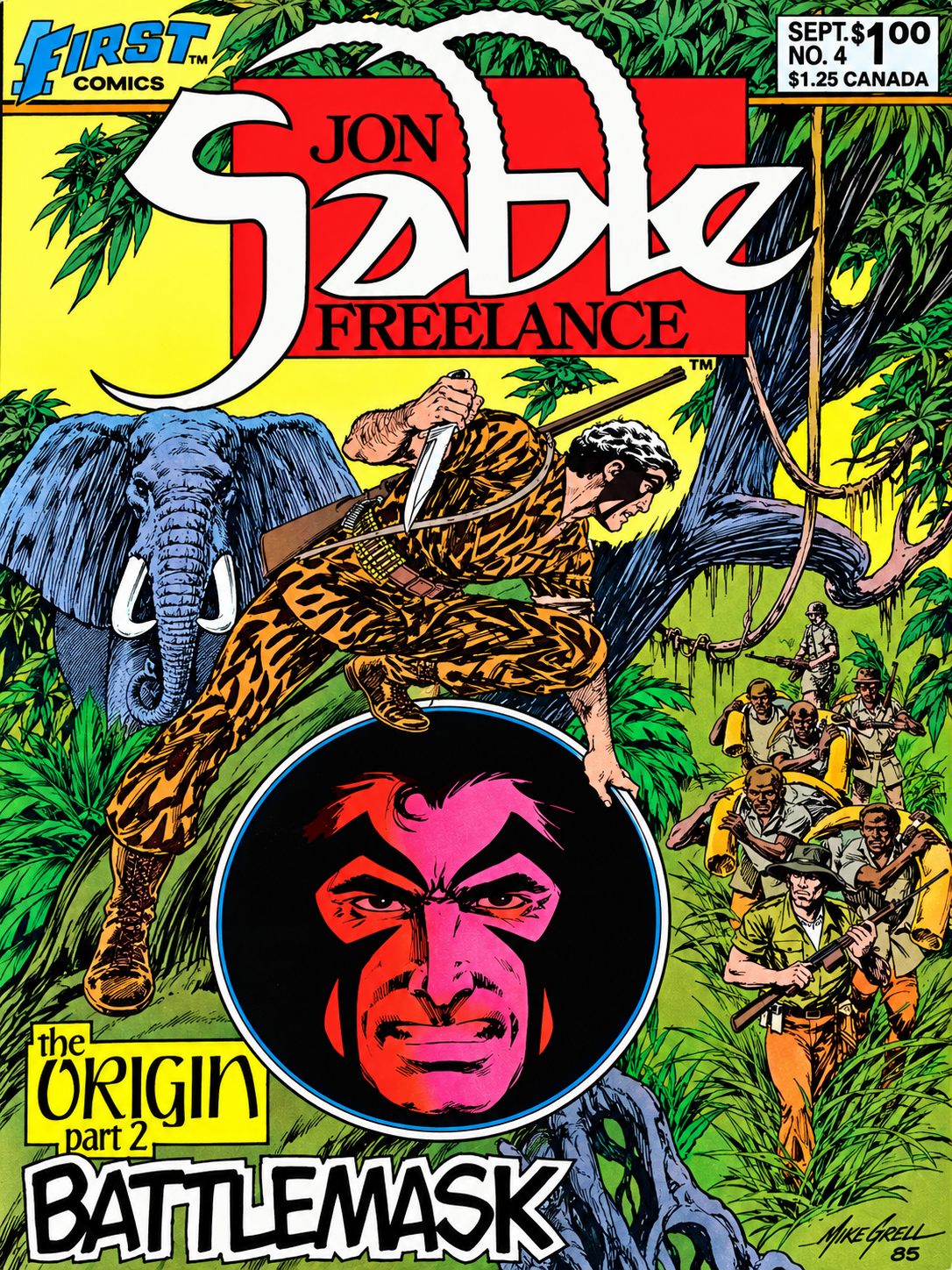
The original series lasted 56 issues, from June 1983 through February 1988. Grell wrote the run and continued providing covers throughout it, although other artists eventually assumed responsibility for the interior artwork. Sources generally identify issue #43 as Grell’s final full interior-art issue.
For an independent comic of the period, 56 monthly issues represented an impressive run.
Ending Jon Sable, Freelance did not mean the end of the character at First Comics.
Almost immediately, First relaunched the property as simply Sable.
The new series began in March 1988, following directly after the February 1988 conclusion of Jon Sable, Freelance. This time, Marv Wolfman took over the writing, with Bill Jaaska among the principal artists.
Mike Grell was no longer directly involved with the series.
 Sable lasted another 27 issues, ending in May 1990. Wolfman departed before the conclusion, with Steve Kaye writing the final four issues.
First Comics subsequently published Mike Grell’s Sable, a ten-issue series reprinting the first ten issues of Grell’s original run.
Between the two original ongoing series, Jon Sable had accumulated 83 new issues between 1983 and 1990, an unusually substantial body of work for a creator-owned adventure character of the era.
Jon Sable also accomplished something relatively rare for an independent comic-book character of the 1980s.
He made it to network television.
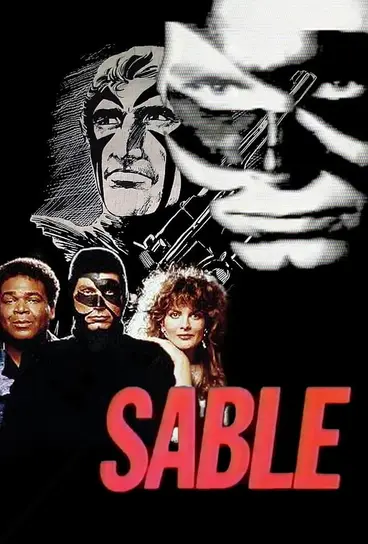
Sable premiered on ABC on November 7, 1987.
Actor Lewis Van Bergen played Jon Sable, while the cast included Rene Russo as Eden Kendall, Ken Page as Cheesecake Tyson and Holly Fulger as Myke Blackmon.
 The television version made several changes to the comic. Sable’s children’s-book identity, for example, became Nicholas Fleming rather than B.B. Flemm.
Despite the comic’s popularity, television success proved more difficult to achieve. Only seven episodes aired, with the final episode broadcast on January 2, 1988.
The series was short-lived, but its existence demonstrated the appeal Sable had generated beyond the comic-book audience.
After First Comics ceased operations, Jon Sable largely disappeared from his own regular series.
Grell kept connections to the character alive through occasional appearances and related projects.
One was Maggie the Cat, featuring the recurring thief from Sable’s world. Image Comics published two issues of the planned series in 1996 before publication stopped.
In 1997, plans were announced for Grell to produce a new black-and-white Jon Sable, Freelance series through Caliber Comics, but the project did not ultimately appear.
Fans would have to wait several more years for Sable’s true return.
 That return finally arrived in 2005.
IDW Publishing reunited Mike Grell with his creation for the six-issue miniseries Jon Sable, Freelance: Bloodtrail.
For the first time in years, Grell was again writing and drawing a new Jon Sable adventure. An interview conducted at the time revealed that bringing the property back required resolving rights and legal issues surrounding some of the former First Comics properties.
The new series demonstrated that Sable had lost none of his essential identity.
He remained the dangerous professional capable of entering situations most people would avoid, while the emotional scars and contradictions that made the character interesting remained intact.
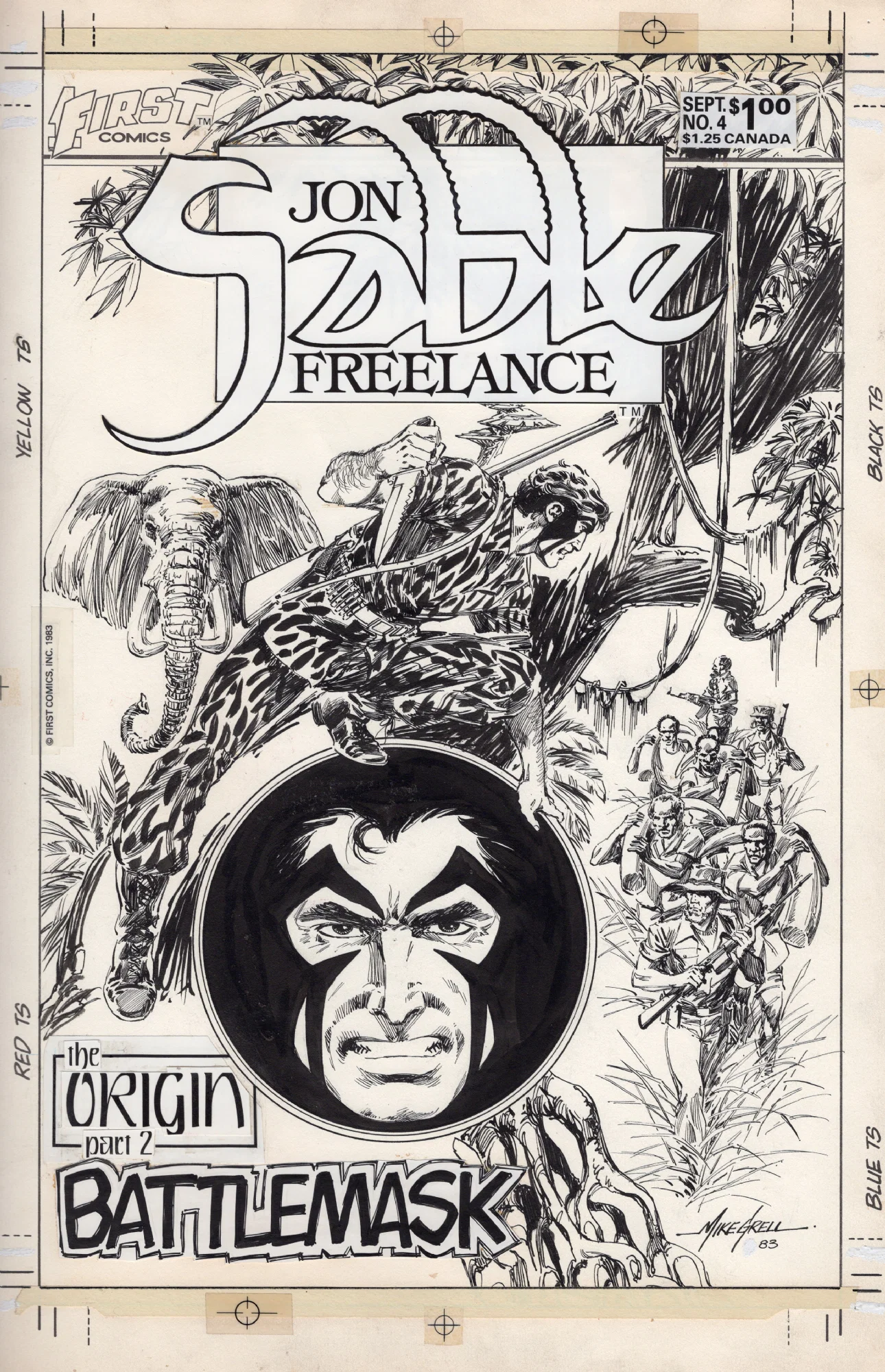 At roughly the same time, IDW began collecting Grell’s original First Comics material in The Complete Jon Sable, Freelance trade-paperback series, giving a new generation access to stories that had become increasingly difficult to find.
Another new Sable adventure followed.
Jon Sable, Freelance: Ashes of Eden initially appeared online through ComicMix beginning in November 2007. ComicMix promoted the project as a new Mike Grell graphic novel that readers could follow online.
The story eventually appeared in print as a five-issue series between 2009 and 2010 and was later collected.
By this point, the way comics were being distributed had changed dramatically from 1983.
Jon Sable had gone from the emerging comic-shop direct market, to network television, to trade-paperback collections and finally to online serialization.
Yet the character remained recognizably Jon Sable.
The original run has continued to find new audiences through collected editions.
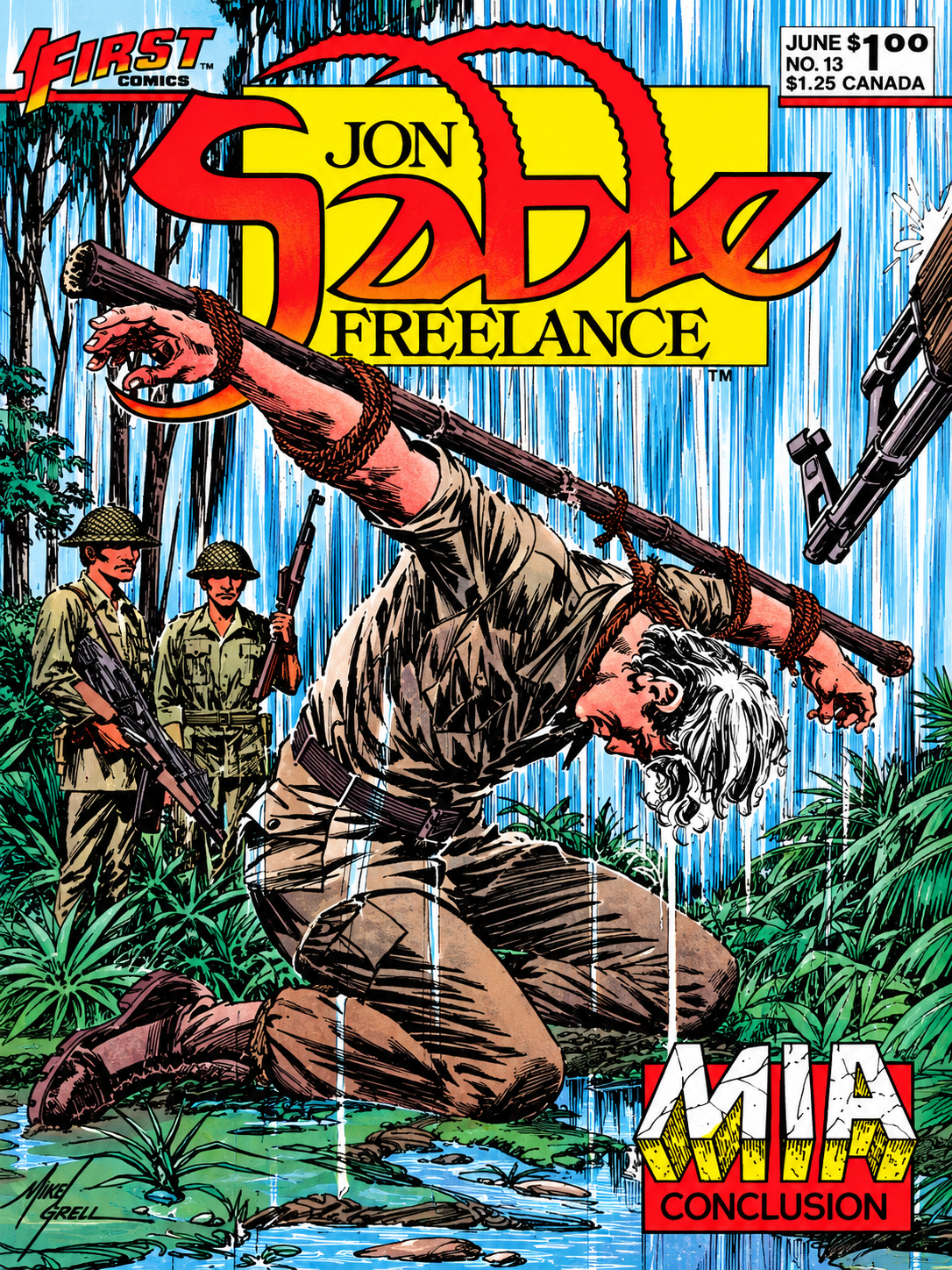 Following IDW’s Complete Jon Sable, Freelance books, ComicMix produced omnibus editions collecting the original series. More recently, deluxe Masterstroke Edition volumes have returned Grell’s early Sable stories to print in oversized editions.
Another Grell project, Jon Sable: Rules of the Hunt, explored Sable’s early career and was eventually produced in connection with a crowdfunding campaign that also revisited the unfinished Maggie the Cat material.
Four decades after his debut, creators and readers are still returning to the character.
Jon Sable arrived during a period when American comics were beginning to demonstrate that successful comics did not necessarily need to come from Marvel or DC and did not necessarily need to involve superheroes.
First Comics offered creators and readers something different.
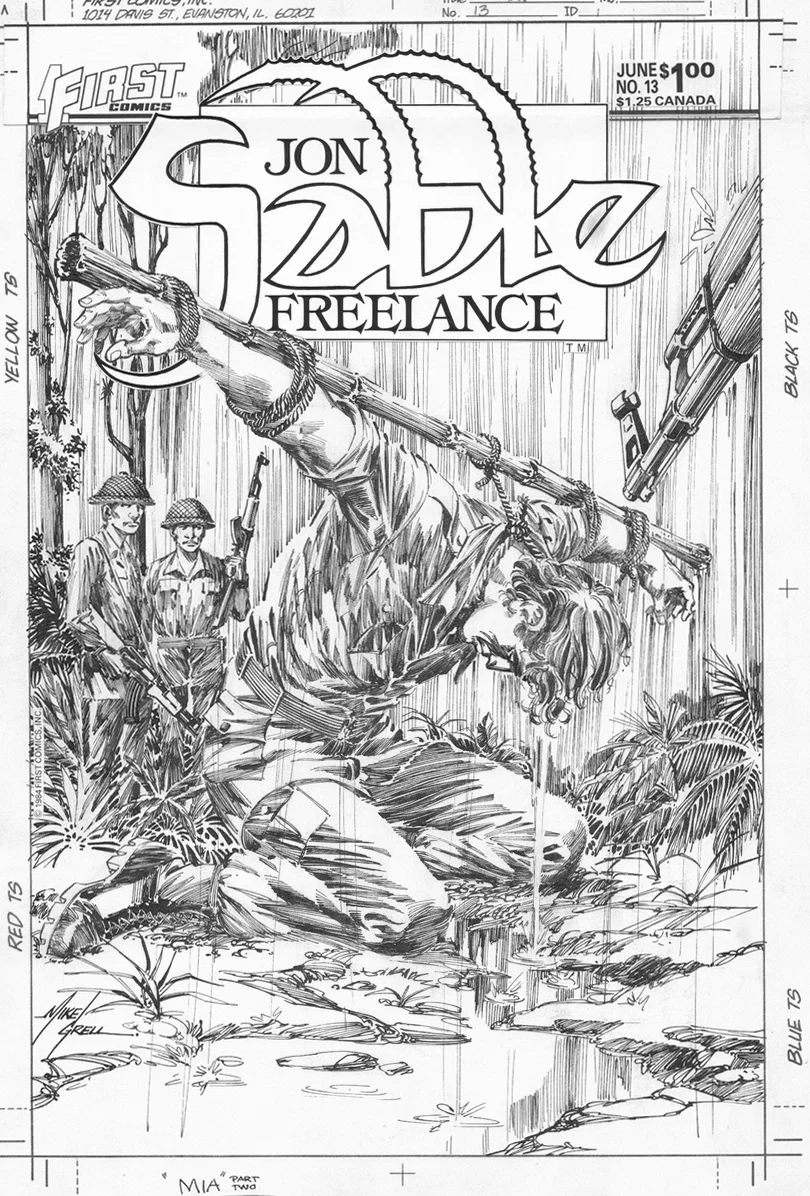 Alongside titles such as Grimjack, American Flagg!, Nexus and Badger, Jon Sable, Freelance helped establish First Comics as one of the defining independent publishers of the 1980s.
Sable also showed what creator ownership could make possible.
Mike Grell could build a character around the genres and themes that interested him rather than fitting the concept into an established superhero universe. The result combined James Bond-style international adventure, hard-boiled crime fiction, military action, hunting stories, romance and personal tragedy.
At the centre of all of it was a contradiction.
Jon Sable could enter a room carrying a gun and wearing camouflage face paint, then go home and write stories for children.
He could survive wars and assassins but could not erase the memories of his murdered family.
He could make his living through violence while possessing a remarkably gentle side.
That contradiction is what elevated Jon Sable beyond the familiar tough-guy adventurer.
 When Jon Sable, Freelance #1 reached comic shops in 1983, there was no guarantee that First Comics itself would survive, much less that its new creator-owned adventurer would still be remembered more than 40 years later.
Instead, the original series reached 56 issues, spawned another 27-issue series, inspired a network television adaptation, returned through IDW and ComicMix, and has repeatedly been collected for new generations of readers.
Much of the credit belongs to the strength of Mike Grell’s original concept.
Jon Sable never needed superpowers.
Give him a dangerous assignment, a passport, a gun, and a reason to get involved.
That was enough.
And after more than four decades, Jon Sable is still freelance.
About Author
