
 First Comics News: What was it that first made you want to be a writer?
Graham McNeill: From the earliest age, I just loved telling stories, finding a way to really affect the person on the other end of it. I remember writing a story in primary/elementary school about a giant octopus attacking a trawler (inspired by the Doctor Who episode, The Power of Kroll, and I vividly remember seeing all my fellow kids react with excitement and horror at elements within the story. I think I’ve been chasing that ever since.
1st: What do you find most enjoyable about writing?
Graham: I love it when a plot comes together, when your characters surprise you, and the tale goes in directions you never expected. I love seeing the thing I’ve had in my head for months or years finally take shape, having ideas and then realizing them on the page. And then, later, hearing how the story and characters affected people, that they were moved or horrified, inspired or learned something, etc. Seeing a tale unspool from my head and (hopefully) turn out the way I wanted or better is a great feeling. It’s creation, it’s making something from nothing, a thing that didn’t exist until I thought of it and made it real – you can’t beat that feeling.
1st: You wrote for the Netflix TV show “Arcane”. What was the easiest and hardest part of it?
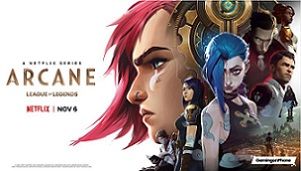
Graham: The easiest part of it was working with all the other writers in the room, who were all superb humans and a joy to work with. Every day, we were slinging ideas around, and everyone made those better in the resulting discussions. I already knew the world and characters very well, so that part was easy to get my head around, but it was finding ways to tell the story we wanted to tell, while being true to those characters and what we felt were authentic developments in them that was challenging, as we didn’t want to make anyone’s version of Jinx, Vi, etc., feel like they weren’t portrayed as honestly as they needed to be.
1st: In the “Paint the Town Blue” episode, how do you think watchers will respond?

Graham: I hope they’ll love it as much as I did. Every episode of TV has multiple fingerprints all over it, and this one was no exception. Yes, the episode has my name on it, but everyone contributed to it, from plot points, a line of dialogue, or an emotional beat, whatever… I’m proud of the episode, and the ending of it is one I pitched and, from the faces in the room as I did, that we had something special there. It’s an anarchic episode, with a ferociously exciting finale, but also takes the time for a bit of fun throughout its run time, so I really hope folk enjoy it and feel that we did justice by the characters.
1st: What are you working on at “People Can Fly Studios”?
Graham: Sadly, I’m not working there now. The vagaries of the video game industry meant that our game was cancelled (though it was awesome), and our entire team was laid off. I can’t say too much about it, but it was a lot of fun to play, and everyone involved was doing incredible work. That’s the way the cookie crumbles, sometimes.
1st: What did your writing at Riot Games entail?
Graham: I was a Principal Narrative Writer at Riot Games, so there wasn’t a lot I didn’t do. I started work there in the Worldbuilding Team, helping to craft and shape the world of Runeterra into something beyond its very gamey roots, taking it to the developed world you see today. We wanted Runeterra to feel like a real, living, breathing world that could support larger and longer stories, either in novel format or TV and film. I worked on Champion stories, short stories, music videos, on Arcane, and, latterly, the upcoming MMO that Riot’s working on.
1st: Why did you decide to join Riot Games?
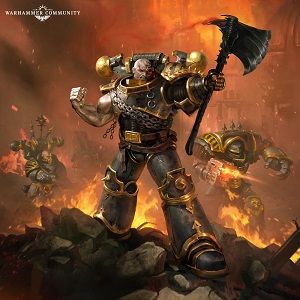
Graham: When the offer came to work with them, I was in a place where I was looking for a new adventure, and working in-house for one of the biggest video game companies in the world was too good an opportunity to pass up. It did entail a move to America, but that felt like a big adventure too. And now, well, it’s been ten years since we came to the US, so something clearly worked out!
1st: What was the last game you worked on at Riot Games, and why would someone want to play it?
Graham: The last game I worked on was the upcoming MMO that Riot’s developing. I, obviously, can’t say anything about it other than the folks they have developing are operating at the top of their game, and the stuff I was seeing during my time at Riot was phenomenal. It’s going to be hugely immersive, with astonishing visuals, and a huge amount of care and attention given to the player in the game. I may not be working on it anymore, but I’ll be first in line to play it when it comes out.
1st: What exactly are the Warhammer 40,000 novels about?
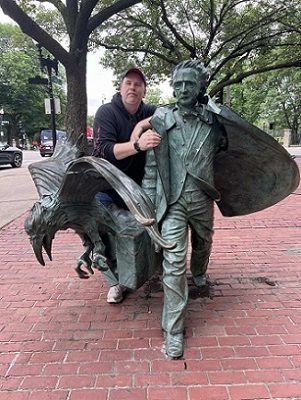
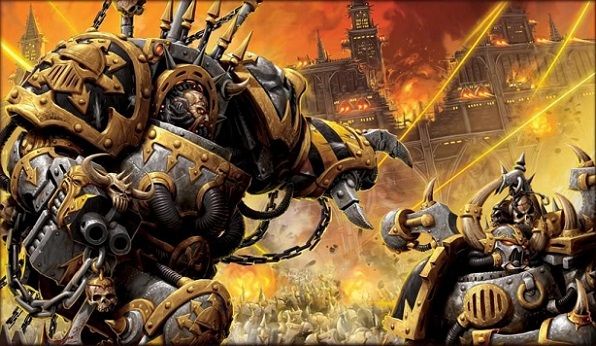
Graham: That’s a big question, as they’re all very different and cover a wide variety of subject themes and styles. There’s something for everyone there, whether you like wall-to-wall battles from start to finish or more dialogue-heavy, character-driven stories. Ostensibly, they’re about war in the grim darkness of the far future, but that’s a very broad canvas in which you can tell pretty much any story imaginable. I like to think of them as cautionary tales of how bad things can get, but also inspirational moments where it is possible to see the greatest heroism against the bleakest darkness. It’s about clinging on to the light when everywhere around you is dark and still (mostly) trying to do the right thing. They’re books set in the cruelest, most bloody regime imaginable, where every faction has its share of heroes and villains – often in the same characters – but one thing they all have in common is that they’re cracking reads and do much more than simply tell tales of the tabletop.
1st: What type of person will enjoy Warhammer?
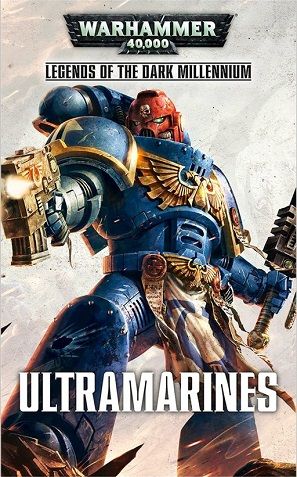
Graham: I’d like to say anyone could, as they speak to universal themes of heroism, resilience, and courage. If you like stories of high drama, over-the-top action, and characters who are larger than life in all the right ways, then these are the books for you.
1st: You wrote “Defenders of Ultramar.” What is Sergeant Learchus’s personality?
Graham: Learchus is a stickler for the rules, a product of the Codex Astartes, the great tome of Roboute Guilliman that sets down the tenets of how Space Marines should organize, fight, and live and die. It’s held up as inviolable doctrine by some – though it’s more there to guide than prescribe – and Learchus sees it as basically holy writ, seeing any deviation from it as something heretical. Though after the events of Defenders of Ultramar, he’s come to see that not every line needs (or ought) to be followed to the letter. He still is a rules-follower, but at least he’s gaining something of an understanding that there’s room for individual interpretation there, too. Not too much, mind, but some…
1st: Do you fantasize a lot about yourself?
Graham: Um, no, not really… Unless you count the Chaos Space Marine dreams…
1st: What is next for you in your career?
Graham: I’m keeping myself really busy just now with a lot of projects, most of which I can’t talk about yet as they haven’t been announced (though a few will be soon…). I have a novel on the go, a graphic novel soon to launch on Kickstarter, I’m doing some work for a few video games, and I am working to develop IPs for a number of startups. So, yeah, keeping busy!
1st: What would you like to say to your many fans?
Graham: I’d say a heartfelt thank you for coming with me through all the stories and all the years. I literally couldn’t do what I do without you. Thank you for reading what I’ve written, and if you keep reading, I’ll keep writing. One of my favorite things is to get out and about at signings and conventions to talk to folk who’ve read my words and hear their thoughts; what moved them, what helped them, what they liked (or didn’t), and just hanging out to talk story and characters. It’s a wild ride, and I’m eternally grateful that they chose to spend their precious money and time in spending time with me and the tales I’ve told.
About Author
