
 There are comic-book heroes who save the universe, battle gods, and carry the fate of reality on their shoulders. Then there is The Rocketeer, a struggling stunt pilot who straps an experimental rocket to his back and hopes he can survive long enough to land.
Created by Dave Stevens, The Rocketeer remains one of the great independent-comics creations of the 1980s, a character built from Stevens’ affection for pulp magazines, movie serials, aviation, pin-up art, and the uncomplicated excitement of old-fashioned adventure.
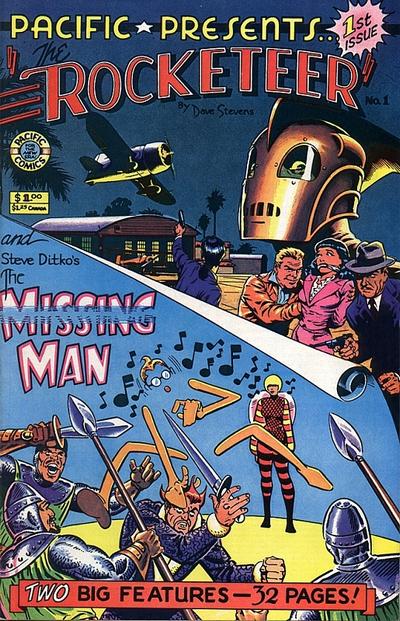
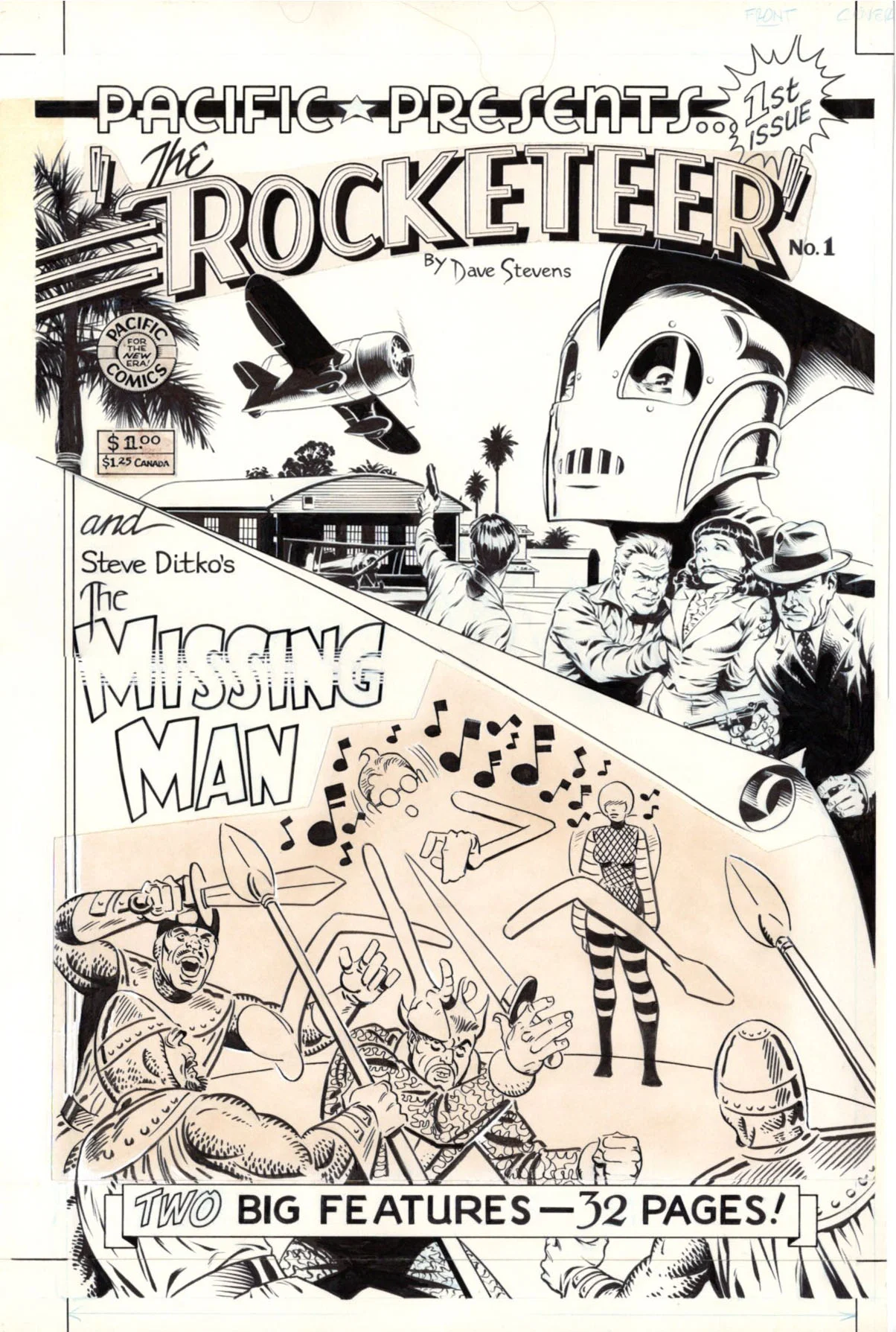
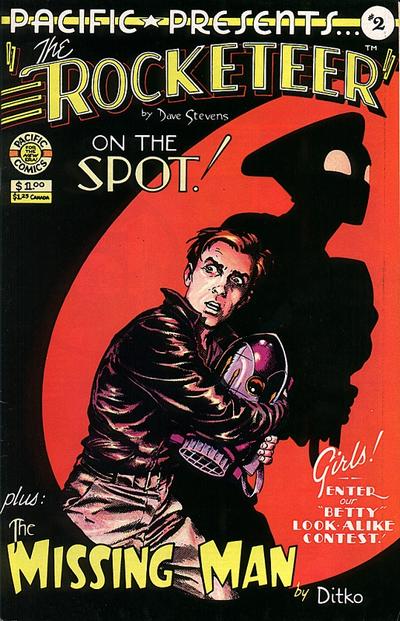
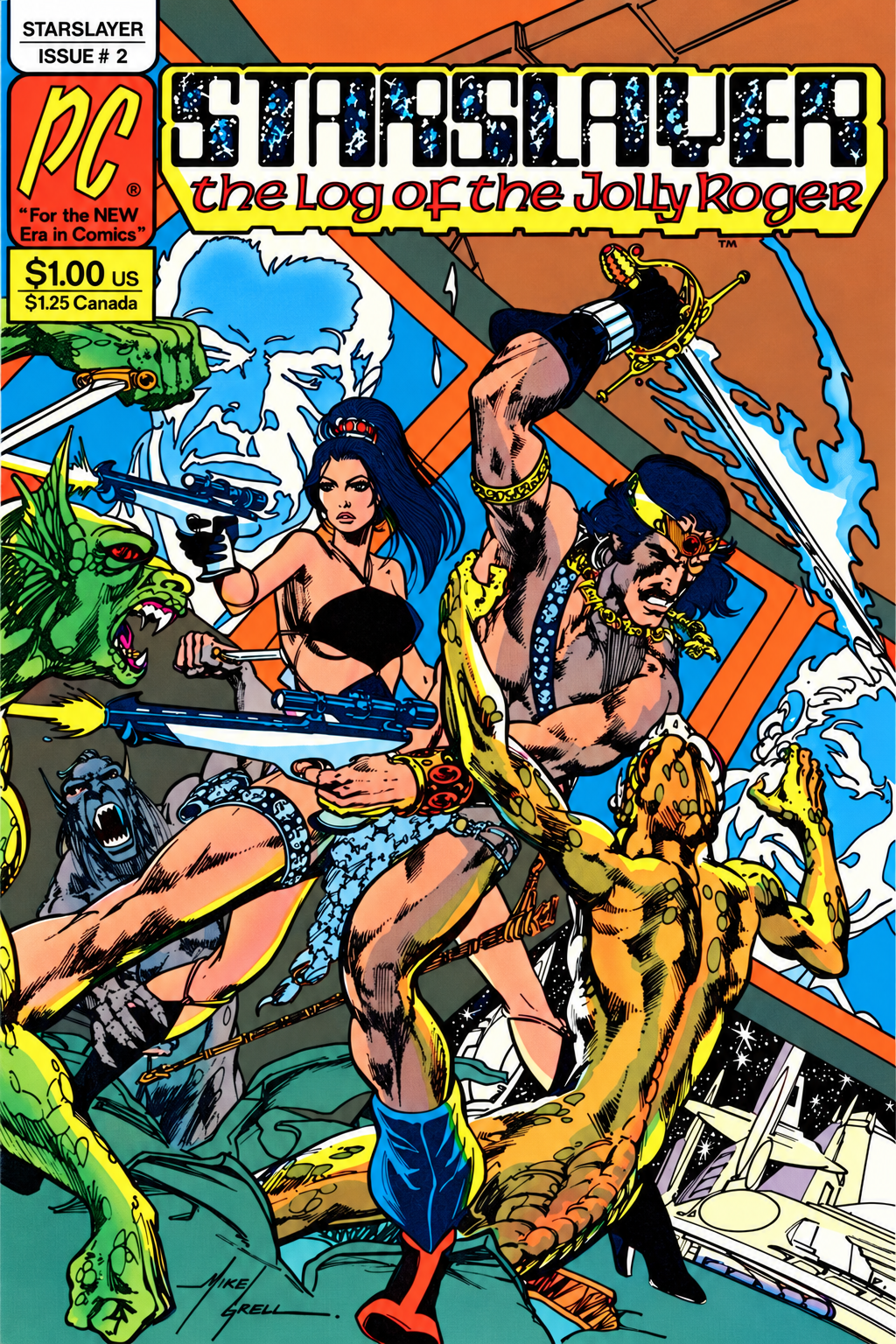
The Rocketeer made his debut in 1982 as a backup feature in Pacific Comics’ Starslayer #2. What began as a relatively modest independent-comics feature quickly attracted attention because there was simply nothing else quite like it on the stands.
At the center of the story is Cliff Secord, a pilot trying to make a living during the Depression. Cliff isn’t a scientist, a billionaire, an alien, or the recipient of superpowers. He’s a guy who loves airplanes and frequently finds himself short of money.
Then he finds a stolen experimental rocket pack.
Suddenly Cliff can fly.
With the help of his mechanic and friend Peevy, Cliff develops the equipment necessary to use the rocket and becomes the mysterious flying hero soon known as The Rocketeer. The concept is wonderfully simple. Give an ordinary adventure-story hero one extraordinary piece of technology and then see how much trouble it can cause.
That trouble comes quickly.
 Gangsters, government agents, spies, and assorted villains all want the rocket pack. Cliff, meanwhile, isn’t necessarily looking to become a superhero. He is frequently just trying to stay alive, protect the people he cares about, and perhaps make a few dollars along the way.
That distinction is important.
The Rocketeer may look like a superhero, but Stevens structured the feature much more like a 1930s adventure serial. Cliff’s world is populated by pilots, mechanics, gangsters, secret agents, glamorous actresses, mysterious villains, and experimental machines.
Even the Rocketeer’s costume reflects that approach.
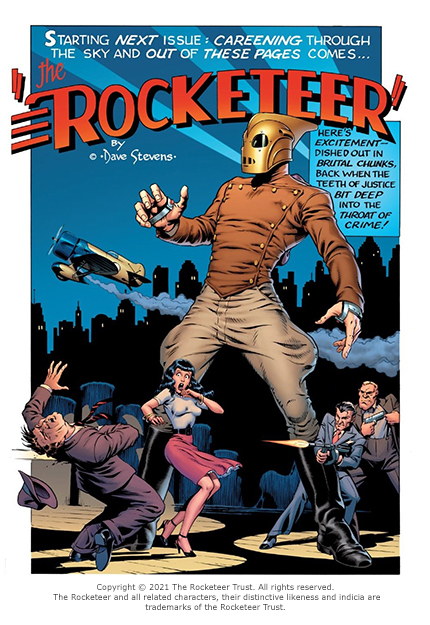
There is no cape and no traditional superhero uniform. Cliff wears a leather flying jacket and an extraordinary Art Deco helmet. Add the rocket pack and the silhouette becomes instantly recognizable.
It may be one of the finest character designs ever created for comics.
The success of The Rocketeer is inseparable from its creator.
Dave Stevens was born in Lynwood, California, in 1955. His professional comics career began in the 1970s when he assisted legendary artist Russ Manning on the Tarzan newspaper strip. Stevens would also work in animation and storyboarding, including work connected with Raiders of the Lost Ark and Michael Jackson’s Thriller.
But The Rocketeer allowed Stevens to combine virtually everything he loved.
Aircraft.
1930s and 1940s popular culture.
Old Hollywood.
Pulp heroes.
Movie serials.
Beautiful women.
Elaborately researched period details.
And adventure.
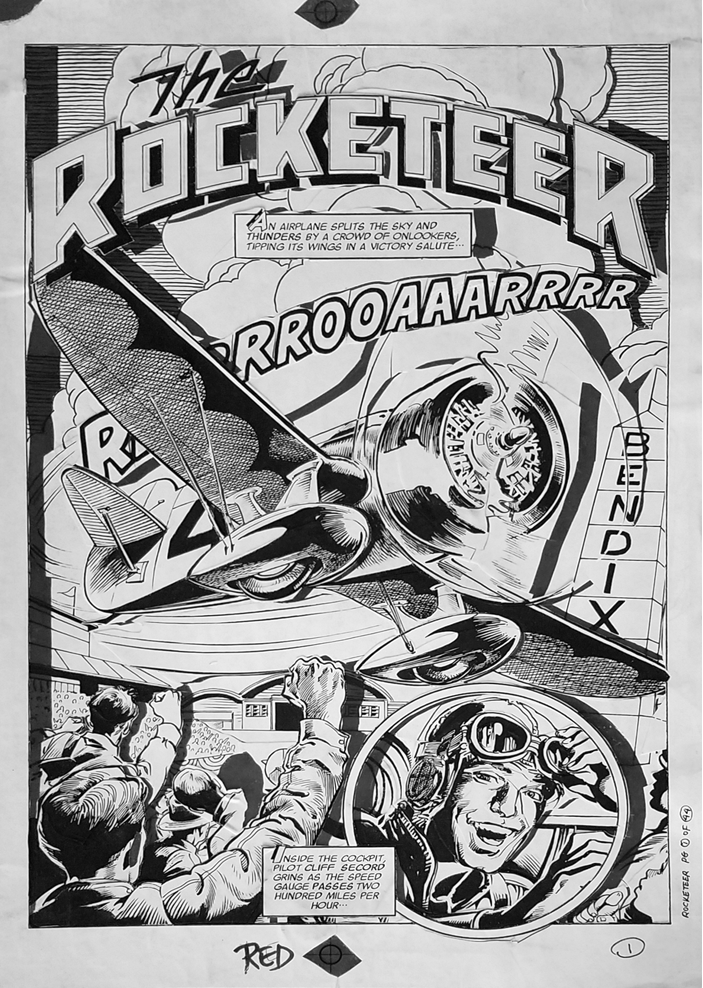
Stevens was a meticulous artist, and that attention can be seen everywhere in the strip. Airplanes look like airplanes. Cars look appropriate to the period. Clothing, architecture, equipment, and machinery create the feeling that the reader has stepped into another era.
Yet the artwork never becomes a dry exercise in historical accuracy.
It moves.
 Characters leap, fly, crash, fight, and race through panels with the kinetic energy of an old Saturday matinee serial.
Then there is Betty, Cliff’s girlfriend.
Betty became almost as closely associated with Dave Stevens as the Rocketeer himself.
Stevens based her appearance heavily on legendary pin-up model Bettie Page, whose photographs from the 1950s had largely disappeared from mainstream popular culture by the time Stevens began drawing the character.
His artwork helped introduce Page’s distinctive look to a new generation of fans and contributed to the renewed interest in her work. Page herself later became friends with Stevens.
Betty also gives the series much of its humor and personality.
Cliff may have the rocket pack, but that doesn’t necessarily mean he has control of his life. His relationship with Betty helps keep the stories grounded in something considerably more human than flying heroes and international conspiracies.
The Rocketeer’s arrival could hardly have been better timed.
The early 1980s saw the American comic-book market beginning to change dramatically.
The emerging direct market allowed publishers to reach specialty comic stores without relying entirely on traditional newsstand distribution. That helped smaller publishers such as Pacific Comics, Eclipse Comics, First Comics, Comico, and others experiment with material that might never have found a home at Marvel or DC.
Creators were also becoming increasingly interested in retaining control of their creations.
The result was one of the most creative periods in American comics.
Readers suddenly had books such as Nexus, American Flagg!, Grendel, Mage, DNAgents, Jon Sable, Freelance, and The Rocketeer sitting beside Marvel and DC titles.
The Rocketeer was especially important because it demonstrated that an independent comic did not have to reject traditional adventure storytelling.
Stevens wasn’t trying to tear superhero comics apart.
He was reminding readers why adventure comics were fun in the first place.
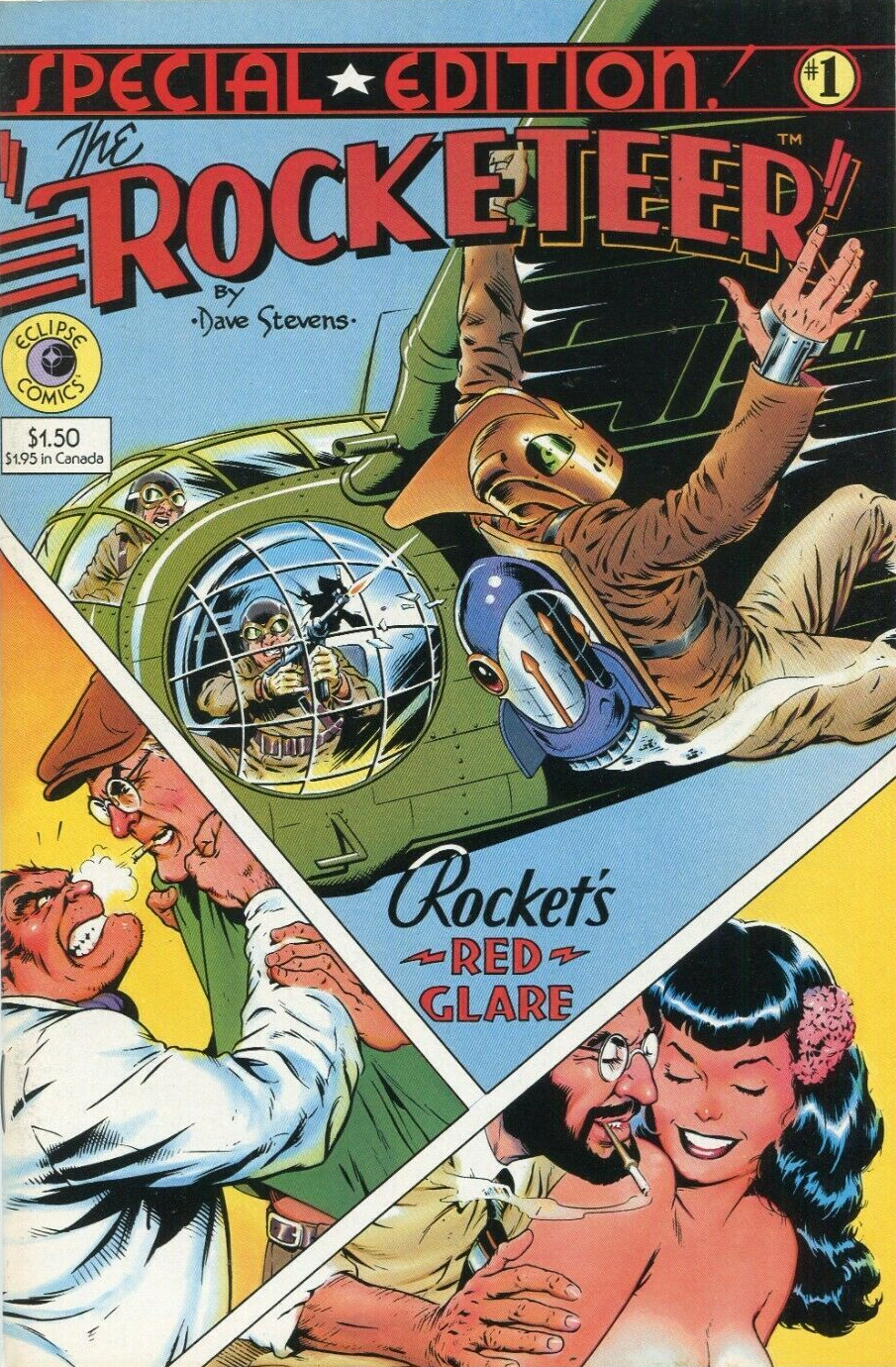 Publishing complications meant that The Rocketeer did not always have the simplest release history.
After its Pacific Comics appearances, the character moved through other publishers, including Eclipse Comics, which released The Rocketeer Special Edition #1. The relatively small body of original Stevens material eventually became something of an advantage.
There aren’t hundreds of Dave Stevens Rocketeer comics.
There is a comparatively compact collection of beautifully crafted stories.
That gives Stevens’ original run an almost storybook quality. It feels less like an endlessly continuing monthly superhero comic and more like one creator’s carefully constructed adventure serial.
It was probably inevitable that Hollywood would notice.
Disney’s The Rocketeer arrived in theaters on June 21, 1991, directed by Joe Johnston. Billy Campbell played Cliff Secord, Jennifer Connelly played Jenny, the film’s version of Betty, Alan Arkin portrayed Peevy, and Timothy Dalton played movie star and secret Nazi agent Neville Sinclair.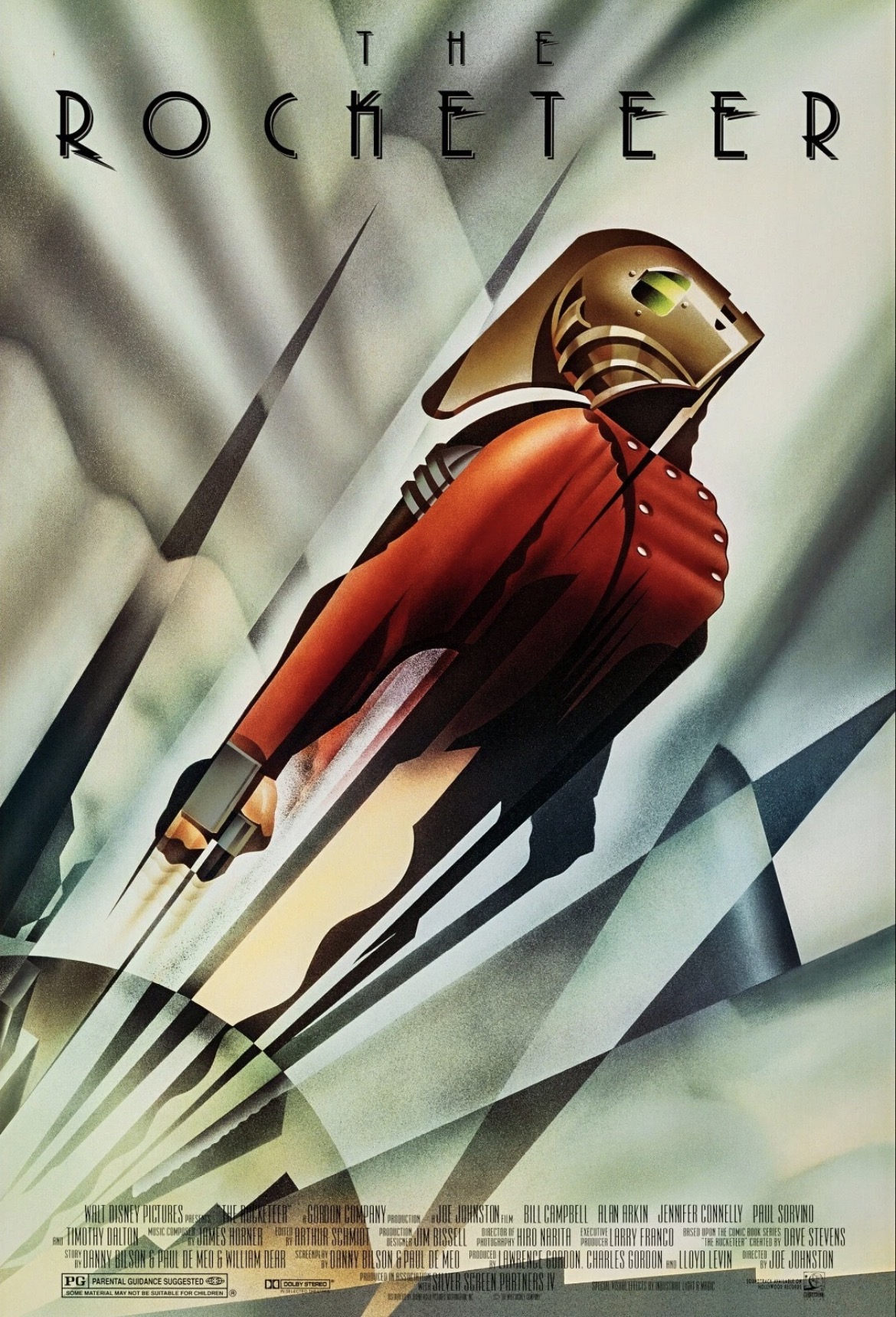
The movie took some liberties with Stevens’ comics but preserved the fundamental appeal of the concept: 1930s Hollywood, aviation, gangsters, Nazi spies, romance, and a guy with a rocket strapped to his back.
The production also brought Stevens’ remarkable helmet design to life.
Although the film was not initially the franchise-launching blockbuster Disney may have hoped for, its reputation grew significantly over the years. Today it is widely regarded as one of the most affectionate comic-book adaptations of its period.
It also arrived years before Hollywood became saturated with superhero movies.
In 1991, a lavish period superhero adventure like The Rocketeer was still unusual.
Looking back, it is easy to focus so much attention on the character that Stevens’ sheer ability as an illustrator can be overlooked.
That would be a mistake.
Dave Stevens was an extraordinary draftsman.
His line work could be elegant without appearing stiff. His characters were expressive. His machinery had weight. His women were glamorous without losing personality. And his pages had the carefully controlled storytelling of an artist who understood both illustration and sequential art.
He also had a reputation for being extremely demanding of his own work.
The downside was that Rocketeer stories appeared slowly.
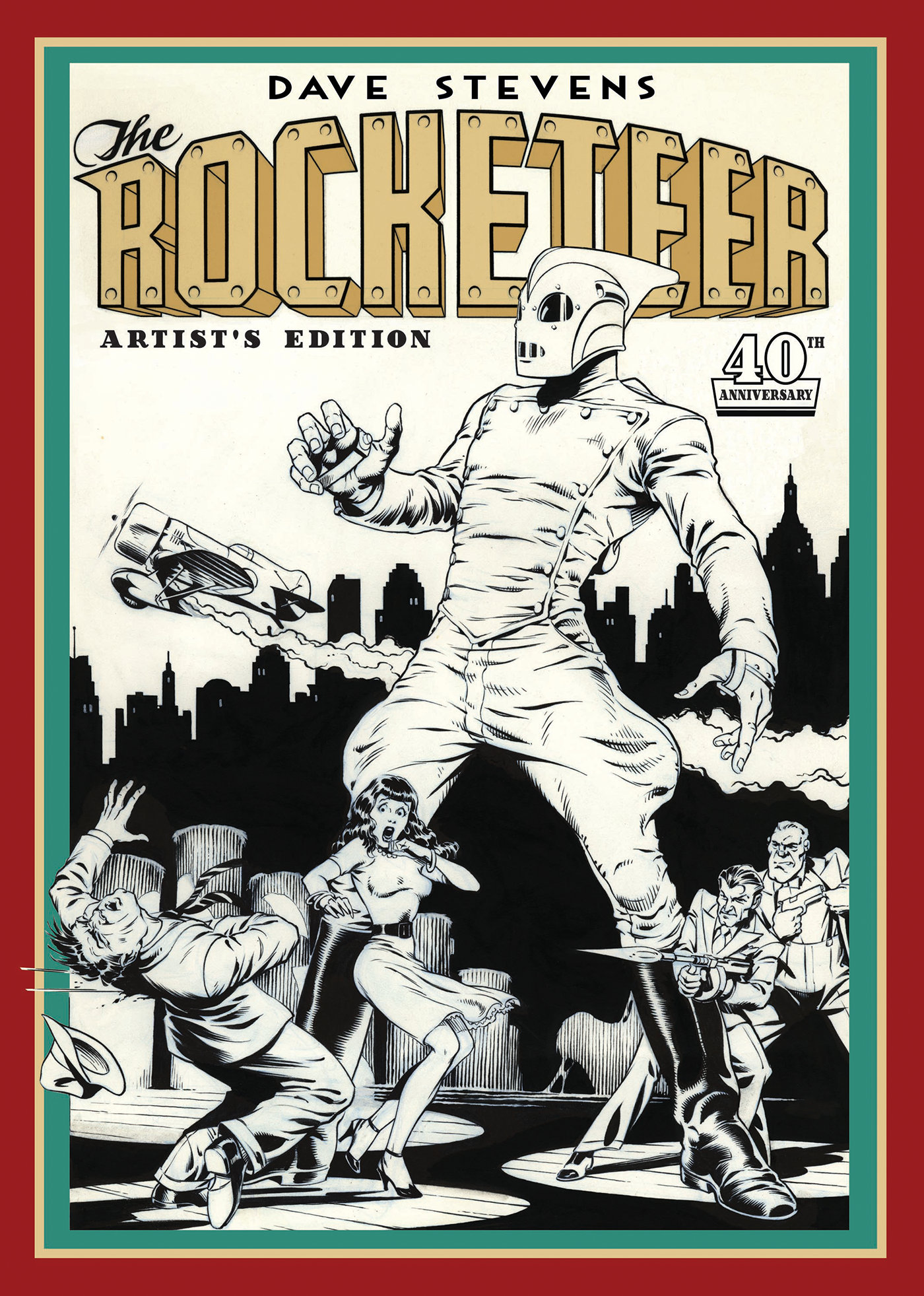
The upside is that the finished pages frequently look like illustrations that could hang on a wall.
That legacy was recognized when IDW Publishing chose Dave Stevens’ The Rocketeer as the inaugural release in its Artist’s Edition line in 2010. The oversized reproduction of Stevens’ original pages went on to win two Eisner Awards.
Few comic books are better suited to that format.
 Dave Stevens died on March 11, 2008, following a battle with hairy cell leukemia. He was only 52 years old.
The Rocketeer, however, continued.
IDW Publishing eventually produced new stories featuring Cliff Secord and his supporting cast, bringing together an impressive group of creators influenced by Stevens’ work.
Creators who have contributed to later Rocketeer stories include Darwyn Cooke, Mark Waid, Chris Samnee, Kurt Busiek, Dave Gibbons, Walter Simonson, Bruce Timm, Stan Sakai, John Byrne, Matt Wagner, and many others.
That list tells you something about Stevens’ influence.
These aren’t creators being assigned another corporate superhero.
They are artists and writers who grew up admiring Dave Stevens and wanted an opportunity to play in his world.
In 2022, IDW celebrated the character’s 40th anniversary with The Rocketeer: The Great Race, written and drawn by Stephen Mooney. New Rocketeer material has continued to appear, demonstrating that the character remains viable decades after Stevens first put Cliff Secord into the sky.
 Perhaps the most remarkable thing about The Rocketeer is how little the basic idea has aged.
There is no elaborate mythology necessary to understand it.
Cliff Secord is a pilot.
He finds a rocket pack.
Bad people want it.
Cliff puts on a helmet and flies.
That is enough.
Everything else comes from the characters, the setting, and the execution.
The Rocketeer also occupies an unusual place in superhero history. He was created in the 1980s but deliberately feels as though he could have existed forty years earlier.
He is simultaneously a modern independent-comics creation and a tribute to an imaginary Golden Age hero who never actually existed.
That illusion may be Dave Stevens’ greatest accomplishment.
The first time you see the Rocketeer, he somehow feels familiar.
You assume there must have been old movie serials, pulp magazines, radio programs, and 1940s comic books featuring him.
There weren’t.
Dave Stevens simply understood the visual language of that era well enough to make us believe there should have been.
 The Rocketeer never needed a massive publishing history.
He didn’t need decades of continuity, endless reboots, or hundreds of villains.
Dave Stevens created something much harder to manufacture.
He created an icon.
The bronze helmet.
The leather jacket.
The rocket pack.
The plume of smoke.
That silhouette remains unmistakable more than four decades after Cliff Secord first blasted off from the pages of an independent comic.
Among the explosion of creator-owned characters that emerged during the 1980s, few have maintained such an enduring visual identity.
The Rocketeer is a superhero.
He is a pulp hero.
He is an aviation hero.
He is a movie-serial hero.
But most importantly, he is a reminder of something comics occasionally forget:
Adventure is supposed to be fun.
And when Dave Stevens put Cliff Secord into the sky, he made it look like the most fun anyone could have.
 THE ROCKETEER
Created by Dave Stevens
First appearance: Starslayer #2 (1982)
Original publisher: Pacific Comics
Later publishers include: Eclipse Comics and IDW Publishing
Alter ego: Cliff Secord
Occupation: Pilot
Equipment: Experimental rocket pack and flight helmet
More than forty years after his debut, The Rocketeer is still cleared for takeoff.
About Author
