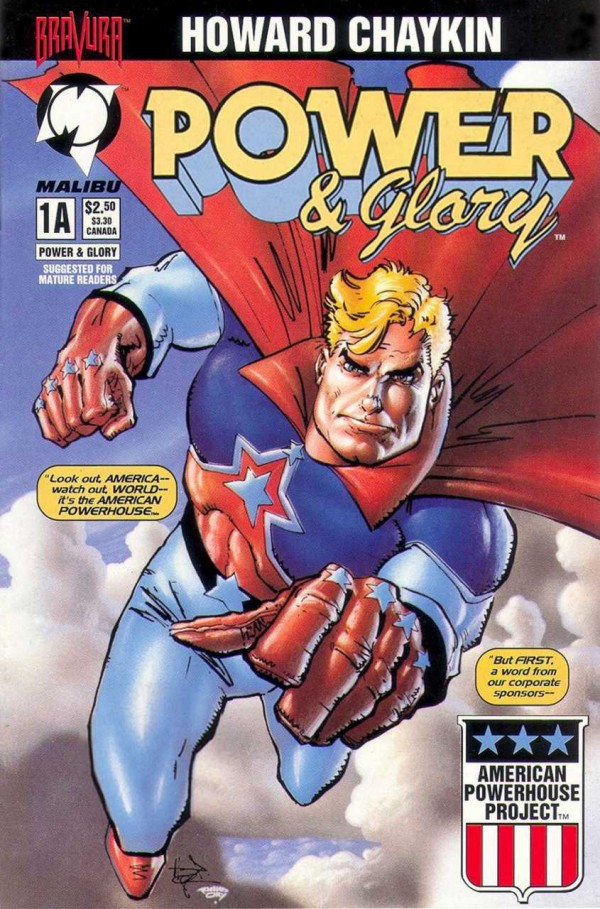
 What happens when the United States government creates the ultimate American superhero, only to discover that the man behind the costume is completely unsuited for the job? That was the unusual premise behind POWER & GLORY, Howard Chaykin’s four-issue limited series published by Malibu Comics in 1994.
In February 1994, Malibu Comics introduced Power & Glory through its Bravura imprint, a publishing line designed to showcase creator-owned projects by established comic book professionals. Written and illustrated by Howard Chaykin, the series took familiar superhero conventions and turned them into a biting satire of government bureaucracy, celebrity culture, and the American obsession with image over substance.
The story centers on a secret government project intended to create the nation’s first genuine superhero. Rather than waiting for someone to develop extraordinary powers naturally, the government decides to manufacture its own champion through scientific experimentation.
The project selects Allan Powell, a government agent who undergoes a transformation that gives him remarkable superhuman abilities.
Powell emerges as A-Pex, the American Powerhouse, a costumed symbol of American strength and superiority. He possesses the kind of extraordinary physical abilities that would ordinarily make him the central figure in a conventional superhero adventure.
Despite his impressive powers and heroic appearance, Powell is neither particularly courageous nor especially competent when confronted with genuine danger.
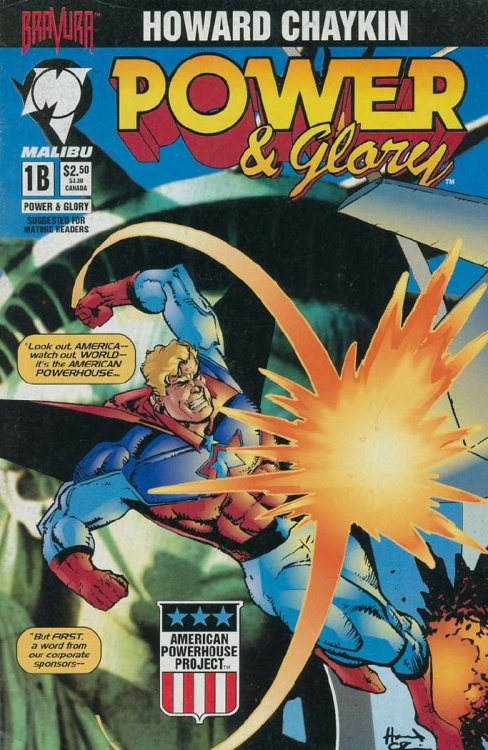 The government’s carefully constructed superhero looks magnificent in photographs and promotional appearances, but when it comes to actually fighting criminals and protecting innocent people, he leaves a great deal to be desired.
Gorski is a tough, resourceful professional assigned to train Powell and prepare him for his responsibilities as America’s first superhero. Unlike Powell, Gorski understands violence, danger, and the practical realities of confronting dangerous opponents.
As the series progresses, Gorski becomes considerably more than a trainer.
He finds himself performing the dangerous work that Powell cannot handle, effectively becoming the real hero behind the American Powerhouse’s carefully manufactured public image.
This reversal of the traditional superhero formula forms the foundation of Chaykin’s story. The man with the extraordinary powers is largely incapable of using them effectively, while the man without those advantages demonstrates the qualities that actually make someone heroic.
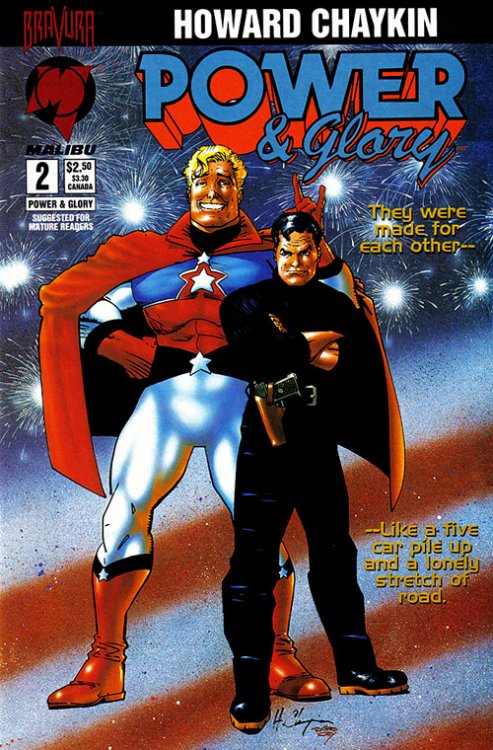 The arrangement also exposes the questionable priorities of the government officials responsible for the program. Their primary concern is not necessarily whether their superhero can save lives, but whether he can convince the public that America possesses the world’s greatest champion.
The writer and artist had already established a reputation for challenging conventional ideas about heroism, politics, and popular culture. His groundbreaking American Flagg! series, published by First Comics beginning in 1983, combined science fiction, political satire, media manipulation, and social commentary into one of the most distinctive comic books of its era.
Chaykin had also worked on such recognizable properties as Batman and The Shadow, demonstrating an ability to reinterpret established characters through his own distinctive storytelling approach.
The series examined the difference between actual ability and public perception, presenting a world where image management could be more important than genuine accomplishments.
It also explored the idea that extraordinary powers do not automatically make someone extraordinary as a person.
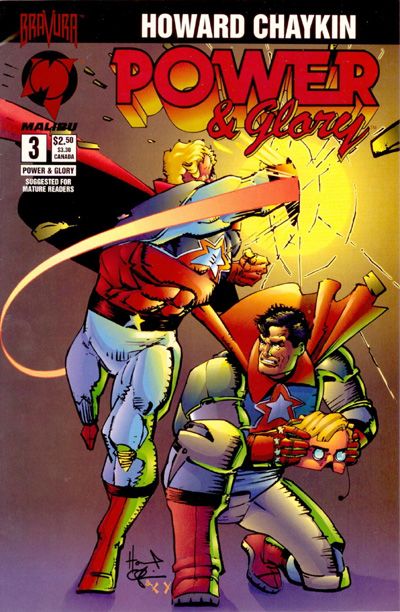 The concept was especially appropriate for the comic book industry of the early 1990s. At the time, superheroes were increasingly depicted with exaggerated physiques, enormous weapons, and elaborate costumes. Chaykin used the same visual vocabulary while questioning whether the qualities celebrated by superhero comics had anything to do with genuine courage or responsibility.
Malibu Comics was enjoying considerable attention during the early 1990s, particularly following the introduction of its Ultraverse superhero line in 1993.
Rather than concentrating on a shared universe of interconnected characters, Bravura emphasized individual creative visions. Established creators were given opportunities to develop their own concepts, often with greater creative freedom than they might receive while working on traditional corporate-owned superheroes.
Alongside Chaykin, the imprint featured projects associated with creators such as Jim Starlin, Walter Simonson, Steven Grant, and Gil Kane.
Before Power & Glory #1 even reached comic book stores, readers received an early look at the concept in Bravura #0, which included a five-page preview written and illustrated by Chaykin.
 That preview introduced the commercial side of the superhero project, with television personality Malcolm LeStrange promoting the PLEX/BIOMATRIX program and encouraging potential participants to apply for superhuman enhancement.
The preview established an important element of the series. Creating a superhero was not simply a scientific or military undertaking. It was also an exercise in advertising, publicity, and selling an image to the public.
The first issue of Power & Glory arrived in February 1994 and introduced the government program and the selection of Powell as its chosen candidate.
The second issue continued the story as Michael Gorski began training the newly empowered Powell.
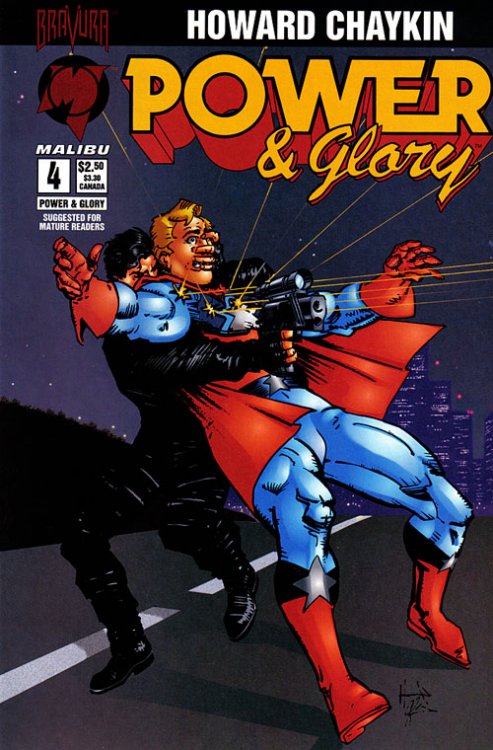
By the third issue, the central arrangement had become established, with Gorski effectively serving as the American Powerhouse’s stuntman, handling the dangerous assignments while Powell enjoyed the recognition.
The fourth and final issue appeared in May 1994, completing the original limited series.
The artwork was handled by Chaykin himself, with coloring by Lydia Nomura and the Malibu coloring team known as the ‘Bu Tones, and lettering by Ken Bruzenak.
 The series also participated in Malibu’s Bravura Gold Stamp promotional program, which encouraged readers to collect special stamps included with participating comic books and redeem them for premium editions.
Malibu collected the four-issue story in a 132-page paperback edition in 1994, making the complete adventure available beyond its original individual issues.
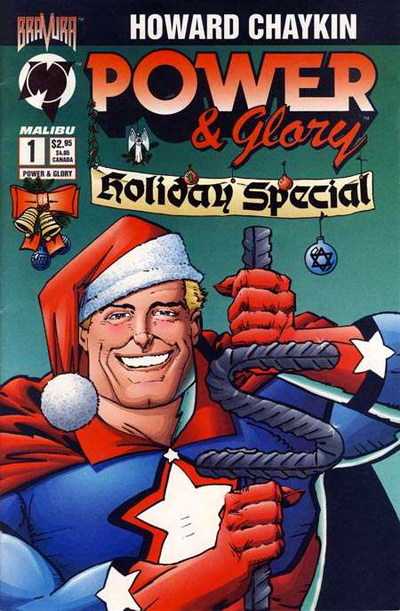
The property did not disappear immediately after the miniseries concluded. Malibu also released a Power & Glory Holiday Special in December 1994.
In 1994, Marvel Comics acquired Malibu Comics, bringing the publisher’s various properties and publishing operations under Marvel’s control. Although Malibu’s Ultraverse would continue for a time, the company’s independent publishing identity gradually disappeared.
As a result, Bravura and its creator-driven experiments became part of a relatively brief but interesting chapter in the history of 1990s comic books.
Unlike Malibu’s Ultraverse titles, Power & Glory was a creator-owned Howard Chaykin property rather than part of the interconnected superhero universe.
In 2009, Dynamite Entertainment published a new collected edition of Power & Glory, introducing Chaykin’s superhero satire to another generation of readers.
The premise also anticipated continuing debates about celebrity culture, political branding, and the ability of public relations campaigns to transform carefully selected personalities into national icons.
Howard Chaykin was never particularly interested in presenting superheroes as flawless symbols of virtue. His characters were frequently complicated, morally ambiguous, and shaped by the political and social institutions surrounding them.
About Author
