
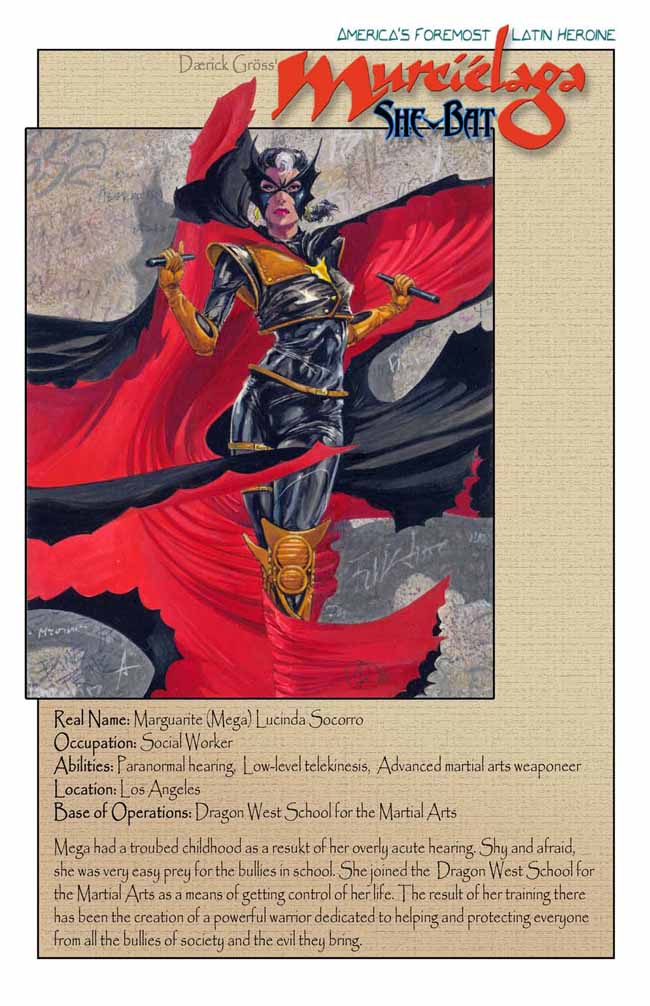
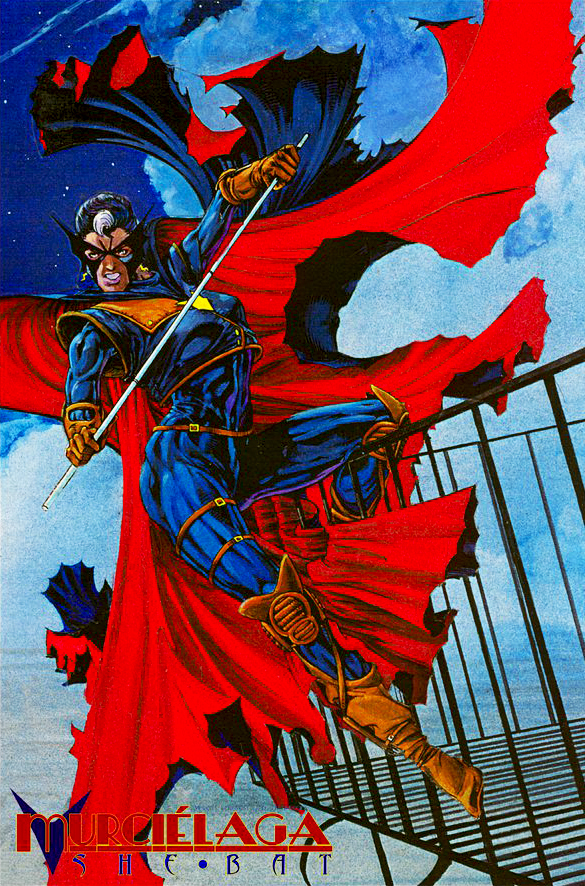
 Long before independent comics made diversity a regular part of the conversation, Murciélaga She-Bat was already flying over the streets of Los Angeles.
Created by the late Dærick Gröss Sr., Murciélaga made her first appearance in RoboWarriors #3 in June 1988. She was originally conceived as a supporting character, but it did not take long for the Latina martial artist to develop a following and begin starring in stories of her own.
Her civilian identity is Margarita “Mega” Lucinda del Socorro, a Los Angeles native whose unusual abilities made growing up difficult. Mega possesses extraordinarily sensitive hearing, an ability that was as much a burden as a gift during her childhood. She also possesses a limited degree of telekinesis. Rather than giving her the enormous power set common to many superheroes, Gröss built Murciélaga around martial arts, discipline and a comparatively modest collection of superhuman abilities.
That distinction was intentional.
 Gröss later explained that Murciélaga was partly inspired by his affection for the original Batwoman, but he deliberately designed his heroine to be substantially different from the Batman family. Murciélaga was Latina, based in Los Angeles, possessed actual superhuman abilities and relied heavily on martial arts rather than gadgets. Even her fear of heights separated her from the traditional image of the fearless rooftop vigilante.
The Spanish word murciélaga means “bat,” making the character’s full superhero name essentially “Bat She-Bat.” Studio G generally treats Murciélaga and She-Bat as interchangeable names, although Murciélaga She-Bat became the formal designation most often associated with the character.
Murciélaga emerged from a somewhat unusual corner of the comic-book industry.
During the late 1980s, CFW Enterprises published magazines aimed at martial-arts readers that included comic-book stories. It was there that Gröss developed Murciélaga and several characters connected with what would become the Reiki Warriors.
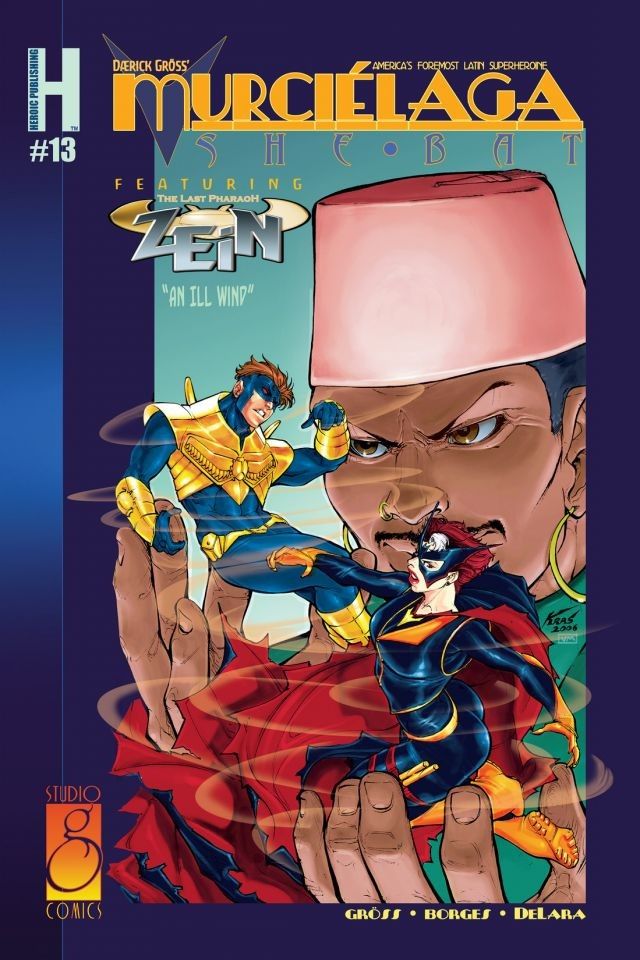 After CFW’s publishing efforts ended, Murciélaga went dormant for a period while Gröss worked on other projects, including The Vampire Lestat for Innovation Comics. She returned when Heroic Publishing picked up the character in the early 1990s.
Murciélaga She-Bat #1 appeared with a January 1993 cover date. The issue reintroduced the character by reprinting earlier material, while the second issue presented a new crossover with Heroic Publishing’s Tigress. That story also established Murciélaga as existing alongside characters in Heroic’s superhero universe.
It was the beginning of a publishing history that would prove nearly as adventurous as the stories themselves.
One of the most important chapters in Murciélaga’s history arrived with issue #3.
Following the Heroic issues, the series shifted publishers, with Murciélaga She-Bat #3 appearing with a July 1993 cover date. The story, “Blood Sisters,” was written by Martin Powell with pencils by John Statema.
 The tale became one of the defining Murciélaga stories. It explored elements of her origin, including the source of the distinctive white streak in her hair and her telekinetic abilities, while providing greater depth to her personality and motivations. Studio G itself describes the story as a pivotal chapter in the character’s development.
Decades later, Heroic Publishing returned to “Blood Sisters,” presenting the material in color as part of Murciélaga She-Bat #16.
Murciélaga’s publication history was never simple.
The character moved between publishers, appeared through Gröss’ Studio G, returned to Heroic Publishing and survived periods when new material became scarce. Studio G published additional issues after the early Heroic run, while later Heroic editions brought older stories back into circulation. The numbering itself reflects that complicated history, jumping between material published by Heroic and Studio G.
Then came a much more serious setback.
 In 2001, a fire destroyed Gröss’ studio while several projects were in production. The disaster interrupted plans for Murciélaga and contributed to the cancellation or delay of several projects. The character nevertheless remained visible through convention appearances, online promotion, guest appearances and eventually renewed cooperation with Heroic Publishing.
That persistence has become part of the character’s story.
Murciélaga survived publishers closing, changing comic-book markets, production problems and a devastating studio fire. For an independent character created in 1988, simply remaining recognizable and in circulation for decades is an achievement.
At first glance, the name and scalloped cape inevitably invite comparisons with Batman, Batgirl and Batwoman.
But Murciélaga developed along a very different path.
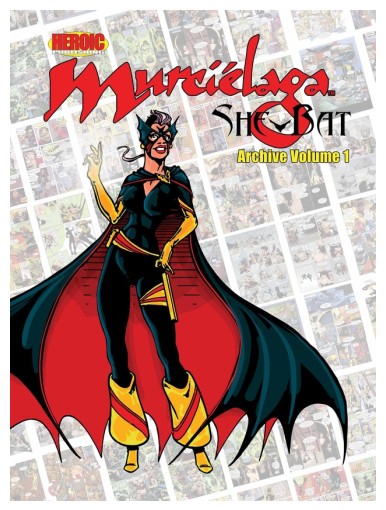 Her stories combine superhero adventure with martial arts, supernatural elements and the experiences of a Latina heroine living in Los Angeles. Her enhanced hearing is not simply another convenient superpower. In her background, that sensitivity contributed to the isolation and confusion she experienced while growing up.
She eventually found greater confidence through friendship and martial-arts training before becoming associated with the Reiki Warriors.
That helped give Murciélaga something many independent heroes of the period lacked: an identity that existed beyond the costume.
She was not simply designed to imitate an established superhero archetype. Gröss was consciously attempting to create a female hero who could stand on her own at a time when he felt too many women in superhero comics were either sexualized or pushed into secondary roles.
Murciélaga cannot be separated from the career of Dærick Gröss Sr.
Beyond She-Bat, Gröss worked for publishers including Innovation and Marvel and contributed to projects ranging from The Vampire Lestat to Excalibur. Yet Murciélaga remained his signature creation and one he continued returning to throughout his career.
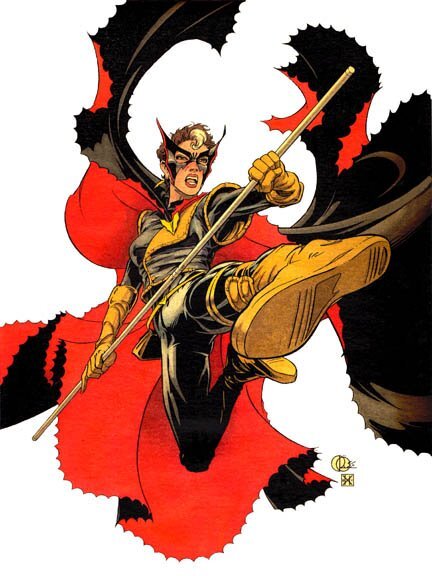 Gröss died in late 2023, closing the first major era of the character’s history.
Studio G has since passed into the hands of Dærick W. Gröss, with the company describing the earlier material as the first volume of Murciélaga’s story rather than something to be discarded. Studio G has announced plans to preserve that history while developing a new incarnation of the character for a planned 40th-anniversary relaunch in 2028.
The company has also worked with Heroic Publishing and Critical Blast on plans to collect the Dærick Gröss Sr. era of Murciélaga stories.
Murciélaga She-Bat is an example of what makes independent comics fascinating.
Her career was never supported by decades of uninterrupted monthly publication or the promotional machinery of a major publisher. Instead, she survived because creators and readers continued to care about her.
 She moved from martial-arts magazines to superhero comics, from Heroic Publishing to Studio G and back again. Stories were lost, delayed, reprinted and rediscovered. Publishers disappeared. A studio burned. The comic-book business changed around her.
Yet Murciélaga remained.
Nearly four decades after Dærick Gröss Sr. first put her on the page, Murciélaga She-Bat remains one of independent comics’ enduring Latina superheroes, with her original adventures being preserved and another chapter waiting in the wings.
For a heroine whose career began as a supporting character in a martial-arts magazine, that may be her greatest victory of all.
About Author
