Before Image Comics, before Savage Dragon, and before Youngblood, there was MEGATON!
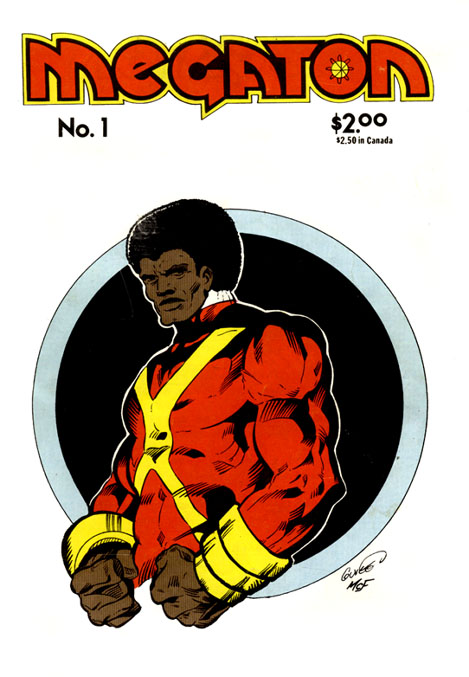 In November 1983, writer and editor Gary Carlson introduced Megaton, a black-and-white superhero anthology that would become one of the most historically significant independent comic books of the 1980s. Although the series lasted only eight issues, published between 1983 and 1987, its influence would extend far beyond its modest beginnings.
Megaton arrived during an exciting period for independent comics. Creators were exploring opportunities outside Marvel and DC, experimenting with new characters and publishing formats. Carlson’s anthology offered a showcase for original superheroes and talented artists who were just beginning their professional careers.
The first issue was an ambitious 64-page publication featuring several different characters and creative teams. With a cover by Jackson “Butch” Guice, Megaton #1 introduced readers to a colorful collection of heroes, including Megaton, Vanguard, Berzerker, Ethrian, and Ultragirl.
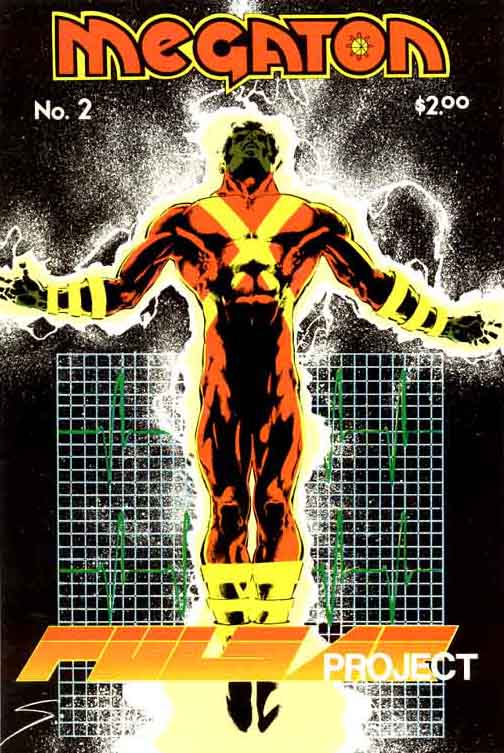
The title character, Megaton, was Matthew Scott, a former child celebrity born with two hearts. His unusual physiology made him a suitable candidate for an experimental super-soldier program called Project Pulsar. The procedure enhanced his strength, stamina, reflexes, and senses, transforming him into a superhero.
 Megaton was not the only attraction. Erik Larsen contributed adventures featuring Vanguard, an extraterrestrial hero whose adventures would eventually become connected to Larsen’s Savage Dragon. Frank Fosco’s Ethrian, the powerful Berzerker, and other original creations helped establish the anthology as a shared showcase of independent superhero storytelling.
Perhaps the most remarkable aspect of Megaton was its collection of emerging artistic talent. Erik Larsen, Rob Liefeld, Angel Medina, Gordon Purcell, Frank Fosco, Clarke Hawbaker, and others contributed early work to the series. Several would subsequently establish successful careers at major comic book publishers.
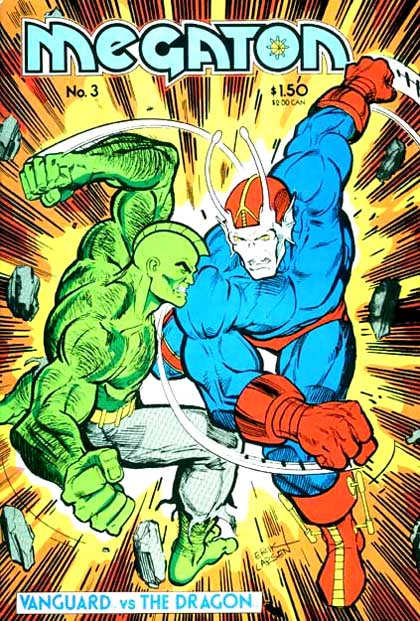
One of the most historically important developments occurred in Megaton #2, published in October 1985, when Erik Larsen included an early appearance of the Dragon in a Vanguard story. The character received a more substantial appearance in Megaton #3, published in February 1986. Years later, Larsen would transform the character into Savage Dragon, one of the flagship titles of Image Comics.
Rob Liefeld also contributed to the anthology, including artwork featuring Megaton and Ultragirl in the eighth issue. That same final issue, published in August 1987, contained promotional artwork for Liefeld’s planned Youngblood project. The team had already appeared in other Megaton-related material, years before Youngblood became the first comic book released by Image Comics in 1992.
 These connections would eventually earn Gary Carlson recognition as an important figure in the development of creator-owned superhero comics. Liefeld even referred to Carlson as the “Grandfather of Image Comics.”
Despite its creative accomplishments, Megaton faced significant publishing challenges. Producing a 64-page anthology with numerous contributors made maintaining a regular schedule difficult. Nearly two years separated the first and second issues, and the series never established a consistent release schedule.
By 1987, the independent black-and-white comics market had become increasingly crowded. Plans were developed to expand the characters into a line of full-color superhero comics, but financial difficulties and disappointing sales prevented the expansion from succeeding. Megaton #8, published in August 1987, became the final issue of the original series.
Although the anthology disappeared from comic shop shelves, its characters and creators did not. Larsen, Liefeld, and several other contributors went on to greater success, while characters such as Vanguard and Savage Dragon found new lives in later publications.
For decades, the original eight issues remained an important piece of comic book history, particularly among collectors interested in the early careers of Image Comics creators.
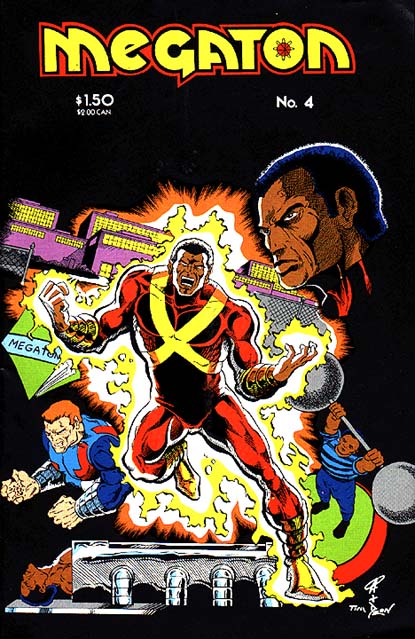 In 2023, Image Comics released Megaton Archives, a 456-page collection celebrating the series’ 40th anniversary. For the first time, readers could experience all eight original issues together in chronological order, reproduced from the original artwork and printing materials. The collection also included early advertisements, unpublished artwork, preliminary character designs, and commentary from Gary Carlson.
Today, Megaton stands as a reminder that some of the most important developments in comic book history began in small, independently published titles. Its creators were experimenting with characters, artistic styles, and publishing opportunities years before many became household names among comic book fans.
The roots of Image Comics can be traced back to a little black-and-white superhero anthology called Megaton. It published only eight issues, but those eight issues helped introduce characters and creators who would change the comic book industry forever.
About Author
