
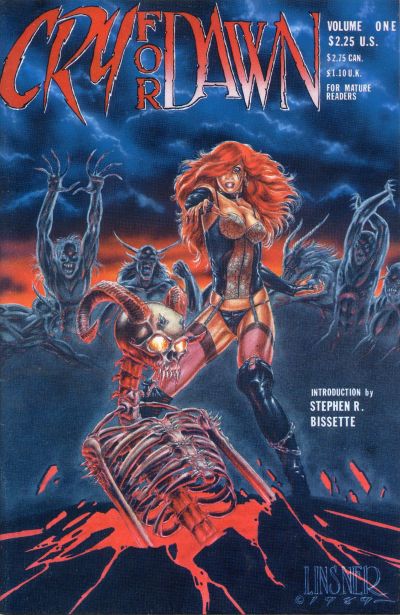
 In the late 1980s, independent comic books were exploring territory that mainstream publishers rarely dared to enter. Horror, violence, sexuality, and psychological terror were finding new audiences, and small publishers were proving that comics did not have to follow traditional superhero formulas. Among the titles that emerged from this movement was CRY FOR DAWN, a groundbreaking horror anthology that introduced one of the most recognizable female characters in independent comic book history.
Created by writer Joseph M. Monks and artist Joseph Michael Linsner, Cry for Dawn debuted in 1989 through their own publishing company, Cry for Dawn Productions. The series ran for nine issues through 1992, developing a devoted following and establishing Linsner as one of independent comics’ most distinctive artists.
The origins of Cry for Dawn can be traced to the longtime friendship between Monks and Linsner. The two had known each other since childhood and shared an interest in comics, horror, and storytelling.
During the 1980s, independent publishers were demonstrating that creators could reach audiences without working for Marvel or DC Comics. Inspired by that growing movement, Monks and Linsner decided to publish their own horror anthology.
Linsner later recalled discovering how affordable it had become to print black-and-white comic books. Rather than wait for an established publisher to give them an opportunity, the two creators took the independent route and launched Cry for Dawn themselves.
Their determination helped turn a modest self-publishing venture into a cult favorite.
Unlike traditional superhero comics, Cry for Dawn was an anthology featuring disturbing short stories aimed at mature readers.
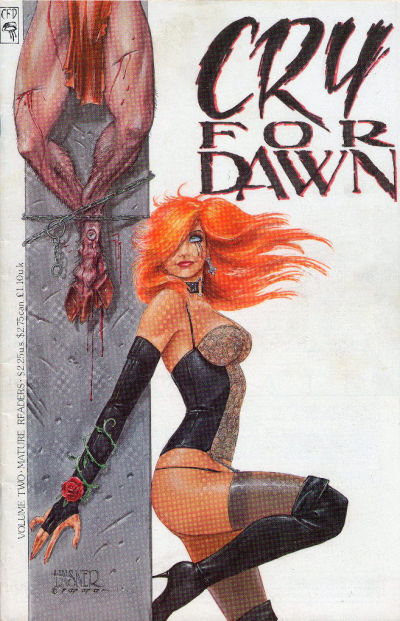 The series drew inspiration from classic horror comics while embracing a darker, more contemporary approach. Its stories explored death, madness, cruelty, obsession, and the supernatural. The emphasis was not necessarily on heroes defeating villains, but on the unsettling consequences of human behavior.
Monks contributed much of the writing, while Linsner supplied artwork that moved between stark black-and-white storytelling and more elaborate illustrations. Additional creators participated as the series developed.
The result was a comic that combined the unsettling atmosphere of classic EC horror with the creative freedom of the independent publishing movement.
Cry for Dawn also arrived during the same period as influential independent horror titles such as The Crow and Faust: Love of the Damned. Together, these comics demonstrated that there was a growing market for darker, adult-oriented comic book storytelling.
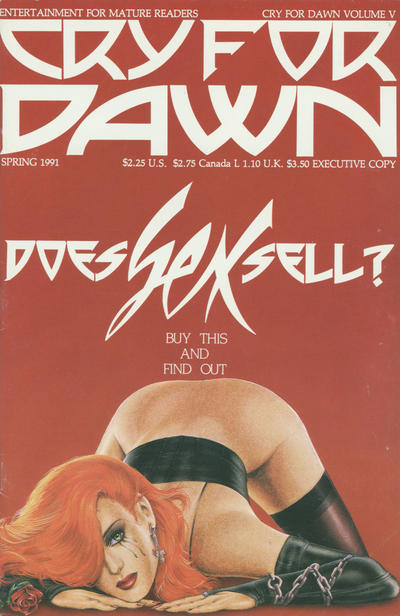
Although Cry for Dawn was a horror anthology, its most enduring contribution to comic book history was the introduction of Dawn.
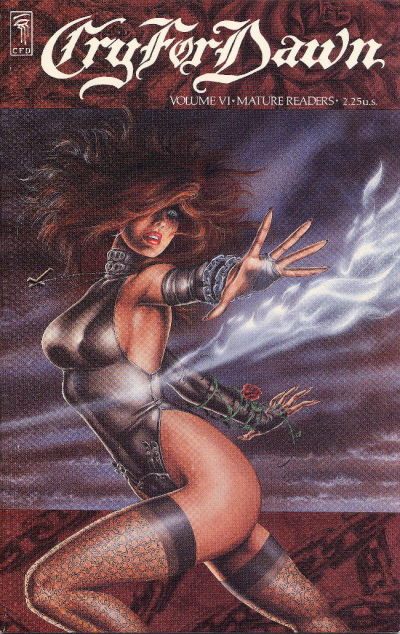
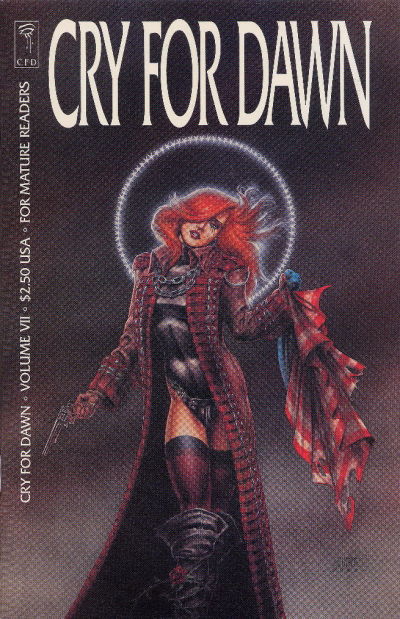
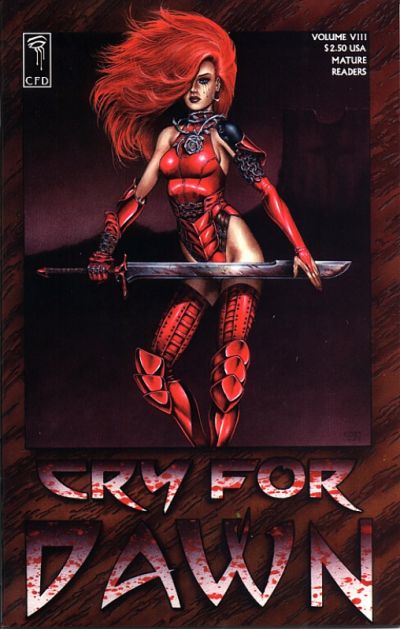
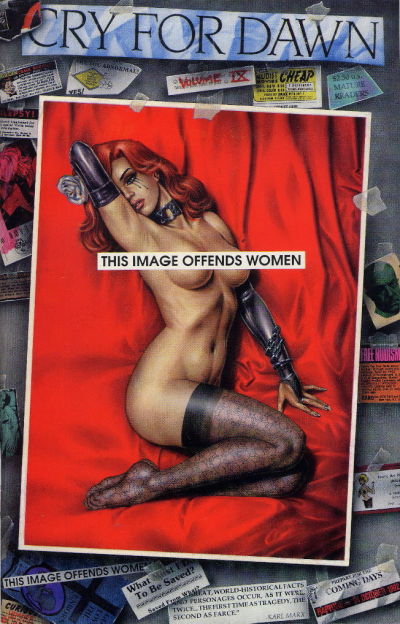
With her flowing red hair, pale complexion, provocative gothic clothing, and striking facial markings, Dawn immediately stood apart from conventional comic book heroines.
She was mysterious, alluring, and surrounded by imagery associated with death, religion, and the supernatural.
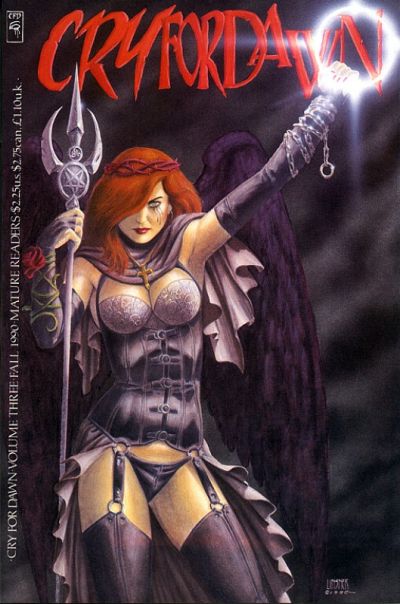 Initially, Dawn functioned primarily as a host and visual symbol for the anthology rather than the central protagonist of a continuing adventure. Her presence on the covers gave the series a recognizable identity, even when the stories inside were unrelated.
Linsner’s artwork transformed Dawn into something much larger than an anthology hostess.
She eventually developed into a supernatural figure associated with birth, rebirth, life, and death. Rather than functioning simply as a costumed adventurer, Dawn embodied mythology, spirituality, and the eternal cycles of existence.
Her distinctive appearance became inseparable from Linsner’s artistic identity.
One of the greatest strengths of Cry for Dawn was Linsner’s artwork.
His illustrations combined realistic anatomy, elaborate gothic costumes, rich shading, and sensual imagery. His covers frequently resembled paintings or fantasy illustrations rather than conventional comic book covers.
Linsner possessed a particular talent for creating striking female figures without losing the dark atmosphere surrounding them. Dawn could appear beautiful and seductive in one illustration, then dangerous or otherworldly in the next.
Religious symbols, skulls, roses, elaborate jewelry, and dramatic lighting became recurring visual elements.
His growing command of painted illustration helped make the comic increasingly recognizable on store shelves.
At a time when many independent publishers struggled to distinguish their books from competing titles, Linsner’s covers gave Cry for Dawn an unmistakable visual identity.
Although the Bad Girl comic book boom is primarily associated with the 1990s, Cry for Dawn was one of the titles that helped establish its foundations.
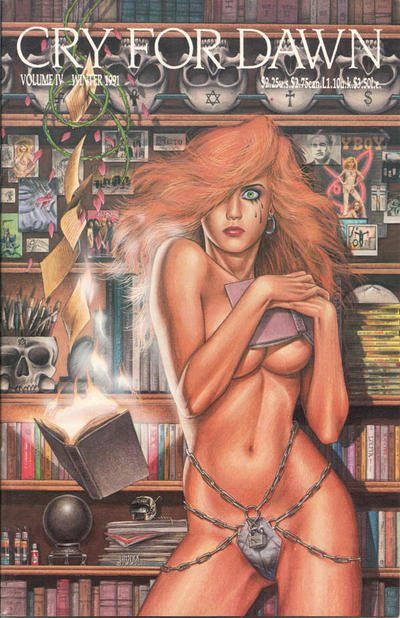 Earlier characters such as Vampirella and Red Sonja had already demonstrated the popularity of powerful, visually provocative female characters. Dawn took that tradition in a distinctly gothic direction.
She was neither a conventional superhero nor merely a horror character. She occupied a space between fantasy, mythology, supernatural storytelling, and pinup illustration.
When characters such as Lady Death, Razor, Shi, and Witchblade became prominent during the 1990s, the market had already been introduced to the striking visual appeal of Dawn.
The success and cult reputation of Cry for Dawn demonstrated how a memorable character could become the defining attraction of an independent comic book.
Dawn was more than another attractive face on a cover. She helped establish an aesthetic that became increasingly influential throughout the following decade.
By 1992, Cry for Dawn had completed its nine-issue run.
Cry for Dawn Productions continued operating for a time, but Monks and Linsner eventually went their separate ways in 1993.
Their partnership had produced an influential independent horror comic, but the two creators would pursue different creative directions.
Monks continued working in independent horror publishing, establishing CFD Productions, also known as CreativeForce Designs, and developing titles including NightCry and Tales of the Dead.
Linsner retained Dawn and continued developing her mythology, eventually bringing the character to Sirius Entertainment.
 Although Cry for Dawn had ended, the character it introduced was only beginning her journey.
During the 1990s, Linsner developed Dawn into the central figure of her own comics. Through Sirius Entertainment, she appeared in projects that expanded her identity beyond her original role as a horror anthology hostess.
Among the most important were Dawn: Lucifer’s Halo and Dawn: Return of the Goddess.
These stories further explored Dawn’s supernatural identity, mythology, and relationship with humanity.
Linsner continued examining themes of love, faith, temptation, death, and rebirth while creating increasingly elaborate fantasy artwork.
Dawn subsequently appeared in additional publications, including projects associated with Image Comics, proving that the character could endure long after the original anthology had disappeared from comic shop shelves.
More than three decades after its debut, Cry for Dawn remains an important title in the history of independent horror comics.
 Its significance extends beyond the introduction of a popular female character.
The series demonstrated the creative opportunities available to independent publishers at a time when the comic book industry was undergoing major changes.
It provided an outlet for mature horror storytelling, helped establish Joseph Michael Linsner’s reputation as an artist, and introduced an iconic character who would become closely associated with the Bad Girl comics movement.
For collectors, the original issues represent a fascinating period of independent comic book publishing, when ambitious creators could build audiences through distinctive storytelling, memorable artwork, and a willingness to challenge established conventions.
For readers discovering the series today, Cry for Dawn offers a look at the darker side of the independent comics revolution.
And for fans of Dawn, it represents the beginning of a character whose mythology would grow far beyond her humble origins as a horror anthology hostess.
Cry for Dawn was more than a horror comic. It was an early chapter in the transformation of independent comics, and it helped introduce a new kind of female icon to the industry.
About Author
