 Long before independent comic books became a major force in the industry, Bill Black was keeping the spirit of classic superhero comics alive through his own publishing efforts. While today’s readers may recognize Black as the driving force behind AC Comics and the long-running Femforce, an earlier publication helped bridge the gap between his fan-publishing beginnings and his emergence as an independent comic book publisher.
That publication was Bill Black’s Fun Comics, an ambitious anthology that combined original superheroes, Golden Age nostalgia, historical articles, and the work of talented comic book creators.
At a time when mainstream comics were beginning to embrace darker, more complicated storytelling, Black continued to celebrate the colorful heroes, imaginative adventures, and straightforward excitement that had made him a comic book fan in the first place.
For Black, comic books were supposed to be fun, and he wasn’t about to let anyone forget it.
Bill Black’s publishing story began in 1969 when he founded Paragon Publications, producing independently published magazines devoted to superheroes, adventure, and comic book history.
 Black had already entered the professional comics industry, illustrating horror stories for Warren Publishing’s Creepy and Eerie. However, his own publishing efforts gave him something the larger companies couldn’t always provide: complete creative freedom.
Throughout the 1970s, Paragon introduced readers to original characters such as Captain Paragon, Scarlet Scorpion, Tara, Synn, and Ms. Victory. These early publications were produced on limited budgets, frequently in black and white, and often relied heavily on Black himself to write, draw, ink, and edit the material.
The publications reflected his affection for the Golden Age and Silver Age of comics, as well as his interest in preserving forgotten characters and stories.
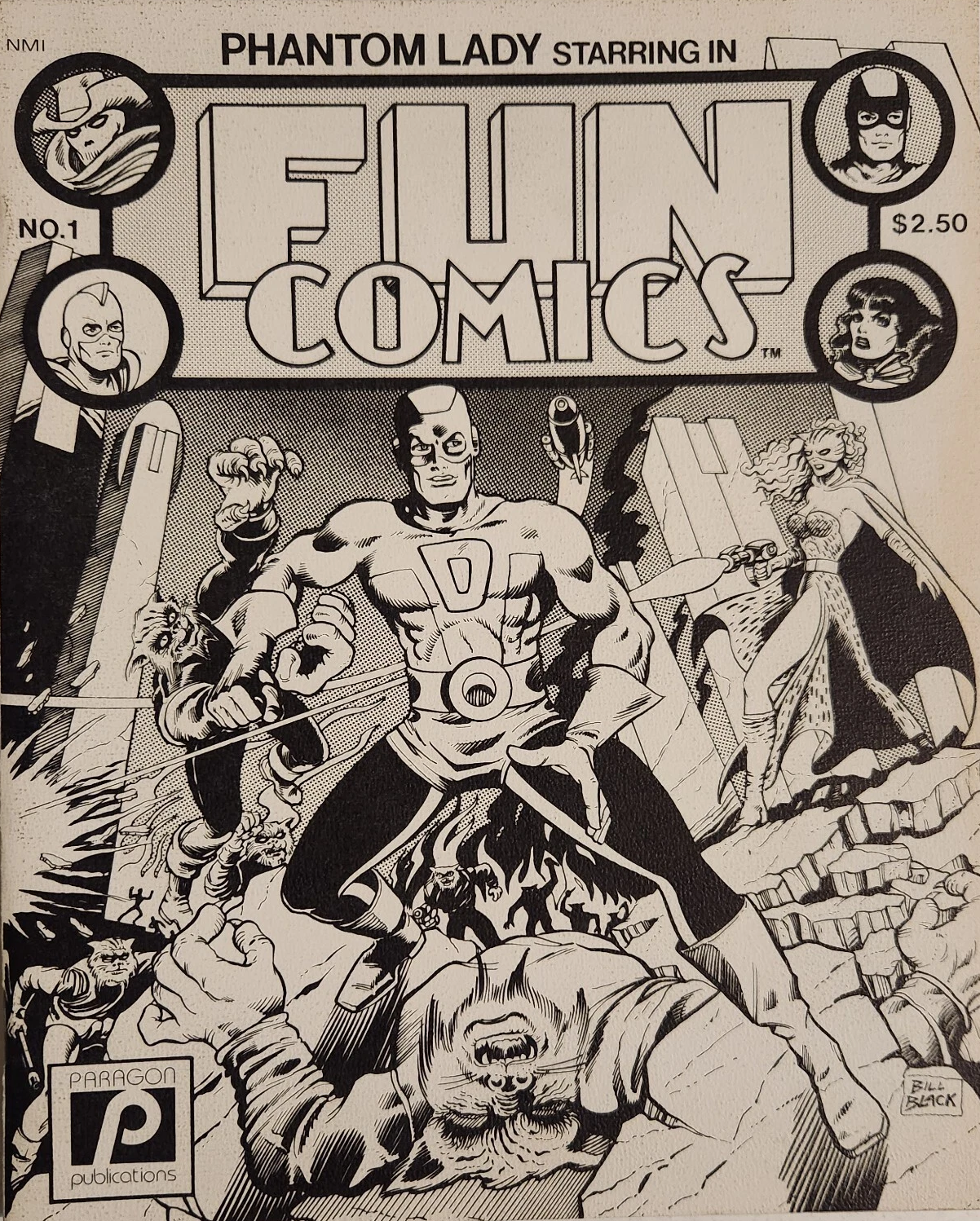
By 1980, Black brought that enthusiasm into a new anthology simply titled Fun Comics. The publication would eventually become Bill Black’s Fun Comics, carrying his name prominently on the cover.
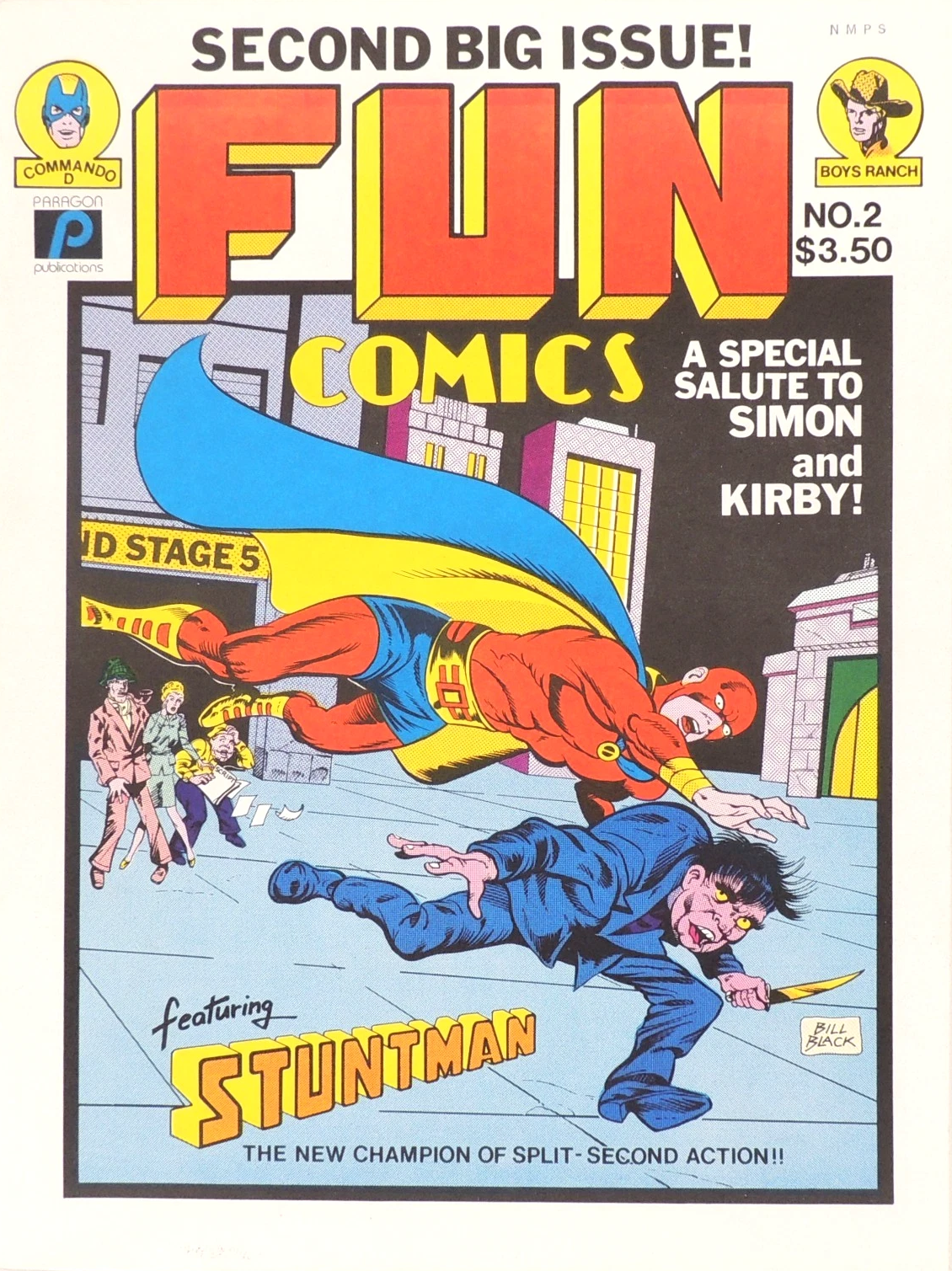
The original Fun Comics ran for two issues in 1980 and 1981. The title continued as Bill Black’s Fun Comics #3 in 1982 and #4 in March 1983.
Although the combined original run consisted of only four issues, it represented an important transitional period between Paragon Publications and the emerging Americomics publishing operation that eventually became AC Comics.
What made Fun Comics interesting was its combination of familiar comic book traditions and Black’s developing cast of original characters.
Rather than relying on a single superhero, the anthology offered a variety of adventures and features.
Among its most notable characters were Captain Paragon, Commando D, Phantom Lady, and Nightfall, the heroine who would later become Nightveil.
Captain Paragon represented the traditional superhero ideal. Powerful, courageous, and visually reminiscent of the colorful costumed champions of an earlier generation, he was central to Black’s developing superhero universe.
Commando D was another important feature. Appearing in the first issue of Fun Comics, the character continued throughout the original run, providing a connection between the publication’s earliest days and the growing collection of heroes that would populate AC Comics.
Phantom Lady brought a connection to Golden Age superhero history. Black’s interest in the character reflected his broader fascination with reviving and reinterpreting comic book heroes who had fallen out of the public spotlight.
Perhaps most significantly, Bill Black’s Fun Comics #4 included “The Mystic Origin of… Nightfall,” featuring the heroine who would later become Nightveil. That story helped establish one of the characters most closely associated with AC Comics and Femforce.
One of the most fascinating aspects of Bill Black’s Fun Comics was its willingness to devote considerable space to comic book history.
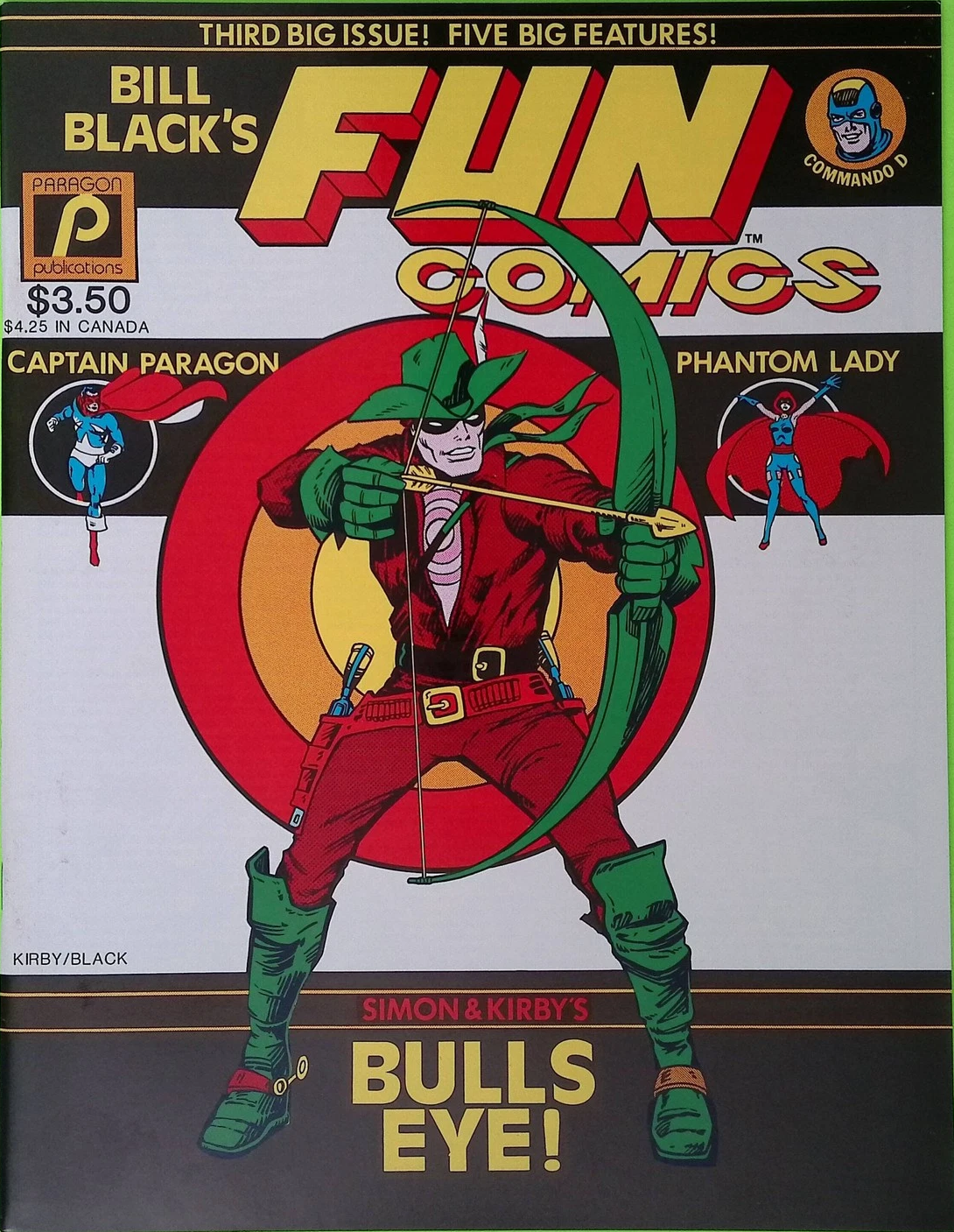 Issue #3, published in 1982, featured a striking cover devoted to Bullseye, the Western hero created by Joe Simon and Jack Kirby.
The cover featured Kirby artwork inked by Bill Black, bringing together the legendary visual storytelling of the King of Comics with Black’s own enthusiasm for the medium.
Inside, readers found a substantial retrospective examining the original Bullseye comic books, including reproductions of covers and information about the series.
The issue also included historical material devoted to Captain 3-D, another Simon and Kirby creation, alongside original superhero adventures.
This combination of original fiction, historical essays, illustrations, and classic comic book appreciation gave the publication an identity that was different from the typical superhero anthology.
Black wasn’t simply creating comics inspired by the past. He was helping readers discover the original material that had inspired him.
If there is one issue that deserves particular attention from AC Comics collectors, it is Bill Black’s Fun Comics #4.
Published with a March 1983 cover date, the final issue of the original series introduced important developments that would influence AC Comics for decades.
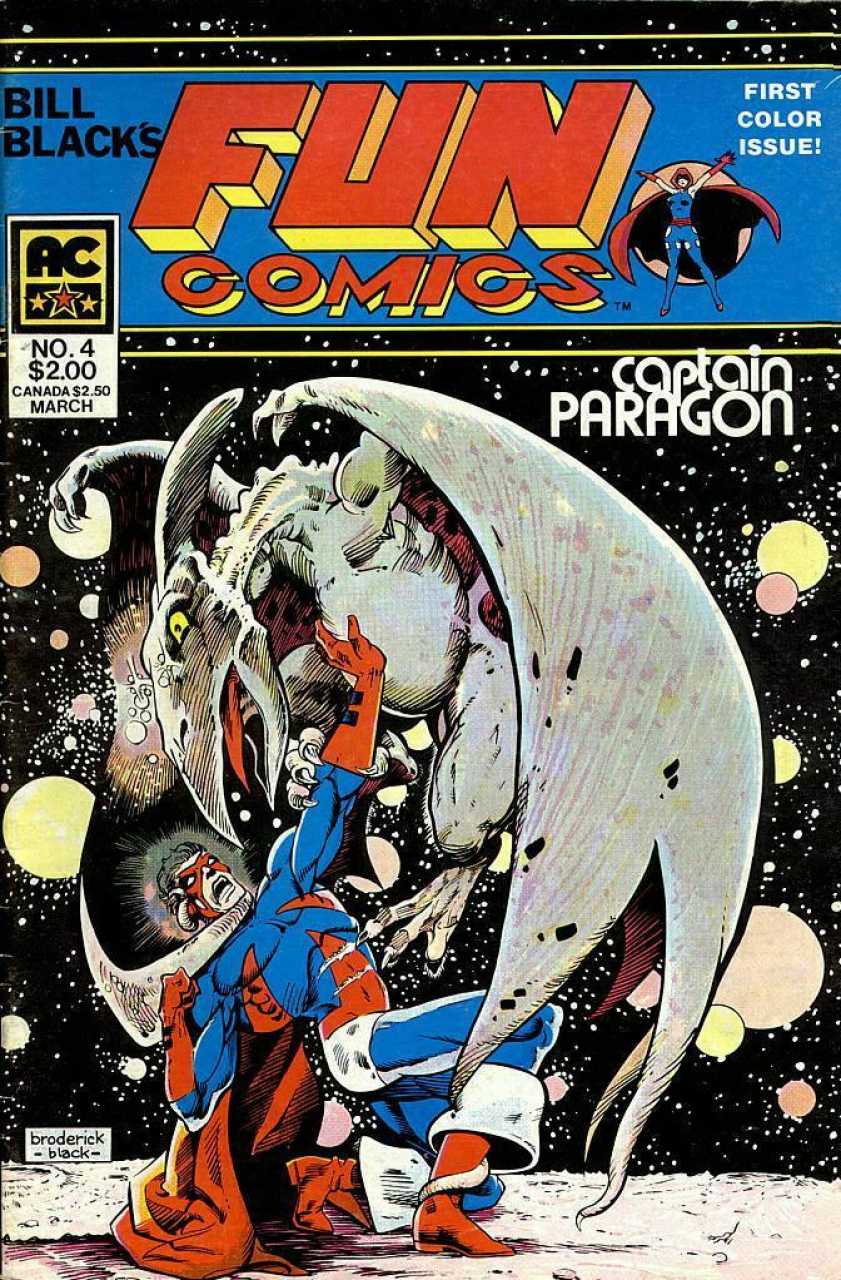 The Captain Paragon adventure “Stardust Descending!” introduced Stardust, who would eventually become a member of Femforce.
Meanwhile, “The Mystic Origin of Nightfall” presented the transformation of Phantom Lady into Nightfall through the Cloak of Darkness. The character would later become known as Nightveil, one of AC Comics’ most enduring heroines.
The issue also included a retrospective on Simon and Kirby’s Boys’ Ranch, continuing Black’s commitment to comic book history.
Contributors included Bill Black, Jim Sanders III, Mark Heike, Ben Smith, and R. C. Harvey, with cover artwork credited to Pat Broderick and Black.
In retrospect, this issue was more than the conclusion of an anthology. It helped lay the foundation for the superhero universe that would become AC Comics’ defining achievement.
The original series may have ended in 1983, but Black hadn’t forgotten it.
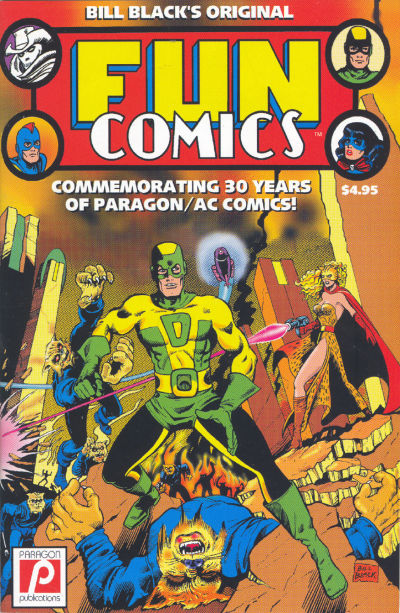
In 1999, AC Comics revived Bill Black’s Fun Comics as part of a celebration of the company’s publishing history.
The new first issue commemorated 30 years of Paragon and AC Comics, returning to the company’s roots while introducing readers to material that reflected Black’s long-standing interests.
The 1999 issue included a Commando D adventure, historical material celebrating Jack Kirby and Joe Simon, and Phantom Lady artwork by Bob McLeod.
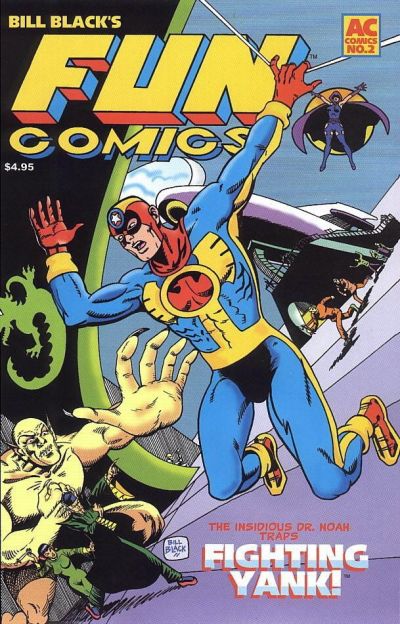
A second issue followed in 2000, featuring stories such as “Bail Out at Ground Zero,” starring Fighting Yank, Rocketman, and Jet-Girl, and “Banzai Bengals.”
The revival demonstrated how much of Black’s publishing identity remained connected to the comics of his earliest years. Even after decades of publishing superhero adventures, he still found value in revisiting the characters and traditions that had inspired him.
The later series consisted of two issues, bringing the total number of original and revival issues to six.
The importance of Bill Black’s Fun Comics goes beyond the individual characters and stories that appeared in its pages.
 The publication represents a fascinating period in the development of American independent comics.
In the late 1970s and early 1980s, independent publishers were beginning to demonstrate that comic books didn’t have to come exclusively from Marvel or DC. Creators could build their own properties, publish their own material, and develop their own audiences.
Black was among those helping establish that alternative.
His approach was particularly distinctive because he wasn’t attempting to reject the traditions of mainstream superhero comics. Instead, he embraced them.
His characters had colorful costumes, fantastic powers, dramatic villains, and larger-than-life personalities. His stories celebrated heroic adventure without apologizing for their traditional approach.
At the same time, his commitment to comic book history introduced readers to material from earlier generations of creators.
That combination of nostalgia and original storytelling became a defining characteristic of AC Comics.
Most importantly, Fun Comics helped establish a creative environment where characters could develop over time. Heroes who initially appeared in modestly produced independent publications eventually became part of a larger fictional universe.
Black’s publishing philosophy would reach its most recognizable expression with the creation of Femforce, the long-running all-female superhero team that brought together original characters and revived Golden Age heroines.
Bill Black’s contribution to independent comic book publishing deserves considerable recognition.
Beginning with Paragon Publications in 1969, he built a publishing operation that survived changing markets, shifting reader tastes, and the numerous challenges faced by independent publishers.
His work also demonstrated that independent comics didn’t have to abandon traditional superhero storytelling to find an audience.
Black could produce modern adventures while maintaining a deep appreciation for the creators and characters who had established the medium.
From Captain Paragon and Commando D to Nightveil, Stardust, and the heroines of Femforce, the characters associated with his publishing history reflect decades of creative determination.
Black eventually became Editor Emeritus of AC Comics in 2014, but his involvement with Femforce continued. The series reached its landmark 200th issue in 2023, and Black remained creatively active in 2026.
Today, Bill Black’s Fun Comics may not be as widely recognized as some of the independent comic book titles that followed it.
However, its historical importance is difficult to overlook.
It provided a showcase for emerging characters, celebrated legendary creators, and helped transition Black’s publishing efforts from small-press fan publications into a genuine independent comic book company.
More importantly, it reflected the enthusiasm of a creator who genuinely loved comic books.
Bill Black understood something that can occasionally get lost amid complicated continuity, industry trends, and attempts to reinvent the superhero genre.
Sometimes readers simply want colorful heroes, exciting adventures, imaginative villains, and stories that remind them why they fell in love with comics in the first place.
That was the philosophy behind Fun Comics.
And more than four decades after its debut, it remains a philosophy worth celebrating.
About Author
