
Who are the strongest villains in the Marvel Universe? It’s one of those debates that never really ends, and honestly, that’s half the fun. Much like trying to find the best richard casino no deposit offer online, everyone has an opinion, and nobody fully agrees.
Fair warning: if you’re expecting Thanos to top this list, you’re in for a surprise. Almost none of these characters have appeared in the MCU. That’s because the comics operate on a completely different scale, one where cosmic entities devour universes and beings exist outside the multiverse itself.
Let’s get into it.
Why Ranking Marvel Villains Is Complicated
Marvel’s power levels don’t follow strict rules. A villain’s strength is ultimately whatever the story needs it to be, and writers have never been shy about dialing things up to absurd extremes.
Think of it like Dragon Ball: once the bar gets raised high enough, someone has to raise it again. Which is exactly how we end up with beings that can erase all of existence before breakfast. It’s a bit like bonus hunting at a Richard Casino no deposit promotion; the deeper you go, the more layers you find, and the stakes keep climbing.
With that caveat firmly in place, here’s our take on the most powerful villains Marvel has ever put to paper.
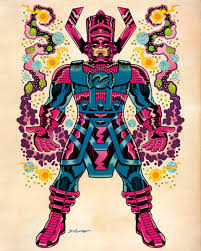 5. Galactus
Some fans argue that Galactus isn’t really a villain, more of a force of nature, like a hurricane that happens to consume entire planets. There’s something to that argument.
But devouring worlds inhabited by sentient life puts him squarely in antagonist territory, regardless of motivation.
For decades, Galactus was essentially unstoppable. Heroes could delay him or redirect him toward uninhabited systems, but nobody was truly defeating him. His raw power, cosmic knowledge, and sheer scale of destruction earn him a spot here, even if more terrifying threats have since emerged from the depths of the Marvel cosmos.
What makes Galactus compelling isn’t just his strength. It’s the indifference. He doesn’t hate the civilizations he destroys. They simply don’t register. That cold detachment is, in many ways, more unsettling than any villain driven by rage or ideology.
 4. Thanos (Without the Infinity Gauntlet)
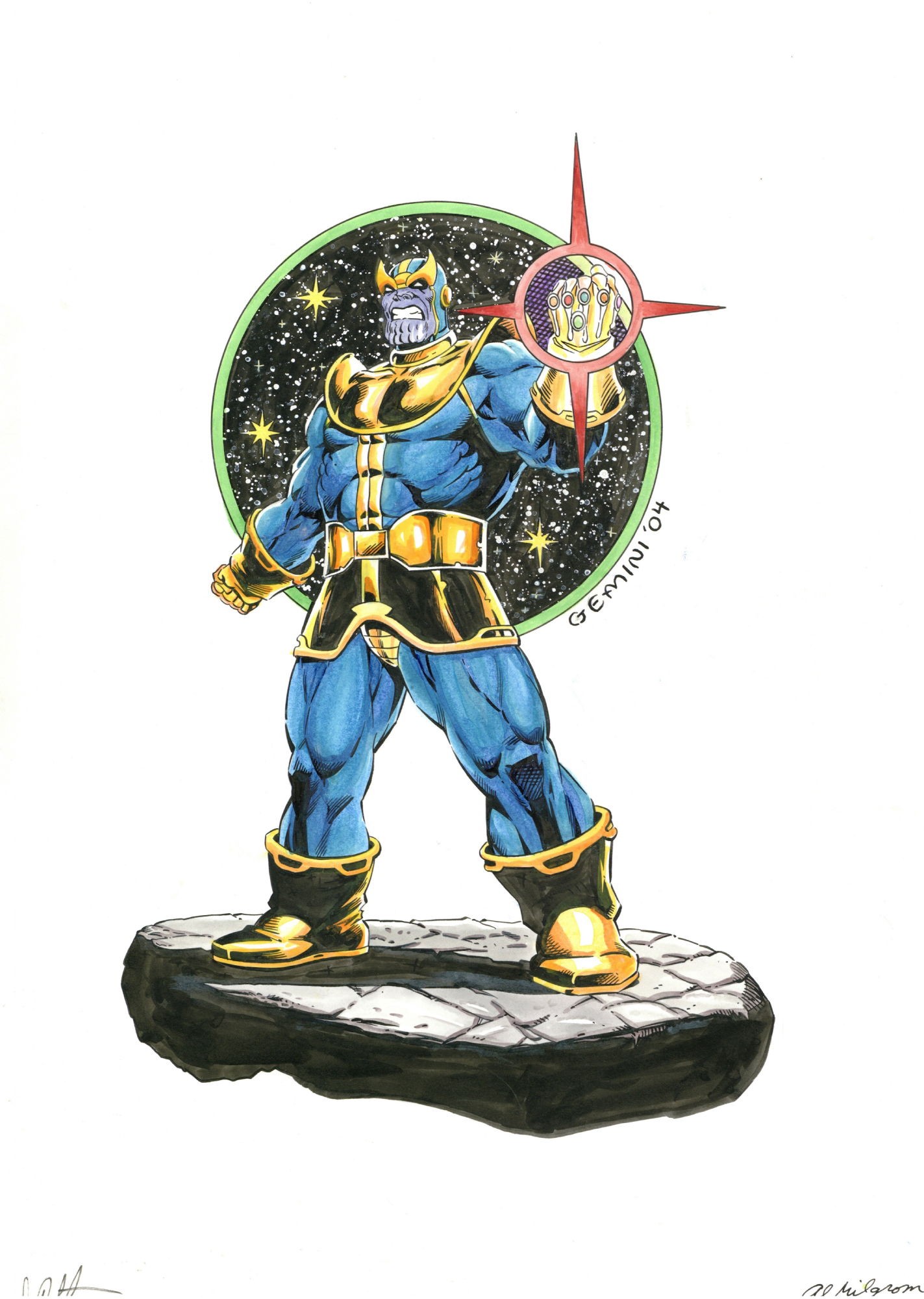
This placement will frustrate some fans. Yes, a fully-armed Thanos with the complete Infinity Gauntlet is among the most powerful beings in Marvel comics. But here’s the thing: that power isn’t really his.
Strip away the Gauntlet, and Thanos is formidable. Exceptional, even. A physical powerhouse with a brilliant tactical mind and near-limitless ambition. But not top-tier by cosmic standards.
What makes his ranking genuinely interesting is that his most dangerous moment has nothing to do with the Gauntlet. When Thanos wielded the Heart of the Universe, a fragment of power tied directly to the being at the very top of this list, he consumed the Living Tribunal, Eternity, and Infinity in succession. That version of Thanos operated on a scale most writers have never revisited.
Without those external power sources, though? His track record gets more complicated. He once rode a vehicle called the Thanos-Copter. With his name on the side. In the comics. Respectfully, that alone keeps him off the podium.
The broader point stands: Thanos is one of Marvel’s greatest villains by reputation, storytelling impact, and cultural weight. In a straight power ranking of the cosmos, though, he needs help to reach the very top.
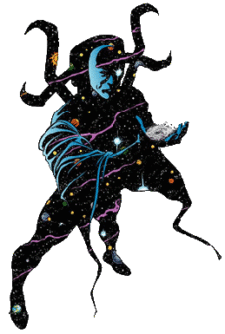 3. Eternity
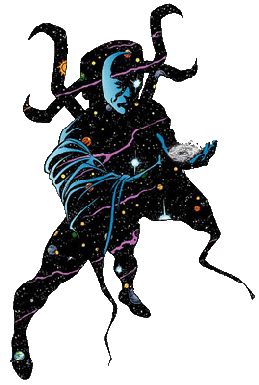
This is where Marvel gets genuinely strange and genuinely fascinating.
Eternity isn’t simply a powerful being who exists within the Multiverse. He is the Multiverse, given form. The living embodiment of all universes, of time itself, and of the infinite scope of existence across every reality Marvel has ever conceived.
He can take a humanoid shape when it suits him. He can possess even the most powerful hosts. He manipulates time, energy, and reality without apparent limit or effort. Describing his abilities in conventional terms almost misses the point; Eternity doesn’t use powers so much as be them.
Thanos himself, at the height of his power, acknowledged that Eternity sits above nearly every cosmic entity in the hierarchy. Equal only to his sister, Infinity. Subordinate only to the Living Tribunal.
His placement here as a villain reflects not just power, but intent. As a force capable of contributing to the destruction of the entire Multiverse, Eternity belongs in this conversation, even if his motivations are far more abstract than a traditional antagonist.
2.  The Beyonder
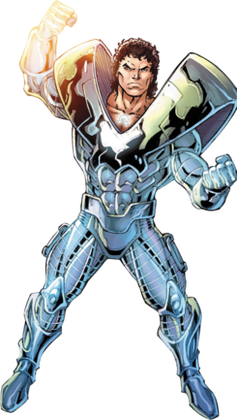
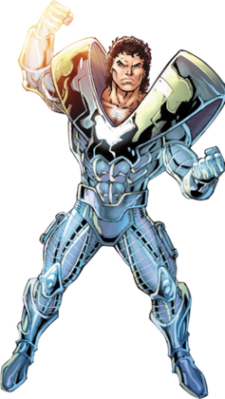
The original Beyonder is, on paper, the closest thing to an all-powerful being Marvel has ever written into existence.
He perceives reality; however, he chooses. He operates with virtually no weaknesses. At his absolute peak, he surpassed the Living Tribunal, itself one of the highest authorities in the Marvel cosmos, and outclassed Eternity, a being already considered near the summit of existence.
The original Secret Wars storyline placed the Beyonder in a category almost entirely his own. He didn’t conquer the Multiverse or threaten to destroy it; he reshaped it as a personal experiment, plucking heroes and villains from their lives simply to observe conflict. That casual omnipotence is, in its own way, more frightening than any grand destructive ambition.
Then Jim Shooter left Marvel, and the editorial direction shifted. The Beyonder was gradually scaled back, reduced, retconned, and recontextualized. Too much unchecked power makes for unsatisfying storytelling, and the character’s later iterations reflect that recalibration.
Even in a reduced state, he remains one of the most formidable characters ever written in superhero comics. But the ceiling above him is real, and the being occupying that space is something else entirely.
1.  The One Below All
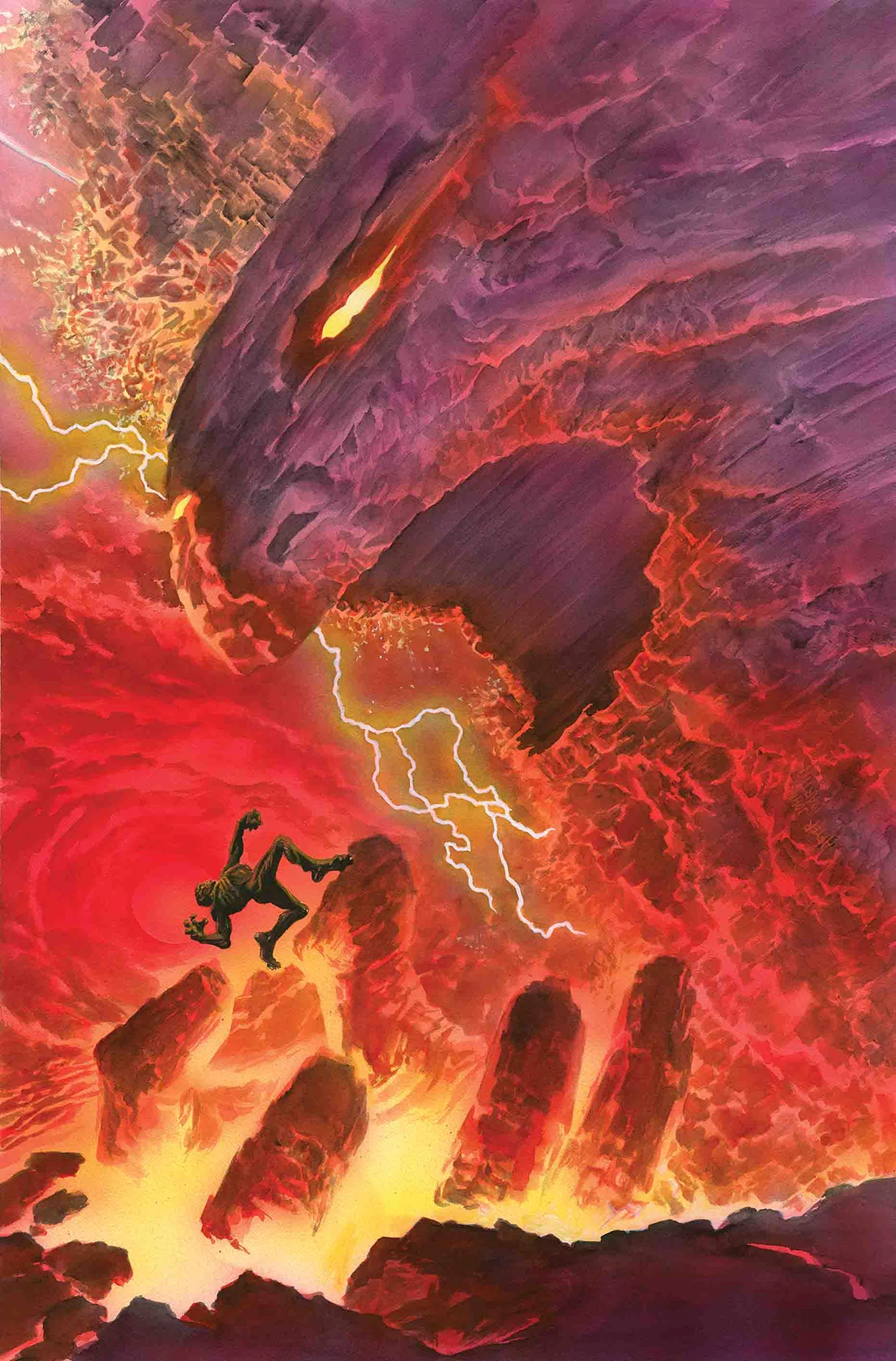
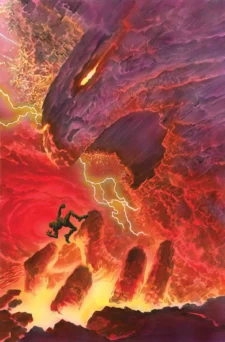
There is no villain in Marvel more powerful, or more conceptually disturbing, than The One Below All.
To understand him, you first need to understand his counterpart. The One Above All is Marvel’s supreme being: the embodiment of creation, compassion, and the totality of existence across every universe. He sits outside the hierarchy entirely, above even the Living Tribunal.
The One Below All is the direct inversion of that.
Where The One Above All represents everything that exists and everything that sustains life, The One Below All is the embodiment of pure destruction, not as a strategy or a goal, but as an absolute, defining purpose. He doesn’t want to rule the Multiverse. He wants to unmake it, completely and permanently.
To prevent this, he is sealed from the rest of existence by what the comics call the Green Door. That containment isn’t incidental; it’s existentially necessary. Without it, nothing survives.
His story becomes concrete in The Immortal Hulk, one of the most acclaimed Marvel comic runs of the past decade. When Bruce Banner is exposed to a gamma bomb, the Green Door opens. The One Below All doesn’t simply gain access to the Multiverse; he begins working through Banner himself, using the Hulk’s near-limitless power as a vessel for his own agenda.
In an alternate future explored within the series, The One Below All eventually achieves full possession of Banner’s body. He erases Bruce’s consciousness. And with that vessel secured, he pursues his singular objective: the complete eradication of all life across every universe, every timeline, every reality in the Multiverse.
Not a planet. Not a civilization. Not a universe. Everything.
That future is ultimately prevented, but the critical detail is that it was destined to occur. The narrative treats it not as a worst-case scenario but as an inevitable endpoint, one only barely averted. That framing says everything about the scale of threat The One Below All represents.
Compare him to the others on this list. Galactus destroys worlds to survive, a biological imperative, terrible but comprehensible. Thanos sought a twisted form of balance, driven by ideology and obsession. Eternity and the Beyonder operate on cosmic scales, but their motivations carry at least some internal logic.
The One Below All has no such logic. No balance. No survival instinct. No experiment. Just the absolute negation of existence itself.
That’s what separates him from every other villain in Marvel history, and what makes him, without serious argument, the most powerful and the most dangerous being ever written into the Marvel Universe.
The comics have always been willing to go further than the films. In this corner of Marvel, further means everything ceases to exist.
From planet-devouring cosmic forces to beings that exist as the literal opposite of creation, Marvel’s most powerful villains operate on a scale that makes their MCU counterparts look like minor threats. The comics built a hierarchy of destruction, and at the bottom of it, The One Below All waits.
About Author
