
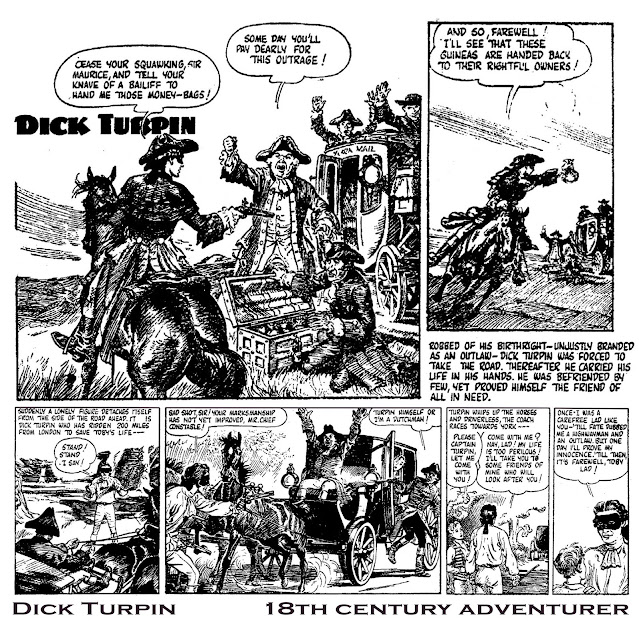
Many an historical figure has been transformed into something else to serve the needs of the popular imagination.
One of those was Dick Turpin, a highway robber in 18th-century England who died on the gallows at age 33, but lived on as a romantic hero.
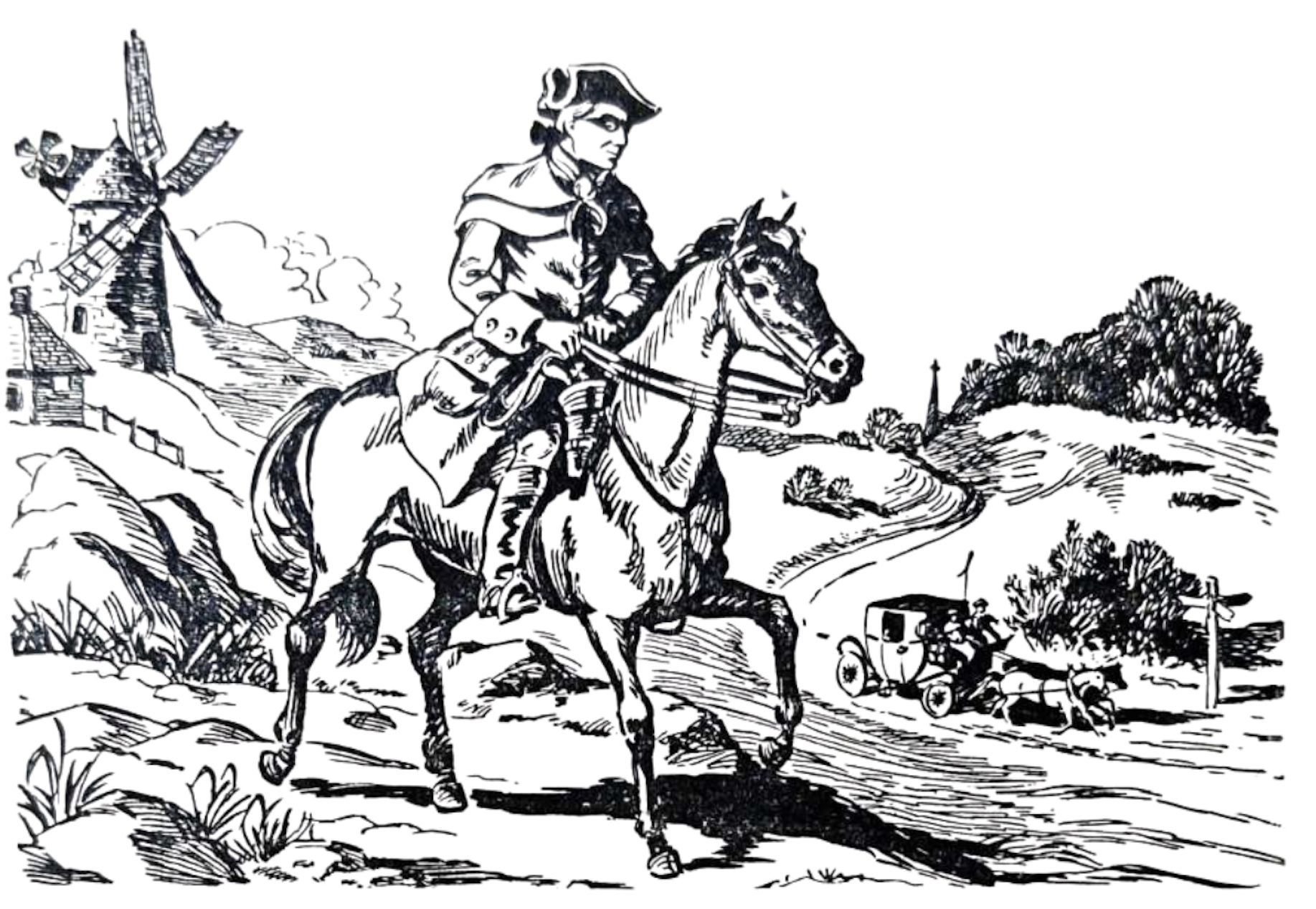
Celebrated in novels, plays, penny dreadfuls, comic books, TV shows, and movies (both silent and sound), Turpin was presented as a romantic figure who preyed upon the rich and helped the poor. He had a secret identity — “John Palmer” — and a wonder horse, Black Bess.
As a masked Robin Hood, he anticipated Zorro and the Lone Ranger.
 In her book Rakes, Highwaymen and Pirates: The Making of the Modern Gentleman of the Eighteenth Century, Erin Mackie observed, “In all three figures, the very feature of their character that is most outdated and most illicit — their commitment to the exercise of personal will self-licensed as absolute authority — enjoys, as an aspect of this anachronism, the glamor of nostalgia. One modern role for such characters, then, is to serve masculinist fantasies of unchecked self-assertion permissible because romanticized through their removal from ethical accountability, historical actuality, and, in this case of pirates, a common national-cultural identity.”
“Fixing the character as mythic type, this romantic dissolution removes it from history — and thus from consequence — into the realm of escapist boys’ stories,” wrote Mackie. “As such, Dick Turpin as romantic highwayman furnishes a model of mythic criminal masculinity to generations of boys and tourists.”
Typical of the romanticized accounts was the 1860s penny dreadful Black Bess or the Knight of the Road: A Tale of the Good Old Times, which was “…a heavily fictionalized account of the life and death of the infamous English highway bandit Dick Turpin (1705-1739),” noted the British Library. “Published in 254 short volumes over five years, the entire completed work runs to some 2,228 pages – with the first murder occurring oddly late in the proceedings, on page 1,757. Black Bess was named for Dick Turpin’s horse on which, legend has it, Turpin rode the 200 miles between York and London in a single night. (This detail appears to have been invented by the novelist William Harrison Ainsworth in his 1834 novel Rookwood.)
Black Bess, written by Edward Viles, opens this way: “He was tall and muscular, and sat in the saddle with an ease and grace as rare as it was admirable. His attire was well calculated to set off his figure to the greatest advantage; it was that so much affected by military officers in the reign of the second George.”
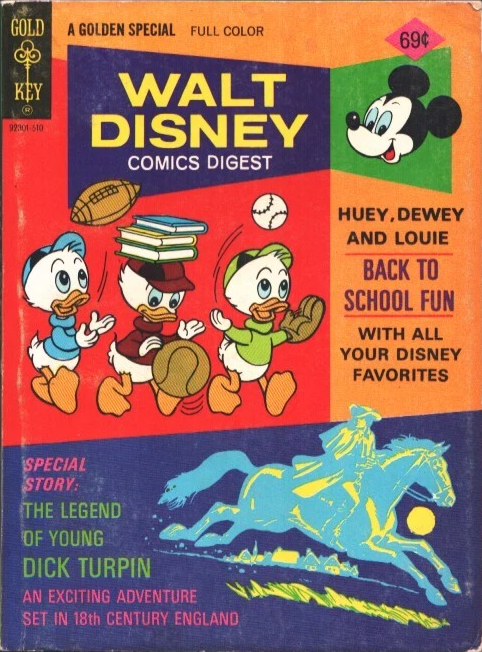
 In 1925, American cowboy star Tom Mix appeared as Dick Turpin in a Hollywood silent film. In 1966, The Legend of Young Dick Turpin was broadcast on NBC as a two-part episode on Walt Disney’s Wonderful World of Color.
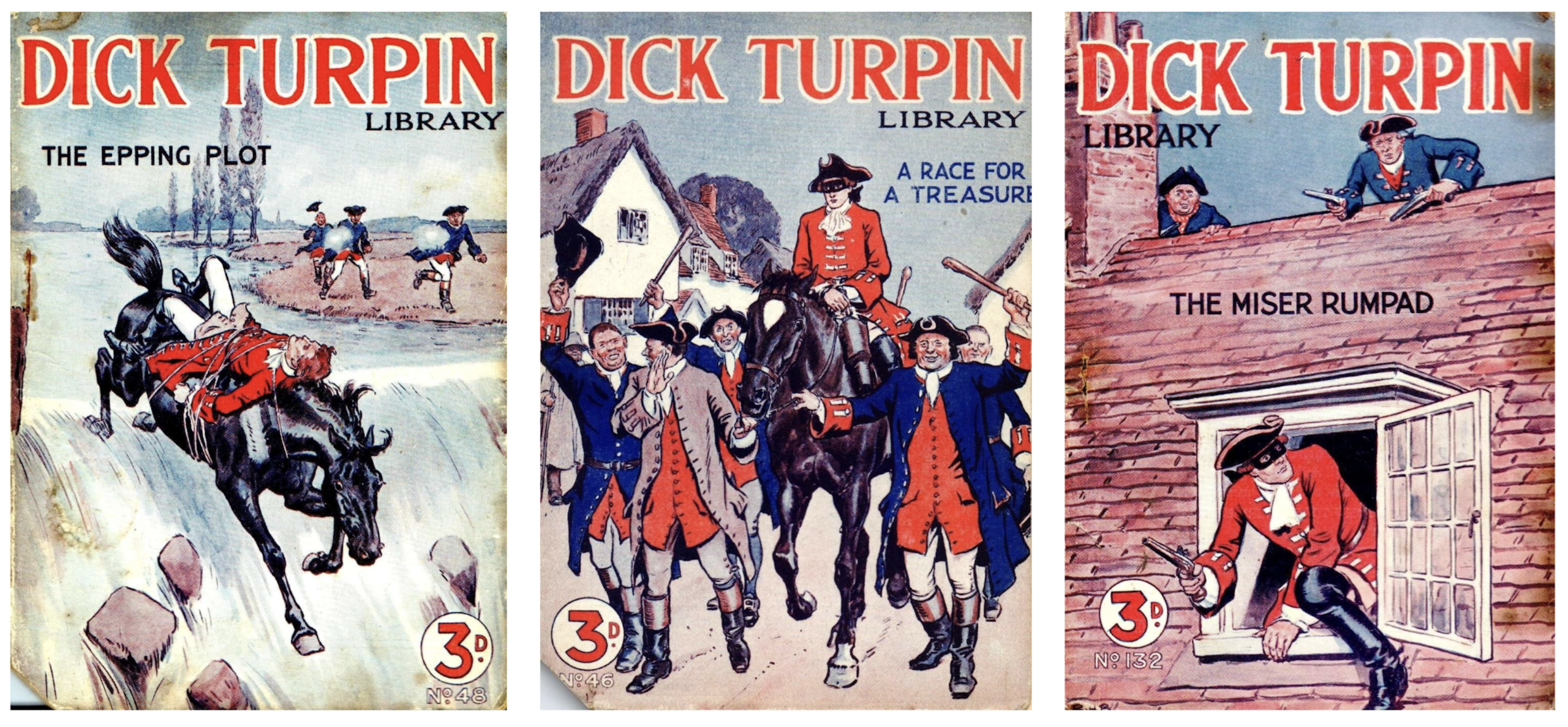
A British story paper, Dick Turpin, was published from April 1902 to September 1909, running for a total of 182 issues. Several Dick Turpin comic books were published, including those appearing in Thriller Comics (later Thriller Picture Library) between 1951 and 1958.
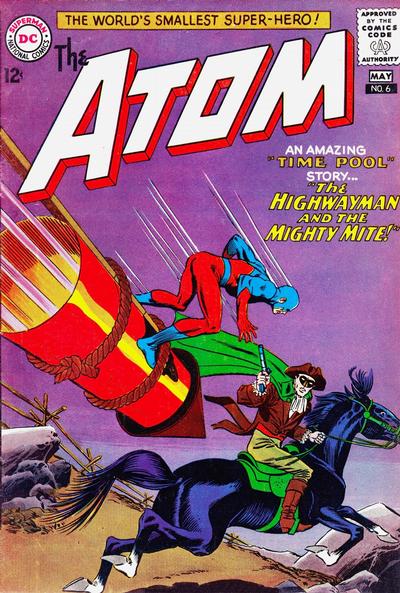
DC Comics’ diminutive superhero, the Ato,m even encountered Turpin during one of his Time Pool jaunts (The Highwayman and the Mighty Mite, The Atom 6, April-May 1963). In fact, the Atom, who is really Ray Palmer, learned that Turpin was one of his ancestors.
And in more ways than he knew.
About Author
