
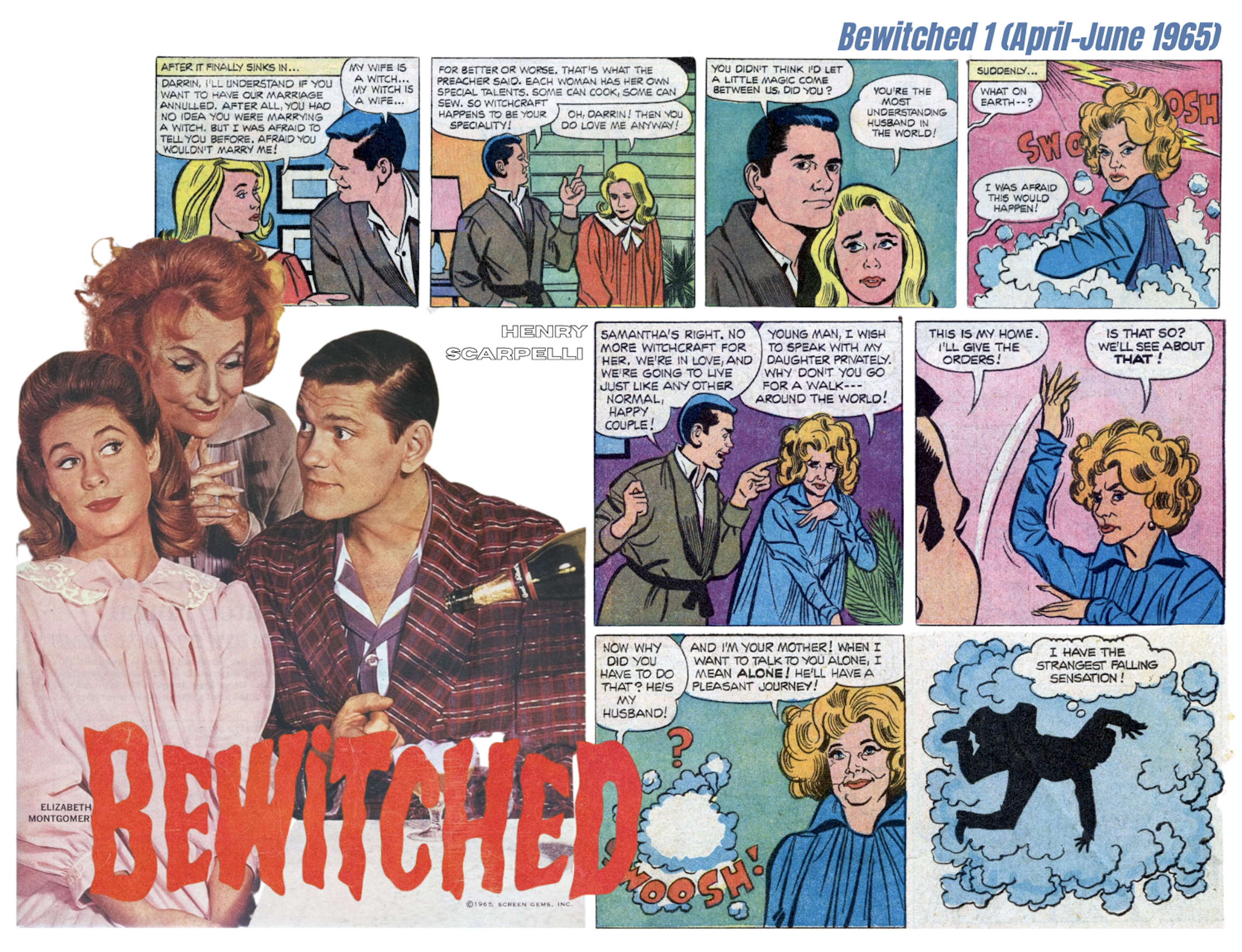
Network television offered several strange examples of super-powered women in the 1960s — not as adventure heroines, but as sitcom characters.
In Bewitched (ABC, 1964-1972), Elizabeth Montgomery portrayed the sweet witch Samantha, commanded by her narrow-minded mortal husband Darrin Stephens (Dick York, then Dick Sargent) to renounce her supernatural powers for the pleasure of serving him as a housewife. Even in fantasy, network TV demanded a heavy dose of the mundane.
Darrin’s no-magic dictum, invariably pronounced in ringing moral tones and never disputed by Samantha, seemed particularly ludicrous coming from a guy who used his talents for the ethically dubious, bamboozling ends of a Madison Avenue executive.
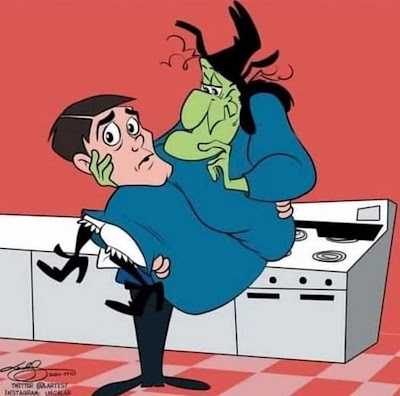 “This is a show, no matter how goofy, about the growing power of women in both the home and society at large in the 1960s,” writer Todd Vanderwerff noted. “It’s a show about how men weren’t sure how to deal with that.”
My sympathies were with Samantha’s mother Endora (the delightful Agnes Moorehead), who was always on the verge of resolving the whole mess by transforming Darrin into the toad he too often resembled.
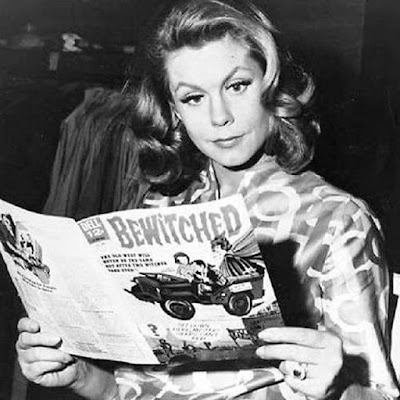
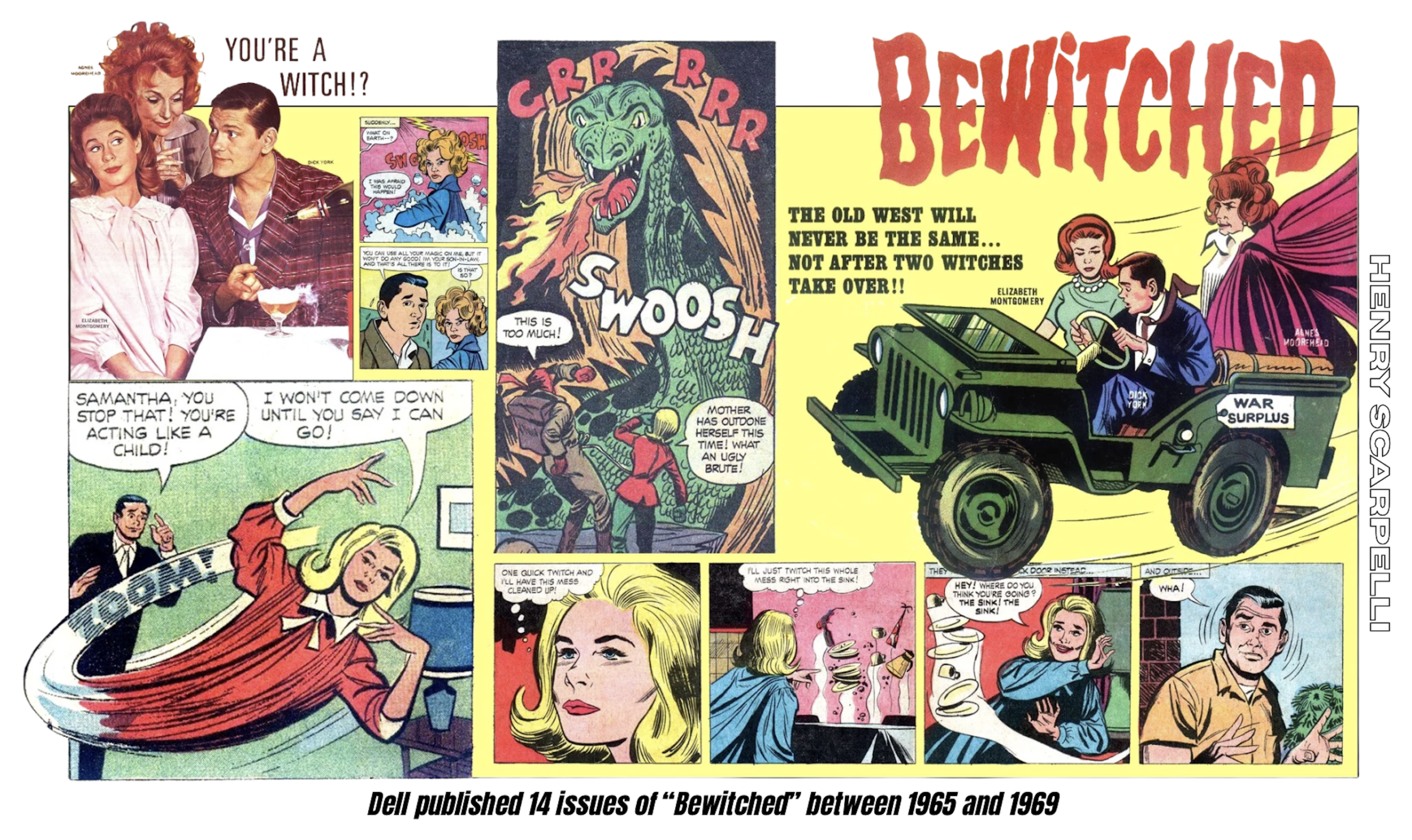
The highly rated show was popular enough to spawn a Dell comic book version that ran 14 issues, one direct spin-off (Tabitha, with Lisa Hartman portraying Samantha’s grown daughter on ABC from 1977 to 1978) and various knock-offs.
The latter tended to reinforce the Bewitched theme that female power is best restrained by male hegemony. After all, for centuries the image of the witch was used to suggest the horrifying consequences of female power.
“By the 1970s, Bewitched came to seem claustrophobic, with the housewife imprisoned by her role,” critic Camille Paglia observed.
From 1965 through 1970, NBC aired the tedious I Dream of Jeannie, with djinn Barbara Eden slavishly devoted to her long-suffering “master” (Larry Hagman).
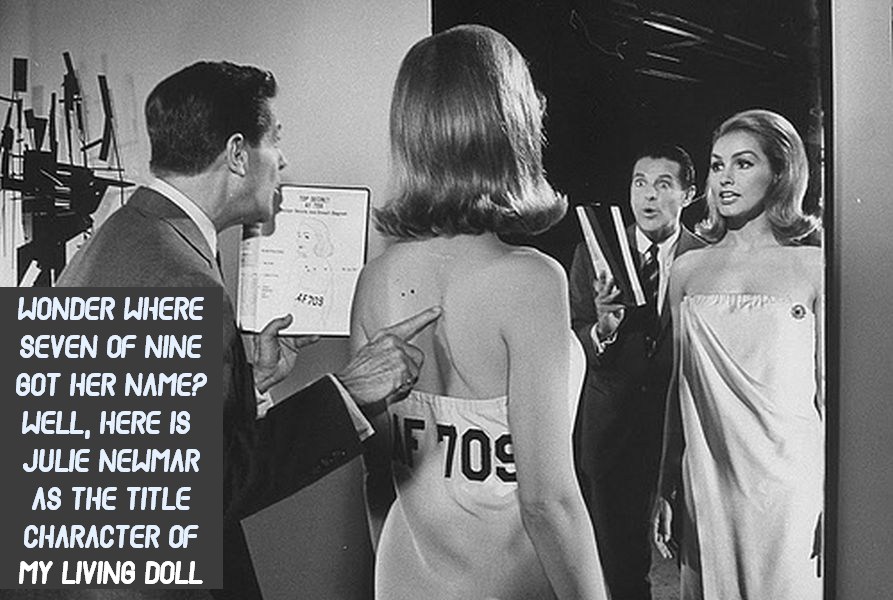
The Random House Historical Dictionary of American Slang notes that My Living Doll is the source of the science fiction phrase “Does not compute” in popular culture.
The double-edged, rather sinister image of the robot woman goes back at least to 1927 and Metropolis (Fritz Lang’s, not Superman’s).
In the 1970s, with feminism’s influence finally filtering into popular culture, another “mechanical woman” appeared on the tube, this time an action-adventure heroine.
Following the pattern established in the comics, The Bionic Woman was a distaff version of the superheroic Six Million Dollar Man. Her limbs and an ear replaced by physically superior prosthetics following a skydiving accident, Jaime Sommers (Lindsay Wagner) fought threats to national security from 1976 to 1978 on ABC and NBC. In a two-part episode, she and the Six Million Dollar Man teamed up to stop the Fembots (female robot slaves, again) created by a traditional mad scientist (theatrical legend John Houseman).
A pop culture metaphor can serve different ends over time, as the background culture realigns itself. Thus the arguably insulting premise of My Living Doll, played for comedy, became an explicitly feminist premise when played as tongue-in-cheek horror in The Stepford Wives, the 1975 film version of Ira Levin’s 1972 novel. Suburban housewives who assert their independence find themselves quietly “androidized” one by one, with the compliance of their husbands.
 The film boasts one of those truly delicious camp scenes destined to stick in the memory. When the robot version of Paula Prentiss’s character is stabbed in the abdomen, her reaction is a mechanical parody of petulant hurt feelings and wifely good manners. “How could you? Just when I was going to make you coffee,” she repeats, over and over again.
Director Susan Seidelman brought the metaphor full circle in her 1987 film Making Mr. Right. In this bit of feminist revenge, John Malkovich plays an android created for space exploration who is ultimately reprogrammed into a “perfect” sensitive, accommodating male. Meanwhile, his human counterpart and creator, a cold-fish scientist also played by Malkovich, is banished into empty space, the only existence for which he is fit, apparently.
In the spring of 1991, as if to underscore the point of just how hard popular culture stereotypes die, Mann & Machine popped up on NBC, featuring yet another macho cop teamed with yet another female android.
About Author
