
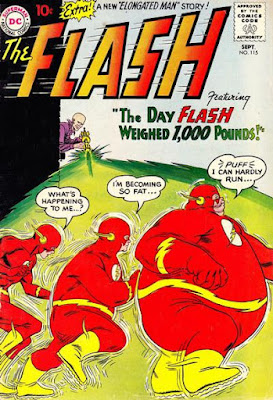
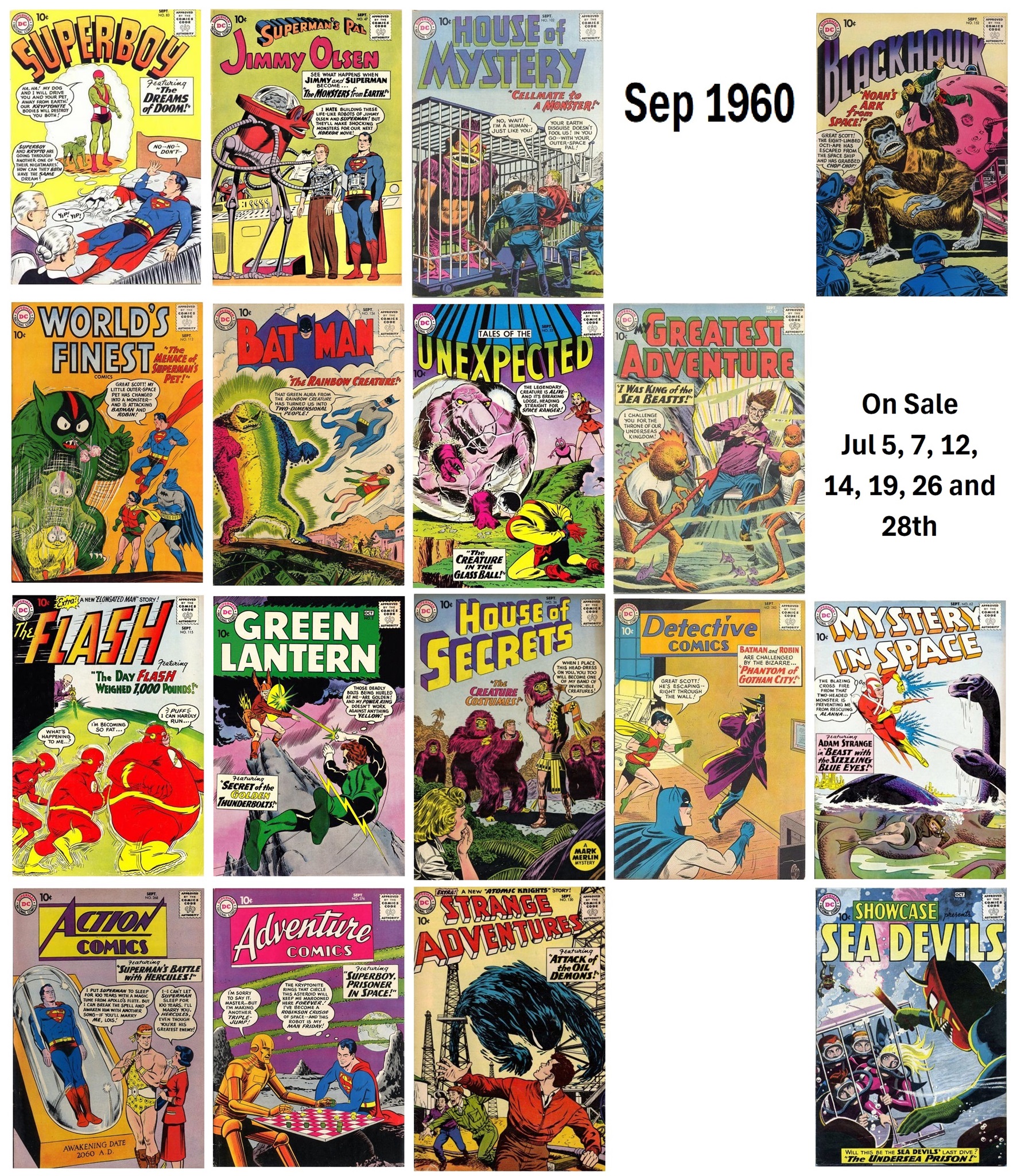
By The Flash 115 (Sept. 1960), the title had become almost a team-up book, with other superhero characters often featured to stir up fresh interest.
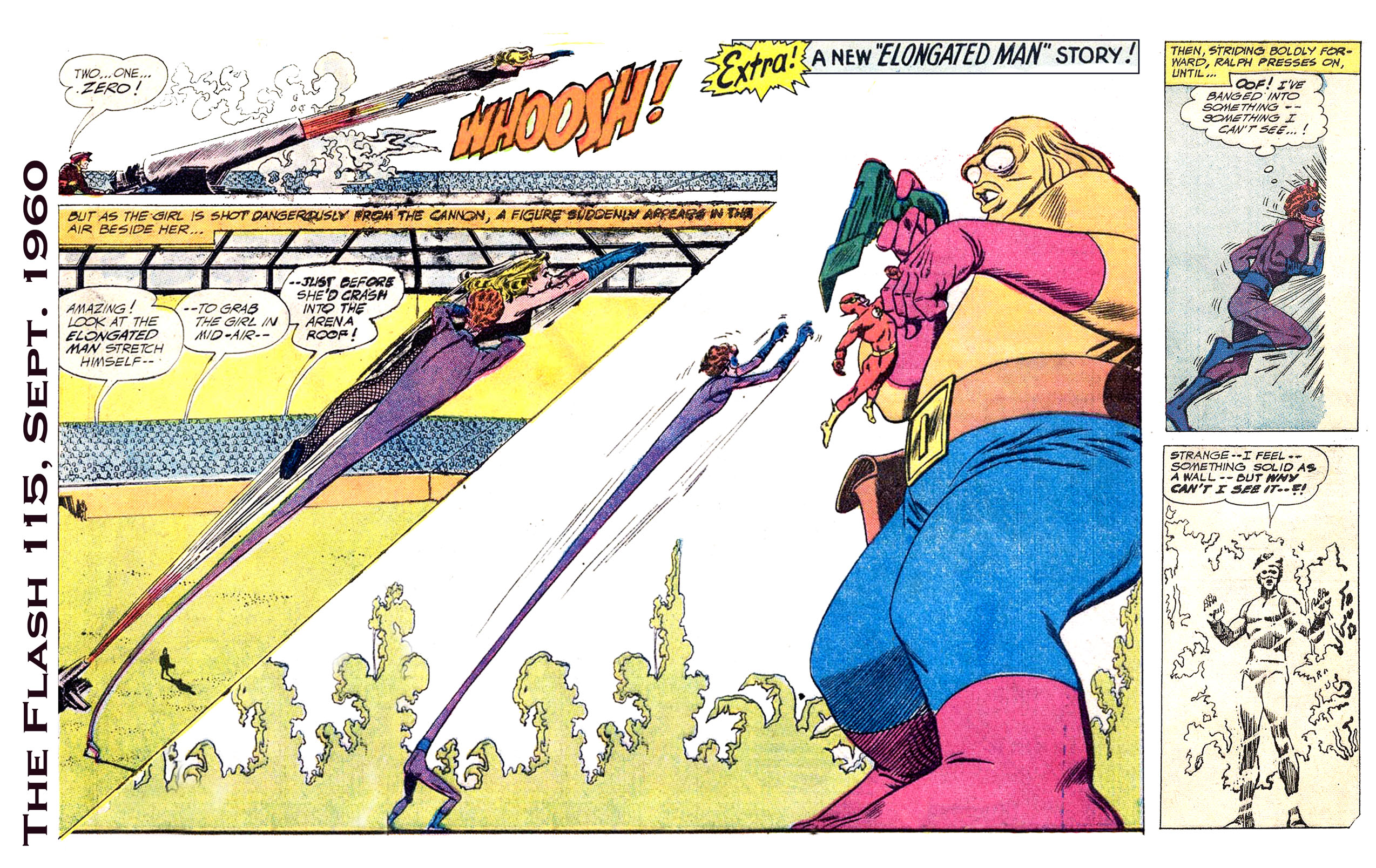
 Here, the back-up story is The Elongated Man’s Secret Weapon, which sees Ralph Dibny calling in the Flash to confront a science fiction mystery in the Yucatan.
“The brief opening section continues the origin story of the Elongated Man, showing what he has been doing since his first appearance in The Mystery of the Elongated Man,” observed comics historian Michael E. Grost. “He has been successful in show biz and making money there.
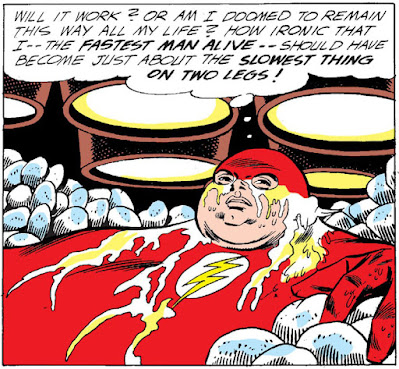
“While the Elongated Man is a hero, this is a career trajectory more typical of (writer John) Broome’s villains. Unlike such villains, however, the Elongated Man does not become obsessed with wealth and fame. He makes enough money to retire and quits his showbiz career. By contrast, Broome villains learn to love money, fame, and success, become morally corrupted, and try to become even bigger big-shots through crime or dictatorship.” Meanwhile, in the cover story, the Flash has been slowed down by that most common of American ailments, obesity.
Arguably the most cunning of the Flash’s foes, Grodd the Super Gorilla isn’t even a gorilla anymore in this tale.
 Imprisoned in Gorilla City, Grodd uses chemical elements from the earth beneath his flexible feet to create a pill that will kill him while secretly transferring his mind to another living being at random.
He lucks out and ends up as a bald Central City sideshow worker named William Dawson instead of a cockatiel, a cod, or a cockroach.
Thus disguised, Grodd fashions a ray gun that turns the Flash into a decelerated thousand-pound man whose memory has been telepathically erased — into a sideshow exhibit, in fact.
“Some earlier tales show friends of Barry’s in mental distress: blackouts in Menace of the Super-Gorilla, strange dreams in Secret of the Sunken Satellite,” Grost noted. “Here it is, the Flash who has a bad psychological experience: amnesia.”
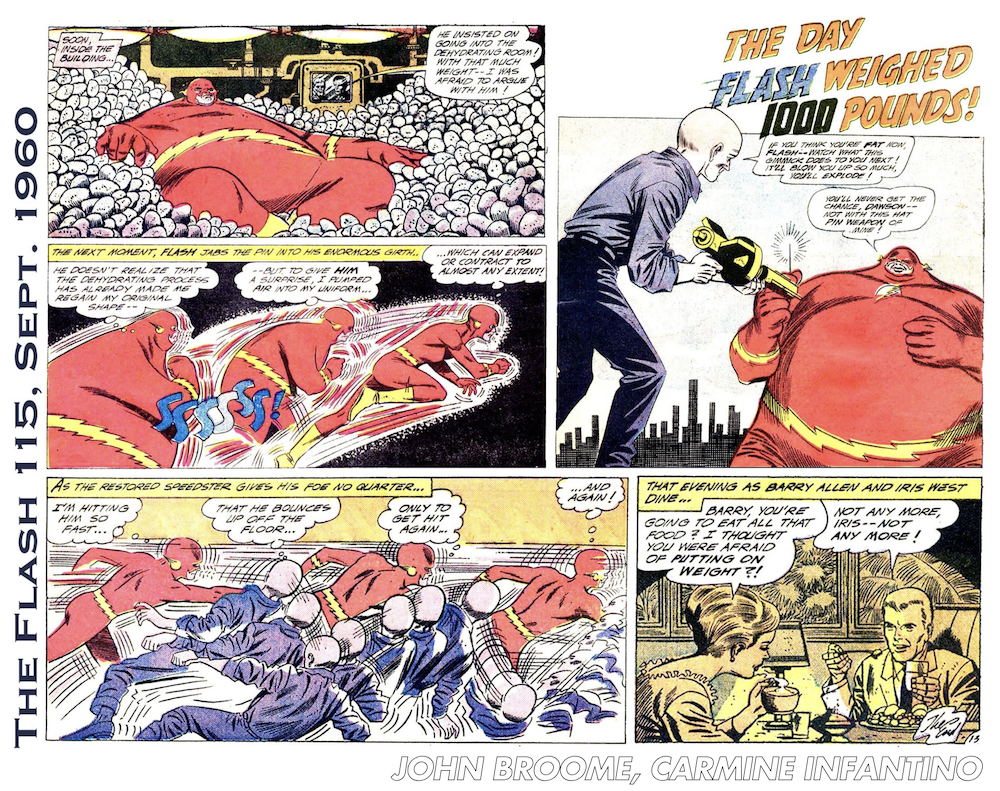
But when a glance into a funhouse distortion mirror reminds the Flash who he really is, he’s able to swiftly lose 800 pounds or so when he gives himself an industrial sauna at a company that dehydrates raw potatoes (let’s just go with it, okay?)
The Flash puts paid to Dawson without ever learning who he really is, and the adventure ends with Barry Allen and his girlfriend enjoying a substantial meal at a restaurant.
Iris West asks if Barry isn’t worried about getting fat, and Barry replies, “Not any more, Iris — Not any more!”
A lame last line, I know. But I do kind of wish I could blame a ray gun fired by a telepathic super-gorilla disguised as a bald guy whenever I put on weight.

About Author
