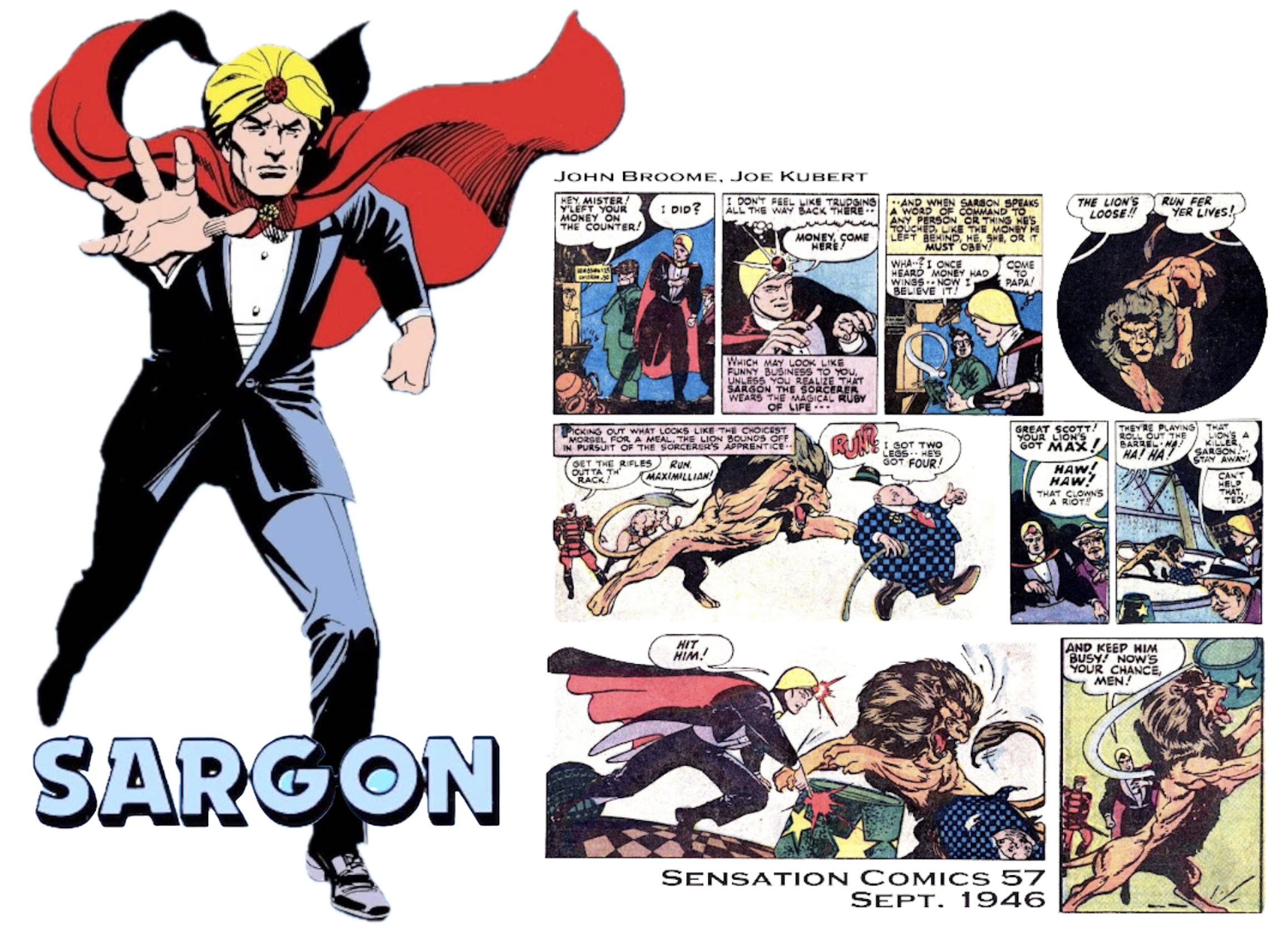
His name has always vaguely reminded me of a prescription drug or a bath oil.
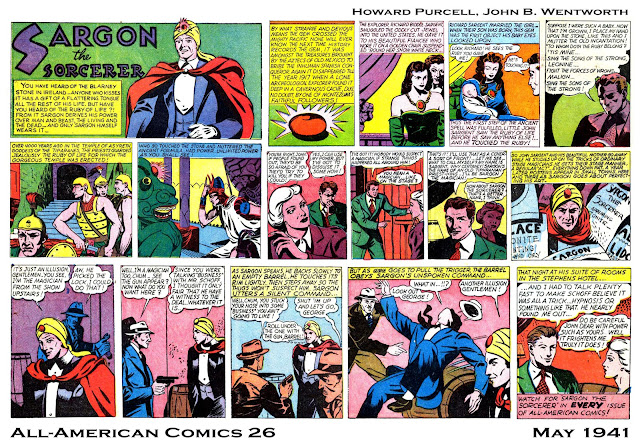
Nevertheless, Sargon the Sorcerer had a respectable run as one of the innumerable superhero magicians of the 1940s, beginning in All-American Comics 26 (May 1941).
“By 1941, American comic book racks were rife with superheroes,” observed comics historian Don Markstein. “To a lesser extent, they were also rife with magic-wielding superheroes who dressed like stage magicians. Like Ibis the Invincible, Mr. Mystic and quite a few others, Sargon the Sorcerer was of the sub-sub-genre that wore a turban as part of the magician get-up.”
Heedless of the risk of looking like Gloria Effing Swanson, Sargon wore a turban (which provided a convenient spot for stashing his Ruby of Life in plain sight).
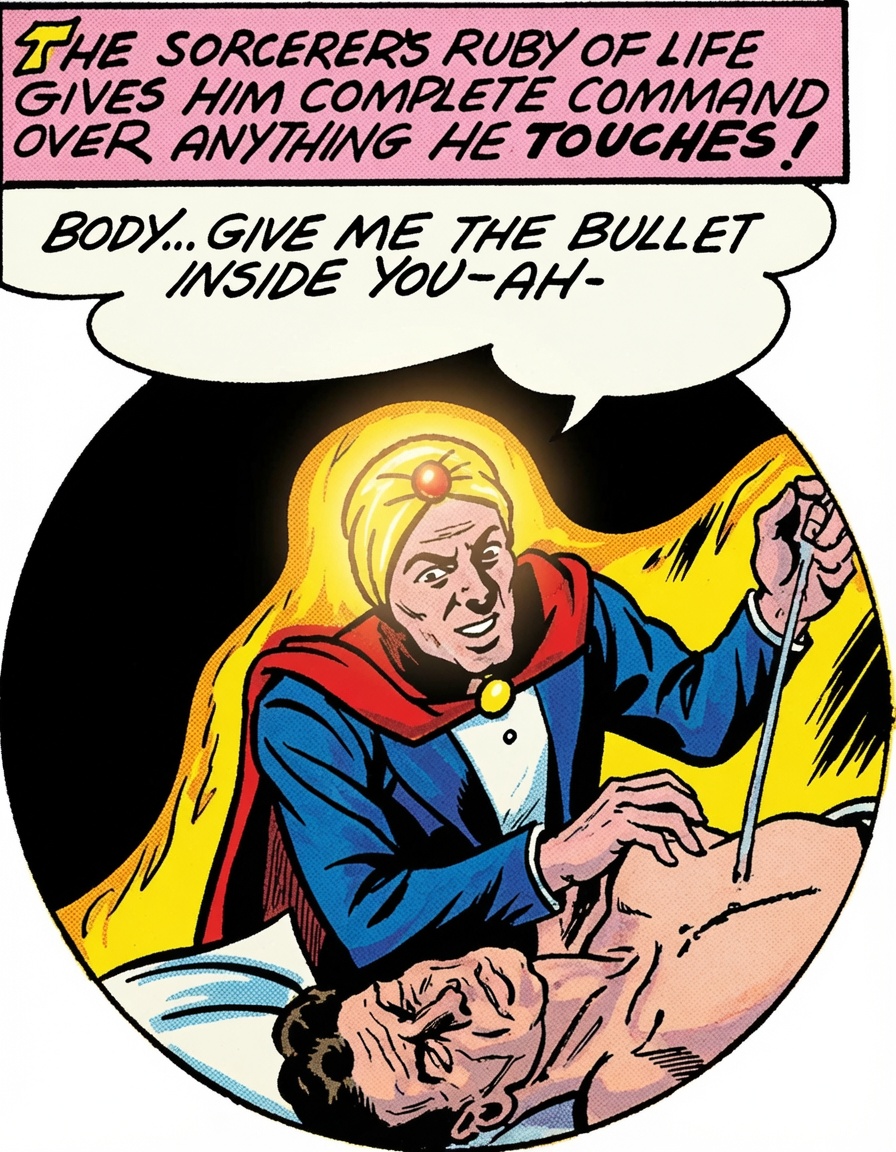 His powers and his name came from his mom. The 4,000-year-old super-ruby ended up in a pendant worn by John Sargent’s mother, and was the first thing seen and touched by him as a baby.
“When John grew up, he learned anyone who had so early a relationship with the stone could, after the proper magical ritual, gain power over whatever he touched,” Markstein noted. “He performed the necessary ritual and used the power, like so many of his contemporaries, to fight crime.”
He’d planned to use the cover of a stage performer, calling himself Sargon the Magician.
“How about Sargon the Sorcerer? That’s a better name, I think,” his mom said.
A lot of superhero magicians had ill-defined and therefore seemingly omnipotent powers, able to pull whatever solution they might need out of their fancy hats. Dramatically, that was a bore, but Sargon didn’t fall into that trap. His powers were limited to what you might call “tactile telekinesis” — he could animate objects as needed.
The sorcerer stayed with All-American until issue 50 (June 1943), also appearing in Comic Cavalcade. He finished his 1940s’ run in Sensation Comics, taking his last bow there in issue 83 (Nov. 1948).
About Author
