 The outlines of Stan Lee, Jack Kirby and Steve Ditko’s Marvel age of superheroes could be traced in the fantasy stories they’d created just previously.
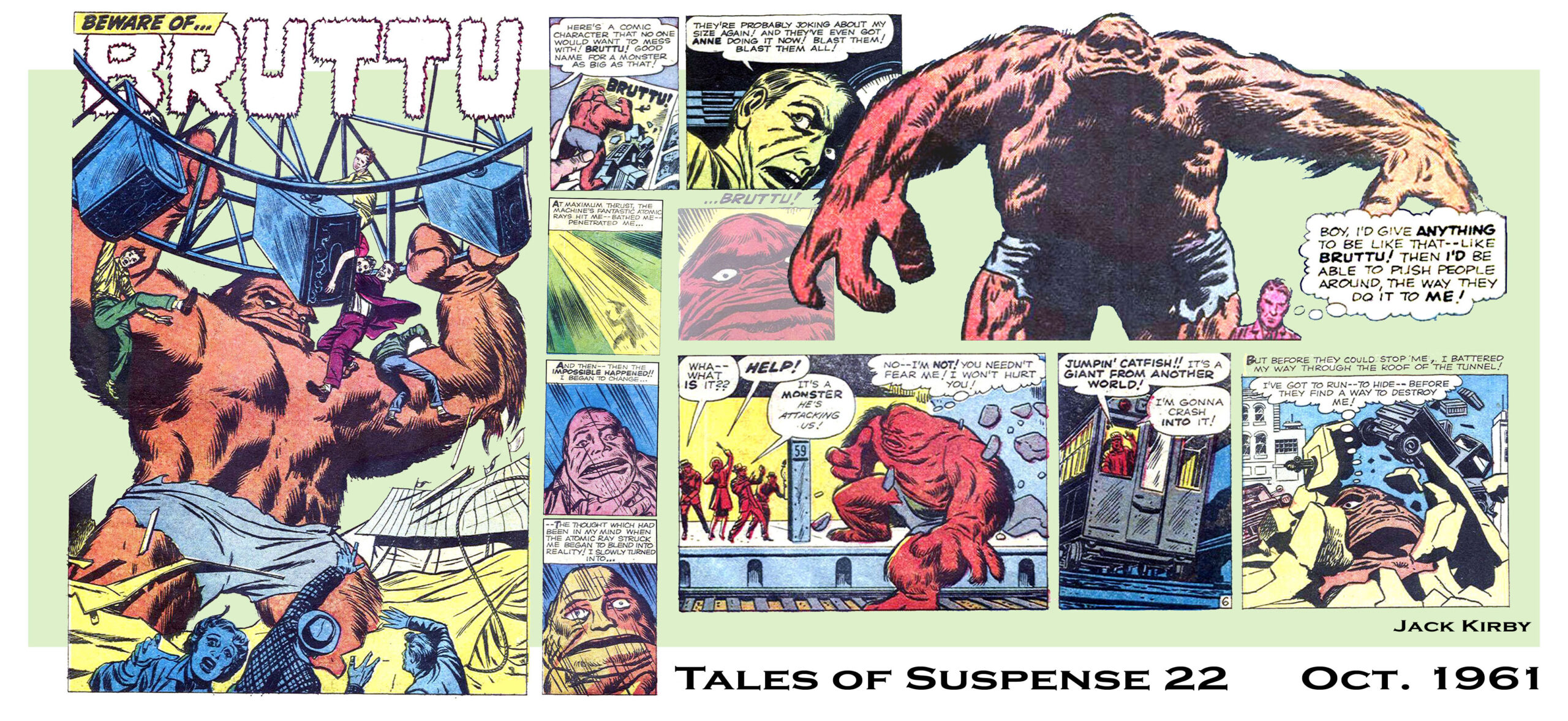
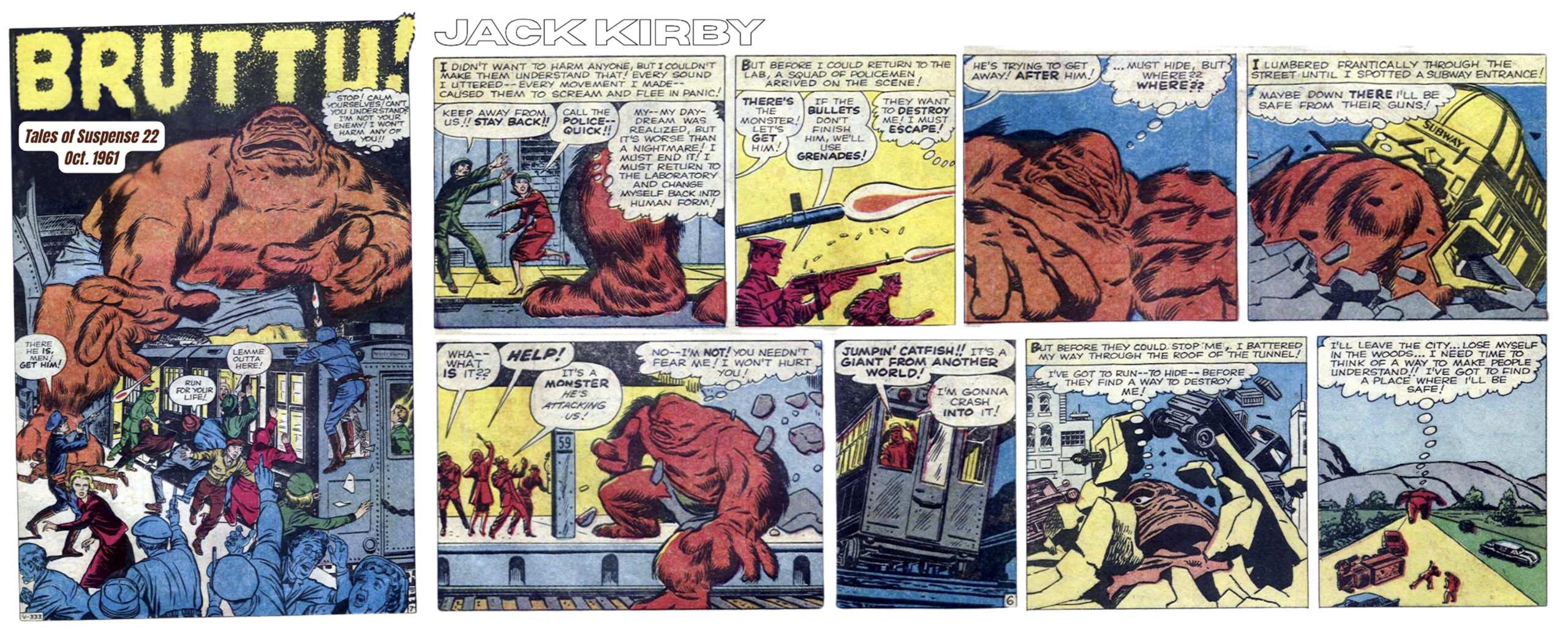
For example, in Tales of Suspense 22 (Oct. 1961), we have a stricken, transformed protagonist in the tragic mold of the Hulk or the Thing, two more enduring monster men also drawn by Kirby.
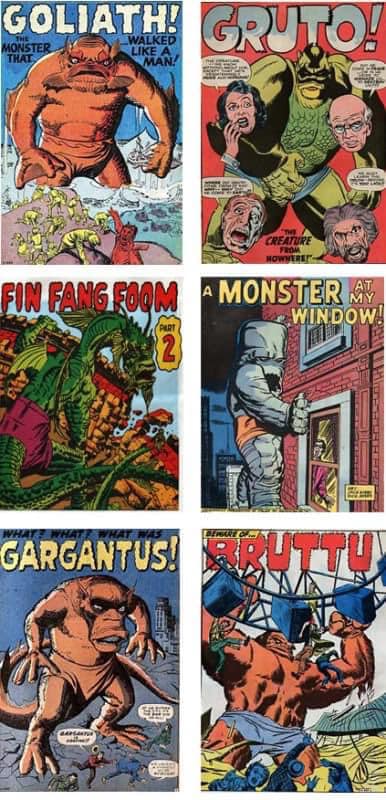
Bruttu loomed large on the newsstands in July 1961, alongside the equally gigantic Fin Fang Foom over in Strange Tales 89 and the Abominable Snowman in Tales to Astonish 24.
Debuting one month ahead of a new superhero team called the Fantastic Four, Bruttu was not the usual rampaging alien giant that stomped through Marvel titles at the time. Instead, Howard Lindley was a slight, easily intimidated lab technician who believed he’d disgraced himself in the eyes of the girl he liked, Anne Benson.
Bullied and mocked, Lindley is naturally attracted to the image of power he sees on the cover of a comic book, an orange-furred titan called “Bruttu.”
“Here’s a comic character that no one would want to mess with! Bruttu,” he thinks. “Good name for a monster as big as that!” (Note that Stan liked to compliment himself even in dialogue).
Lindley brings the comic book to his lab on the day when — you guessed it — an accidental exposure to radiation recasts the distracted scientist into the very form he’d been brooding about — Bruttu!
Easily 20 feet tall and unable to speak, Bruttu blunders clumsily into buildings and tunnels into the subway to escape police machine guns. Harried and frightened, the orange brute dodges army heavy artillery and escapes into a carnival.
“Why?? Why can’t they understand I’m not dangerous?” he wonders. The Hulk will later echo identical sentiments. “Why don’t they stop tormenting me? They treat me like a menace! All right — I’ll SHOW them! I’ll BE a menace!”
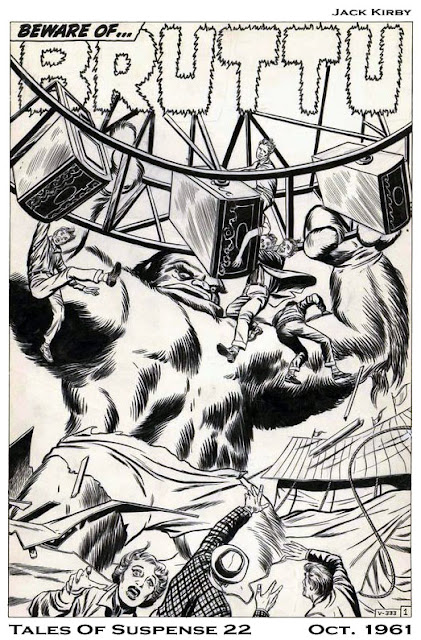 Bruttu lifts the House of Horrors and hurls it at the troops. He tears a Ferris wheel from its moorings, and briefly considers crushing two people who are riding on it.
Then this monster story takes an unusual turn. Bruttu takes a deep breath and calms himself down.
“What am I doing?” he thinks. “Why am I panicking this way? Go free, you two weaklings! I won’t harm you!”
Clear-headed now, Bruttu resigns himself to his grim fate. “All I can do is keep running … until they finally catch up with me and destroy me! But before I die, I must see Anne again! I must look upon the face of the woman I love … the woman who will never be mine!”
Approaching Anne’s house, Bruttu terrifies her, but then reassures her by scratching a message into the soil with a rake. He explains he’s harmless.
“Maybe you are telling the truth!” Anne replies. “If only HOWARD were here! He’s not afraid of ANYTHING! He’d have the courage, the intelligence to know how to deal with you!”
Startled by the realization that he already possessed the qualities his girlfriend wanted, the “battered and aching” monster returns to the lab to expose himself to radiation again, for better or worse.
And that’s where the police and the military find Lindley, reverted to human form. They ask him where the monster went.
“I don’t know,” Lindley replies truthfully, if misleadingly. “He was gone when I arrived!”
The story ends happily, with Anne in his arms and Lindley reflecting on a life lesson that rejects the lure of fantasy.
“I’ll never again want to be anything but what I am!” he tells her.
These themes of vast power, alienation and transformation would be played out, again and again, in the coming Marvel superhero comics, leaving a permanent impact on American popular culture.
About Author
