

 The Fly, Archie Comics’ pioneer Silver Age superhero, was a wall-crawler with an alliterative name who was secretly a teenager.
“(B)etween 1961 and 1964, (The Adventures of the Fly and The Adventures of the Jaguar) were practically the only superhero comics NOT published by DC and Marvel,” recalled popular culture author Will Murray.
But while Tommy Troy’s alter ego was a modest success, Marvel’s Peter Parker was a breakaway hit — and that gave Archie Comics ideas.
“(I)n 1965, Archie publisher (John) Goldwater thought he saw an opportunity,” noted Alan McKenzie. “He had been watching the rise and rise of Stan Lee’s Marvel Comics and figured, ‘How hard can it be?’ He hired Superman co-creator Jerry Siegel to revamp all of his superhero properties into one line of comics, the Mighty Comics Group.”
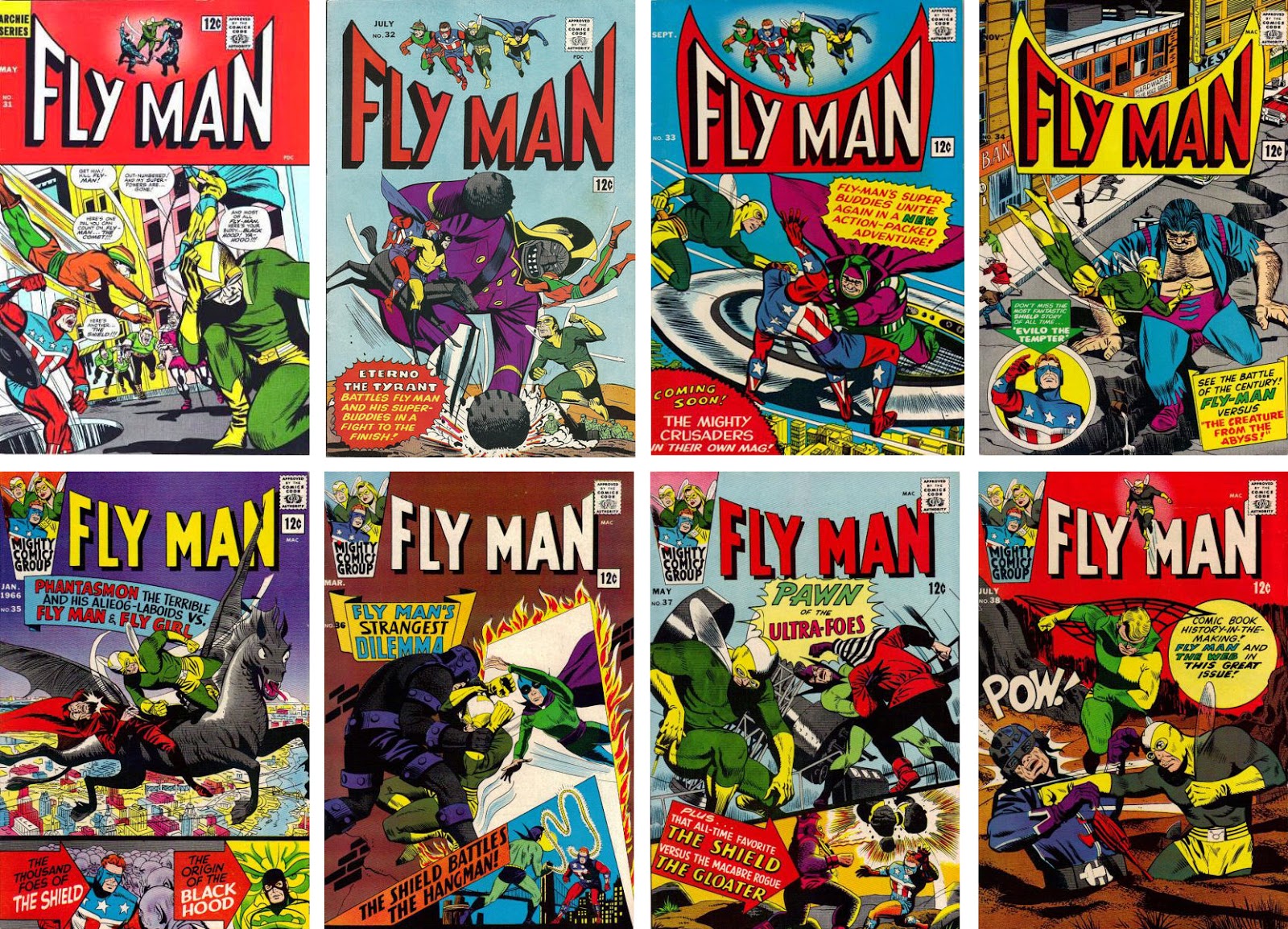
The Fly’s teenage alter ego had been abandoned early on, without explanation, and he became an adult attorney, Thomas Troy. But now Archie veered in the direction of Marvel’s most popular character, and changed the Fly’s name to something more suggestive of “Spider-Man” — “Fly-Man.”
“Not exactly a title calculated to walk off the newsstands,” Murray observed drily.
 Despite his brief run, Fly-Man did manage to make it into paperback.
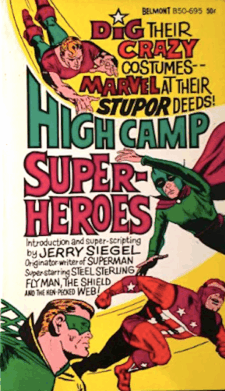
“Archie Comics was quick to capitalize on virtually any sixties superhero trend, producing in April 1966 High Camp Super Heroes,” noted Michael Eury in his book Hero-A-Go-Go. “The Belmont paperback was a project “…gathering in black and white a handful of its most recent Steel Sterling, Shield, and Fly-Man stories. Its cover, using Paul Reinman art, featured copy which winked at its biggest competitors: ‘Dig their Crazy costumes — Marvel at their stupor deeds!’”
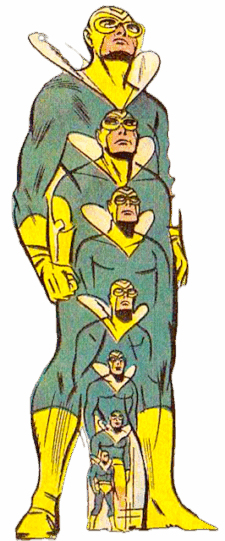
Fly-Man’s already numerous superpowers were expanded, and he gained the ability to shrink or grow to giant size.
“I always rather thought the change of Fly to Fly-Man was also influenced by Ant-Man, who also suddenly acquired size-changing powers, thereby becoming Giant-Man,” wrote John David Hall. “Jerry Siegel’s subsequent career in British comics was also interesting, and possibly galling for him, as he took over a one-time super villain called the Spider (in the pages of Lion weekly) and this character suddenly acquired a very Mighty-ish feel.”
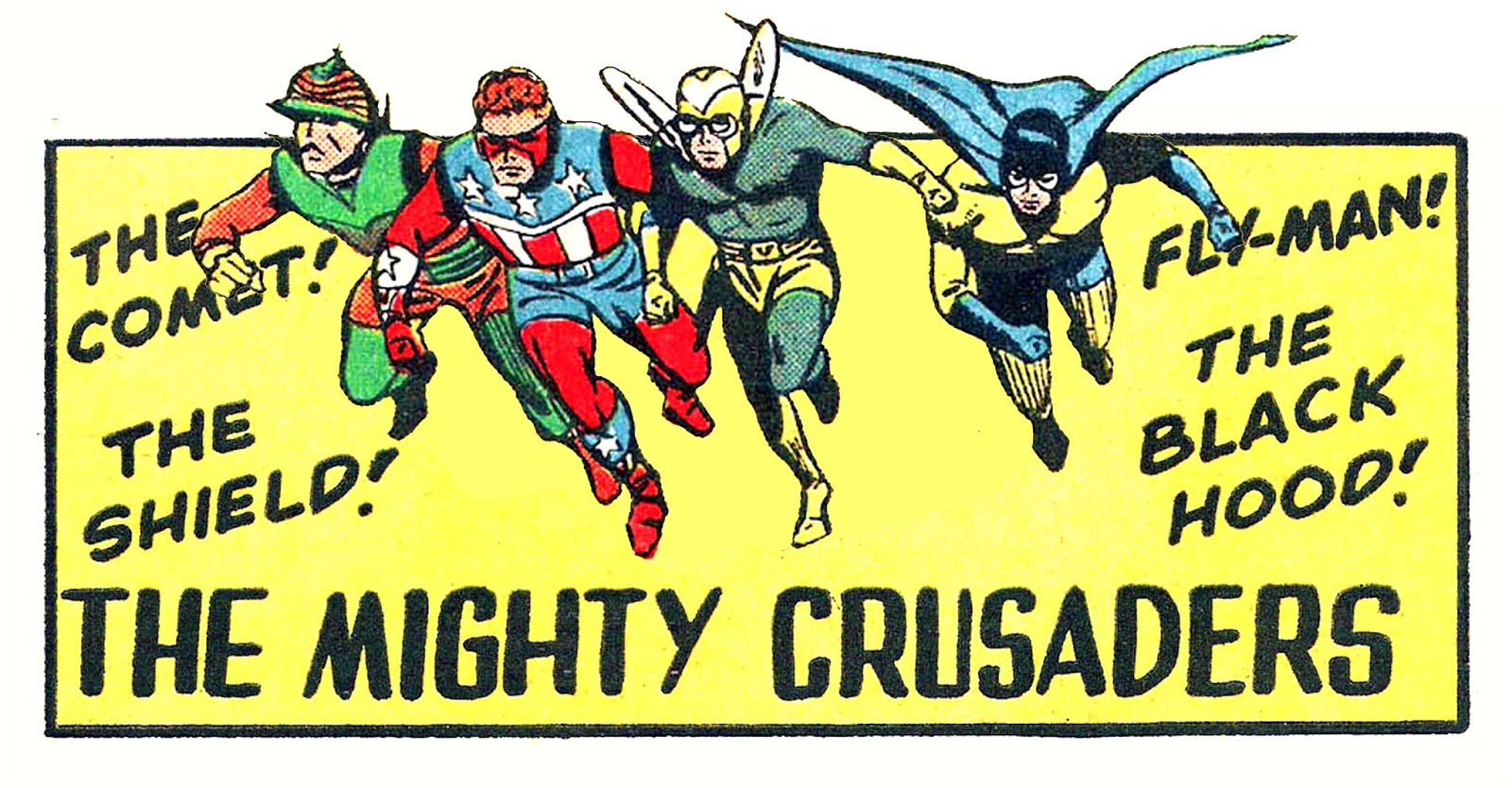
“Starting with the Fly, Siegel morphed him into Fly-Man and pitched the writing style as a bad pastiche of Stan Lee,” McKenzie wrote. “To further beef up the appeal, Siegel included additional superheroes teamed up to help Fly-Man battle the Spider, including Golden Age MLJ characters the Comet and the Black Hood, as well as a revamped version of the Shield … and of course Fly-Girl.”
Murray wrote, “The Stan Lee influence was obvious, from the jocular and melodramatic dialogue to story titles like ‘Evil Lurks Among Us’ and ‘Beware… the Blockbuster!’ Siegel’s superheroes bickered among one another. They had problems.”
“It’s difficult to say now, over 40 years later, whether Siegel was just doing a hack imitation, or was lampooning the Marvel approach to comics.”
Michael Kelly Schurman recalled, “To me, ‘camp’ destroyed the Silver Age. What Stan Lee pulled off with Marvel was too idiosyncratic to be imitated, too naturally his shtick to be copied.
“That said, however, I have an affection for the Mighty Crusaders. Of course, I was disappointed to see a good character like the Fly so treated, and the Jaguar and the Private Strong version of the Shield ignored, but the old MLJ heroes brought back to life were somewhat of a good thing. Like a great piece of music degraded by a terrible arrangement, one could still see the worth of those characters.”
When the Batman TV show pitched camp in January 1966, kicking off the silly season, Fly-Man and friends fit right in.

About Author
