
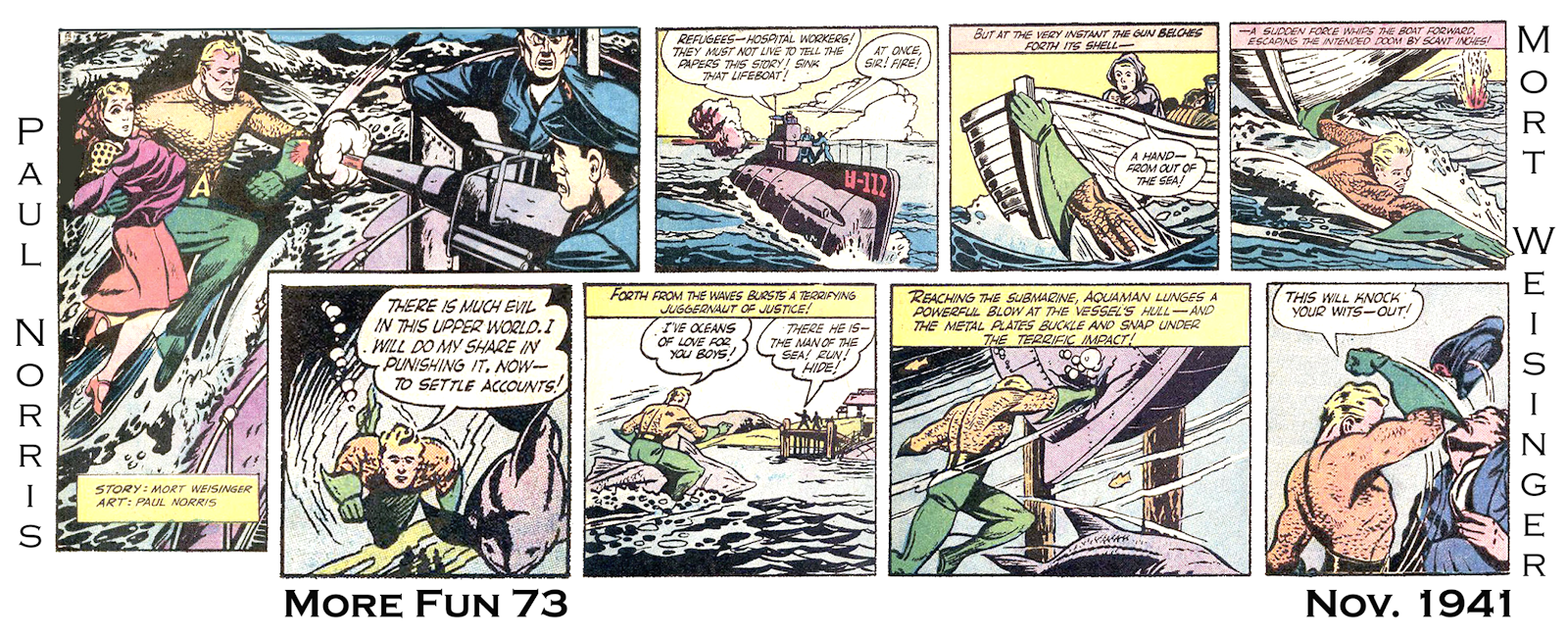
With the Sub-Mariner having established the commercial viability of a seagoing superman two years before, DC Comics launched its own variation on that theme in More Fun Comics 73 (Nov. 1941).
“Aquaman hung around a lot longer than Subbie,” noted comics historian Don Markstein. “Paradoxically, he did it by not being too successful. Like Green Arrow, he survived the 1950s superhero decimation by hiding in the back pages of a comic that was headlined by Superboy.”
Created by writer Mort Weisinger and artist Paul Norris, Aquaman’s first recorded mission was rescuing a lifeboat full of war refugees and hospital workers from a (presumably Nazi) submarine out to kill them in order to keep them quiet.
In September 1941, the month this issue appeared on the newsstands, the first “liberty ship,” the SS Patrick Henry, was launched in Baltimore. Liberty ships were built to meet British orders for transports to replace ships that had been lost to German U-boat attacks in the Battle of the Atlantic.
Also that same month, American aviator hero Charles Lindbergh was roundly criticized after he delivered an America First Committee speech accusing “…the British, the Jewish and the Roosevelt administration” of leading the United States toward war.
Unhindered by any pretense of neutrality toward evildoers, Aquaman proceeded to punch a hole through the U-boat’s hull with his bare fist.
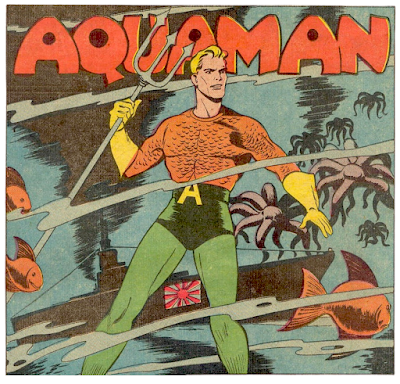 “Right from the start, Aquaman is depicted as a figure involved in world events,” noted comics historian Michael E. Grost. “The politically liberal, anti-Nazi viewpoint here is consistent with the liberal, anti-totalitarian politics of the Weisinger-edited Silver Age Superman stories.
“Like Superman, Aquaman is something of a self-starter. He is not sent on a mission by some higher authority figure. He simply sees that bad things are happening on the surface of the Earth, and tries to stop them. Both heroes are especially concerned with protecting the weak and innocent. Even in this origin story, Aquaman spends as much time helping the refugees as he does battling the villains.”
In addition to his great speed and strength, the Sea King could initially talk to ocean life, presumably much the same way Tarzan was able to talk to jungle animals. Years later he would lose his super-strength, but gain vast “aquatic telepathy.”
Explaining his origin in that first adventure, he said, “The story must start with my father, a famous undersea explorer —if I spoke his name, you would recognize it. My mother died when I was a baby, and he turned to his work of solving the ocean’s secrets.
“His greatest discovery was an ancient city, in the depths where no other diver had ever penetrated. My father believed it was the lost kingdom of Atlantis.
“He made himself a watertight home in one of the palaces and lived there, studying the records and devices of the race’s marvelous wisdom.
“From the books and records, he learned ways of teaching me to live under the ocean, drawing oxygen from the water and using all the power of the sea to make me wonderfully strong and swift. By training and a hundred scientific secrets, I became what you see — a human being who lives and thrives under the water.”
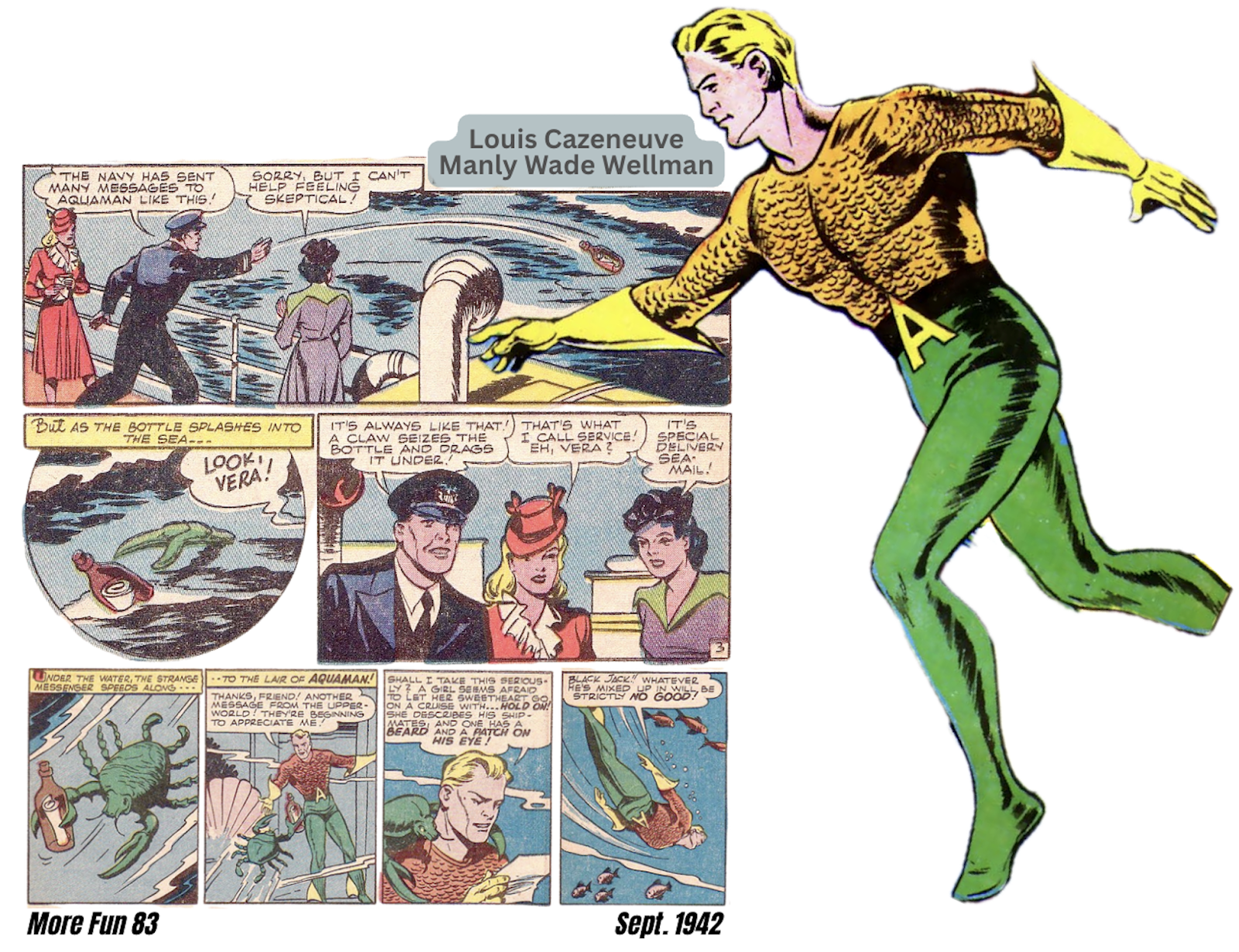
In his second adventure, Aquaman meets his Golden Age archenemy, Captain Black Jack, a pirate who operates under the cover of the chaos of wartime. In More Fun 78 (April 1942), he battles the super villain Master Sargasso, a murderous madman who enslaves sailors using a sleep gas. The story was written by noted fantasy author Manly Wade Wellman.
The undersea is often a symbol of the unconscious mind, but Aquaman’s adventures did not take on a more relaxed and dreamlike quality until they were illustrated by the uniquely talented Ramona Fradon, beginning in 1951.
“Her bold, clear brush strokes are highly regarded by many discerning comics aficionados,” observed Markstein.
Aquaman dog-paddled along for 19 years in the back of More Fun Comics and then Adventure Comics. Presumably because his mise en scène proved awkward to work into a land-based story, he wasn’t a part of either the Justice Society of America or the Seven Soldiers of Victory.
“When superheroes came back into vogue, DC gathered most of its existing costumed characters into the Justice League of America, a revival of the old Justice Society,” Markstein noted. “Since they hadn’t yet re-developed a full stable of super guys when the JLA started, even Aquaman was included, despite the fact that in a land-based group like that, he was like a fish out of water. The first JLA try-out issue, which appeared in The Brave & the Bold 28 (Feb-Mar 1960), marked Aquaman’s first appearance on a comic book cover.”
As a founding member of this popular team, Aquaman’s newly elevated profile quickly earned him a Showcase tryout run, his own title and a cartoon series shared with Superman. Along the way, he also picked up a new origin and a young sidekick, Aqualad.
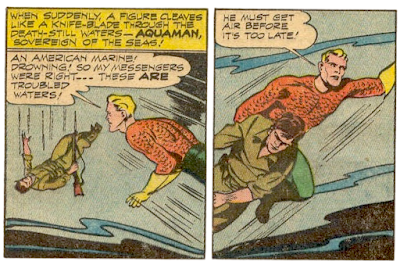 “The only thing that DC screwed up with Aquaman was taking away his super strength during the Silver Age,” observed comics historian Johnny Williams. “There was little to no indication that Arthur had anything other than normal human strength, which was ridiculous for a being whose body could survive in depths that would crush a submarine’s hull like aluminum foil.”
“Part of Namor the Sub-Mariner’s appeal is his awesome strength. Why DC’s writers chose to ignore or write out Arthur’s always annoyed me. Thank goodness contemporary writers woke up and restored the Sea King to his full and rightful physical power.”
I’m guessing the DC editors thought telepathic fish tricks were the character’s strong suit, particularly when charmingly illustrated by Fradon (Aquaman’s octopus pal Topo was particularly cute). But the character is more formidable now, both in physical strength and box-office power.
“There are now so many superhero movies that characters who can barely sustain their own print comic book are being tapped to launch potential film franchises,” noted Reed Tucker in Slugfest: Inside the Epic Fifty-Year Battle Between Marvel and DC. “As recently as 2005, a big-budget Aquaman movie was considered so absurd that the makers of HBO’s behind-the-scenes Hollywood comedy Entourage turned it into a running joke for the whole season.”
About Author
