
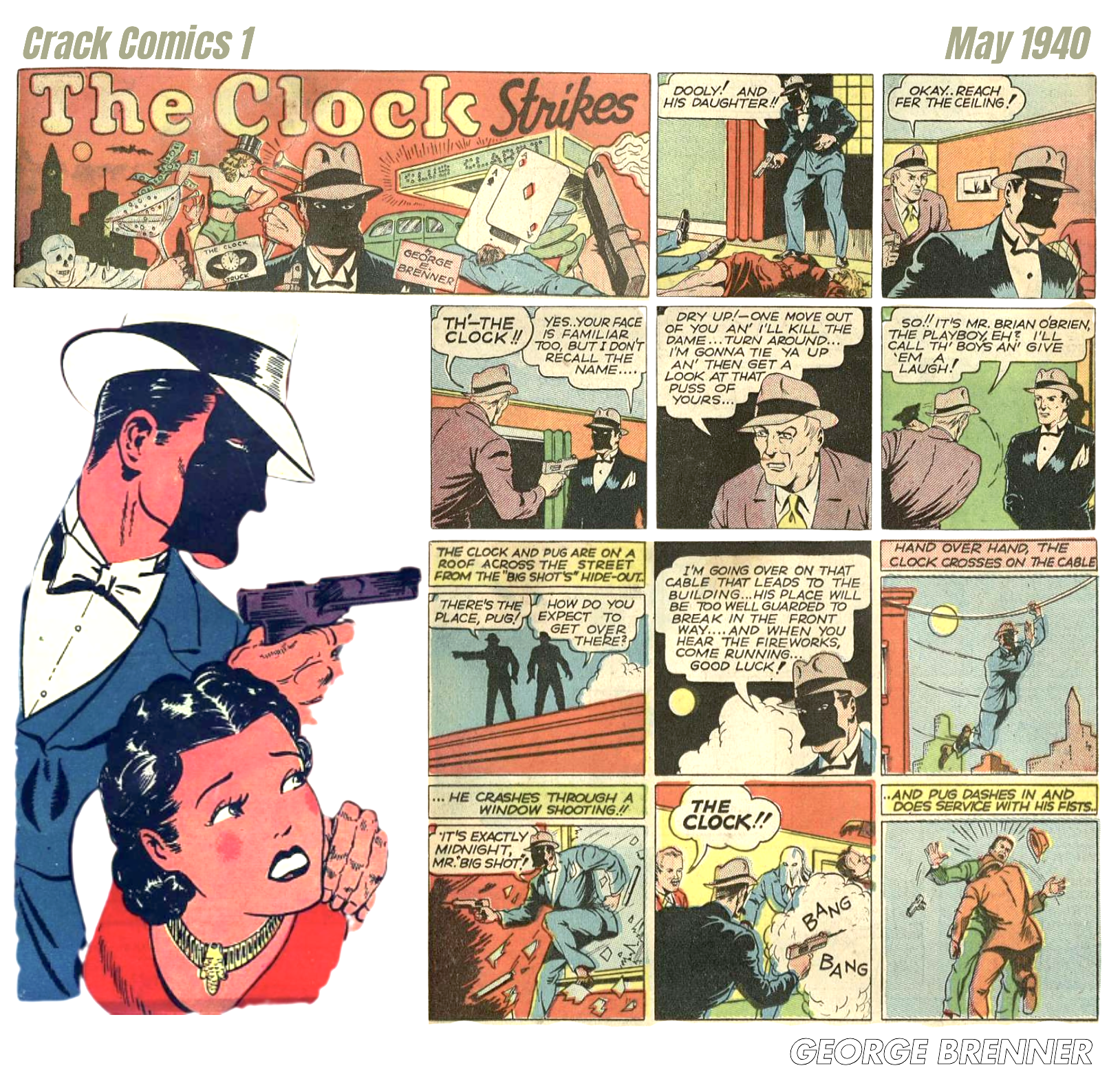
Largely forgotten now, he was the first masked hero in comic books. But the Clock’s hour has long since passed.
“The dapper crimefighter made his debut late in 1936, appearing at about the same time in two different magazines, and went on to be part of several others during his eight years as a mystery man,” noted comics historian Ron Goulart. “The Clock was the invention of artist-writer George E. Brenner.”
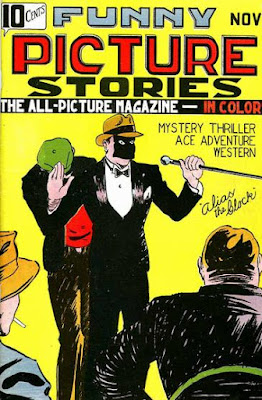 The Clock was secretly “…Brian O’Brien, a former All-American fullback and champion polo player, (who is) outraged at the widespread crime in the city,” recalled Jess Nevins. “So he retires from his job as district attorney and devotes his time to crimefighting, making criminals’ time run out as the Clock. (The police hate him for this).”
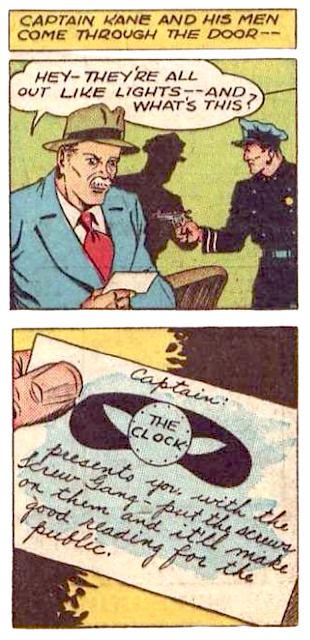
“He wore a tuxedo, fedora, and black silk mask that covered his face,” Goulart wrote. “Brenner’s source of inspiration was the mystery men of the pulps, such as the Shadow, the Spider, and the Phantom Detective. After cleaning up a criminal mess, the Clock left his calling card behind. It showed the face of a timepiece and bore the line, ‘The Clock has struck.’”
After debuting simultaneously in both Funny Pages 6 and Funny Picture Stories 1 in Nov. 1936, Brenner’s mystery man ticked through any number of other comic book titles.
 “The Clock appeared in several Comics Magazine/Centaur titles, including Detective Picture Stories and Keen Detective Funnies,” observed comics historian Don Markstein. “But Centaur Publications didn’t go on to become a major publisher, and all those titles were soon gone. Many of its properties were passed on to Quality Comics (Plastic Man, Blackhawk), which did become one of the majors. The Clock’s first appearance at Quality was in the third issue (Dec. 1937) of Feature Funnies, which at the time mostly reprinted newspaper comics (such as The Bungle Family, Dixie Dugan, and Mickey Finn), but peppered them with a little new material. Brenner continued to write and draw his adventures. He continued through a name change to Feature Comics, until the 31st issue (April 1940), shortly after Doll Man had become the main feature, which signaled the phasing-out of reprints.”
“The character wasn’t dropped, merely transferred to help launch a new title, Crack Comics, which started with a cover date of May 1940.”
In Crack Comics 8 (Dec. 1940), the Clock defeated a super-strong Mongolian whom gangsters dubbed “Stuporman.” One may detect a note of resentment there from Brenner toward a certain late-arriving, upstart dual-identity crimefighter who had completely overshadowed the Clock, beginning in 1938.
The Clock concept got a significant further refinement when Will Eisner introduced his working-class mystery man, the Spirit, in June 1940.

About Author
