
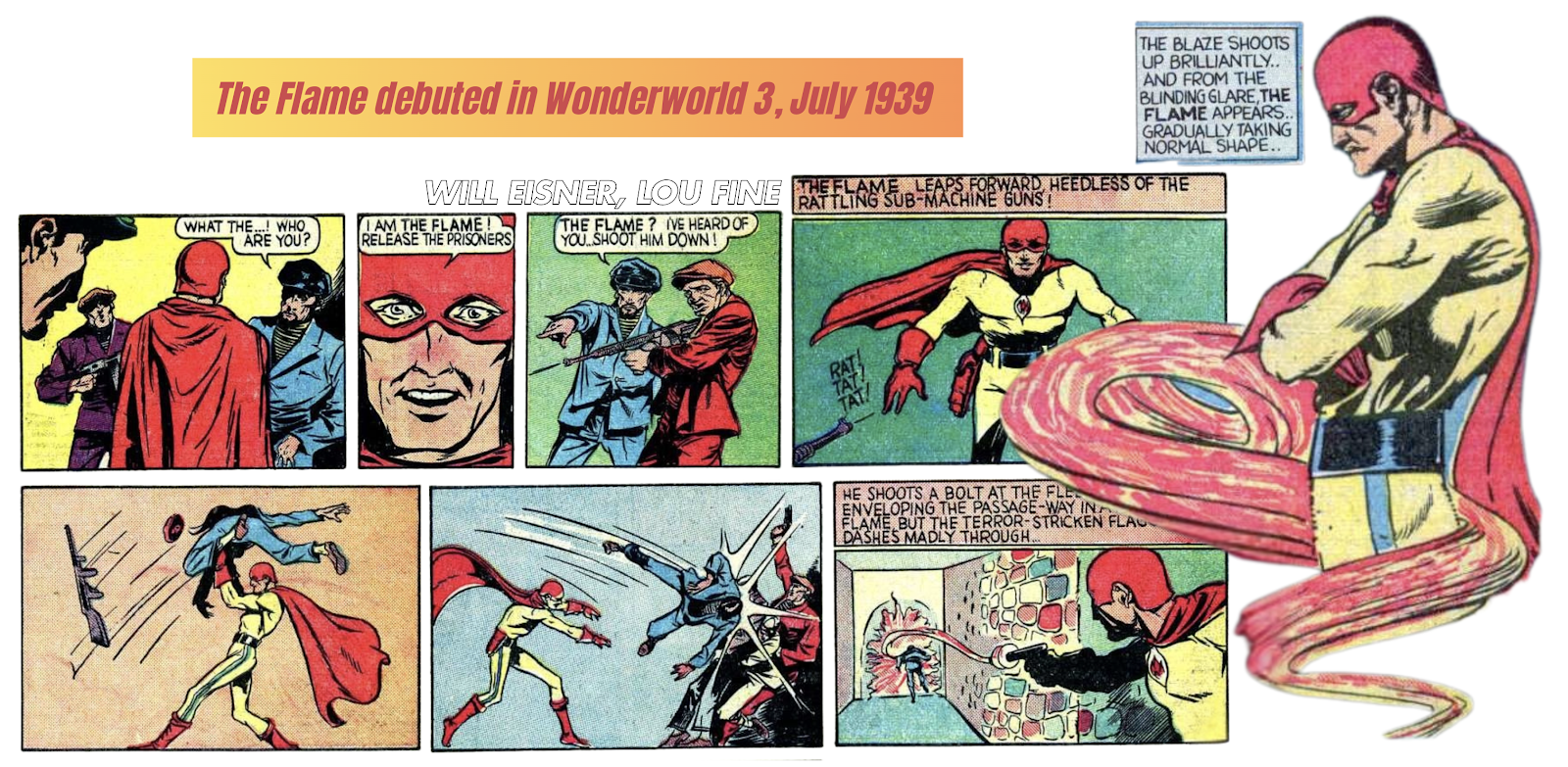
Like the equally fiery Human Torch, the Flame was part of that first wave of superheroes who appeared in Superman’s wake.
The comic book superheroes of the 1930s were a breed apart. The immediate popularity of Superman had shown them the way, sort of.
Should a new character have a caped costume, but no super powers, like Batman? Or super powers without a costume, like the Sub-Mariner? Or both super powers and a costume, and risk being sued out of existence after a single appearance, like Victor Fox’s Wonder Man?
Fox’s The Flame, who debuted in 1939, would never be sued, if only because he was so hard to pin down.
The Flame shared a more muted version of the shtick that would make the Human Torch famous when he debuted three months later.
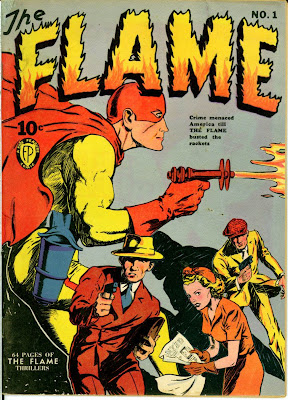 “Fox Feature Syndicate (The Blue Beetle, The Green Mask) was one of the comic book industry’s bottom feeders, founded in plagiarism and sustained by shoddy business practices,” noted comics historian Don Markstein. “Knowing this, one might expect Fox’s early superhero, the Flame, to have been a copy of Marvel’s Human Torch. Actually, the Flame appeared a few months before the Torch’s November 1939 debut. Anyway, although both used fire as a motif, the Flame had a different set of fire-related abilities.”
In an origin that paralleled Superman’s (and Moses’), infant Gary Preston’s father, a missionary in western China, placed the child safely in a basket before being drowned in a flood. Gary washed ashore in Tibet, the traditional comic book locale of super powers. The lamas who raised him trained him to physical and mental perfection, granting him power over fire.
In his first recorded adventure (Wonderworld Comics 3, July, 1939), the Flame seemed to be a costumed crimefighter with a flame gun. But his powers varied.
“The initial adventures of the yellow-clad superman were handsomely rendered by Lou Fine, but the Flame was a slow starter and he took several issues to get his act together,” noted popular culture historian Ron Goulart.
“As a costumed crimefighter, he cannot be harmed by bullets — they melt upon contact — or by explosions, but he can be weakened by water,” wrote comics historian Jeff Rovin. “A knife or club will harm him as well.
“Apart from his ability to control fire, the Flame’s most astonishing talent is way he constantly surprises criminals by appearing, magically, in fireplaces, burning ships and even the flames of cigarette lighters!”
In that, he resembled Marvels’ Golden Age Vision, who appeared out of smoke.
“It wasn’t until 1941 that (the Flame) started bursting into flame like the Torch,” Markstein noted.
In addition to starring in Wonderworld, the Flame headlined his own title for eight issues and co-starred with the Blue Beetle and Samson in seven issues of Fox’s Big 3.
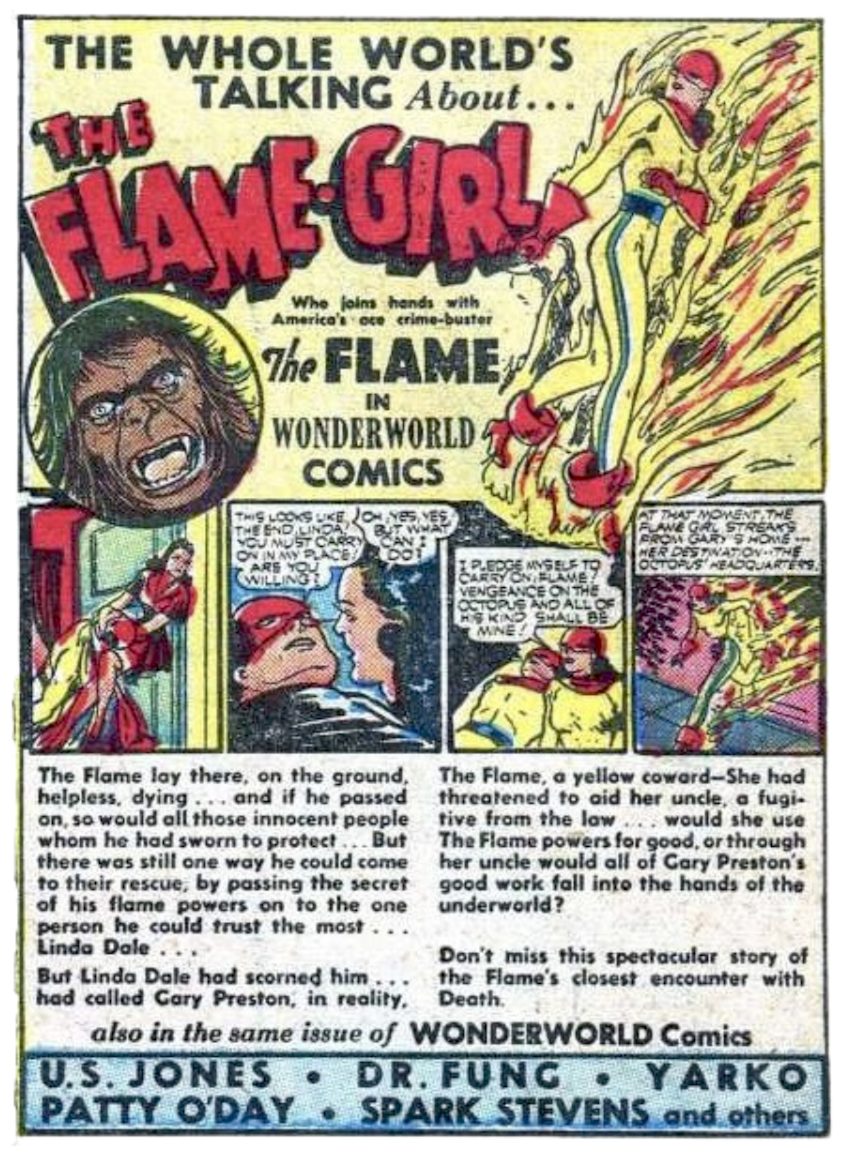
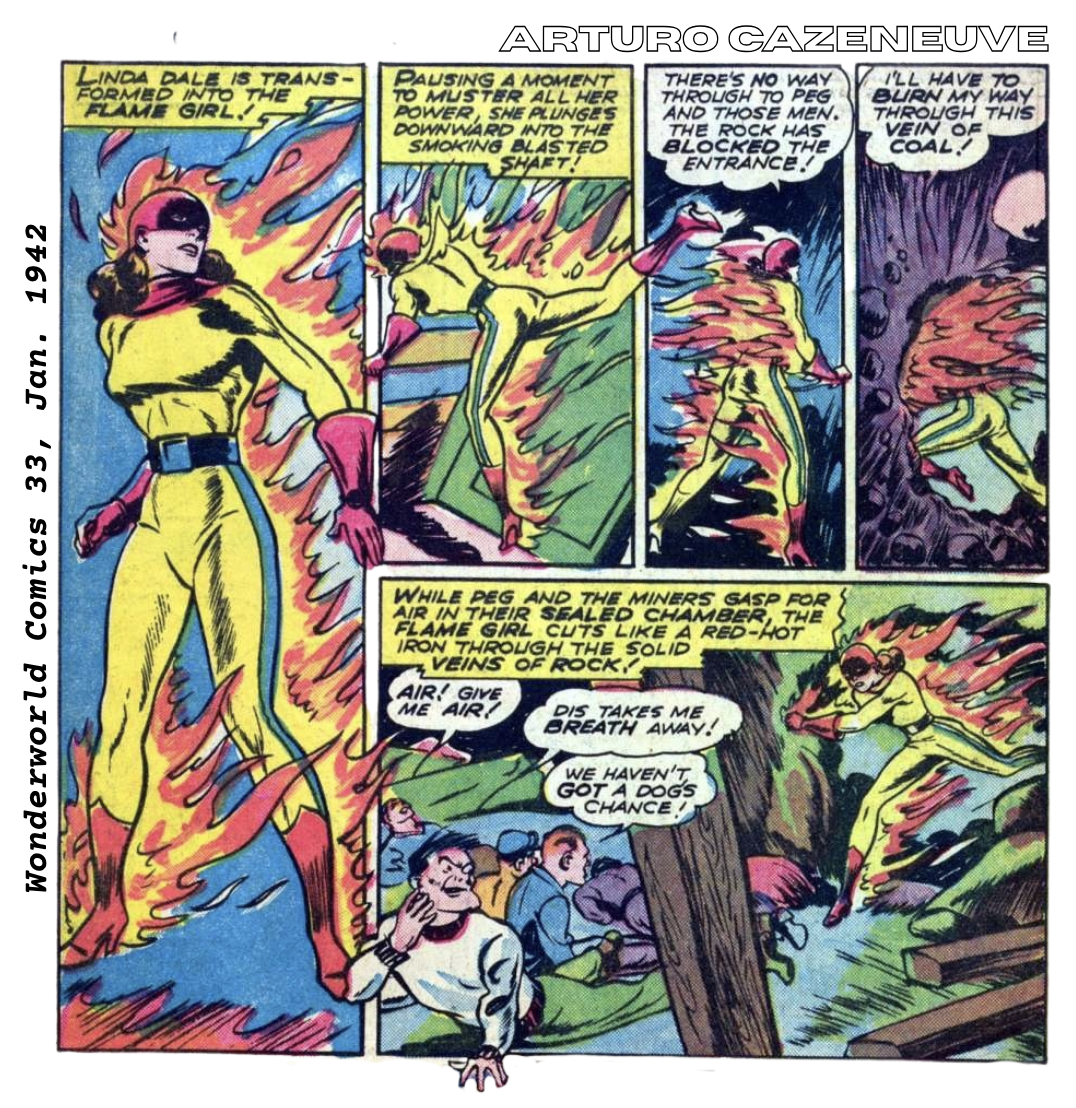
Flame Girl joined his crusade toward the end of his run. And in 1941, the Flame, the Human Torch and Toro were joined by yet another blazing superhero, Centaur Comics’ Fire-Man
About Author
