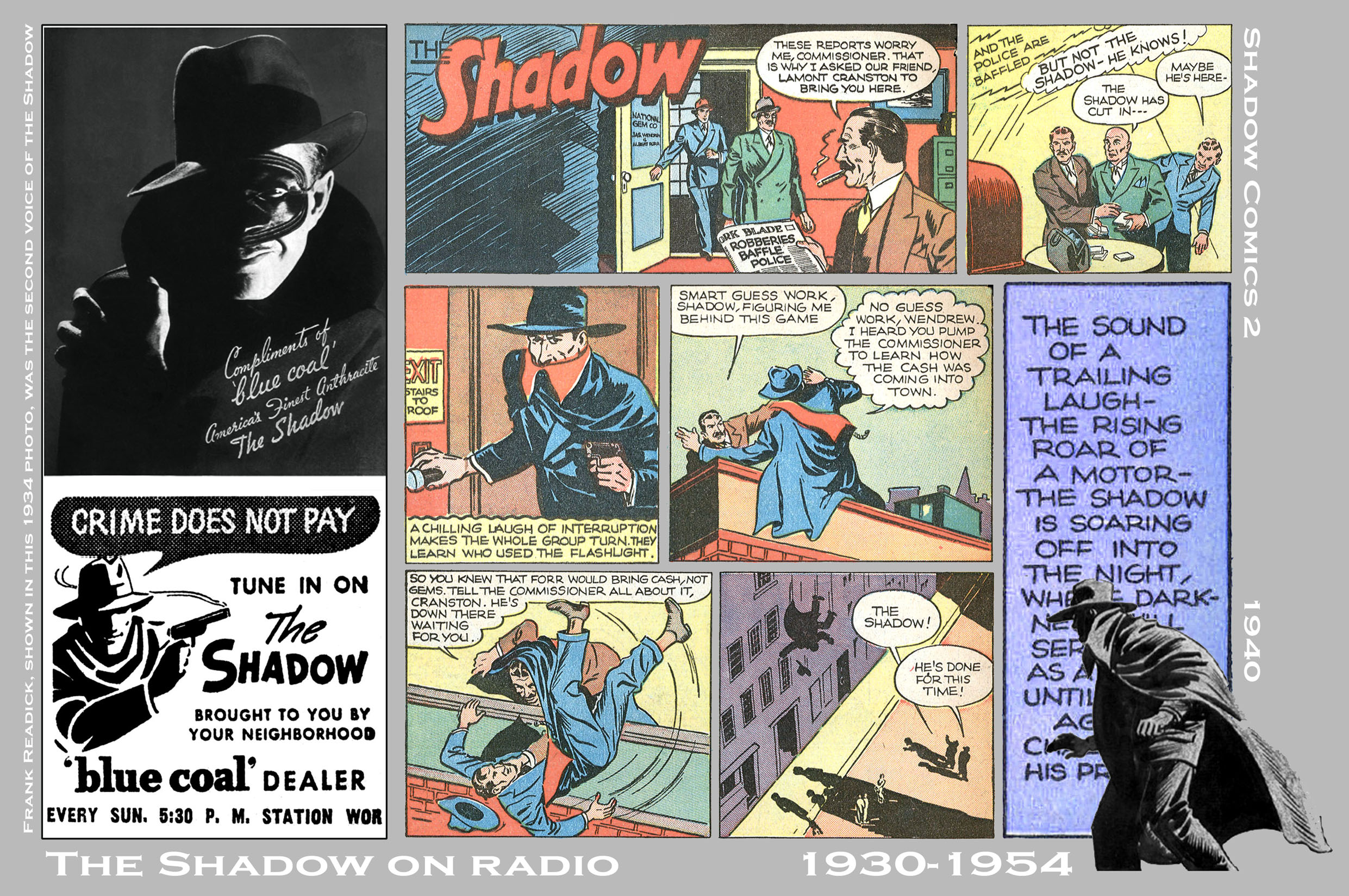
The Shadow first “appeared” less than a year after the 1929 stock market crash, a figure as dark as the Great Depression that spawned him.
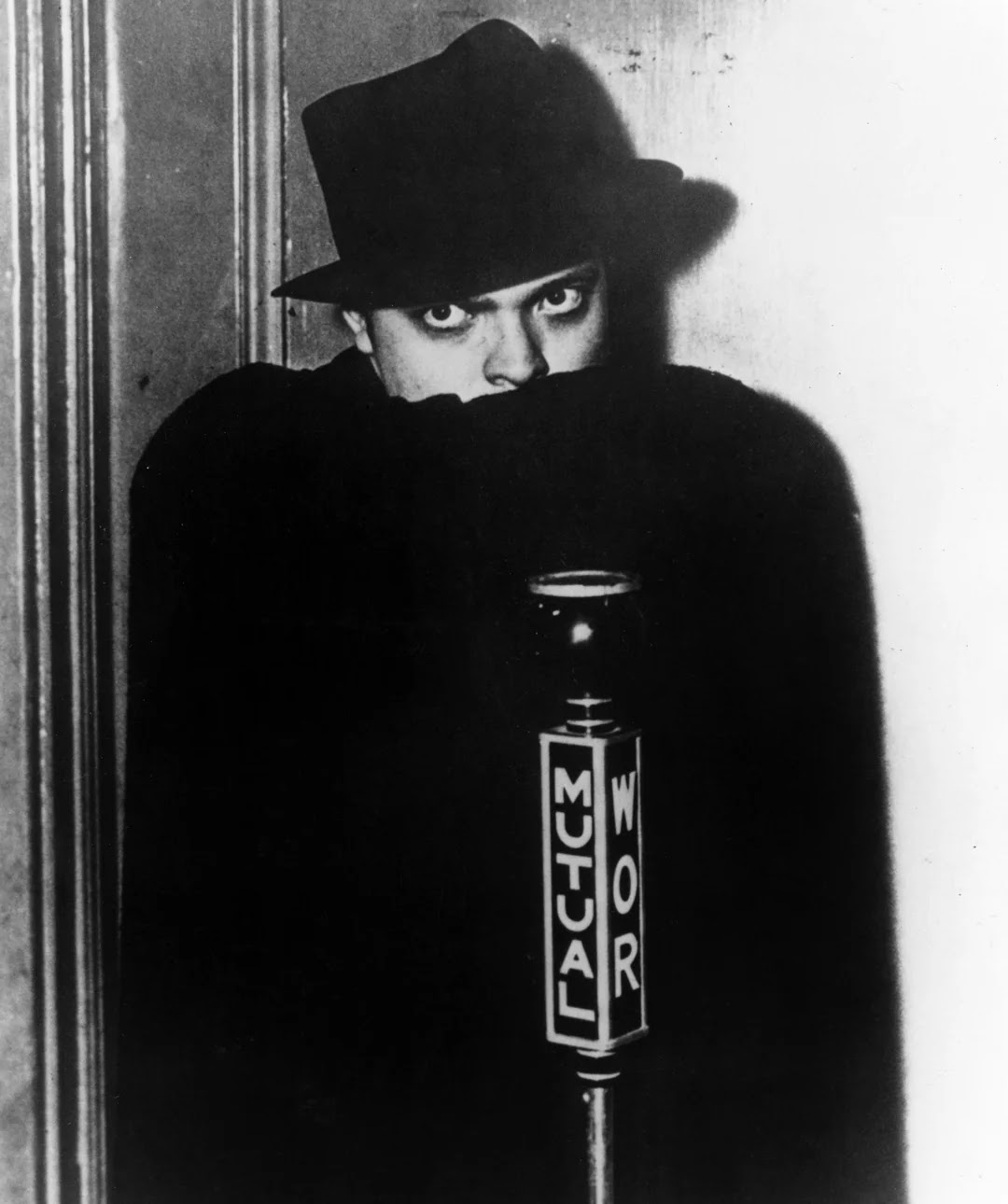
The Shadow began merely as a mysterious, spooked-up radio narrator on Street & Smith Publications’ new Detective Story Magazine Hour on July 31, 1930. The concept was reportedly suggested by the popularity of a mysterious figure called the Silver-Masked Tenor who’d been performing on the Goodrich Silvertown Orchestra program since 1925.
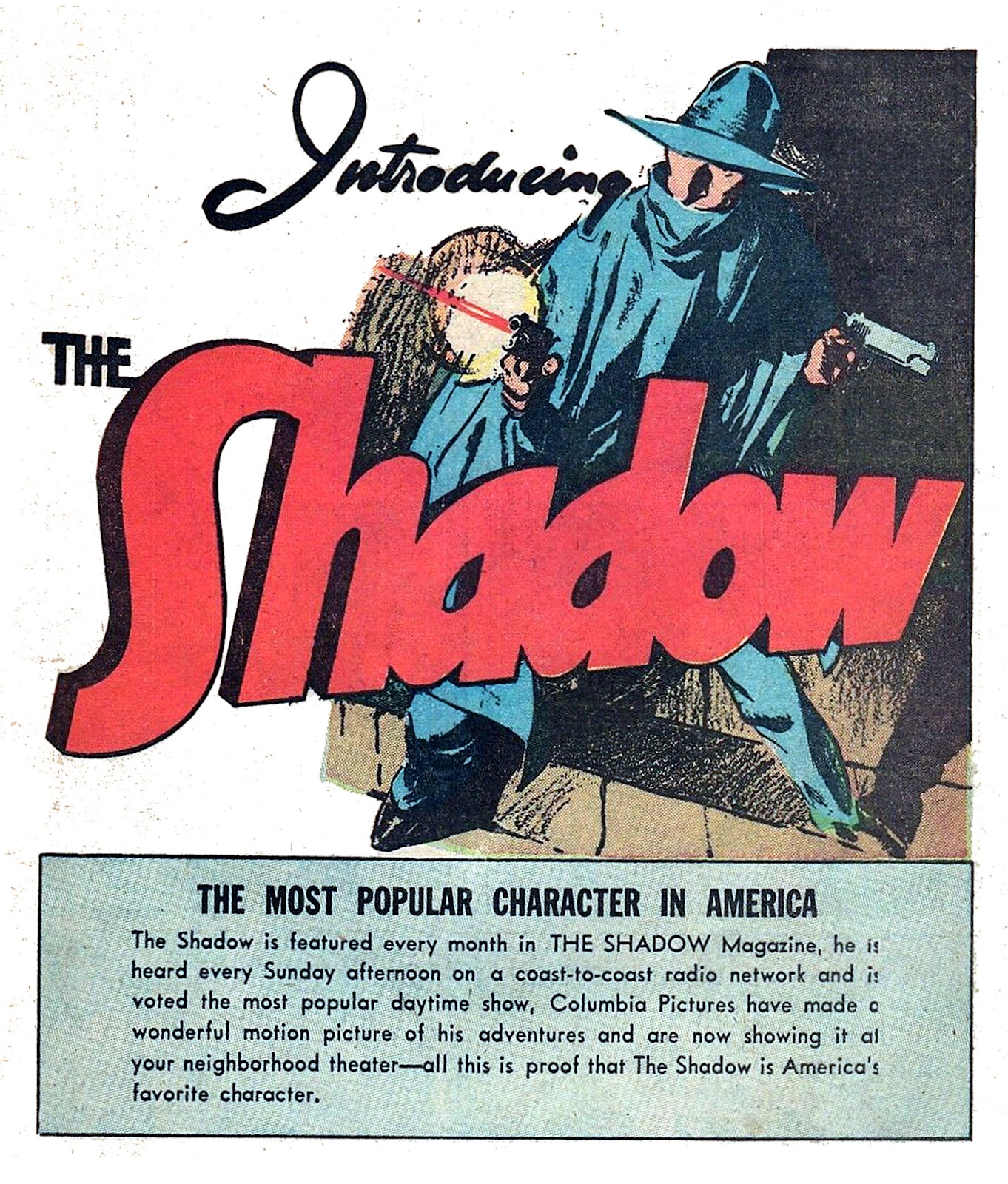
The success of the Street and Smith program, sponsored by Blue Coal, prompted a 1931 pulp magazine spinoff which starred the Shadow as a crime-fighting mystery man. The synergy of all this pushed the Shadow back onto the airwaves as a super-powered hero in 1937. A newspaper comic strip, comic books, and movies followed.
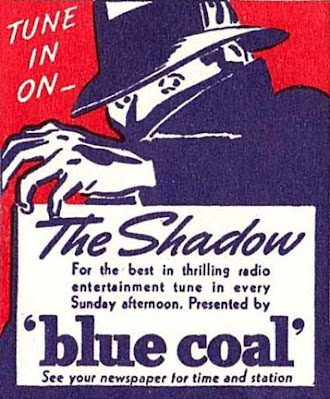 “Through this early period, 1932 to 1936, the Blue Coal people showed a mixture of fascination and dissatisfaction with the Shadow, dropping the show several times but always coming back for more,” noted John Dunning in Tune In Yesterday. “In 1937, they finally hit upon the right formula. Orson Welles, the 22-year-old audio magician, was tapped as the first Shadow in the new mold. Agnes Moorhead, who would go on to bigger things as a member of Welles’ Mercury Theatre, became the first Margot Lane. The Shadow had arrived in his most famous format, the man of mystery who could ‘cloud men’s minds so that they cannot see him.’”
The Shadow, who merely posed as the real millionaire Lamont Cranston in the pulp magazine, was actually Lamont Cranston on radio.
“In his heyday, Cranston and friends formed one of the hottest items on the Sunday air,” Dunning noted. “The fate of the world — for 30 minutes each Sunday afternoon — hung in the balance.”
So the Shadow was actually two distinctly different superhero characters appearing simultaneously in different media, each of whom had a legion of fans. Mysterious indeed!
“The litany is of course now legendary: ‘Who knows what evil lurks in the hearts of men? The Shadow Knows…,’” recalled Chris Steinbrunner in The Shadow Scrapbook. “The maxim that the weed of crime bears bitter fruit, intoned at the start of every program, was biblical in its sternness. The Shadow was an Old Testament avenger, a ruthless slayer of the wicked, very befitting the Depression decade of his greatest strength.
“The Shadow was both the force for good and lurker in the darkness. In the unstable and turbulent times in which he flourished, a time not without despair, it was somehow right for him to operate completely outside traditional institutions and methods of justice. Radical, a people’s hero, a gritty, sober Scarlet Pimpernel translated into a bleak urban setting, he belonged to his Depression world and was its champion.”
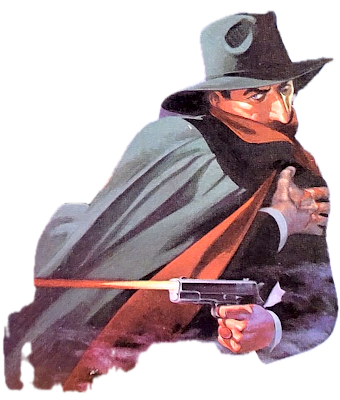 In the later years of the show, Lamont Cranston kept busy by invisibly thwarting mad scientists and werewolves. But in Welles’ early exploits, he also explored the limits of the Shadow’s psychic superpowers.
In Danger in the Dark, which aired Oct. 10, 1937, the Shadow goes up against the Owl, a blind criminal mastermind who has enhanced powers of perception.
In The Temple Bells of Neban, which aired Oct. 24, 1937, Cranston runs into snake charmer and exotic dancer Sadi-Bel-Adda, whose uncle was the Yogi who taught Cranston how to use his powers. She threatens that if the Shadow tries to interfere with her city-wide drug-dealing operation, she will use her bell spell to strip him of his invisibility and expose him. The Shadow eliminates that possibility — and Sabi-Bel-Adda — by switching snakes on her.
In Terror Island, broadcast Nov. 14, 1937, the Shadow faces King Malo, the high priest of the voodoo god Damballa and a man who can also make himself invisible.
In The Ruby of Modoc, which aired Nov. 21, 1937, the Shadow must battle Reigh Singah, a mystic who can force people to commit suicide with his hypnotic powers.
In The Voice of Death, broadcast Dec. 26, 1937, the Shadow is wounded by gunfire and trapped in an escape-proof room. Cranston must use his telepathic powers to summon Margot to rescue him.
In Hypnotic Death, which aired Feb. 14, 1939, Margot finds Cranston ill and voiceless, the victim of the telepathic mental control of the villainous Dr. Dharma.
In the transcription broadcast The Power of the Mind, the kidnapped psychic researcher Dr. Waldeck uses telepathy to call the Shadow to his aid. Exploited Myanmar natives also employ telepathy to contact the Shadow in another transcription broadcast, The Message from the Hills.
And in the transcription broadcast Revenge on the Shadow, the city’s gang leaders hire the Hindu mystic Vedangi to use his powers of thought projection and mind control to destroy the Shadow.
“(T)he Eastern origins of the Shadow’s esoteric knowledge ring true to the spirit of the times, when Theosophists were insisting that one should look to the East to find the powers of mind and spirit evinced as the magic of former ages,” wrote Philip Ball in his book The Dangerous Allure of the Unseen. “For the Theosophists, invisibility was indeed an affair of the mind.”
“It became increasingly expected over the course of the 19th century that discussions of occult powers such as invisibility be referred to an agency with at least a veneer of scientific respectability, even if that meant Mesmer’s animal magnetism or Reichenbach’s odic force,” Ball wrote. “In the age of Freud, the power of invisibility — like all the psychic powers claimed by the mediums of the day — lurked, as the Shadow might put it, in the minds of men.
About Author
