
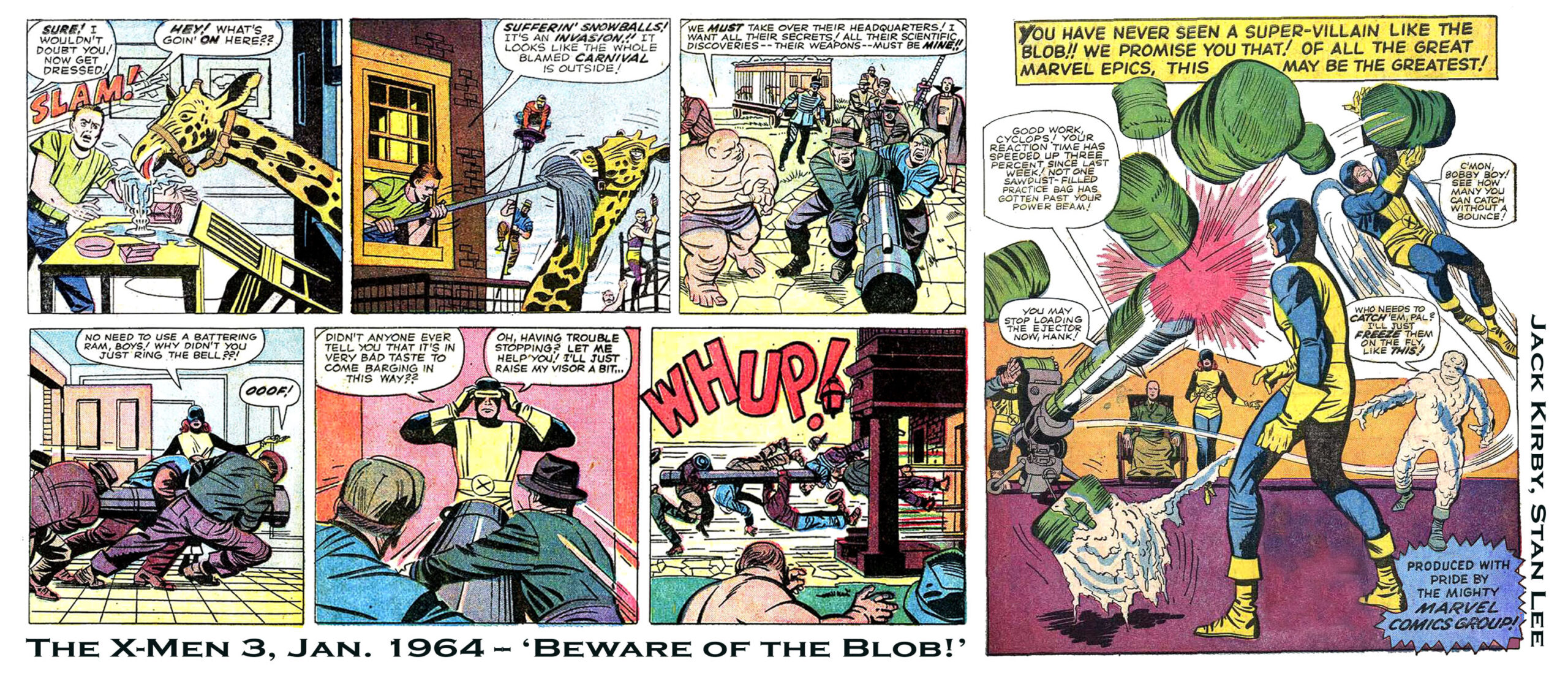
The irresistible X-Men met the immovable Blob in their third issue.
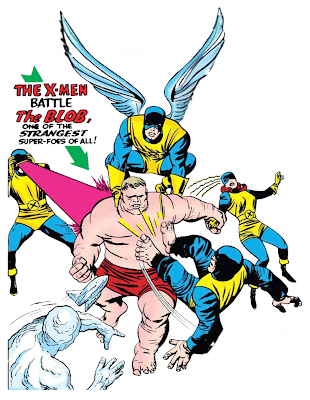 “The first two issues were notable for just how off-model the characters were, as Stan (Lee) had not yet found their personalities. This time out, however, it’s surprising to see just how many of them he’s zeroed in on,” noted comics historian Don Alsafi.
“Observe, for example, Scott Summers, the team leader, who constantly worried about his power’s destructive abilities; this active, physical repression informs his psyche as well, and his ultra-serious tone stands in contrast to the clowning around of the other boys. Stan has also realized that Hank McCoy could be far more interesting if played against type — the powerhouse and the ‘big brain’ rolled into one, rather than just a typical brute — and Warren Worthington, the Angel, is now clearly set up as the rich, flashy, glamorous one.”
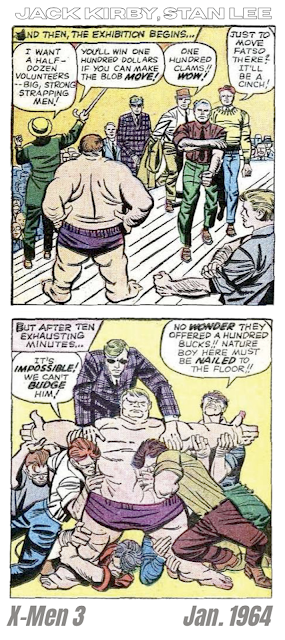 The Blob, Fred J. Dukes, had a distinct personality as well. A crude, high-handed, lowbrow Dukes was one of several X-Men villains who evoked an “immovable object” theme (including Magneto, Unus, and Juggernaut).
The term “Blob” was popularized with kids because of the 1958 SF horror movie of that title, an early Steve McQueen vehicle.
Alsafi noted that the 1960s were the last heyday of the circuses and carnivals depicted often in Silver Age Marvel comics.
“These stories do evoke a time and place in the 20th century that has faded away, yet they resonate because of their more mundane settings,” observed Nick Caputo. “There is a feeling of humanity and humor in scenes such as Bobby’s, something that is sadly lacking in the sturm und drang that takes place in many present-day comic books.”
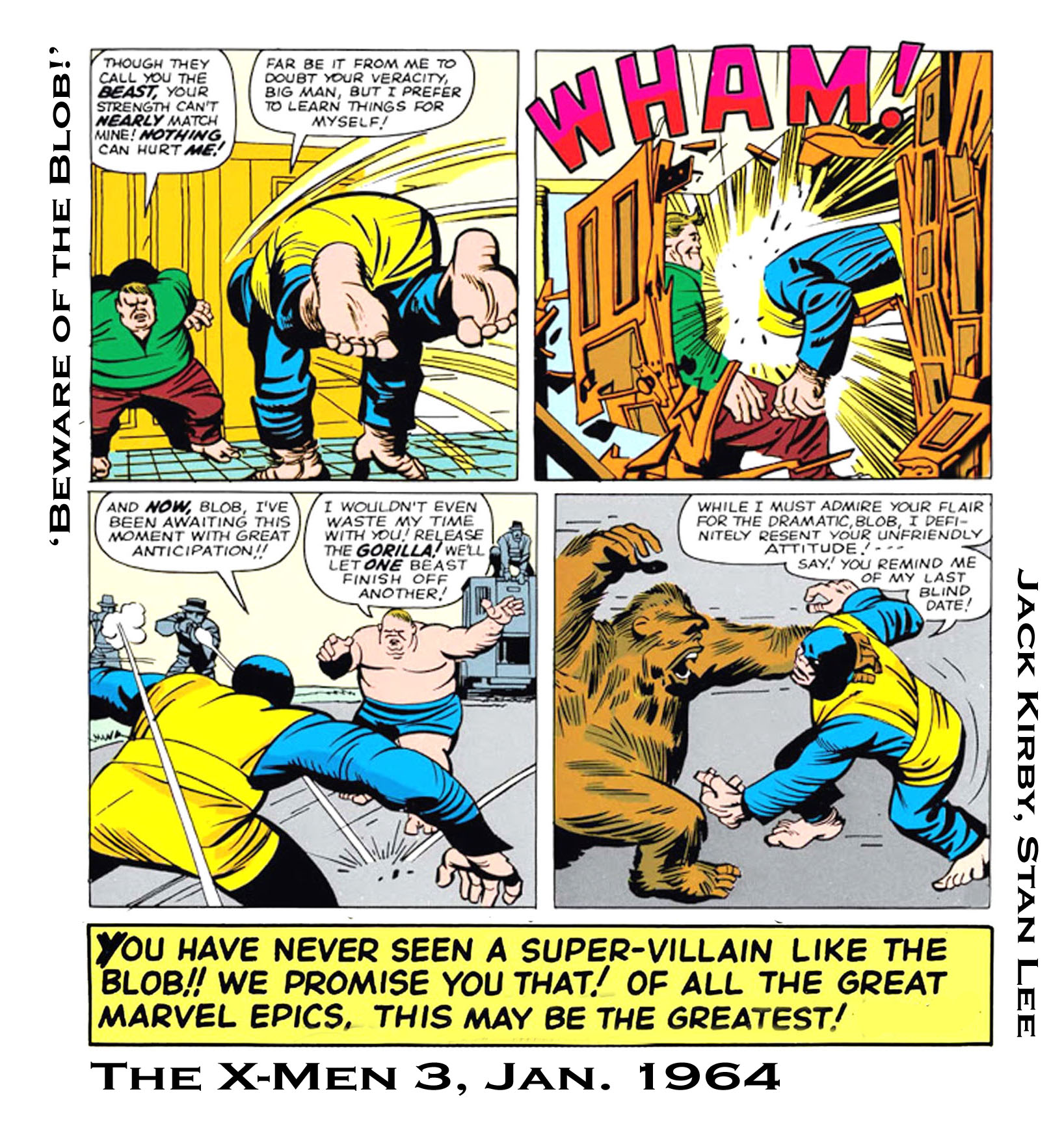
“The gradual development of the X-Men is noticeable, as Stan and Jack (Kirby) were able to mold the strip into something interesting,” Caputo said. “Hank’s transformation was an important step in finding a voice that made him stand out, and offbeat characters such as the Blob made for entertaining stories.”
About Author
