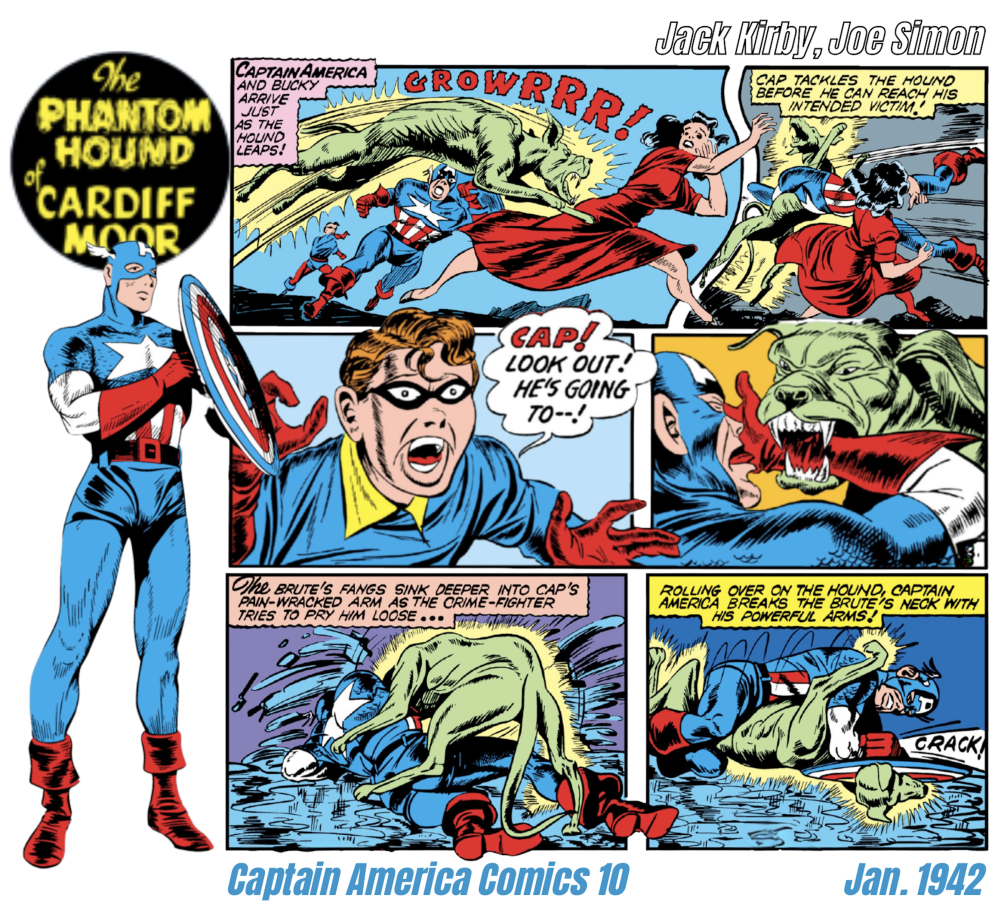
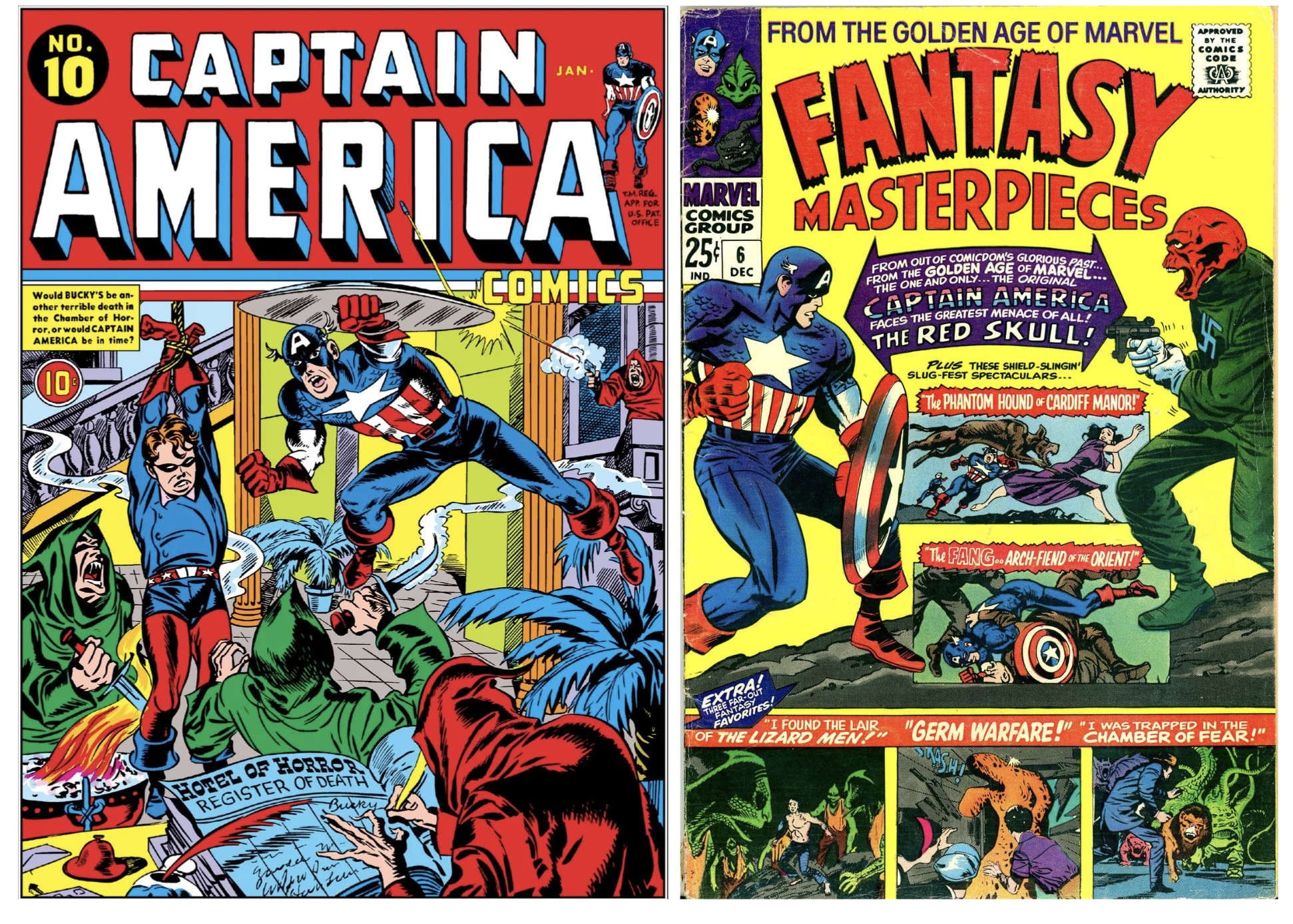
Captain America filled in for Sherlock Holmes in unraveling the mystery of The Phantom Hound of Cardiff Moor (Captain America Comics 10, Jan. 1942).
We young 1960s readers were eager to see the origins of our favorite characters from a quarter-century before, and Marvel Comics editor Stan Lee was happy to supply them — certainly more so than DC Comics, which seemed reluctant to reprint the superheroes’ earliest adventures.
So I first encountered the Phantom Hound in Fantasy Masterpieces 6 (Dec. 1966). That series of Cap reprints was a revelation in the most dynamic comic book art of the early 1940s.
“I turned (Jack) Kirby loose on the artwork, and [the result] was something different,” Cap’s co-creator Joe Simon recalled. “The layout was different, the whole format was different from anything that was being published. After Captain America, the whole business was copying the flexibility and power of a Kirby drawing.”
 “Execution was everything. Joe and Jack’s plots were not always original (neither creator was adverse to cribbing elements of Doyle’s The Hound of the Baskervilles, classic Warner Brothers gangster movies, or even the previous year’s Batman stories), but the result was,” noted Kurt F. Mitchell in American Comic Book Chronicles.
“Kirby’s figures had an innate power that could not be contained within the panel borders, exploding off the page in a cacophony of mayhem. Cap and Bucky seemed to defy gravity as they leapt, dove, and charged headlong into battle, foes buckling left and right beneath a furious onslaught of fists, feet, and shield that made Batman and Robin look like Abbott and Costello.”
Sir Arthur Conan Doyle’s 1902 novel The Hound of the Baskervilles was probably the most popular of his Sherlock Holmes stories — so popular, in fact, that it prompted Doyle to bring his hero back from the dead (he’d apparently killed Holmes off in the 1893 story The Adventure of the Final Problem).
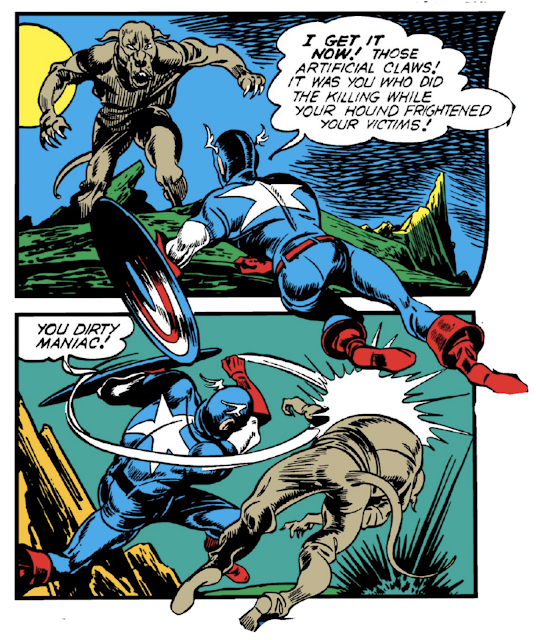
In Cap’s iteration of the classic tale, presented in a visual medium, the villain who manipulates the gigantic, green-glowing “Phantom Hound” actually goes the extra mile by donning a dog costume, which doesn’t look quite as ridiculous as it sounds.
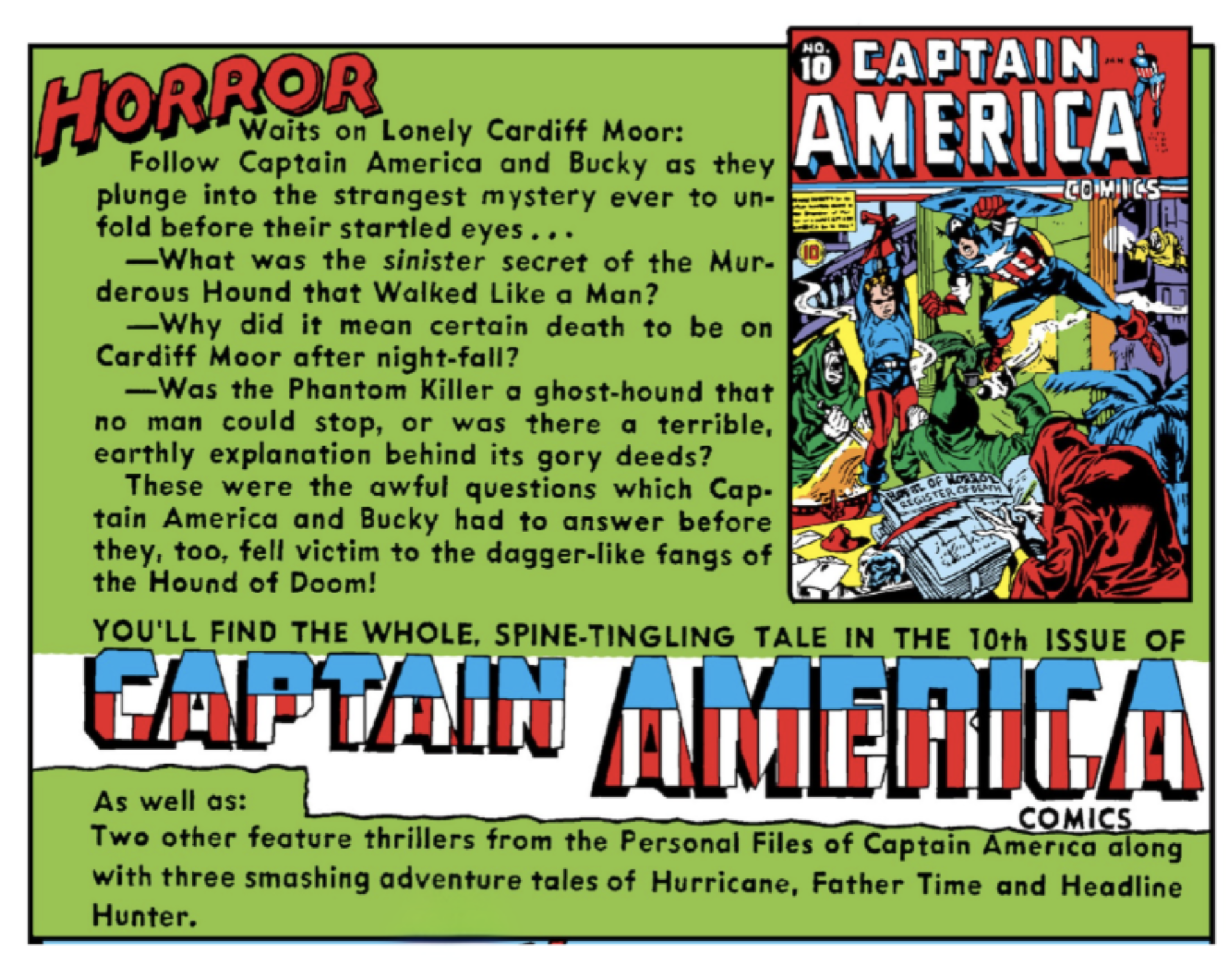
“Despite its military milieu, the Captain America series was a horror strip in superhero drag, its panels chockful of sadism, monsters, torture, mass murder, war crimes and wholesale destruction,” Mitchell noted.
In addition to the canine villain, the early Simon and Kirby stories gave readers a Hunchback of Hollywood, Ivan the Terrible, a sea serpent, a Circus of Crime, a baseball-hating Black Toad, and even an evil Butterfly.
About Author
