
Some legendary Marvel superheroes took their own sweet time to become legends.
Take Dr. Strange, for example.
The character — artist Steve Ditko’s surrealistic masterpiece, but something of an acquired taste — began as a backup feature in Strange Tales 110 (July 1963), where he didn’t even rate a cover mention. The Human Torch was the star, and one of Dr. Strange’s first magical feats was to disappear from issues 112 and 113 before reappearing in issue 114.
 The master of the mystic arts didn’t rate a cover mention until Strange Tales 117, and made his first small cover appearance the next issue.
Ditko left the feature — and Marvel — in July 1966 with a story appropriately titled The End at Last. Strange finally had the cover all to himself.
Dr. Strange acquired his own solo title in the Great Marvel Expansion of 1968, alongside the Hulk, Captain America, the Sub-Mariner, Nick Fury, Captain Marvel, the Silver Surfer, and Iron Man.
Finally freed of a bad distribution deal that limited the number of titles the company could publish, Marvel was at last able to respond to reader demand for their product, with the new first issues appearing on the newsstands between January and May 1968. Marvel even added a new Creepy-sized magazine featuring its star, The Spectacular Spider-Man.
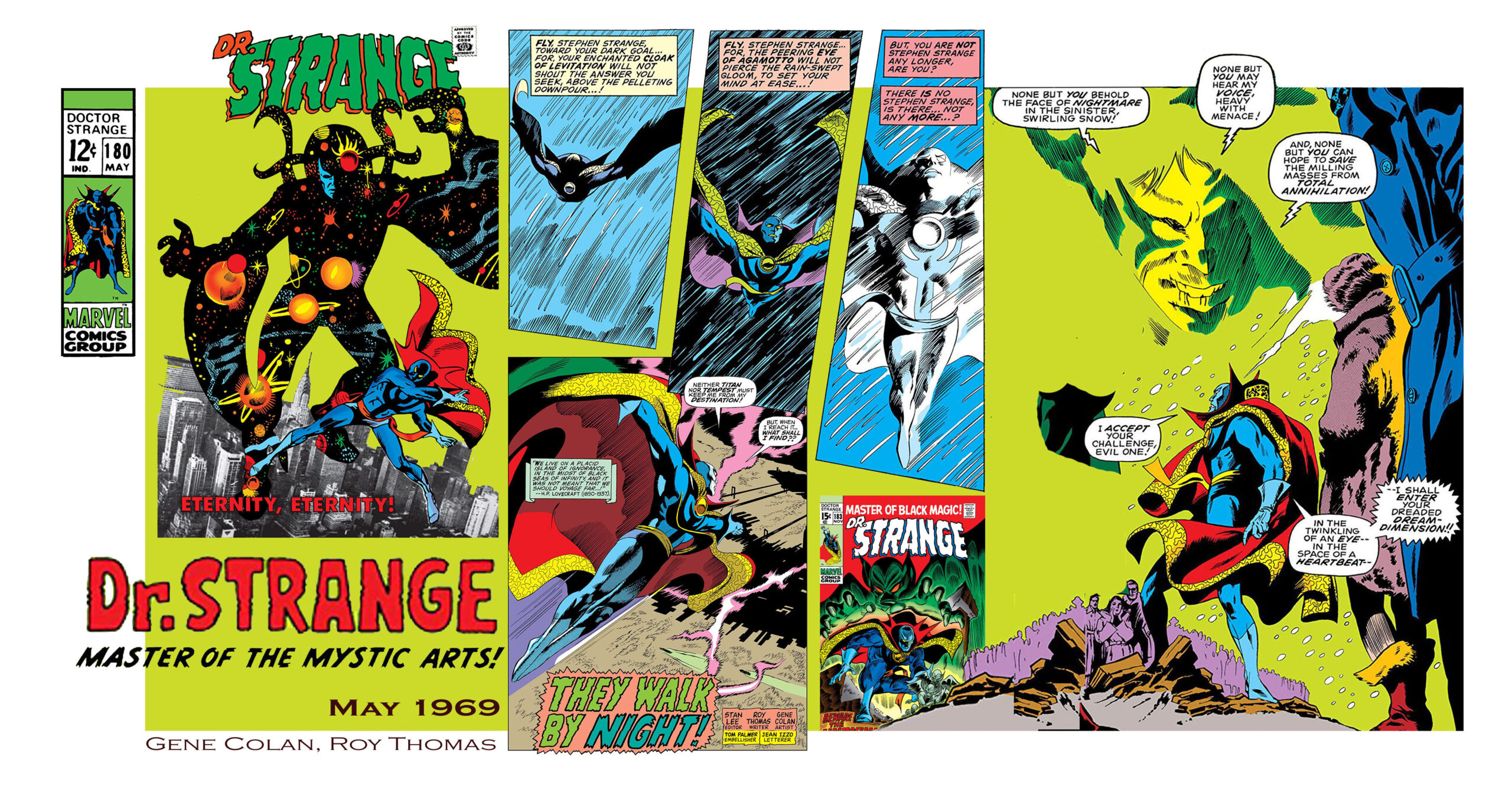
The Doctor Strange title limped along for a little more than a year, from 169 (June 1968) to 183 (Nov. 1969).
Although Ditko was really irreplaceable, Gene Colan’s moody art was well-suited to the unearthly feature.
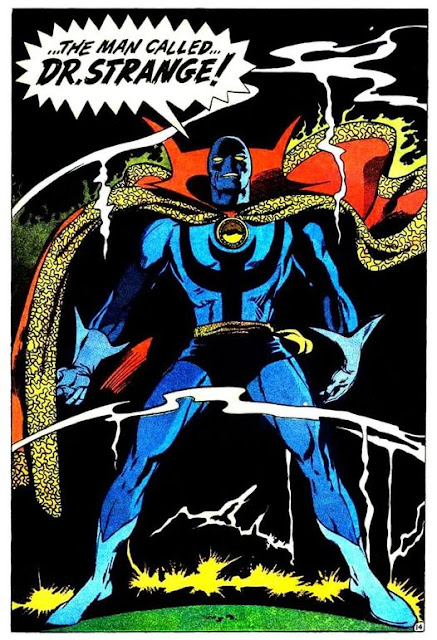
Writer Roy Thomas tried to give the character a boost by making him more closely resemble a traditional superhero, giving him a full face mask when the evil cultist Asmodeus stole his “very face and form” to trick the Ancient One.
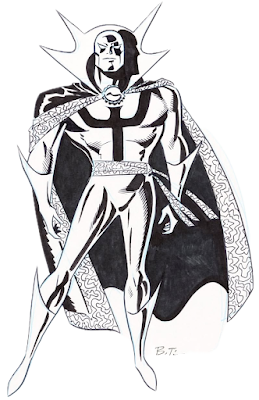 The character now echoed the look of the Golden Age Marvel supernatural superhero, the Vision, whom Thomas had revived and revamped as an android in The Avengers four months before.
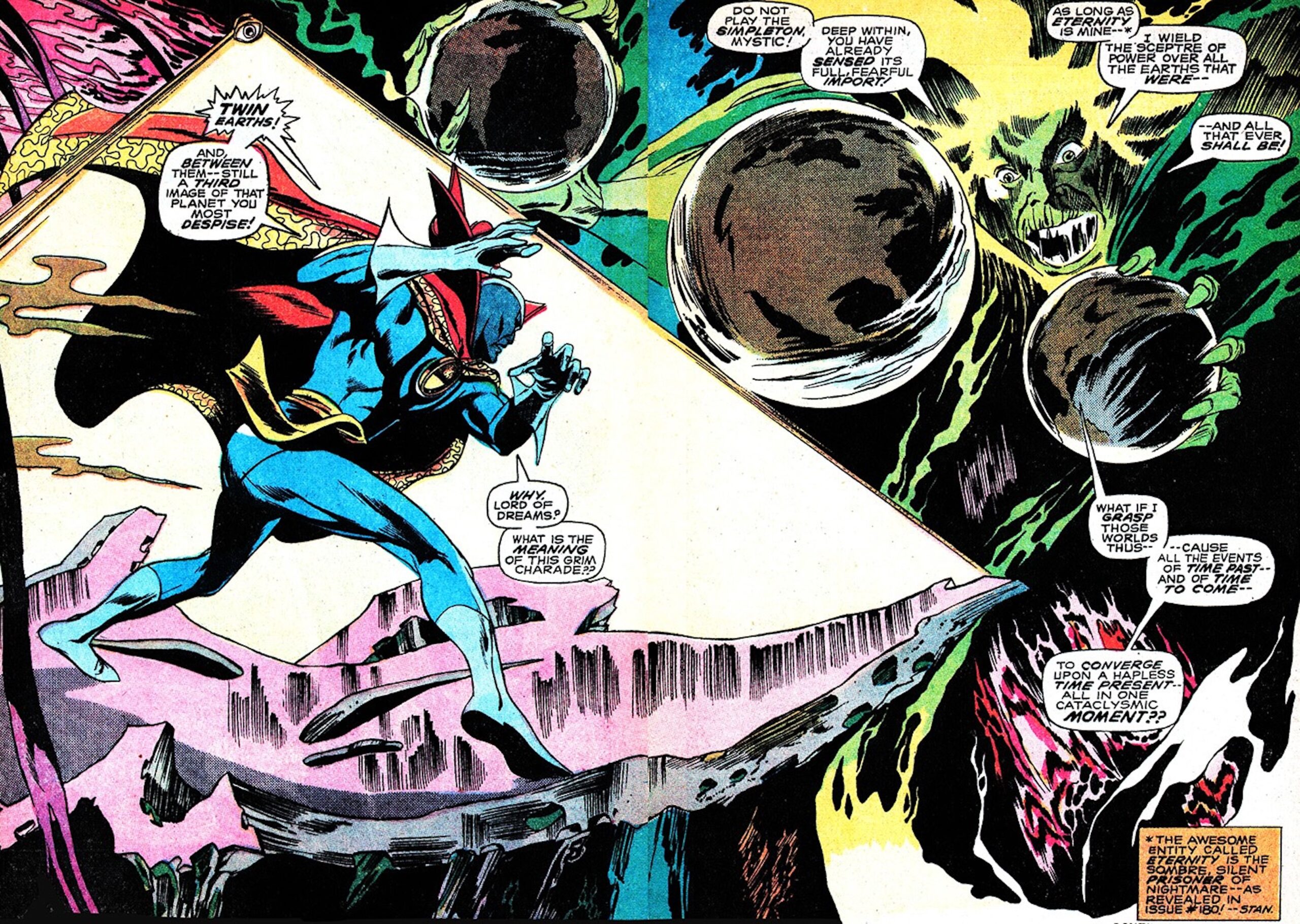
A few issues later, Strange also acquired a secret identity, courtesy of the cosmic entity Eternity, whom he’d fought to save from the cosmic entity Nightmare. Strange learned of Eternity’s reality-bending favor when he saw his new name on a telegram addressed to “Dr. Stephen Sanders, 177A Bleecker St., New York, NY.” So “Dr. Strange” became only his nom de guerre for a time.
“Doctor Strange (and Strange Tales) had never been much of a seller, so I was trying to make him look a bit more like a superhero,” Thomas explained. “It didn’t particularly help … didn’t hurt, either. Anyway, when Stan decided that Dr. Strange should be included in the Defenders series, I felt the costume look was no longer needed, so I dropped it. Could’ve just kept it … not sure why I didn’t.”
Although he lost his superhero look, Dr. Strange functioned more AS a traditional superhero during his long stint with the Defenders (1971-1983).
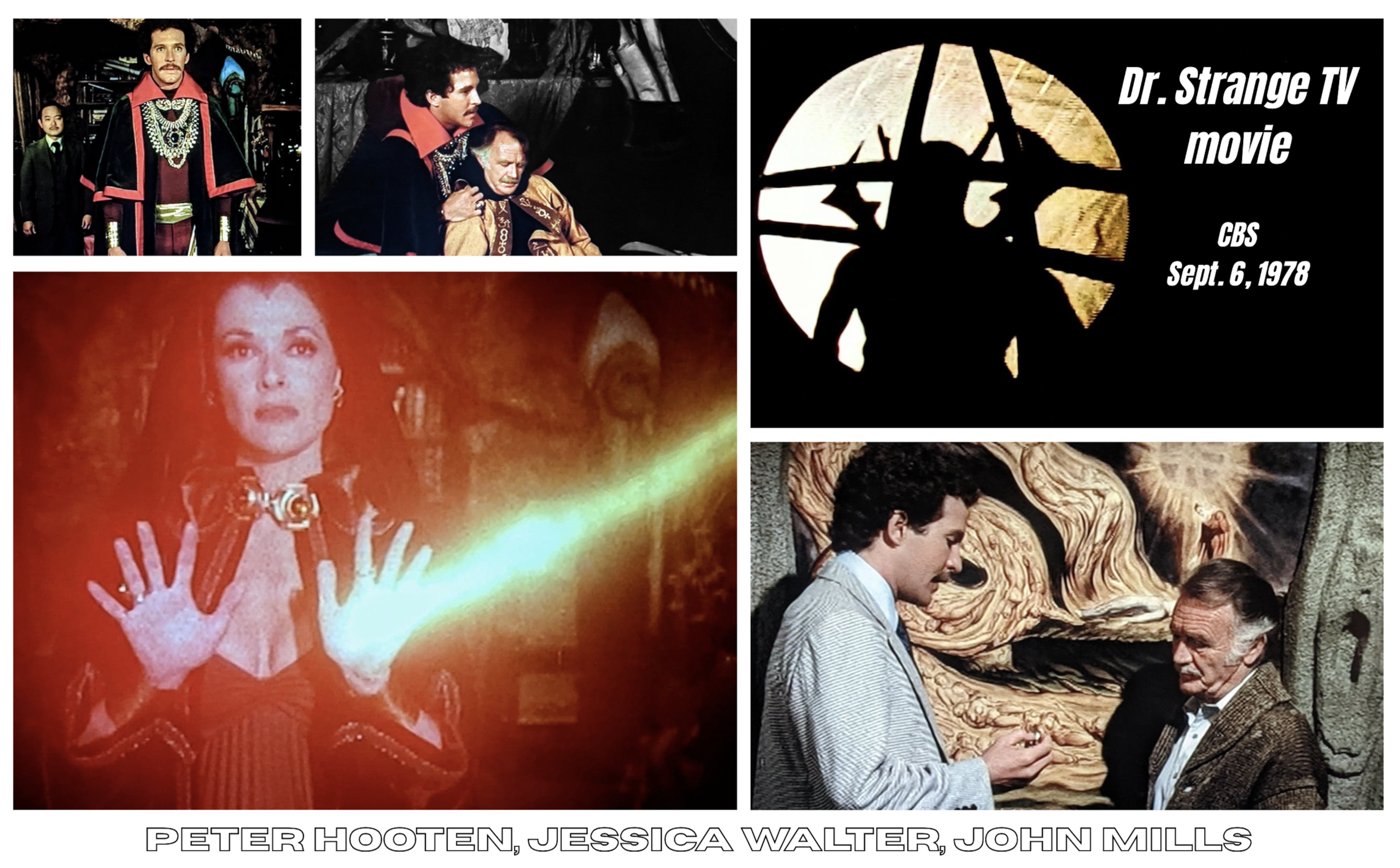
Dr. Strange had a shot at fame in his 1978 TV pilot, made in the wake of the success of the Incredible Hulk series. I liked it, Stan Lee liked it, and many other viewers might well have liked it if they’d had a chance to see it. But the pilot movie, which starred Peter Hooten, John Mills, and Jessica Walter, aired opposite the immensely popular miniseries Roots. It never had a chance.
The magician finally fully came into his own in 2016, 53 years after his creation, in the Marvel Studios movie he headlined, which earned an Academy Award nomination for Best Visual Effects.
Dr. Strange has taken many mystical journeys in his time, but none odder than the odyssey from a back-page comic book story that looked like a one-shot to a worldwide box office take of $677.7 million.
About Author
