
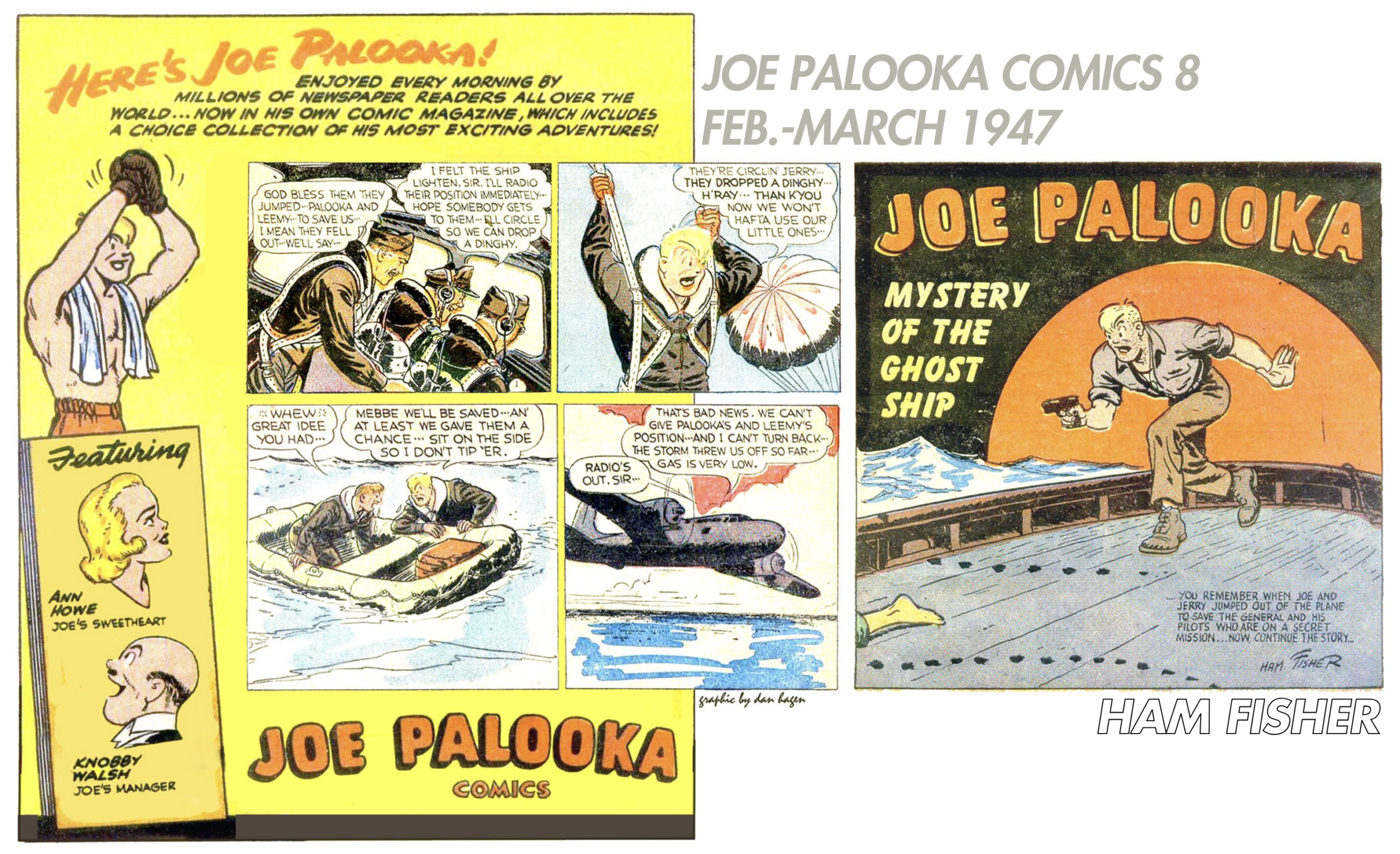
“Many of the adventure-strip leading men, and a few of the women, were pretty tough and handy with their dukes,” observed popular culture historian Ron Goulart. “This was usually, though, in addition to being daredevil pilots, deep-sea divers or soldiers of fortune.
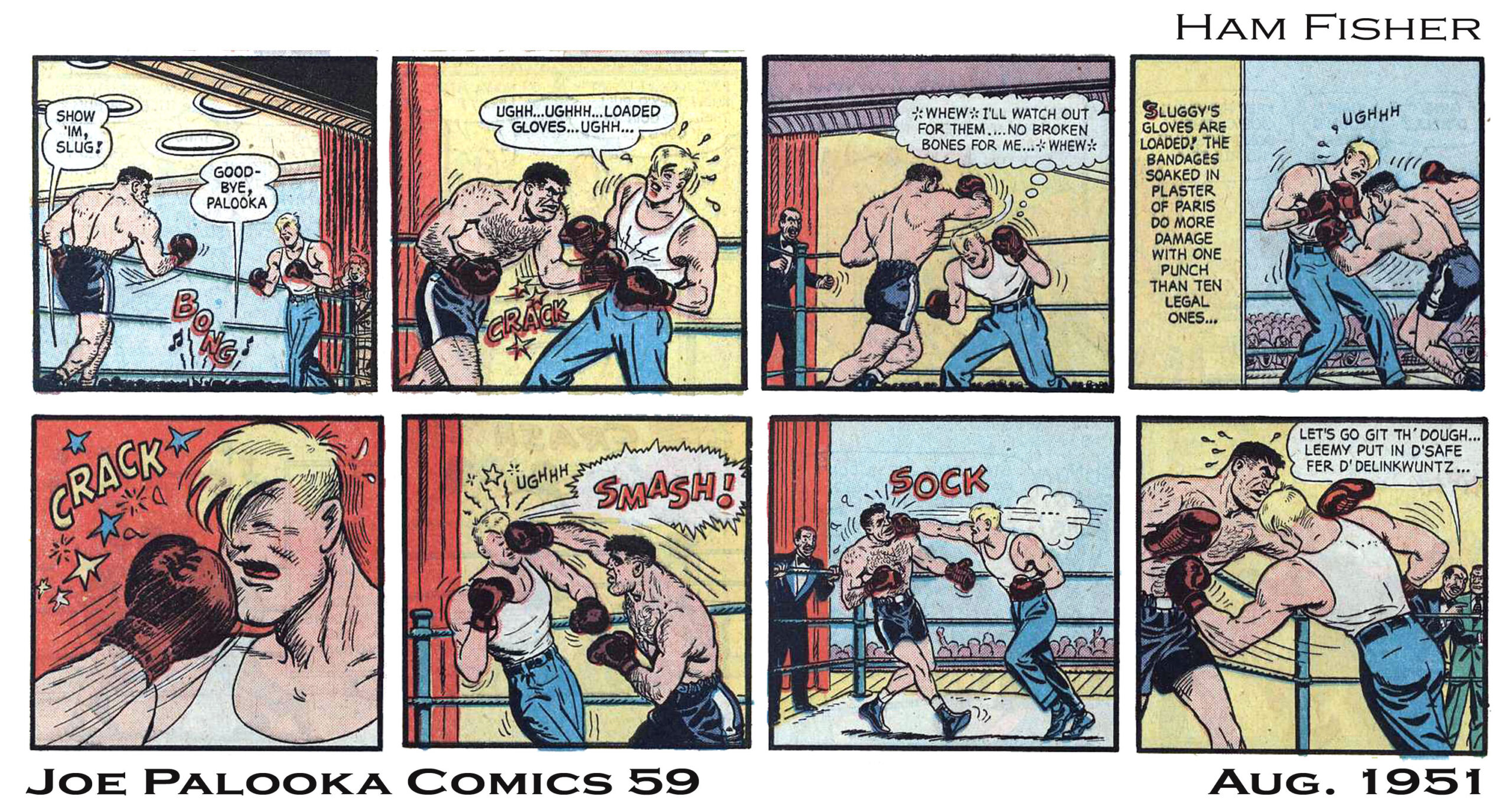
“But there were funny-paper heroes whose major attribute was the ability to punch somebody in the nose. Some did it in the prize ring, while others saved their punches for archfiends and Martian invaders. The sports heroes had been celebrated in comic strips from the 1920s on, the superheroes were children of the late 1930s.”
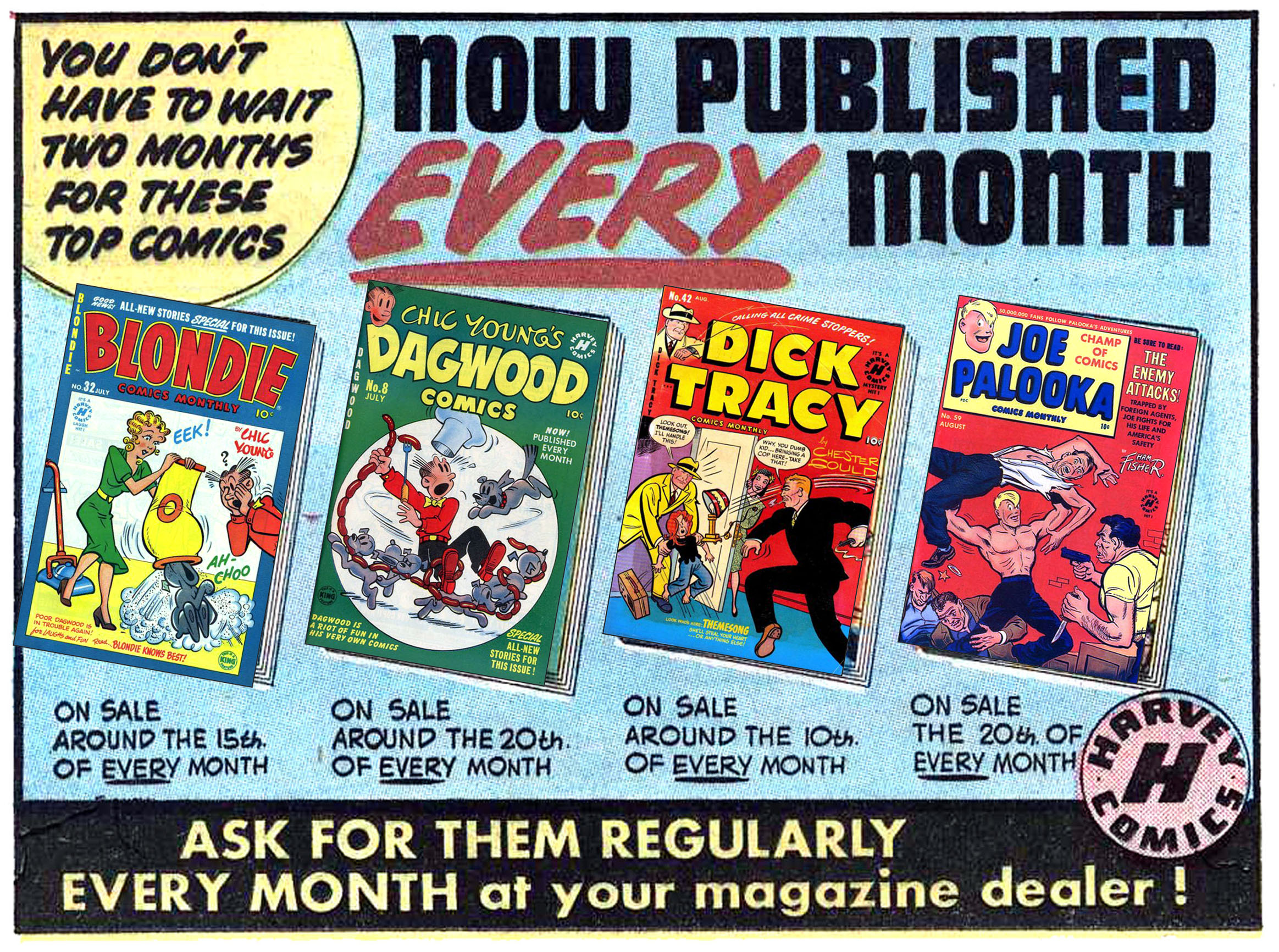
The heavyweight “champeen” of the nose-punchers was undoubtedly prize fighter Joe Palooka. Both Blondie and Joe Palooka began in 1930, with Dick Tracy following in 1931. Those comic strips found good homes in America’s 1,772 daily newspapers, and later in Harvey Comics.
“Palooka, the lovable, laudable, squeaky-clean comic strip boxer created by Hammond ‘Ham’ Fisher made his newspaper debut on April 19, 1930, a little less than six months after the stock market crash of 1929,” observed historian T. Wayne Waters. “In that first series, readers saw Joe become heavyweight boxing champion by knocking out the dastardly Jack McSwatt with a powerful right and a spirited ‘WHOOPEEEEE!’”
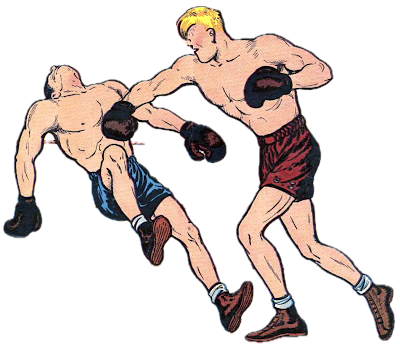 Now largely forgotten, the comic strip appeared in 900 newspapers at its peak, and inspired a short-lived CBS radio series, Monogram and Vitaphone movies, a 1940s board game, a 1954 syndicated TV series, lunchboxes, wristwatches and (naturally) punching bags. A Pennsylvania mountain was named for Palooka.
He was popular enough, in fact, to earn the sincere flattery of imitation. The Big Ben Bolt newspaper strip, syndicated from 1950 to 1978, featured an articulate college graduate who chose a career in the boxing ring.
And from 1945 to 1961, Harvey published 118 issues of Joe Palooka Comics.
“Without really meaning to, I read lots of Harveys as a kid, because I got them as ‘unwanted purchases’ in those three-for-15¢ coverless comics packs — when I was really trying to snag Marvel and DC comics, especially back issues I had missed,” Joe Lenius recalled. “I wasn’t about to let them go to waste, and I did enjoy them on a certain level. More enjoyable were the John Stanley comics (Little Lulu and others) that I came across in a similar manner, and likewise Barks’ Uncle Scrooge. In those coverless comics packs, I was lucky enough to come across the Harvey 25-cent issues of Black Cat, Joe Palooka and Blondie, which I considered good reads.”
“(Harvey Comics) was bringing in a fortune, during the war anyway,” Joe Simon recalled. “You know what was one of the big sellers in the whole field, one of the top half-dozen books? Joe Palooka.”
A “palooka,” by the way, is 1920s slang for an inept or mediocre prize fighter. Joe Palooka wasn’t one.
About Author
