The superhero fell on hard times after World War II in France. Having been occupied by fascist invaders, the French cast a cold eye on the influence of übermenschen fantasies.
“In 1949, the political forces of the Catholic Church and the Communist Left combined to keep out American comics, deemed too violent by the former and too imperialistic by the latter,” wrote Jean-Marc and Randy Lofficier in their Shadowmen books on French popular culture. “This took the form of a law passed in France in July, which prevented the further exploitation of American strips and created a censorship review board of comics.”
Indigenous superheroes like Fantax, a black-masked and caped Batman-like figure created in 1946, would fall before the censors. Fantax fought the Nazi Werewolves and the Ku Klux Klan during his run.
The 1948 costumed hero Satanax — a court recorder given the mystical powers of a Captain Marvel by a forest warlock — was called Le Superhomme d’une heure or “The One-Hour Superman.” He lasted a little longer than that, but not much, thanks to French censorship.
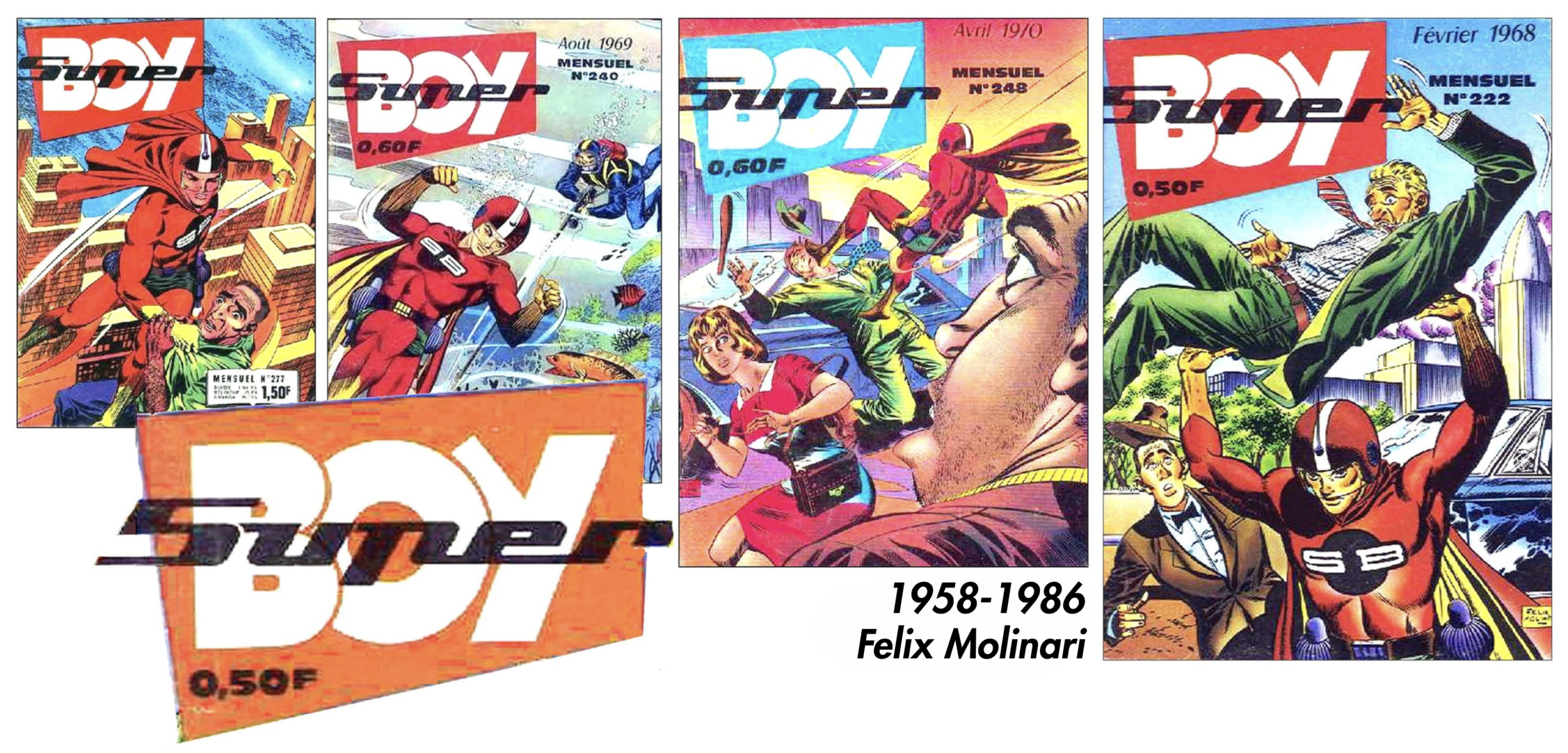
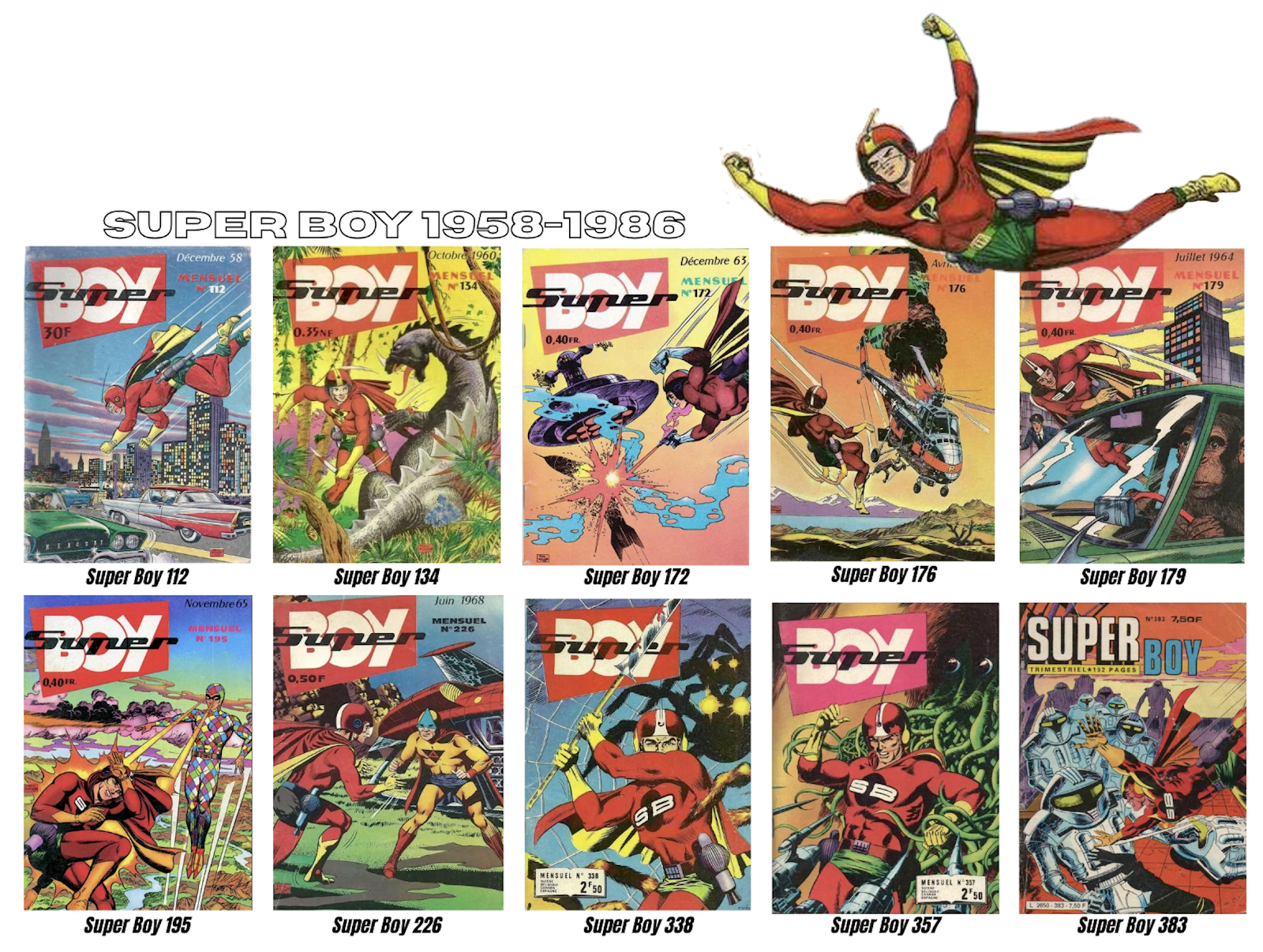
The wary eye of the censor also guaranteed that when the French Super Boy appeared in comics in 1958, he wouldn’t actually have any super powers.
“(H)is exploits are reminiscent of those of the DC character Adam Strange, a comparison bolstered by his helmet (sporting an antenna instead of a fin) and two belt rockets enabling him to fly,” the Lofficiers noted.
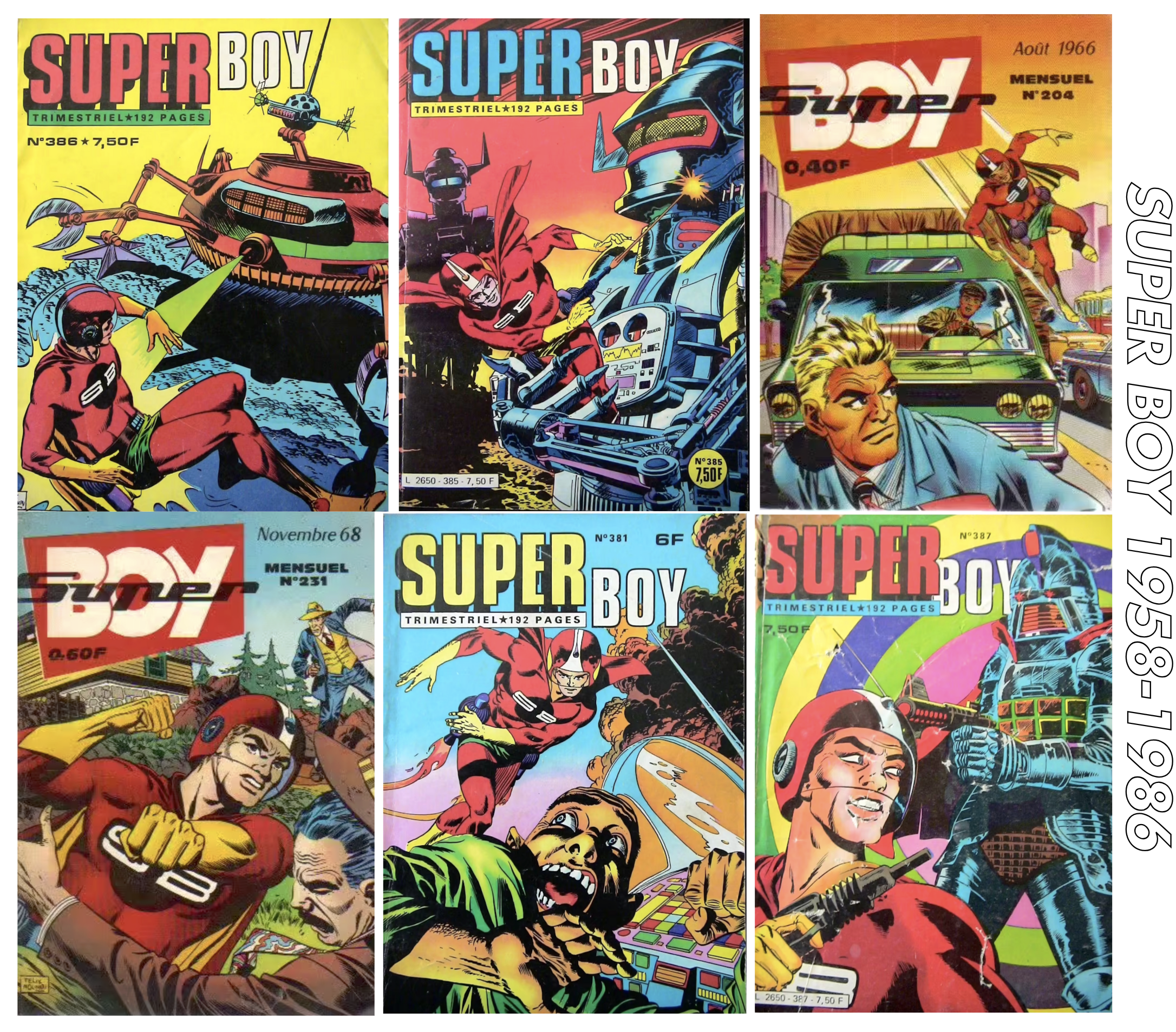
The son of a scientist, Super Boy fought villains and alien threats in adventures published from 1958 to 1986.
“Published by Imperia, who mostly reprinted imported stories from Italy and Spain, the Super Boy magazine was started in October 1949, without a feature entitled Super Boy in it,” noted the International Catalogue of Superheroes. “The eponymous character only made its first appearance in No. 112 in 1958.
“Super Boy was the creation of writer ‘Schwarz’ (publisher Robert Bagage’s first wife) and of artist Félix Molinari. New stories drawn by Molinari appeared without any interruption until No. 247 in 1970, then the magazine began to print a mix of reprints and new stories, drawn by Spanish artists Rafael Mendez, José Maria Ortiz and Jaime Forns. The title e ran until 1986.”
“Sometime during this period, the original triagular chest logo (a yellow triangular “SB”) worn by Super Boy was replaced by a circular one (the letters SB in white against a black circle).”
“The ever-present threat of censorship prevented the creation of a rogue’s gallery worthy of fighting the hero,” the Lofficiers wrote. “The villains (The Harlequin, Mr. Cat, Delta, Earth-II) rarely, if ever, return… The plots are often clever, but more like what one would expect from The Twilight Zone or Outer Limits.”
A similar rocket-belted character, Atome Kid, appeared from 1956 to 1959. Later French superheroes like Photonik —a teenaged orphan transformed into a Man of Light — would reflect the growing global influence of Marvel Comics.
About Author
