The idea of a female knock-off version of the dominant male superhero goes back to the 1930s, a wink at American society’s growing recognition of female power.
Pat Savage, Bulletgirl, Miss America, Namora, Golden Girl, Doll Girl, Batwoman, Supergirl, Fly Girl, Batgirl, the Bionic Woman, Spider-Woman, She-Hulk — the list is lengthy and impressive. And high on it was Mary Marvel.
“The first teenage superheroine in comic books and a member of an illustrious family, Mary made her debut late in 1942 and stayed in business until 1954,” noted comics historian Ron Goulart.
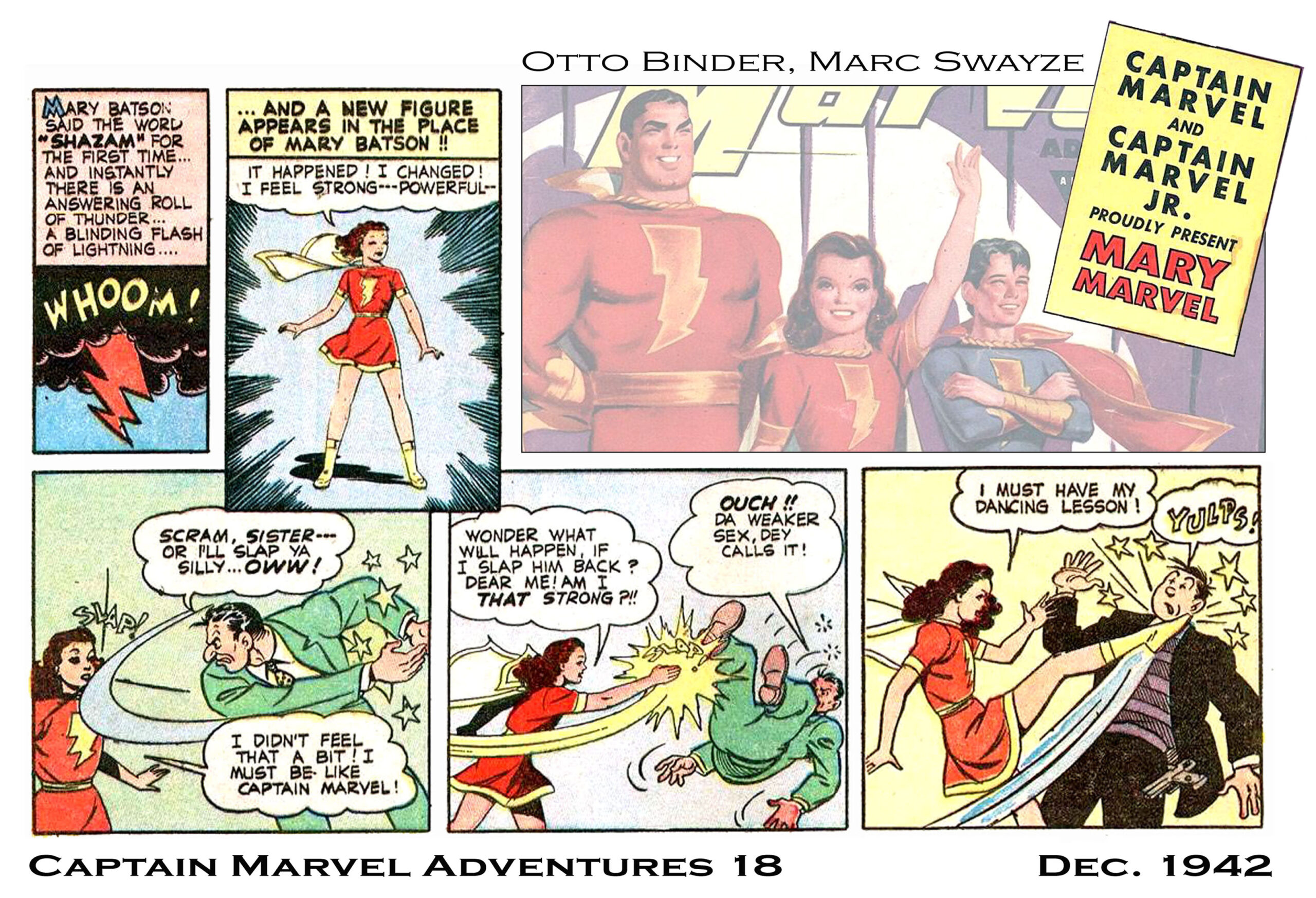
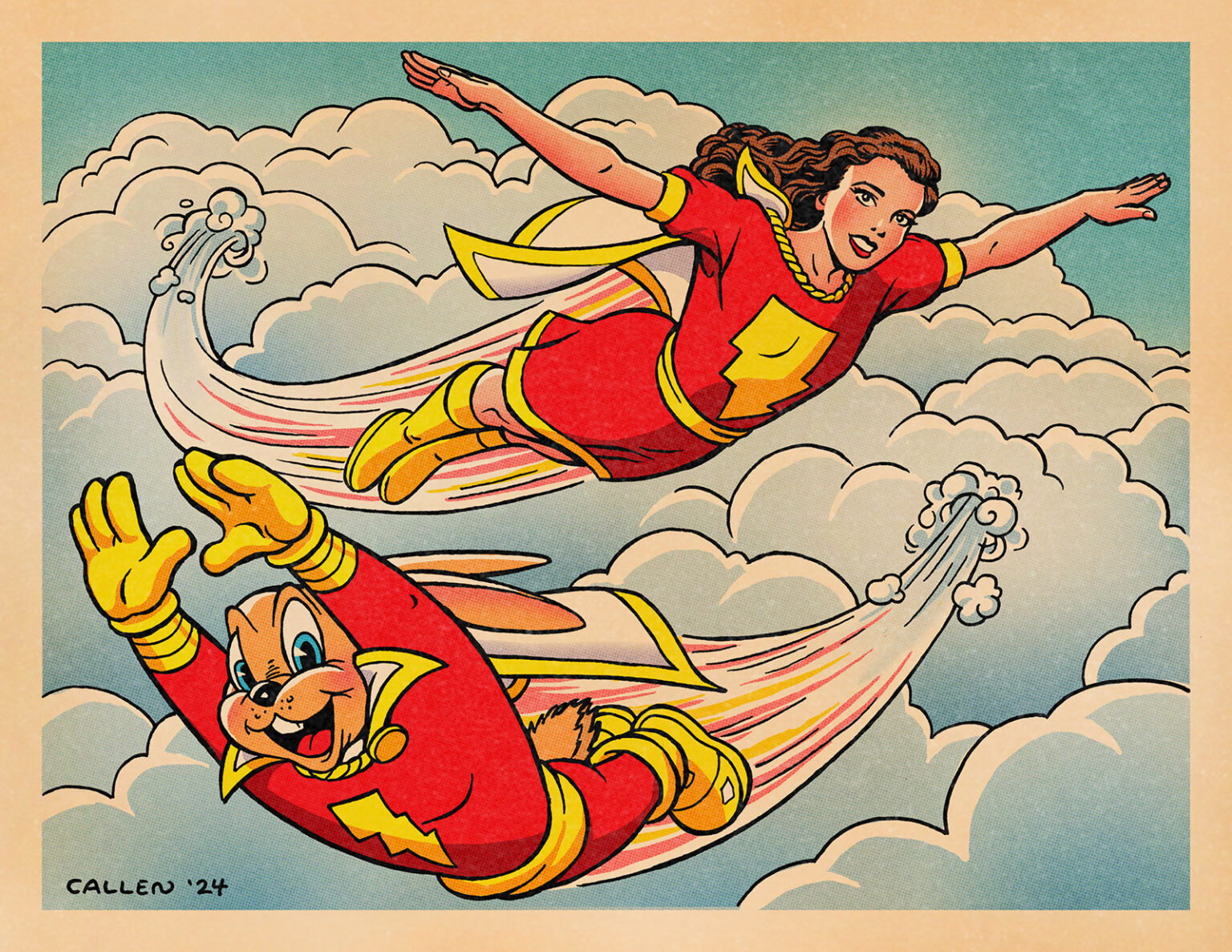
Billy Batson’s long-lost sister Mary Bromfield turns up in Captain Marvel Adventures 18 (Dec. 1942), only to become the target of kidnappers. Rescued by Captain Marvel, she learns about her sibling and his other identity. Although Billy assumes the wizard Shazam would never share his powers with a mere girl, he is, luckily, wrong.
When the kidnappers capture and gag Billy and Freddy Freeman, Billy’s sister utters that magic word in desperation and becomes the most demure of superheroes, Mary Marvel.
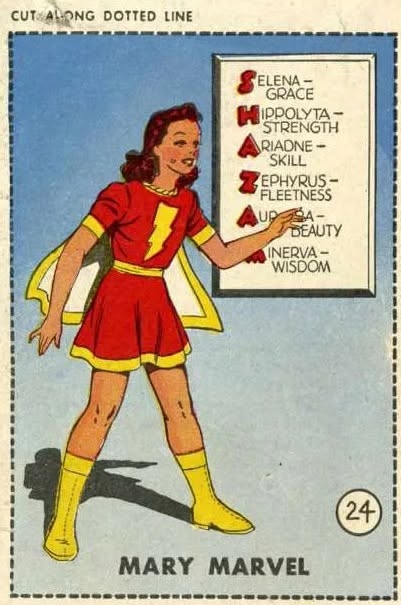
“After she subdues the felons, she and the mystified Billy fly to see the old wizard who gave Billy his powers,” recalled comics historian Jeff Rovin. “He explains that the magic word works for Mary because, ‘though she is a girl,’ there are female counterparts to the gods and demigods from whom Captain Marvel derives his strength. In her case, Mary gets grace from Selena, strength from Hippolyta, skill from Ariadne, fleetness from Zephyrus, beauty from Aurora and wisdom from Minerva.”
“Unlike Wonder Woman and Sheena, her contemporaries, Mary Marvel was very much an unliberated female — and, seemingly, content to be so. She was always flattered to be ‘allowed’ to do the things men did.”
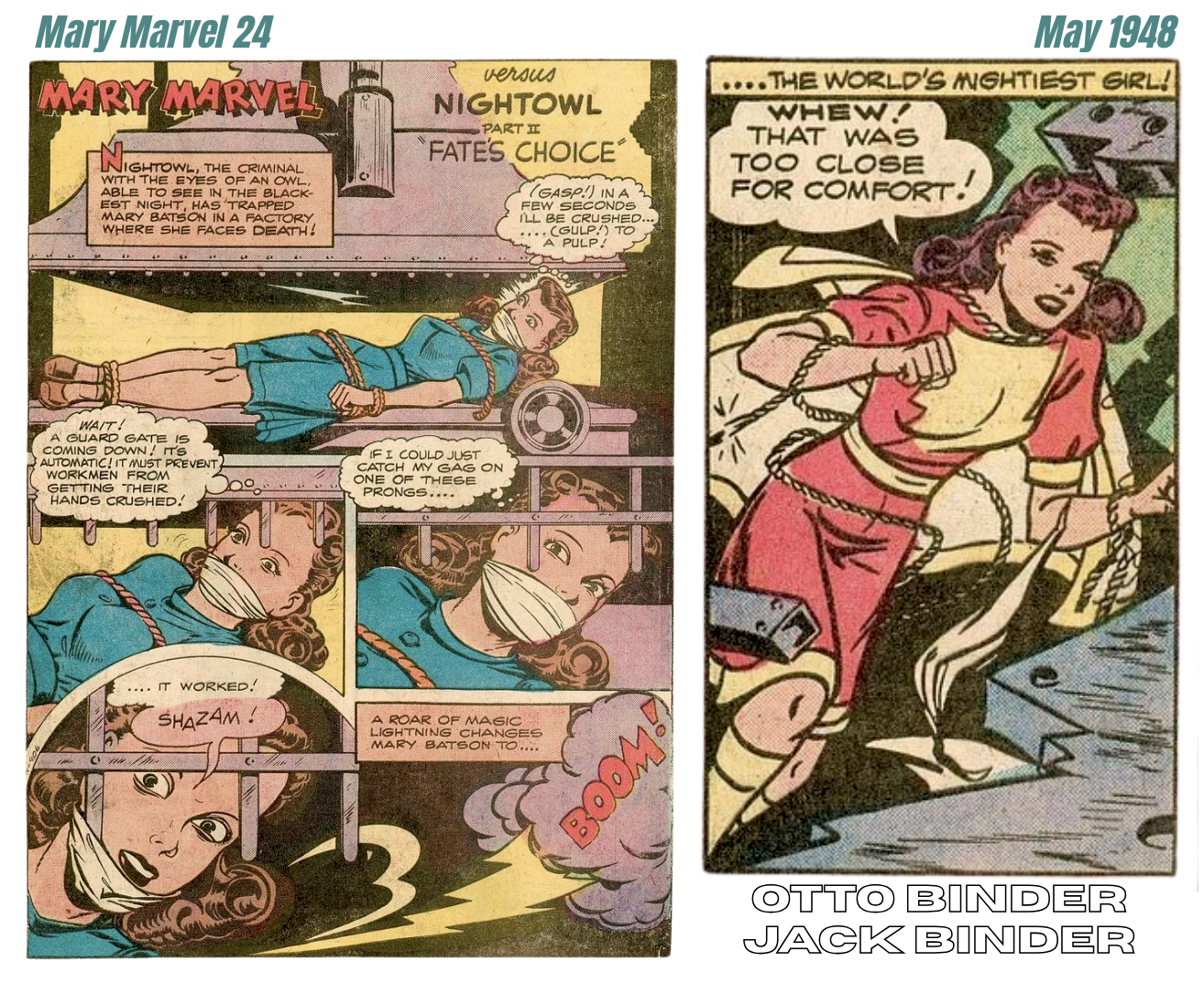
 Mary immediately moved to headline Wow Comics, while also being featured in The Marvel Family and — from 1945 to 1948 — her own title. Her solo title had been delayed by wartime paper rationing.
“Mary was a clever bid to give Fawcett’s female fans their own fantasy figure to identify with,” observed Kurt F. Mitchell in the American Comic Book Chronicles. “In her everyday guise of schoolgirl Mary Bromfield, the World’s Mightiest Girl enjoyed a happier home life than the male Marvels, her adoptive parents giving her the loving attention and guidance neither Billy, ensconced in an urban apartment with only Steamboat for companionship, nor Freddy, eking out a hardscrabble existence all alone in an abandoned tenement, had.”
“Mary Marvel faced foes as heinous as any of those confronting her male counterparts, but bested those foes with a style all her own, performing her super-feats with a grace and delicacy the boys lacked. Her villains included Mr. Night, who threatened to usurp the throne of fabulous Rainbow City from the benevolent King Color; the witchy executives of Wickedness, Inc., who tainted the milk of human kindness and briefly turned Mary herself evil; and the Black Falcon, the ghost of an infamous buccaneer trying to prevent his descendent from going down the same piratical path.”
Some of her other opponents included Prof. Van Ish, Dr. Finale, occultist Rudi Eldritch and the Stone Men of the Moon.
In 1959, with the Marvel Family gone for half a decade, Otto Binder once again fashioned a super-powered female relative for an established male hero. But ironically, this time it was for Captain Marvel’s great rival. In Action Comics 252, he and Al Plastino created Supergirl.
About Author
