
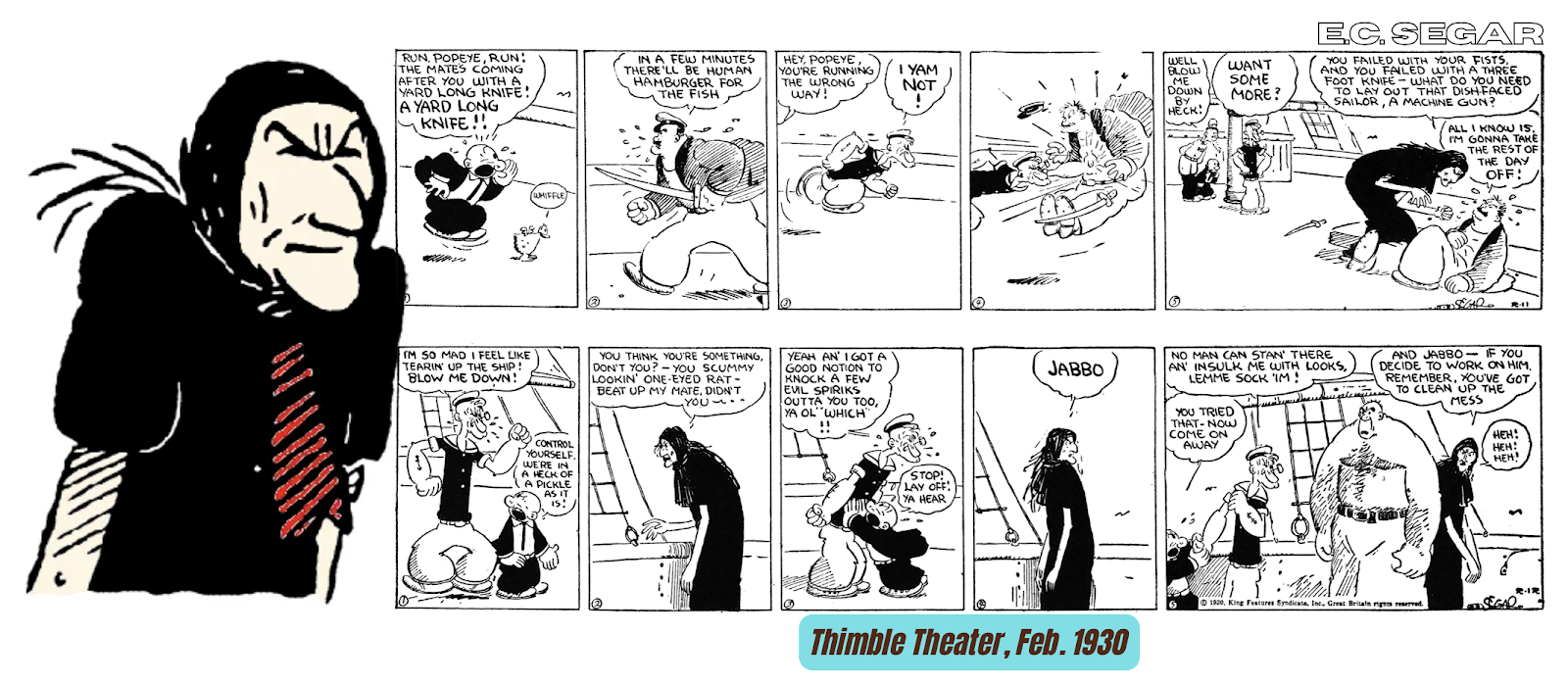
Her tall, grim shadow fell across America’s newspapers just as the Great Depression arrived.
In December 1929, comic strip readers were introduced to the artful, angular Sea Hag, a villainess who would continue to delight them for decades.
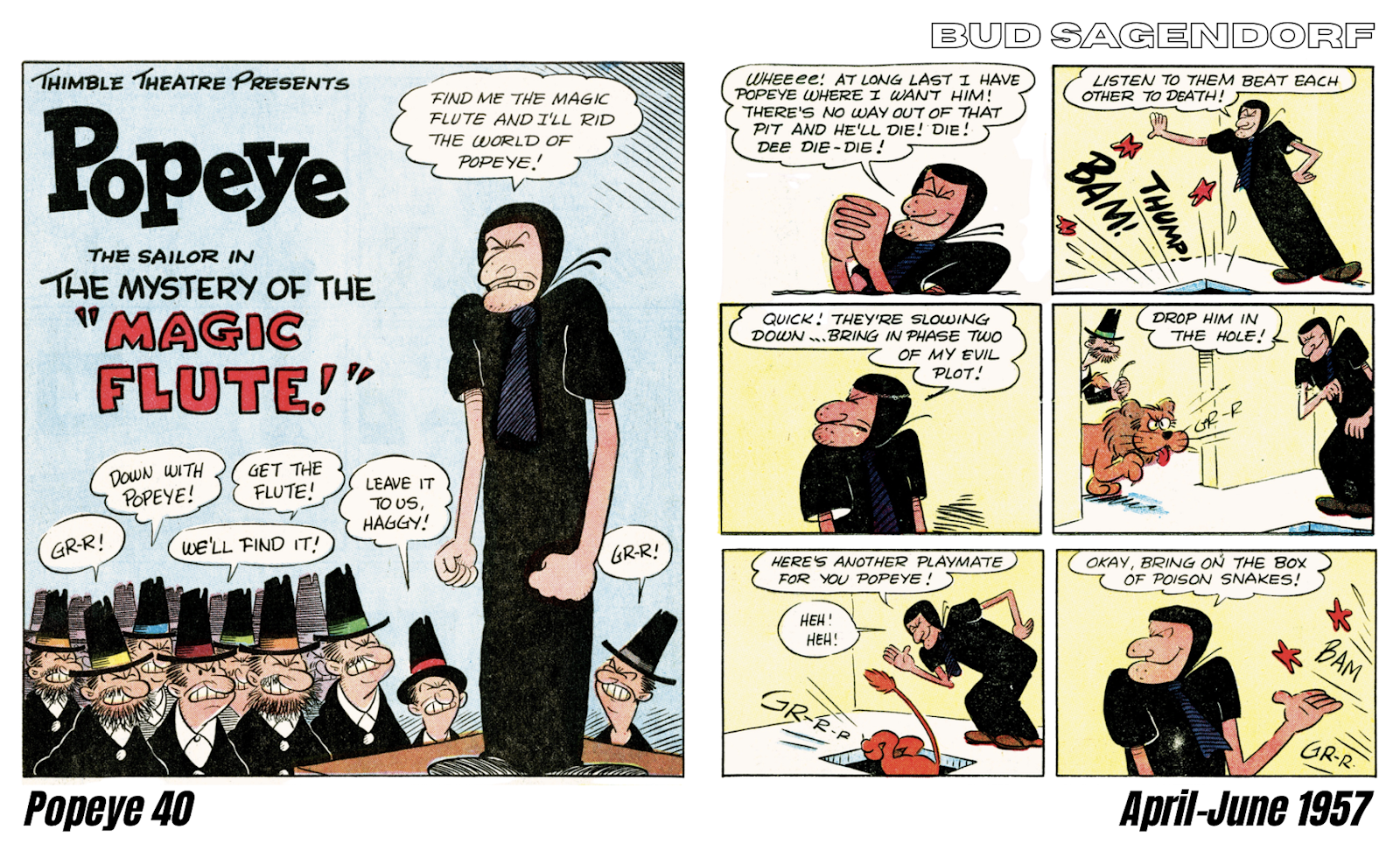
Debuting in King Features’ Thimble Theatre on Dec. 26, 1929 — almost two months to the day after the stock market crash — the Sea Hag was “…the last bonafide witch on earth,” noted comics historian Jeff Rovin. Well versed in voodoo, the piratical enchanter set sail in the Black Barnacle from her headquarters on Plunder Island, where she kept lions who paid their keep by disposing of her enemies.
“She has a number of other hideouts, of which Hide-Out Number 412, in the Eighth Sea, is by far the most dangerous,” Rovin noted. “In addition to housing 327 ferocious vultures (not counting the devoted Bernard), it is the home of the vicious Cave Monster. The Sea Hag also runs the Institute of Witchcraft, on whose athletic field aspiring witches practice levitation.”
The Sea Hag also commanded an army of Goons, a term that the comic strip helped popularize.
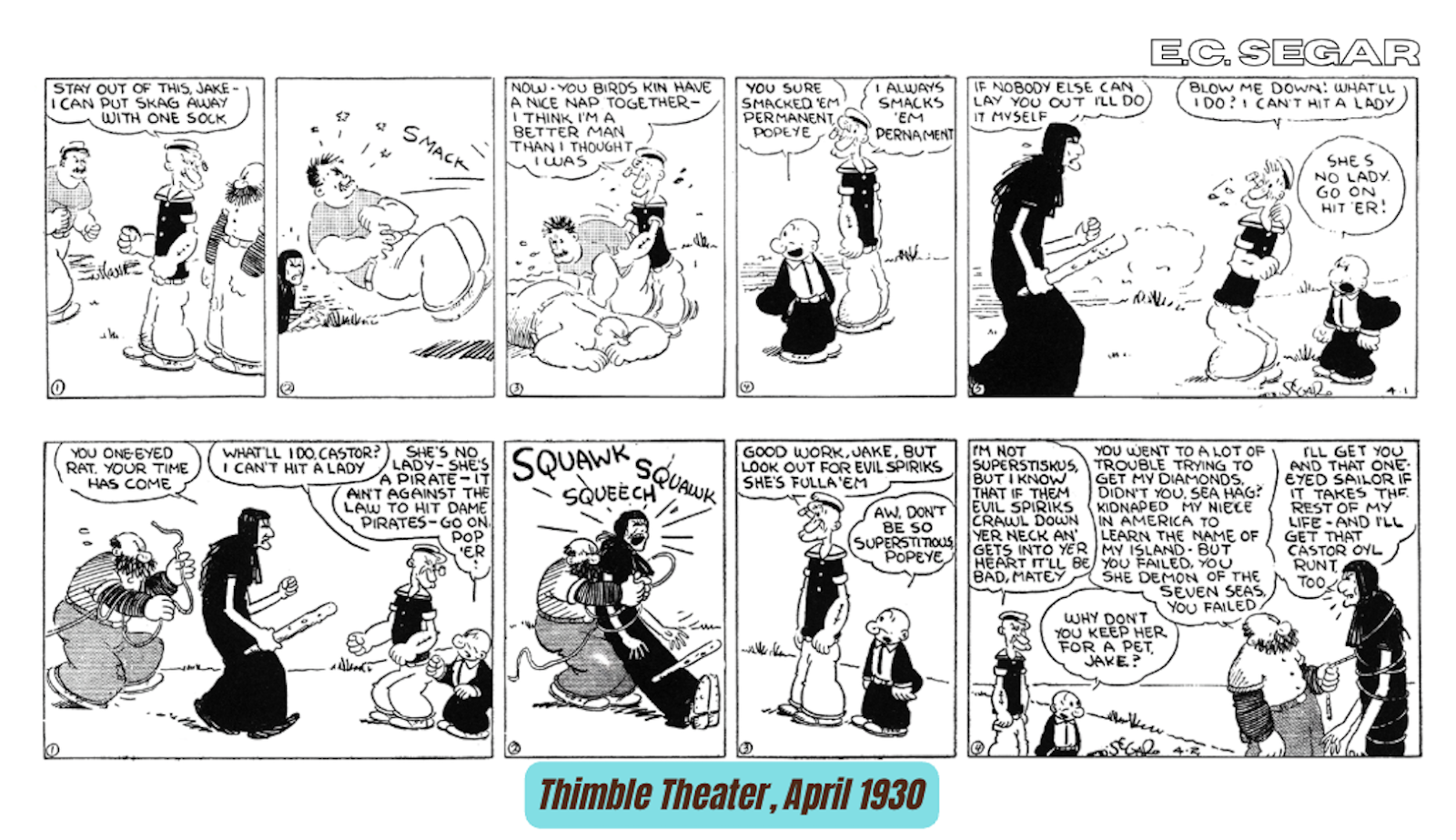
 Comics historian Bill Blackbeard celebrated her as “…the cadaverous, ghoulish Sea Hag, whose skeleton ship haunted the dark seas of the earth and whose periodic reappearance in (E.C.) Segar’s strip provoked outraged letters from parents who said their children were having nightmares as a result.”
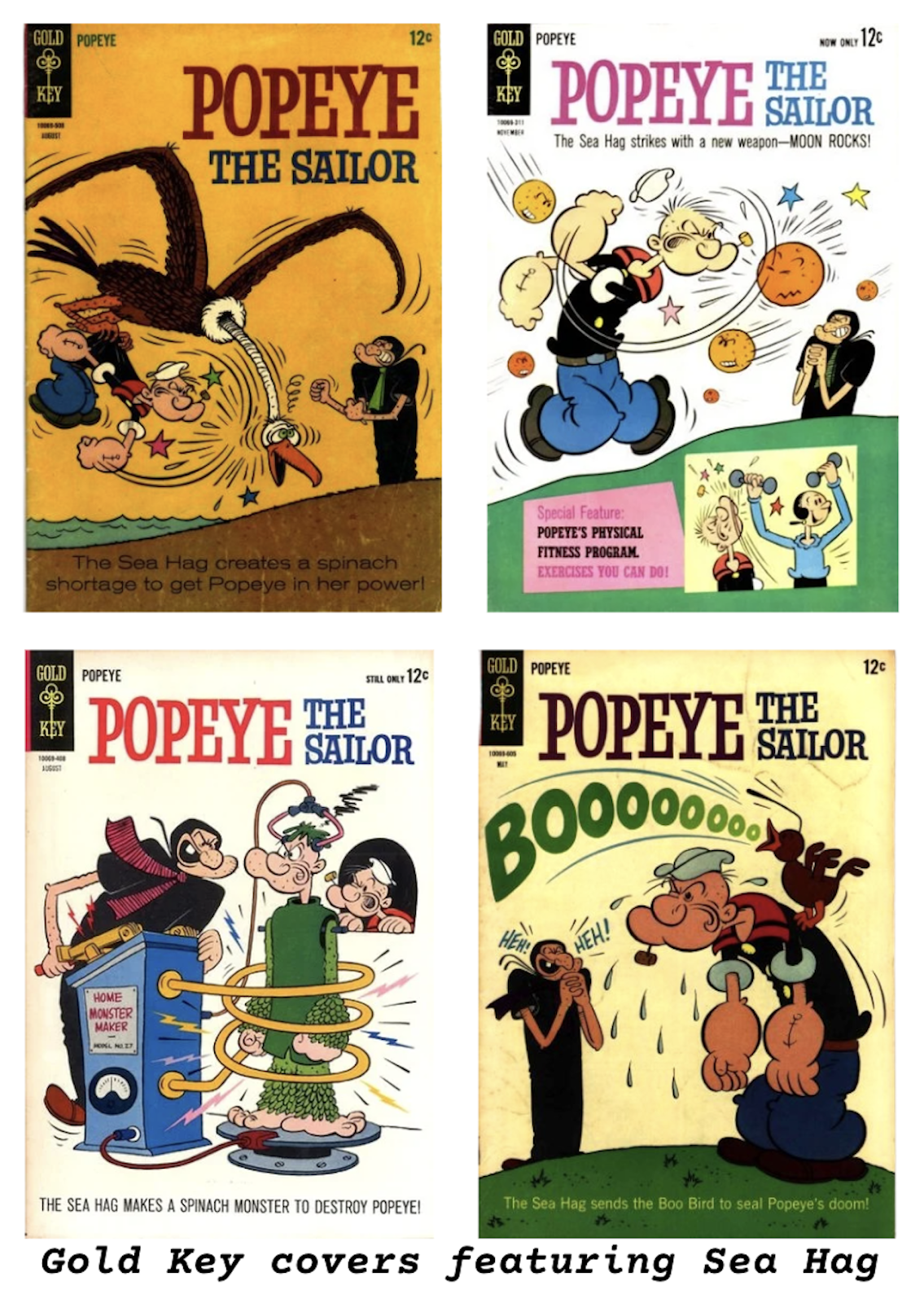
Despite her many powers and minions, the Sea Hag’s evil machinations were frequently thwarted — oddly enough — by a single funny-talking, one-eyed sailor.
“After Popeye, our simple, downstate Illinois artist thought of the Sea Hag,” Blackbeard wrote. “Then he thought of Mr. Wimpy. Then Alice the Goon and the Jeep. Then Poopdeck Pappy. Then, tragically, he died — and none of the legions of cartoonists who have carried on Thimble Theatre have thought of any figures worthy to add to those.
“Why not the others? Why just Segar?
“Because Segar had the capacity to think of them, once circumstance had stimulated his creativity, and that is indeed the simple sum of it — at least for genius like that of Elzie Crisler Segar.”
About Author
