
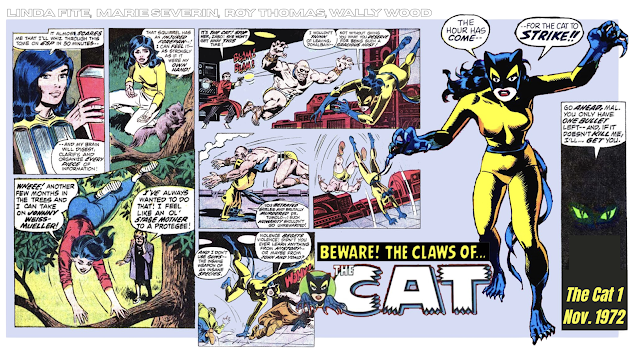
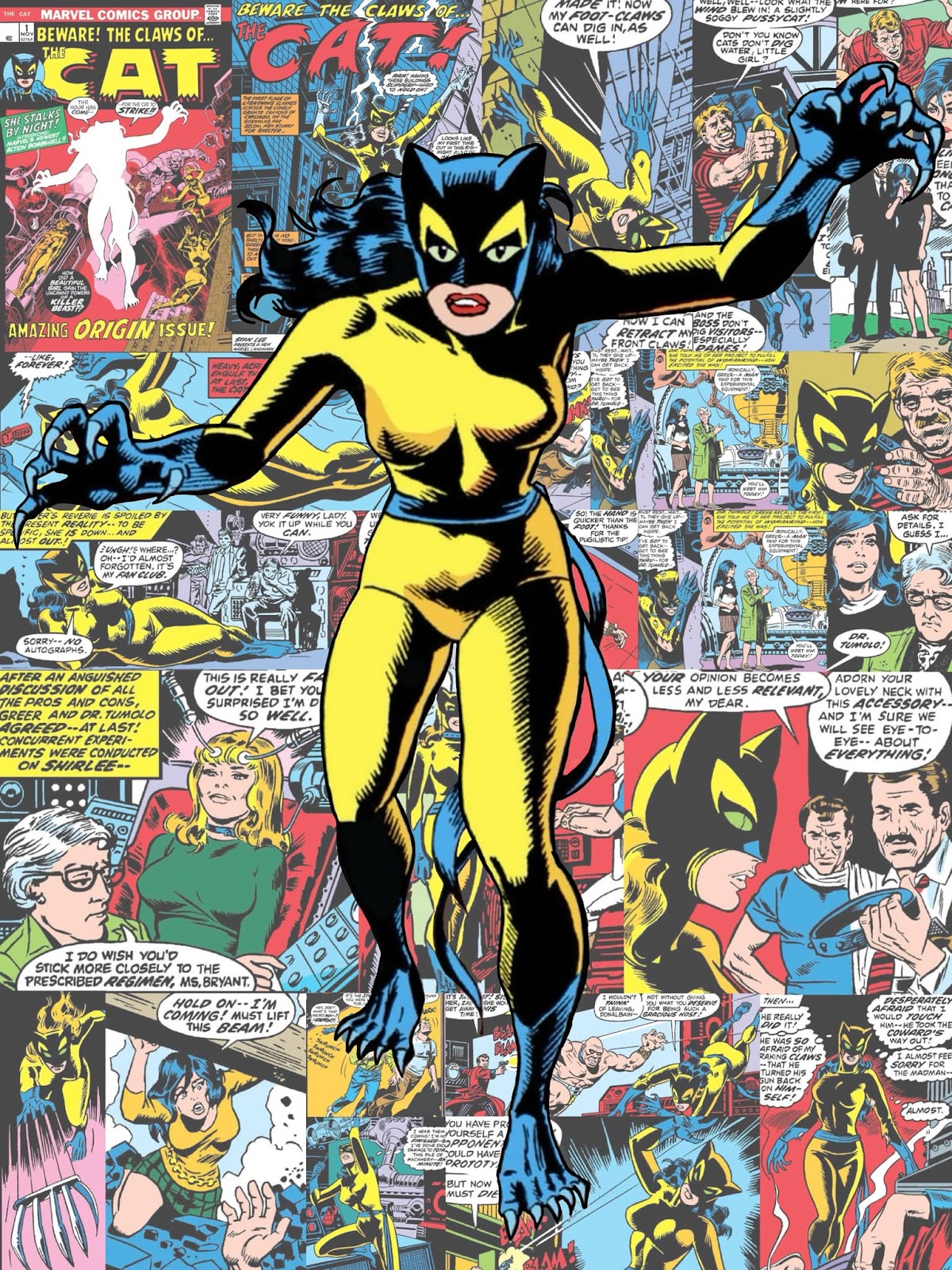
I have a soft spot for superheroes who never found their audience, and one of them is Greer Nelson, the Cat.
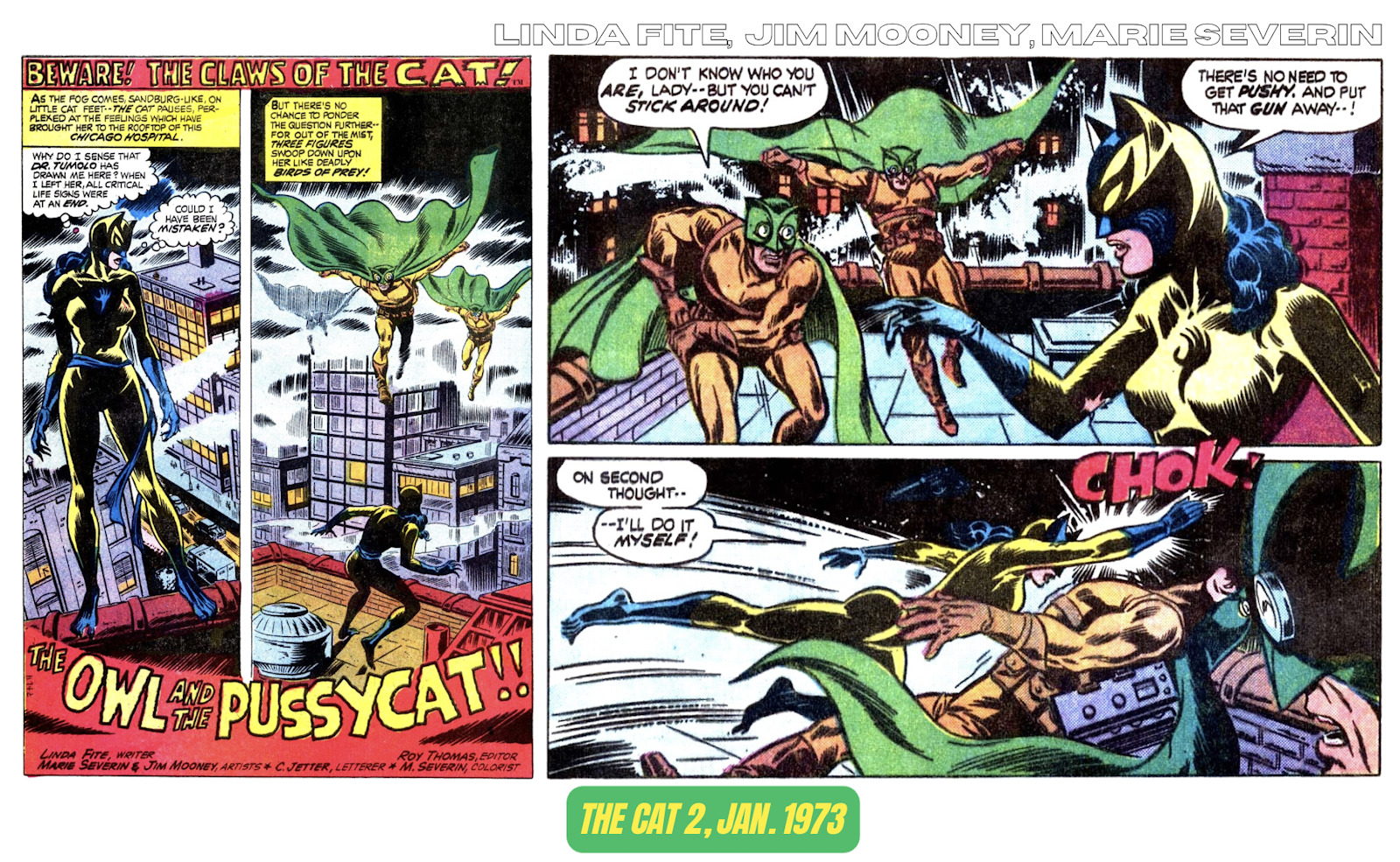
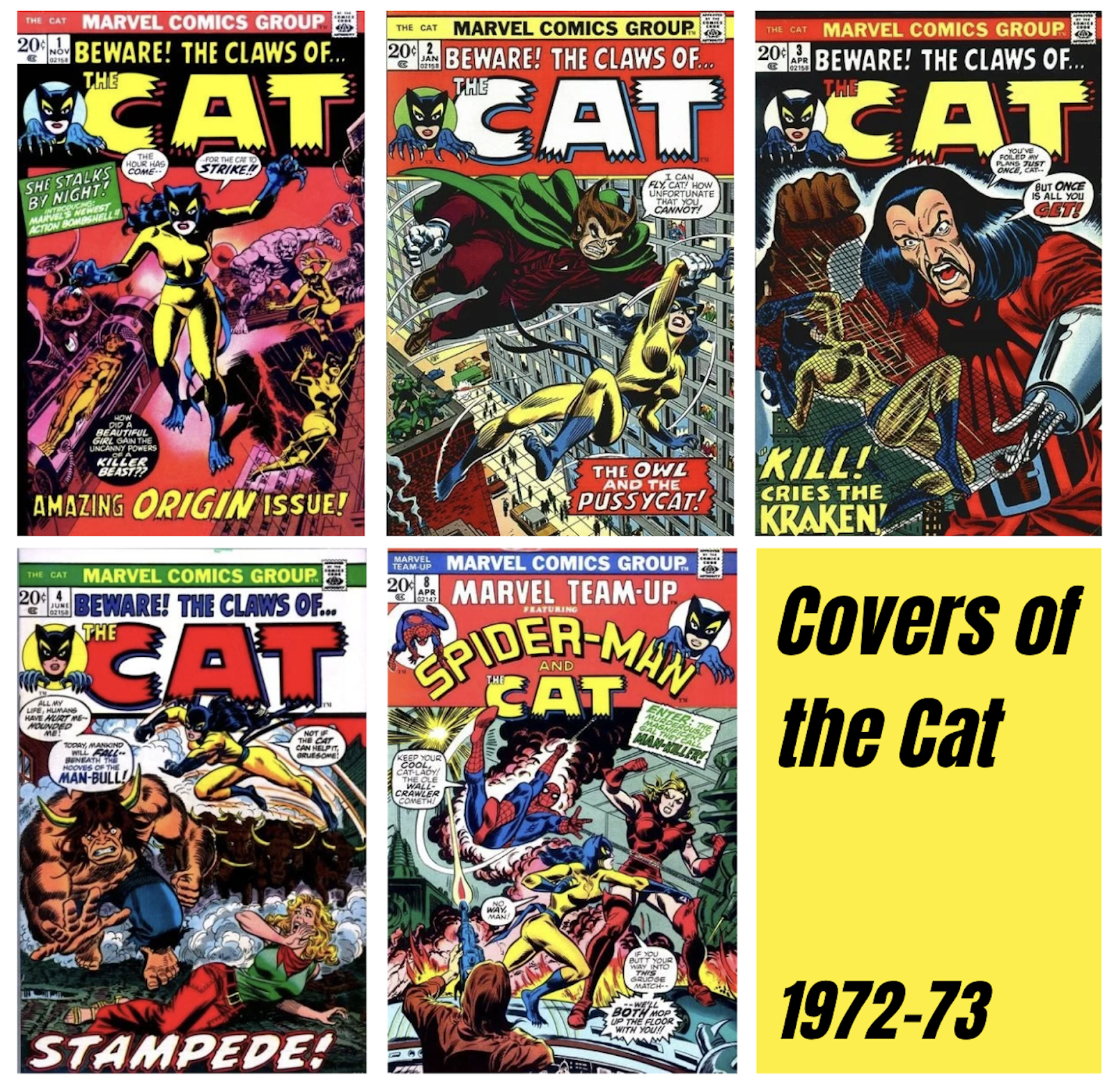
Created by Marvel in 1972 as a feminist heroine (Shanna the She-Devil and Night Nurse debuted simultaneously), the Cat joined a seemingly endless line of cat-themed females, from DC’s Catwoman, to Harvey’s Black Cat (and Marvel’s Black Cat), to DC’s Cheetah, to Republic Studios’ Panther Girl, to Archie Comics’ Cat Girl(s), to Dell’s Tiger Girl, to, arguably, Ian Fleming’s Pussy Galore, “the female who is all feline,” according to Goldfinger’s movie trailer.
“In an attempt to diversify readership, Stan Lee placed several female characters as leads in their own series,” noted the American Comic Book Chronicles. “Though Marvel was continuing to publish the bi-monthly Our Love Story and My Love, which included stories created by women such as Lee’s assistant Holli Resnicoff and Thomas’s wife Jean Thomas, Lee saw an opportunity to draw in more female readers empowered by the nascent feminist movement — as declared in the November 1971 Bullpen Bulletins, ‘For years now, we’ve wanted to start a comic mag which dealt exclusively with the derring-do of a gal superstar.’ Stan Lee came up with the titles of the three new books on the same day.”
As the Diversions of the Groovy Kind blog noted, “Written by the soon-to-be-Mrs. Herb (Incredible Hulk) Trimpe, Linda Fite with art by the incomparable team of penciler Marie Severin and inker Wally Wood, The Claws of the Cat 1 (Aug. 1972) had all the earmarks of another hit for Marvel. A likable, realistic, tragic lead character thrust into the role of a superhero. Story-wise and art-wise, The Cat 1 was a wonderfully crafted tale that could have come straight from Marvel’s Silver Age heyday, but given a ‘modern’ 1970s sensibility. Fite’s plot was heart-wrenching and moody; her dialogue straight from the Roy Thomas/Gerry Conway/Denny O’Neil school of ‘relevance.’ The art by Severin and Wood was lush and as moody as Fite’s story. It should have been a smash hit.”
Although he was falsely accused of disliking superheroes, Wally Wood certainly knew how to draw them. His figures are models of convincing, clean-limbed power. But the title’s feminism, while well-intentioned, may have been a little too heavy-handed. To be effective, the social message has to be in service of the story, and not the other way around.
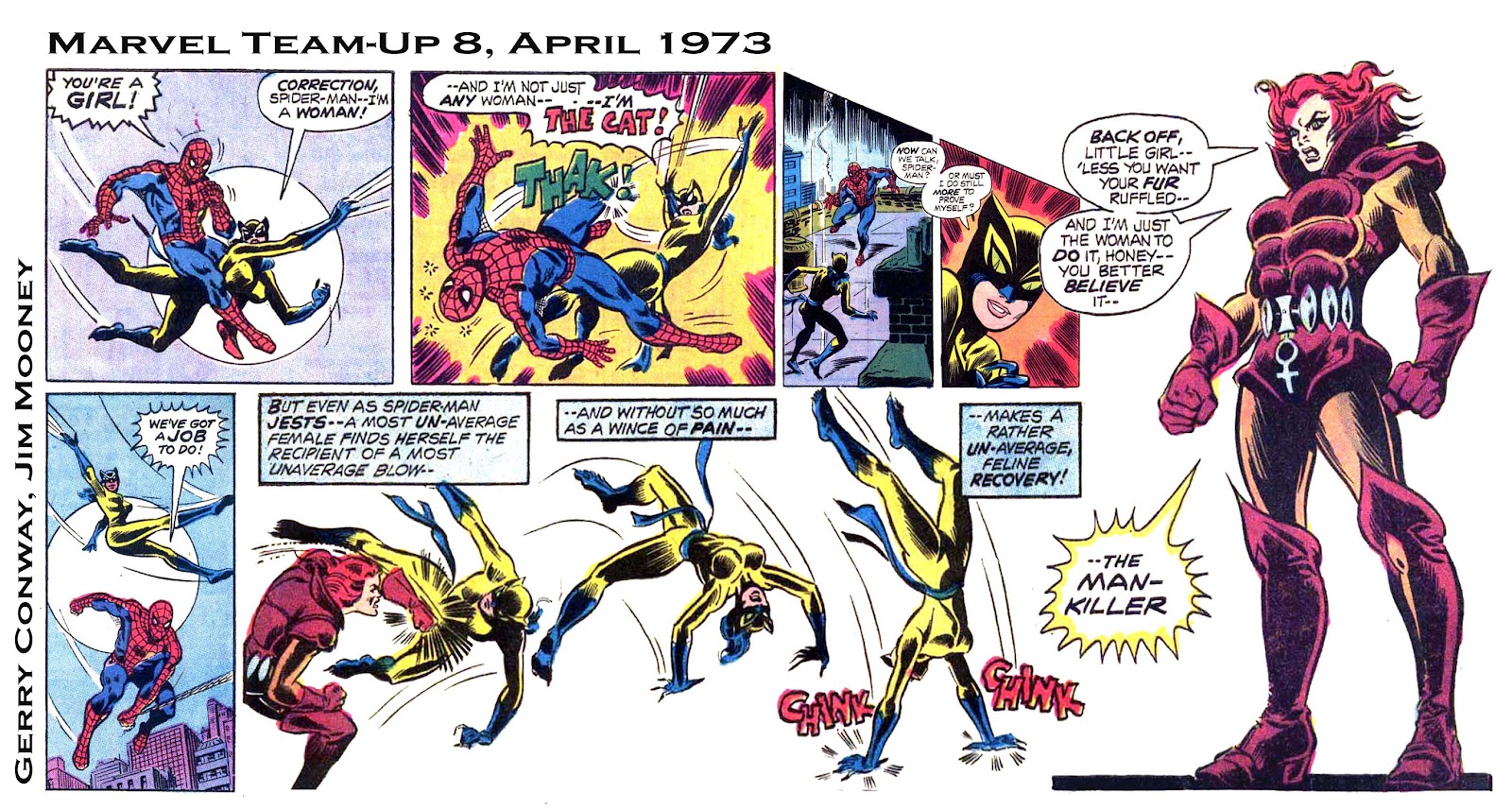
In Marvel Team-Up 8 (April 1973), the Cat joined Spider-Man to battle a parody of feminism, the Man-Killer.
She was about to lose the battle for sales, however. Two months later, the fourth and final issue of her title was published.
My own private theory is that the title failed because the heroine didn’t have the traditional alliterative superhero name, like Peter Parker, Clark Kent, Matt Murdock or Jessica Jones.
Greer Nelson. Meh. Try Greer Garson. Now there’s a name which with to conjure.
About Author
