Like the dinosaur, the gorilla has long appeared to comic book fans as a creature almost too good to be true.
So a hulking, black-furred, almost-human creature with superhuman strength actually exists?How cool is that?
“It’s not surprising that gorillas would be around at the advent of the comics medium. When comic books were first really being developed, films like King Kong and Mighty Joe Young were smashes at the box office,” noted comics historian Benito Cereno.
 “Additionally, many Golden Age artists were not shy about hiding such influences as Burne Hogarth’s Tarzan comic strip (not to mention the hugely popular Johnny Weissmueller series of Tarzan films of the 1930s) and pulp magazines, whose imperialist themes often featured jungle explorers encountering great apes.”
In a trend beginning in 1951, Gorillas clearly sold comics for DC, where editors were eager to use gorilla covers. DC editorial director Irwin Donenfeld finally had to limit them to no more than one a month.
“Soon they were pushing that ‘one gorilla amonth’ rule to the limit,” Cereno wrote. “DC’s sci-fi/fantasy/horror titles such as Strange Adventuresand Tales of the Unexpected have since become notorious for their gorilla covers. Even in this not-quite-Silver Age era, superheroes were getting into the gorilla mix, with Batman fighting the Gorilla Boss of Gotham in Batman 75 (1953), Superboy battling Kingorilla in Adventure Comics 196 (1954), and Wonder Woman, uh, playing baseball with one in Wonder Woman 78 (1955).”
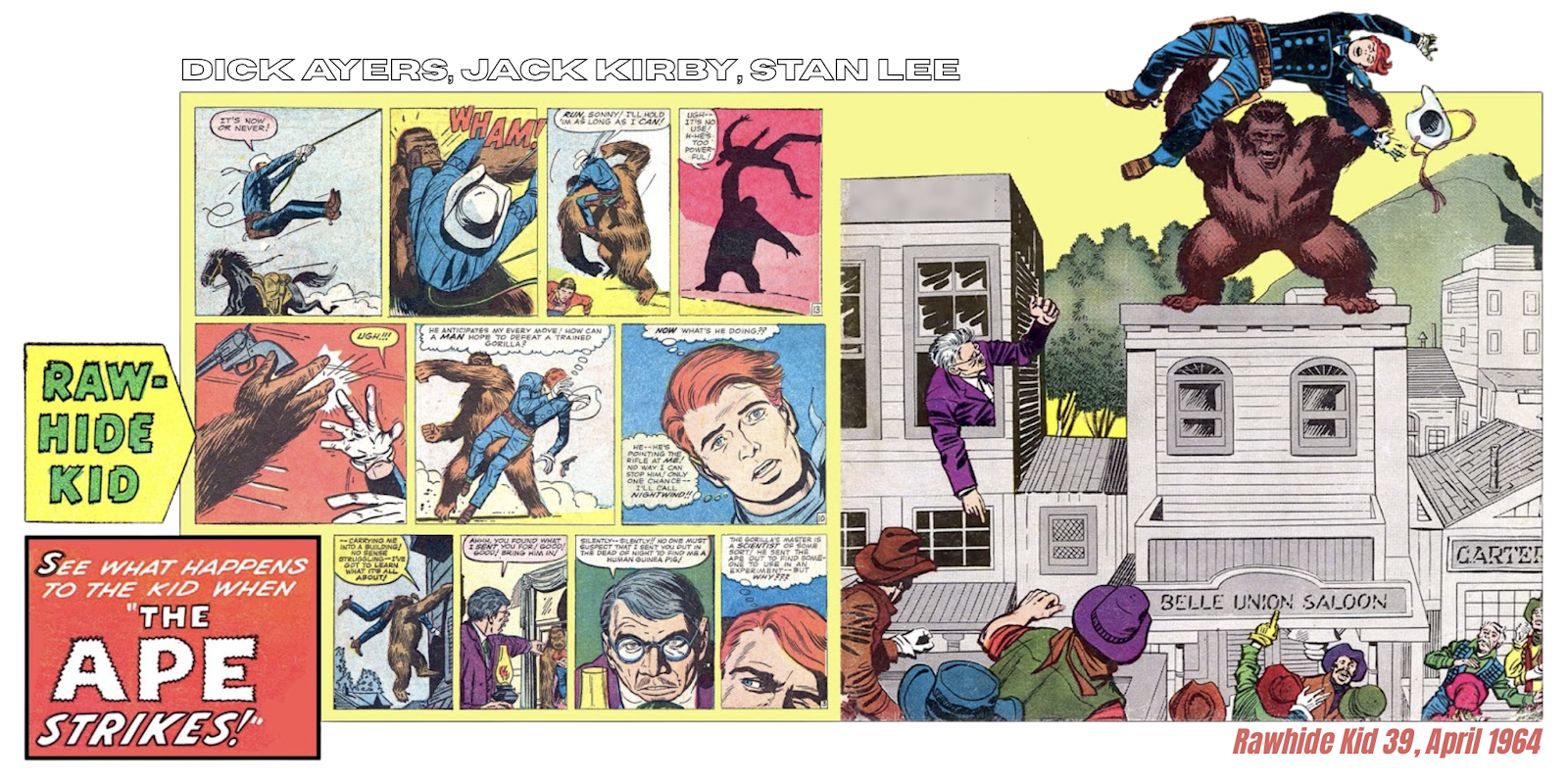
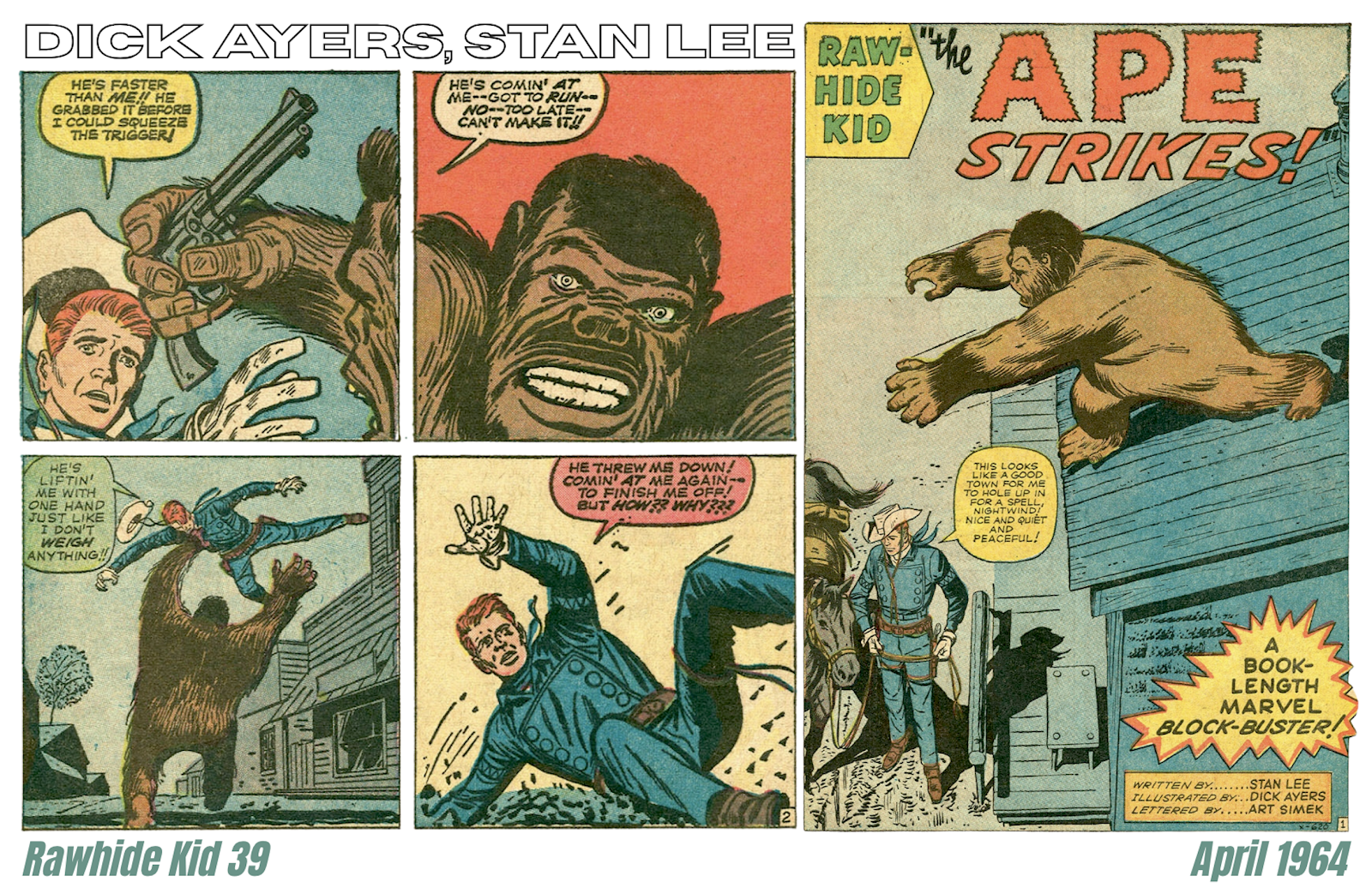
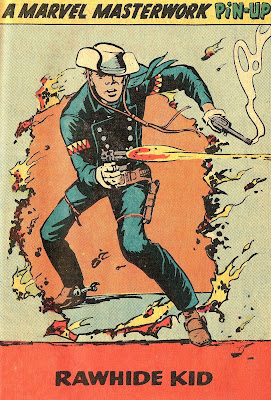 Gorillas also turned up at what would become Marvel Comics, which offered three different characters called “Gorilla Man” within a decade. The Fantastic Four were matched by the Red Ghost’s Super-Apes, and even the western hero Rawhide Kid found himself battling a gorilla in The Rawhide Kid 39 (April 1964).
A slight, lightning-fast redhead named Johnny Bart, the Kid was a hero with whom smaller boys might presumably identify, so pitting him against the infrahuman brawn of a gorilla made for an exciting premise.
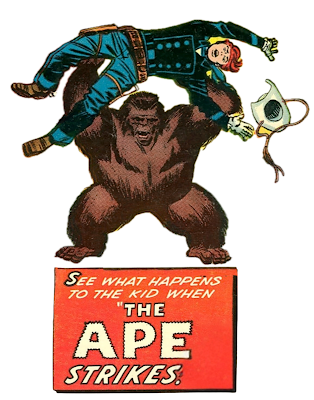
A mad scientist, Dr. Karlbad, schemed to transplant the young outlaw’s brain into the ape’s body. The tale, written by Stan Lee, came with an impressive Jack Kirby cover that depicted the gorilla about to hurl the helpless Rawhide Kid from the top of a building into a western street. The interior art by Dick Ayers didn’t quite deliver on the cover’s promise, however.
The appearance of a gorilla must have seemed particularly startling to the Kid, who was presumably operating during the 1870s-80s. After all, scientists hadn’t discovered gorillas until 1847.
Of course, DC’s frontier hero Tomahawk could have taken it all in stride. He’d had several run-ins with a giant gorilla, King Colosso, a century earlier. That sizable simian one even started wearing a giant headband and shooting a Brobdingnagian bow and arrow.
About Author
