
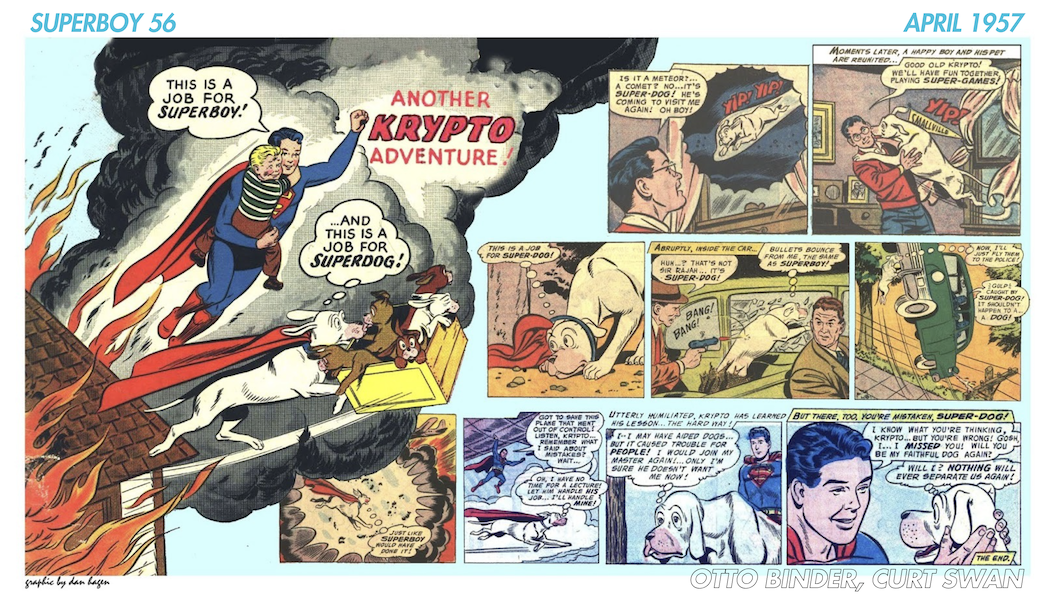
The concept combined vast superpowers with loyalty and lovability, all wrapped up in a flashy red cape.
Who could resist Krypto? Not me.
In a little under two decades, Superman had gone from a two-fisted, slum-clearing crime-buster who could cheerfully threaten to kill corrupt lobbyists to an avuncular hero who kept an anthropomorphic flying dog in a cape for a pet.
And if that storytelling distance didn’t seem as far as it was, that’s probably because it stuck close to the path of wish fulfillment.
 After all, the fantasy life of 1950s children was reflected in the TV shows of the day — not just the immensely popular Adventures of Superman, but also Lassie. The concept of a dog who would brave any danger to save the people she loved had legs enough to carry it for a remarkable 19-year run on TV, 1954 to 1973.
Superman, presumably, has stoically adjusted to his fate, that the primary burden of his near-omnipotence is loneliness. We saw that at the end of the film Superman II, when he robs Lois Lane of her memory, he carries the pain of their relationship by himself. But Superboy can hardly be expected to be so self-denying, and there’s story potential in his longings.
Clark Kent’s condition will mean that throughout his life, he’ll be haunted by loneliness. And he won’t be the first person, or the last, to discover that a dog can considerably lighten that burden.
And by temporarily relieving Clark’s loneliness, Krypto underlines it for storytelling purposes. Krypto provides another opportunity to remind readers what Clark must sacrifice for his mission.
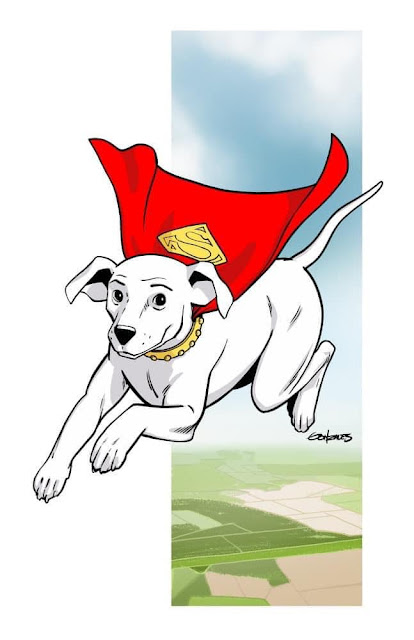
In A Job for Super-Dog (Superboy 56, April 1957), writer Otto Binder and artist Curt Swan give us a tale about how Krypto gives himself a mission parallel to Superboy’s, rescuing dogs instead of people.
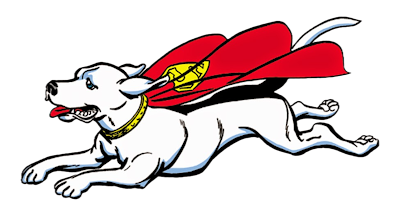 Superman — and to an only slightly lesser extent, Superboy — was required to be perfect. The idea of anyone flawed wielding such near-omnipotent powers would have been pretty unsettling. But Krypto was only a dog. From him, a few well-meaning mistakes were not only to be expected, but endearing.
So Krypto’s solo efforts cause various accidents, and a rift between the boy and his dog. The story ends with a warm reunion, just the emotional payoff the audience requires.
“He is a good-hearted but awkward pooch, smashing through walls and windows,” observed comics historian Michael E. Grost. “Krypto also lets his feelings run away with him. He gets feisty and jealous of other animals, just as he later will with Streaky the Cat. He is a sympathetic and richly comic character.”
The character’s clear direction was silliness, and further down that path we’d find various other caped super dogs, a Space Canine Patrol, the Legion of Super Pets, and finally a campy dead end. Then, like Supergirl, Krypto would be retroactively wiped out of existence — and finally, of course, rewritten back into reality.
Good to see you again, pal. Thanks for returning to us from your romps around the universe.
About Author
