

Something of a cross between Hawkman and Batman, the Night Hawk flew silhouetted against moonlit London skies years before either of those American superheroes was created.
Debuting in a boys’ story paper on April 5, 1930, the character was written by John James Brearley Garbutt, who also penned Sexton Blake novels.
“The Night Hawk … appeared in The Nelson Lee Library as a backup feature in the 1930s,” wrote Chris Murray in his informative book The British Superhero. “He was Thurston Kyle, a scientist who partnered with a sidekick called Sparrowhawk to fight crime in armored flying suits.”
Like Batman, the Night Hawk was motivated by his father’s murder and pursued the man responsible, Silas Benton.
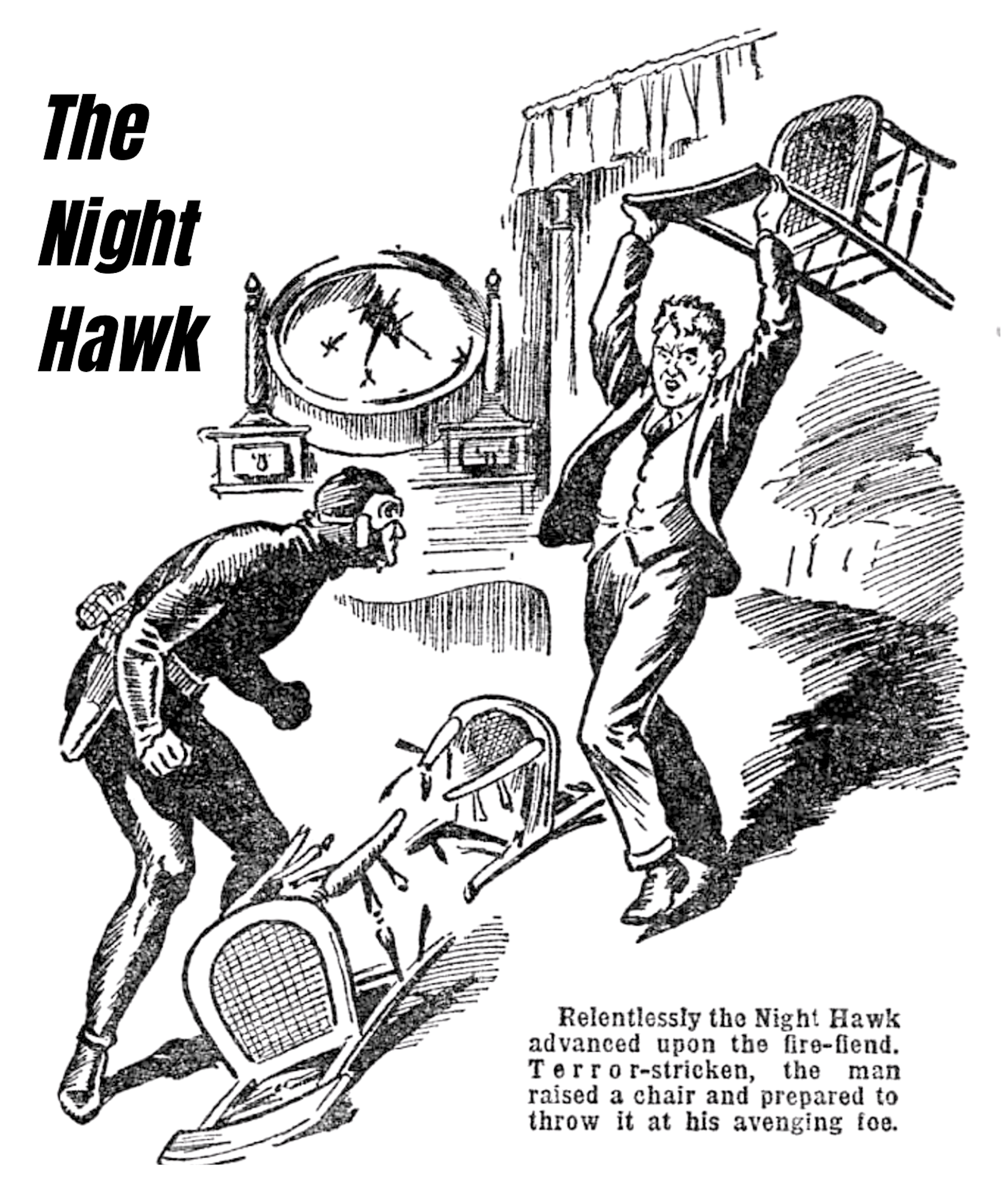
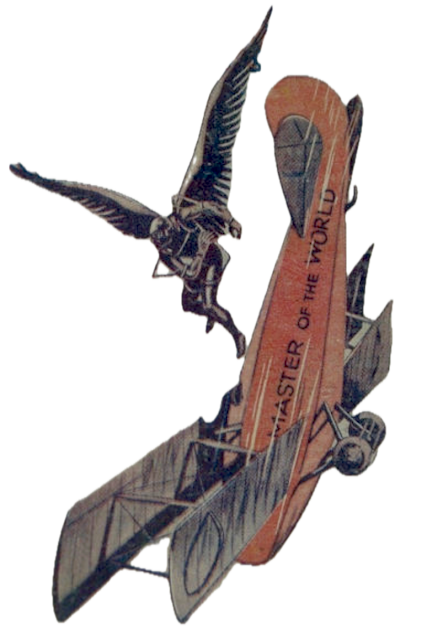 “When Benton disembarked from a train at an Alpine station just inside the Swiss border, thinking he had evaded capture, Night Hawk swooped down and snatched him into the air, then carried him up to a plateau on one of the Jura mountains,” the International Hero website noted. “Night Hawk then took off his wings and challenged Benton to a fair fight, making it clear there was no safe way to descend without the wings and that only one of them would leave alive. Despite Benton pulling a knife, Night Hawk won the brawl, then, ignoring Benton’s tearful and terrified pleas for clemency, Night Hawk lifted his foe aloft and hurled him over the edge.”
Here’s a typical passage: “Under his great wings, the scientist Night Hawk was gliding leisurely homewards after one of his customary trips through the cool night air, following a long, hard day in his laboratory.
“The flight had been shorter and more idle than usual; just a fling across London at top speed, then a quiet flit back to his Hampstead house and bed. He had even left his twin guns and grenade belt at home on account of their weight, because, for once in a way, he had not been in the mood to seek adventure.
“The sight of such a man in so peculiar a position, however, aroused Thurston Kyle’s ever-acute interest, and, without a sound, he dropped lower still, safe in the knowledge of his ‘invisibility.’”
The Night Hawk’s exploits were published in 1930-1931. Four new stories appeared in 2014.
The character was part of a long line of British winged adventurers that included Captain Q (1930), Shade the Shadower (1933), and the Scarlet Bat (1943). The tradition stretched all the way back to Batsowl (1918), the Winged Man (1913), and Dicky the Bird-Man (1910).
“So when reprints of American superheroes such as Batman and Hawkman appeared, they were not entirely without precedent, although the American comics offered heroes, whereas the British proto-superheroes were mystery men and not always heroic in their motives or actions,” Murray noted.
About Author
