
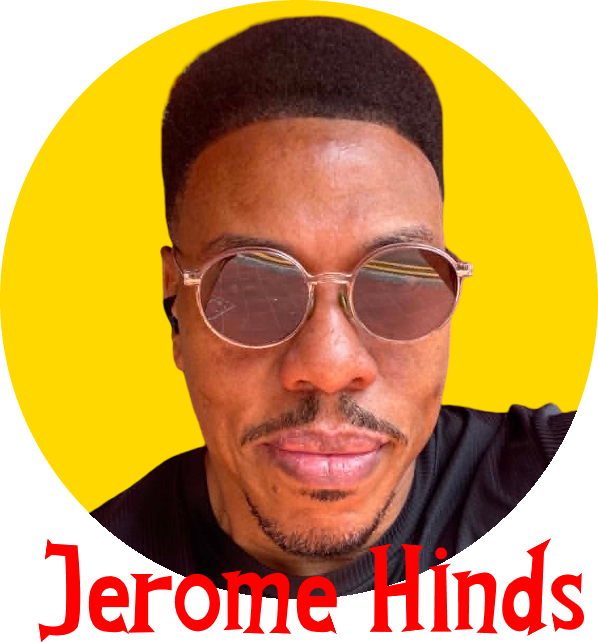
 First Comics News: You live in Singapore. Why was it important to release this book on America’s 250th birthday?
Jerome Hinds: It’s a straight tribute to the land that brought comic books to the world. I had to launch on this day.
 1st: What does Independence Day mean to you as someone living outside the United States?
Jerome: As far as I can tell, the USA is the most extraordinary nation in history. Nothing’s perfect, as they say, but though I’m not a citizen, I largely feel like a spiritual Patriot.
1st: Are there challenges to publishing American-style comics while living in Singapore?
Jerome: Not particularly, as there are facilities like FundMyComic, Amazon, and Kickstarter. Locally, Manga is more popular, so I do indeed have to set my sights abroad readily.
1st: Does distance from the U.S. give you a different perspective on superhero storytelling?
Jerome: Possibly, especially on different cultures. The essence of a good story, though I think, is universal, and though I want to be original, I don’t want to stray too far from the essence of superheroes.
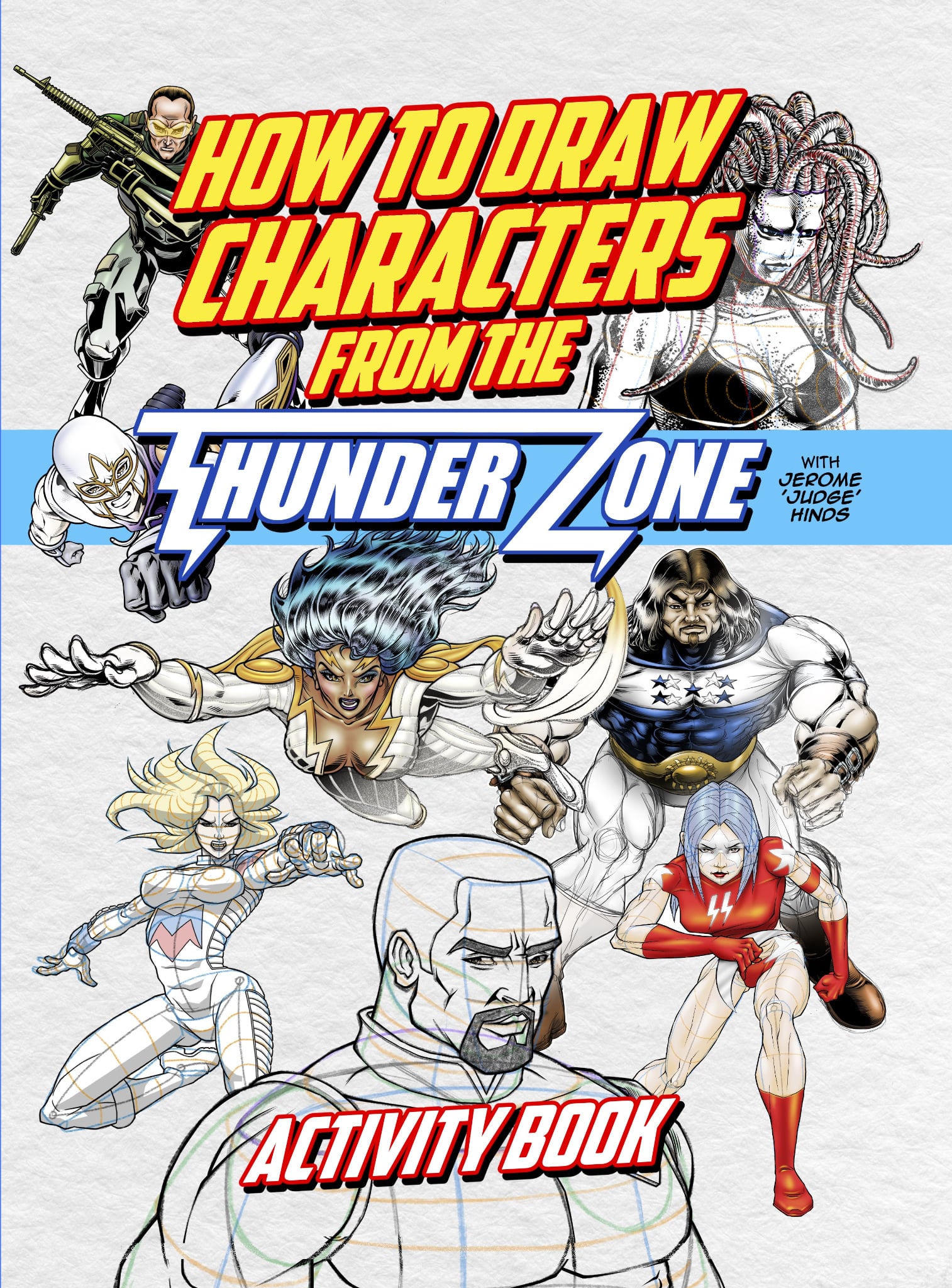
1st: Many readers will immediately think of How to Draw Comics the Marvel Way. Was that book an inspiration?
Jerome: YES!
1st: What lessons did you learn from classic instructional books?
Jerome: The aforementioned book is the greatest art book I’ve ever read – even if you’re not particularly into superheroes, the lessons in anatomical construction and basic perspective are priceless. A book on Inking by Gary Martin was also exceptional.
1st: How does your teaching philosophy differ?
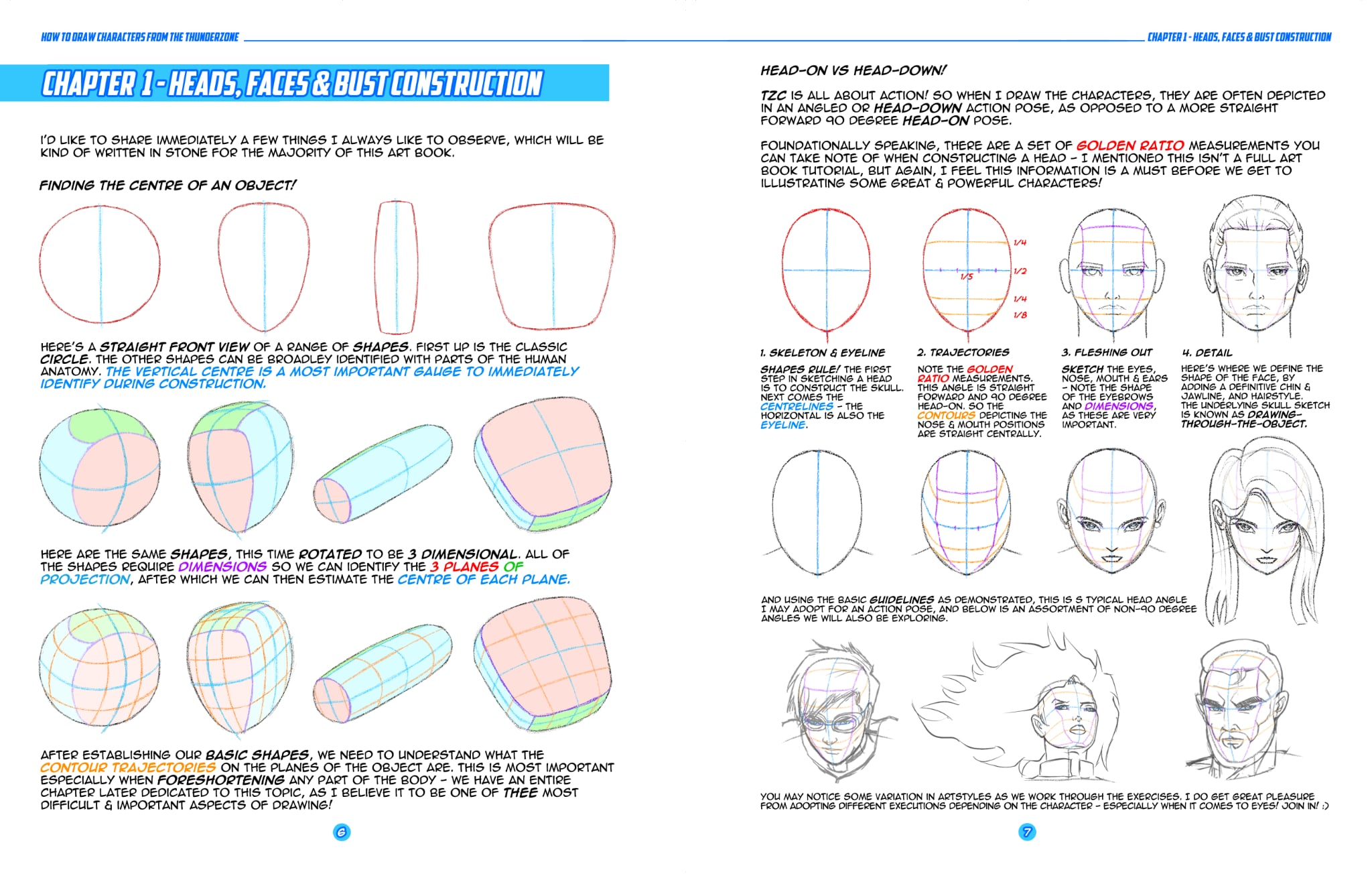
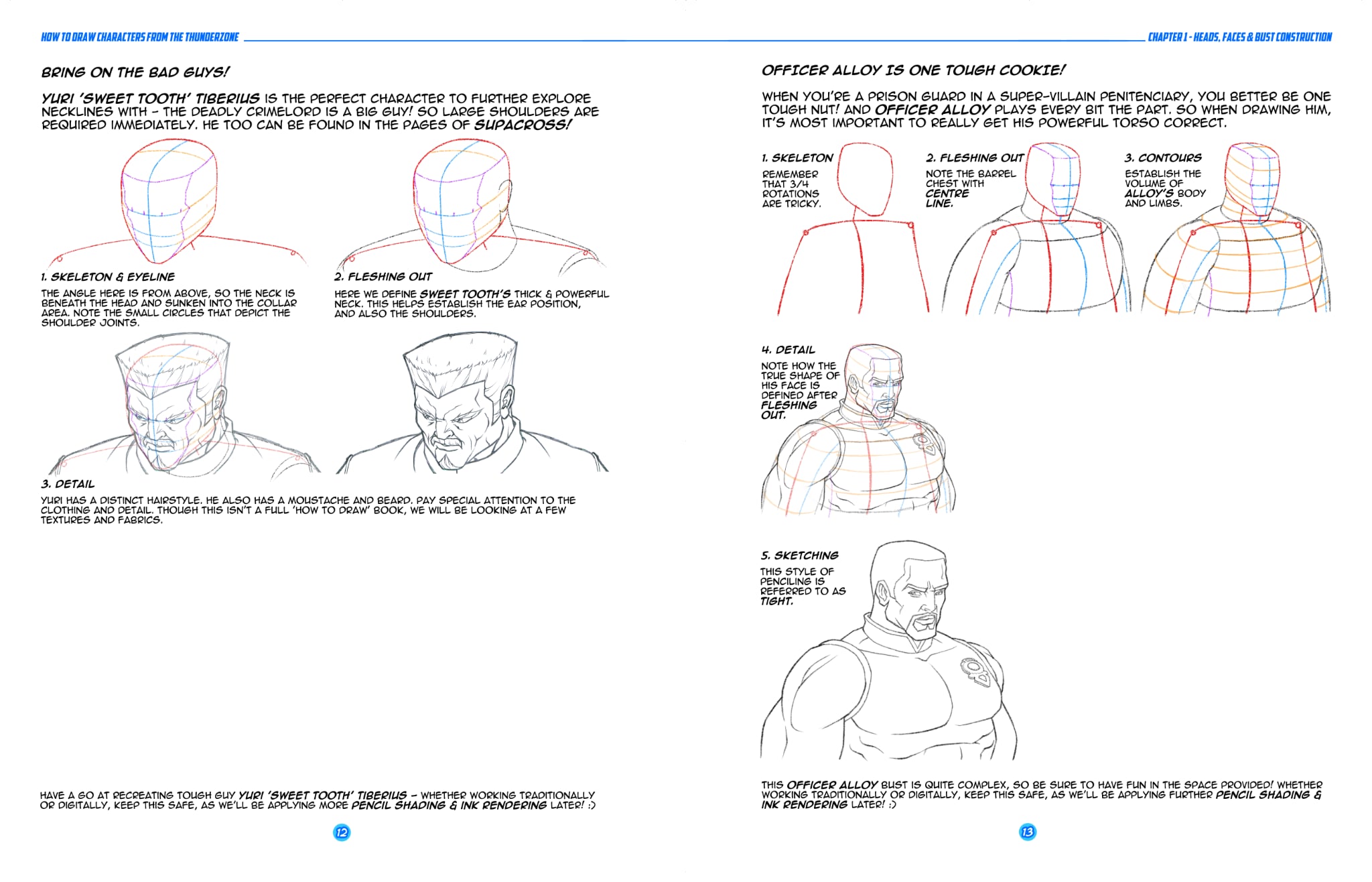
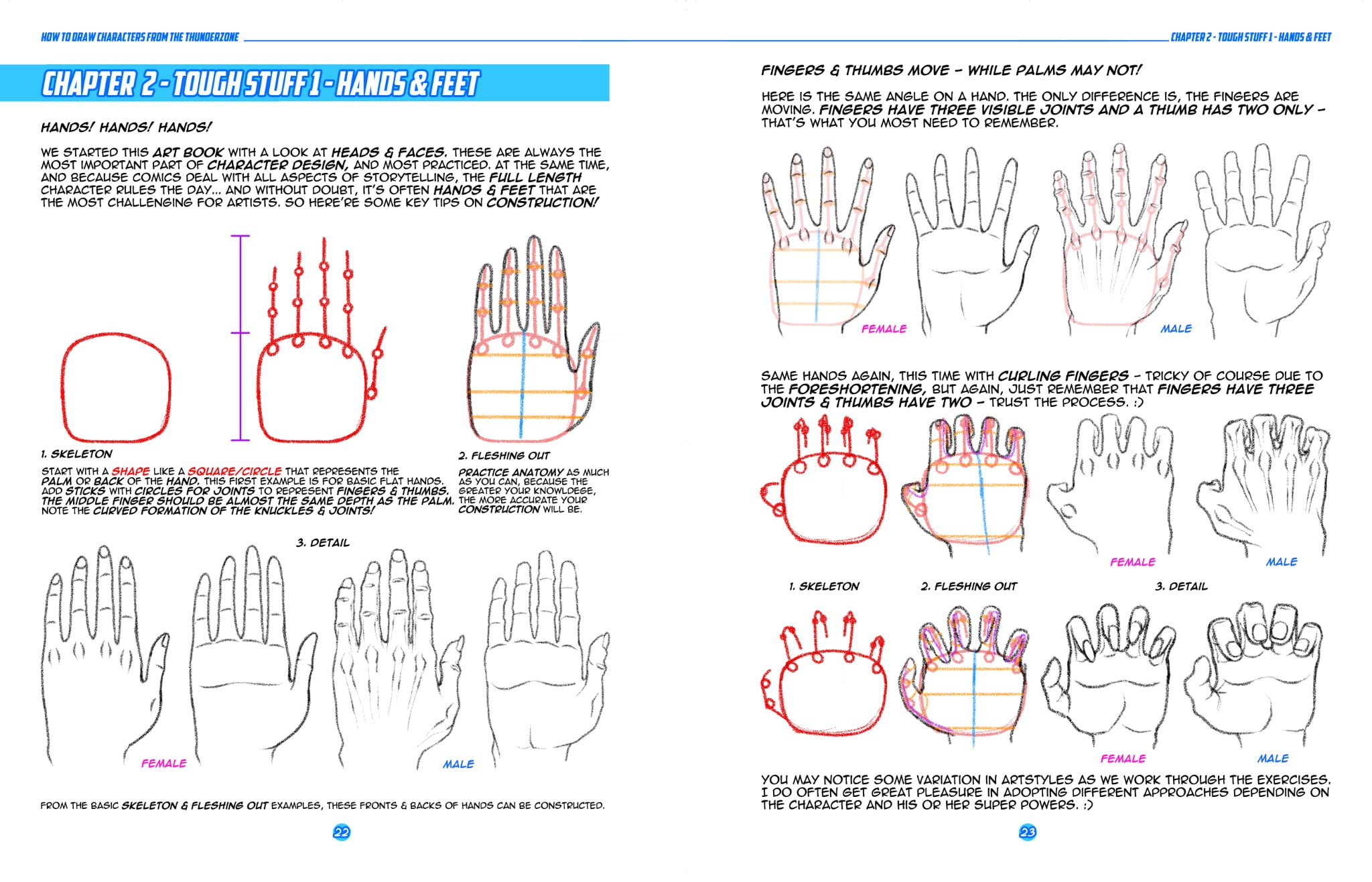
Jerome: Something that I’ve ‘developed’ is ‘Finding The Centre Of An Object’. I’ve not seen before anyone else focus on this to such a large extent. And I suppose another major difference in this book is it’s an ACTIVITY BOOK – meaning you can draw directly onto the book pages in the spaces provided. I also accept that many people may choose not to ‘deface’ the book by doing this, and draw on separate pieces of paper, or digitally.
1st: Is your book aimed more at beginners or experienced artists?
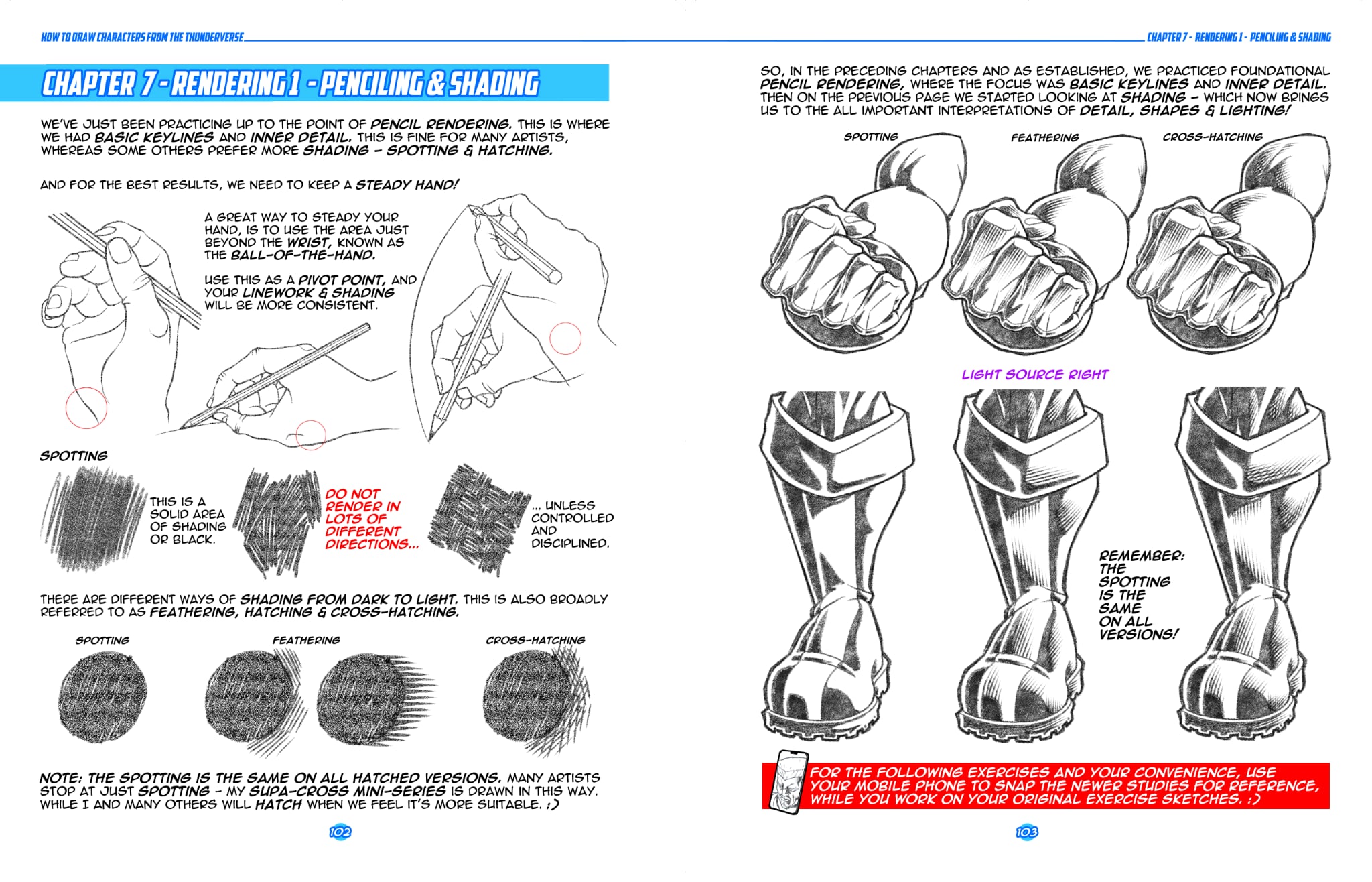
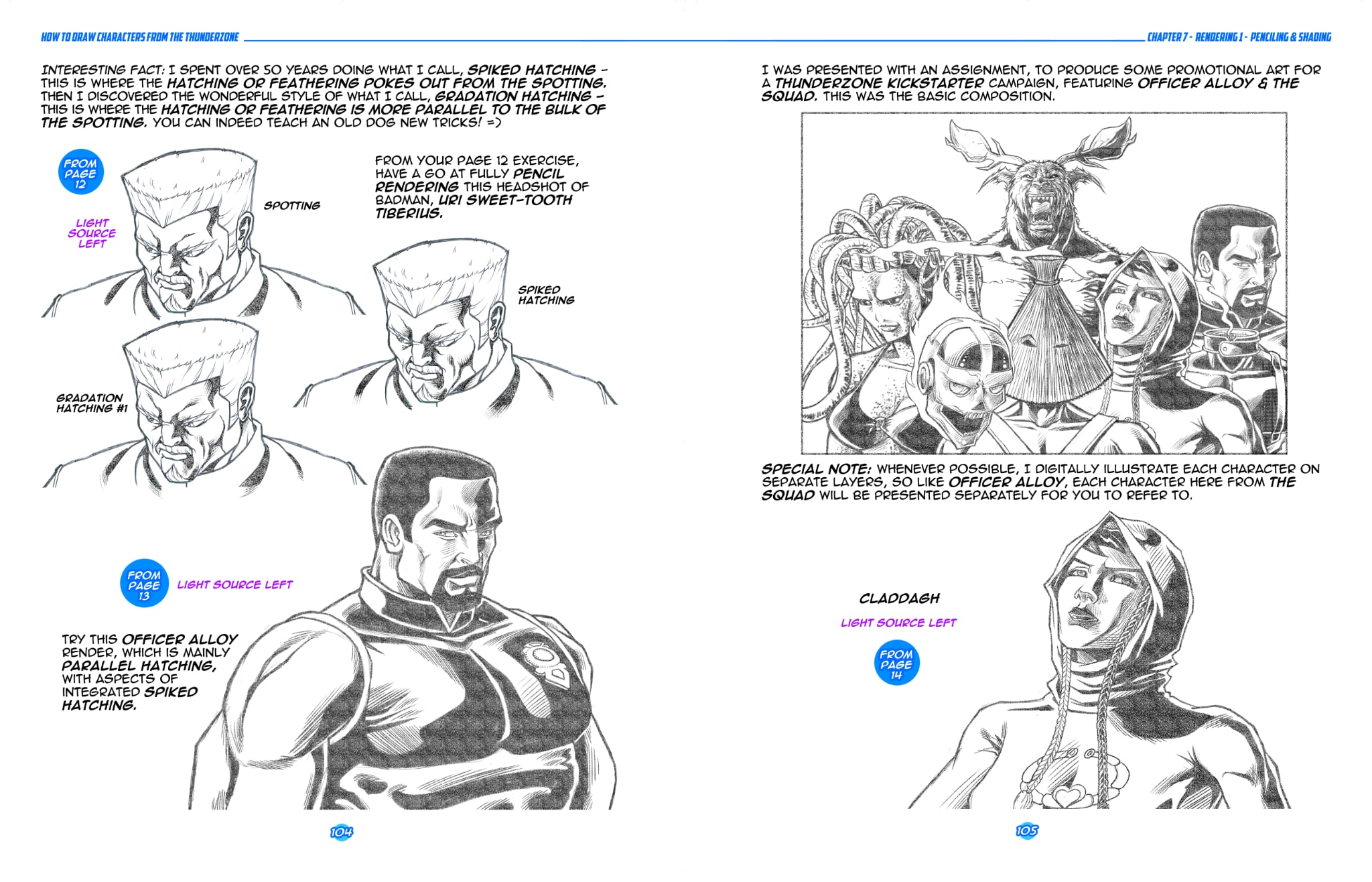
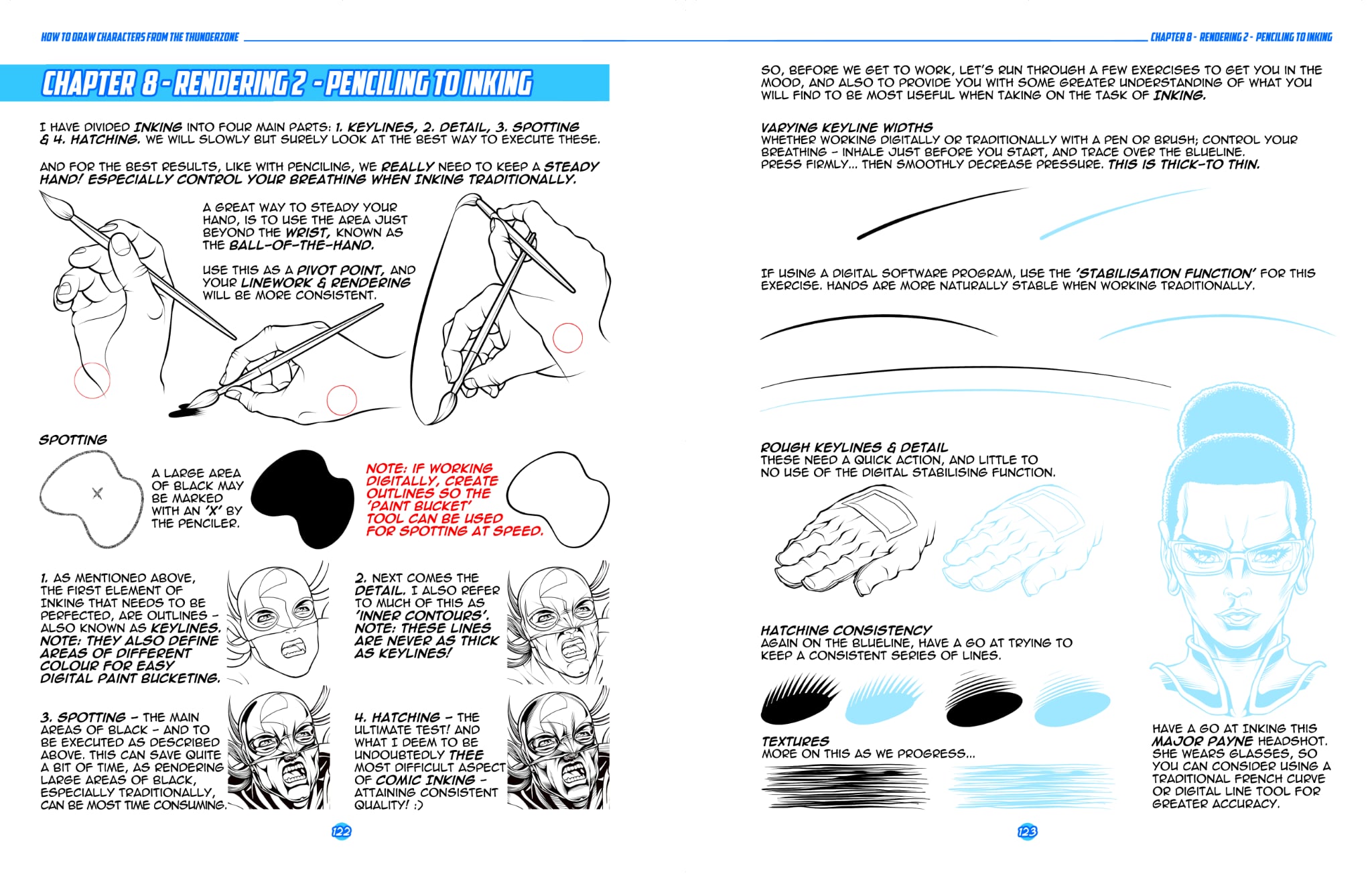
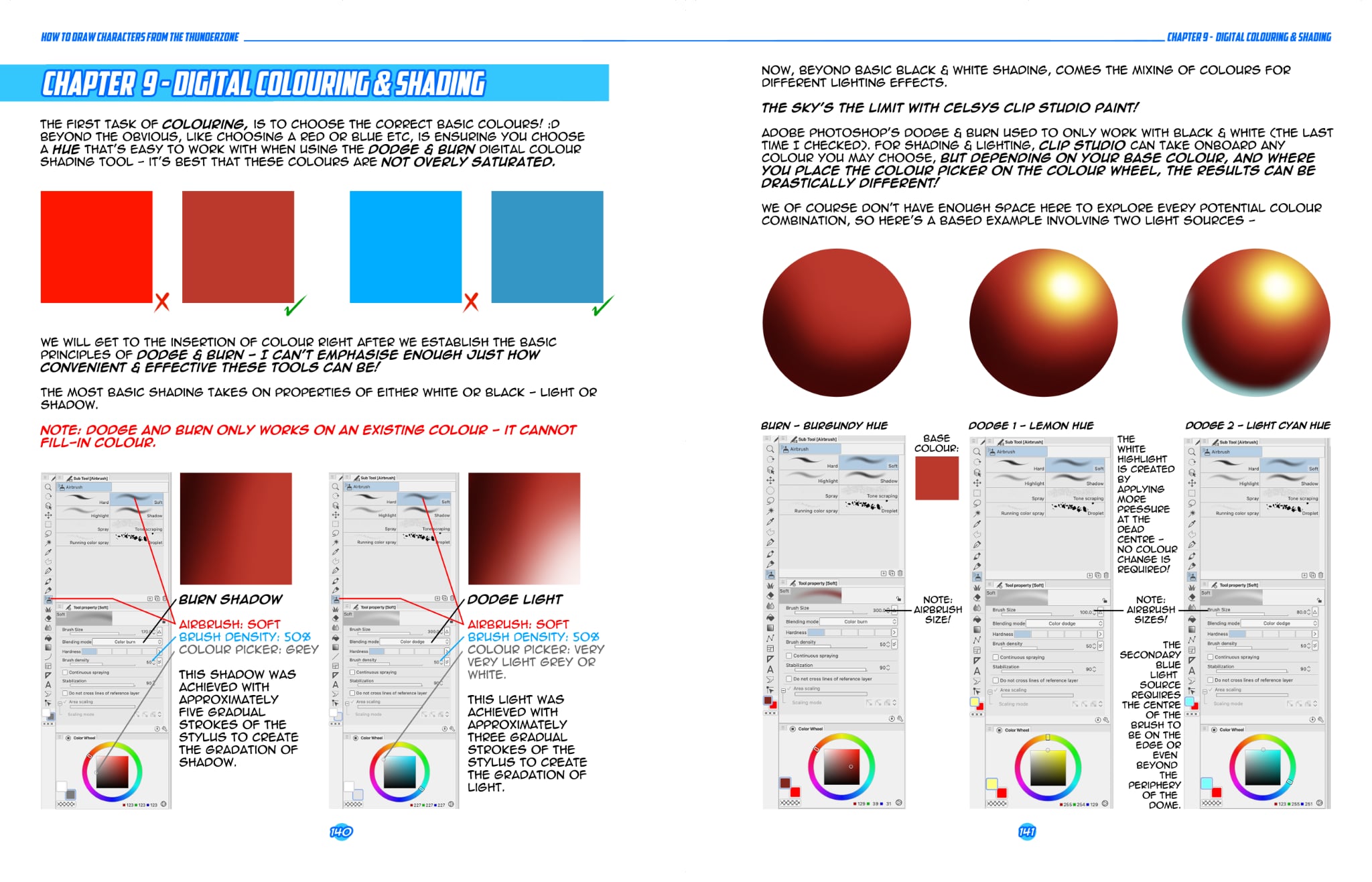
Jerome: Beginners and intermediate. I have also had some very encouraging words from some quite experienced artists as well, particularly in regards to the chapters that address pencil rendering/hatching/inking and digital colouring.
1st: What techniques do you cover that readers won’t find in How to Draw Comics the Marvel Way?
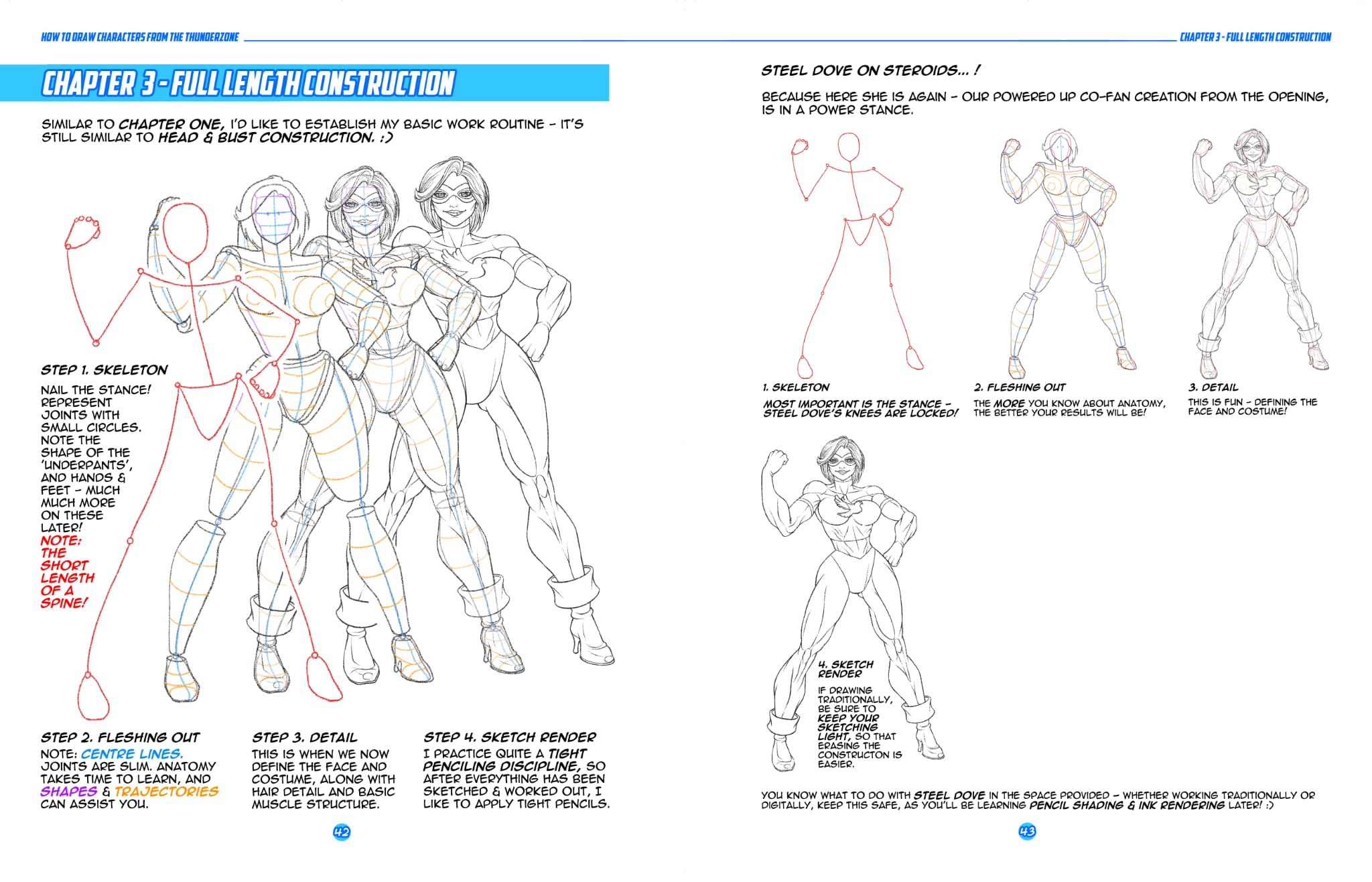
Jerome: The figurative constructional methods are different in places. The chapters on pencil application and inking approaches are unique, as are the rapid digital colouring techniques demonstrated.
1st: Does your book focus more on your own characters than on general comic art principles?
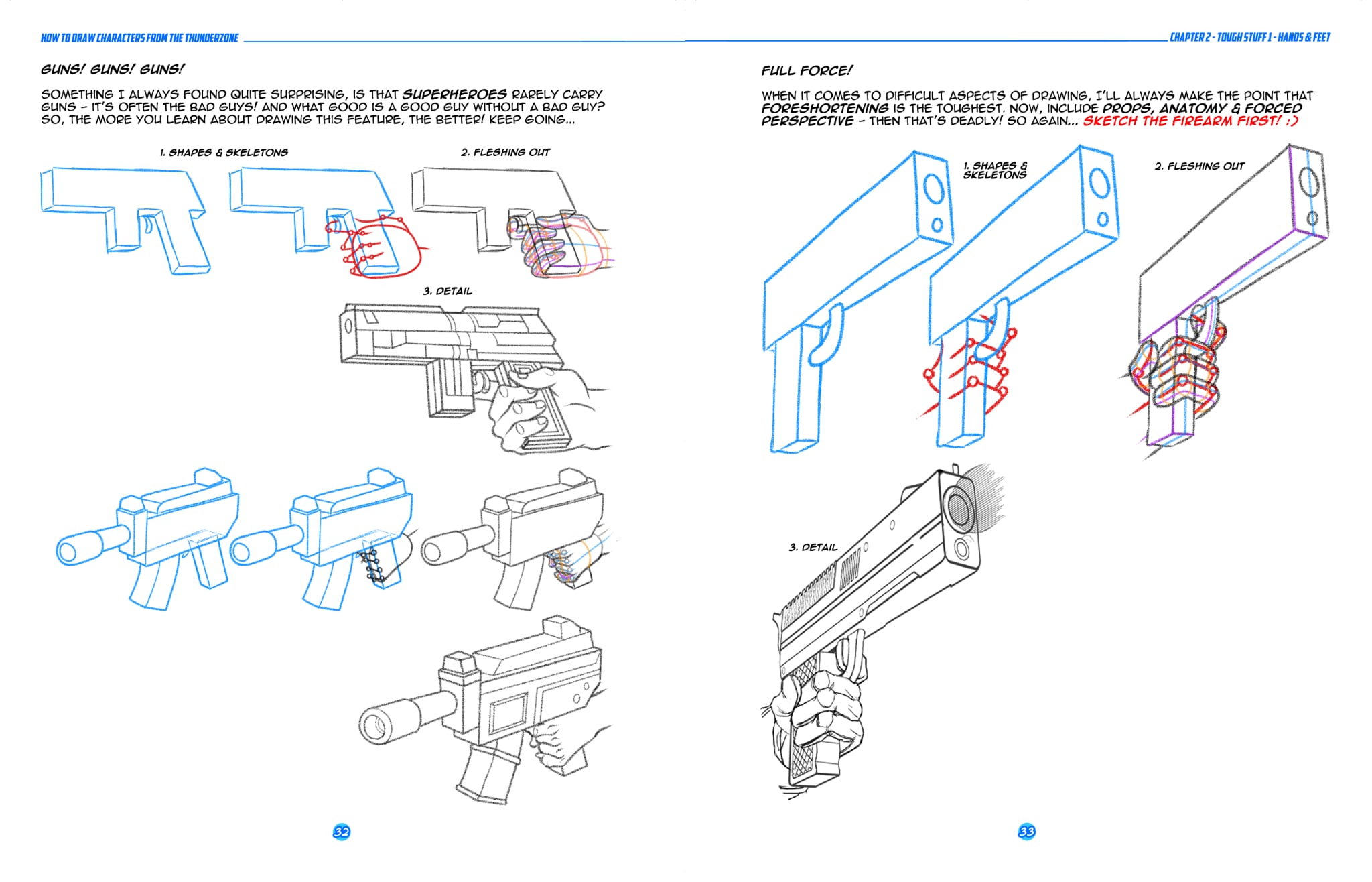
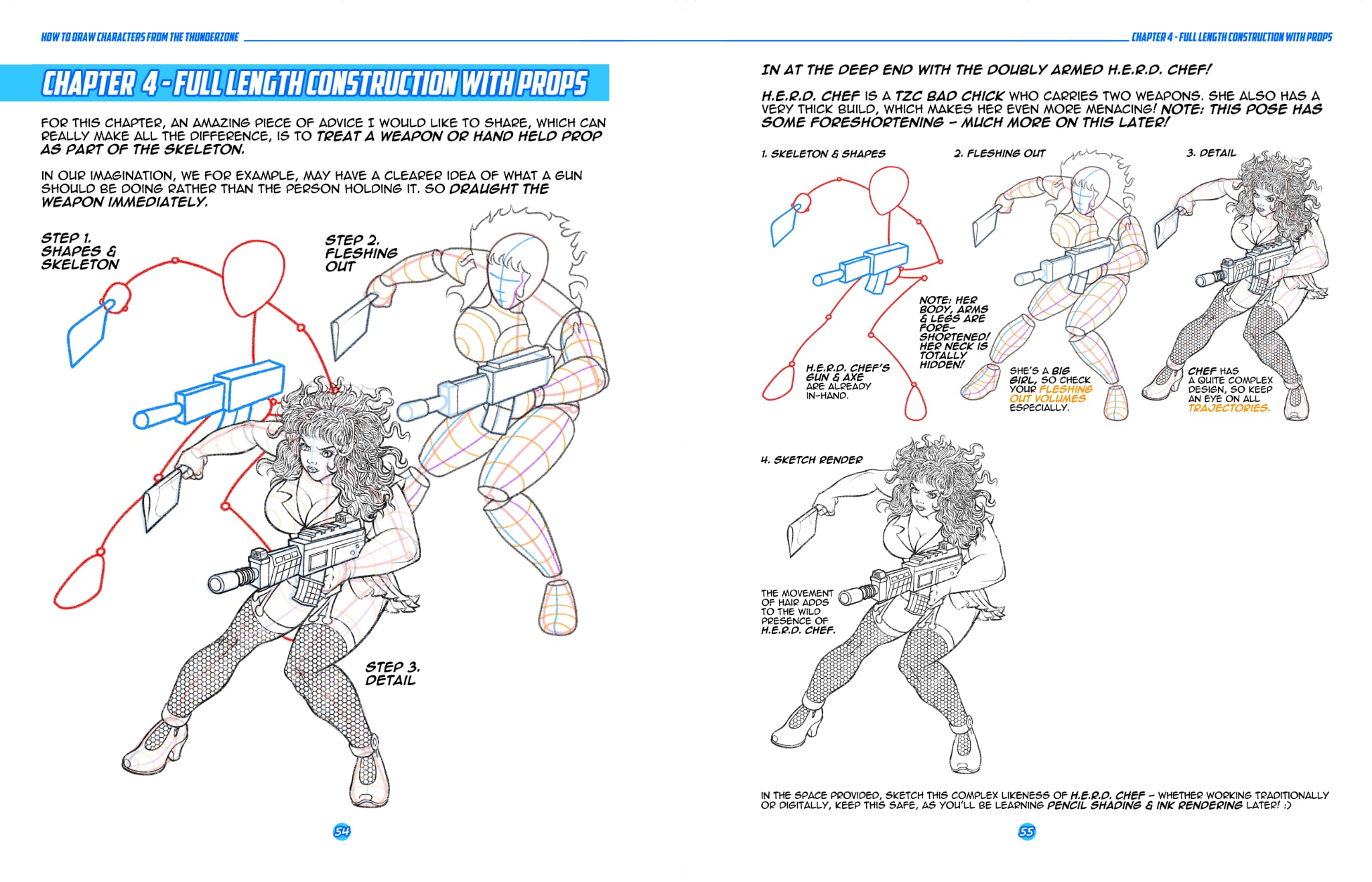
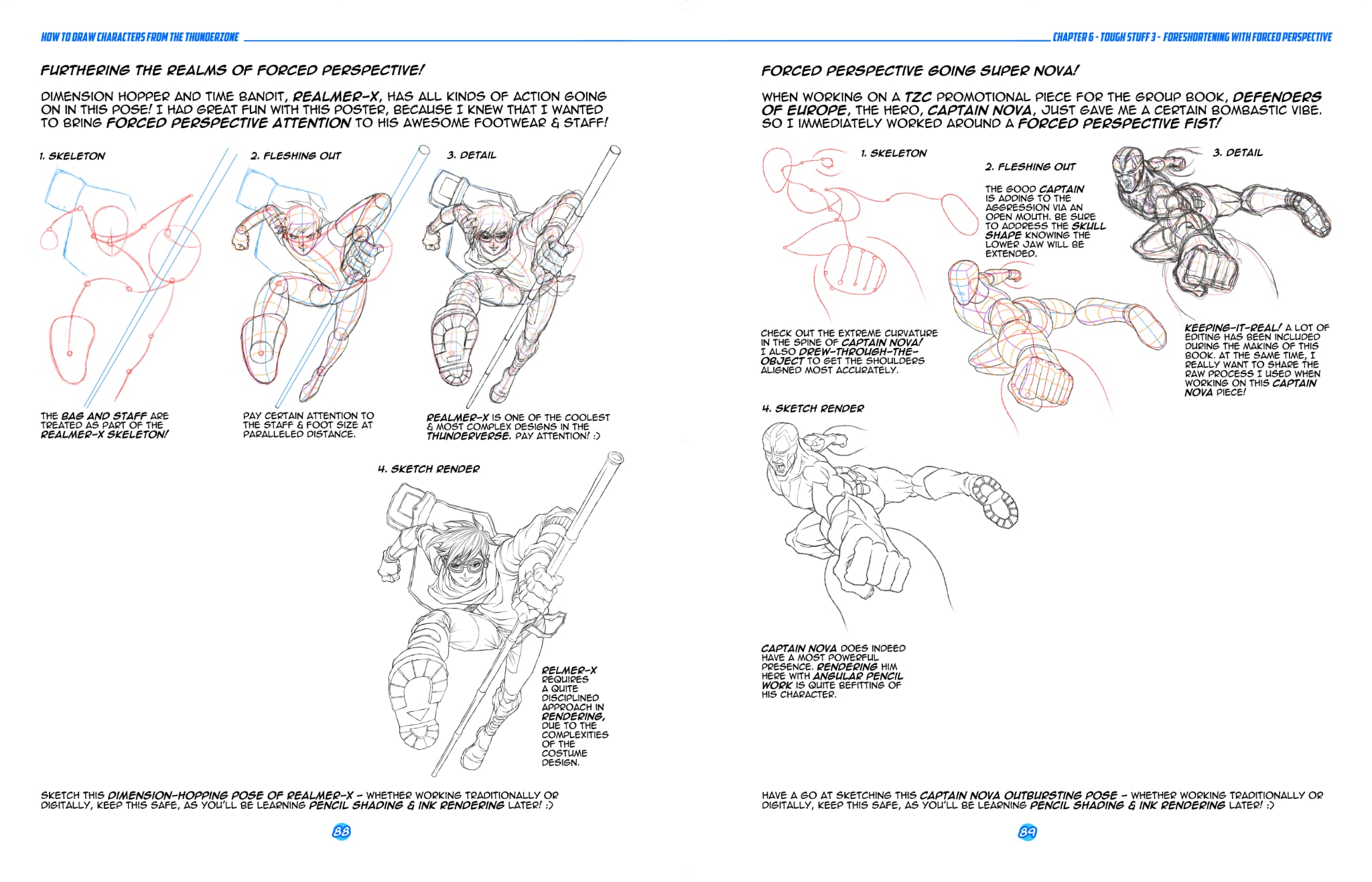
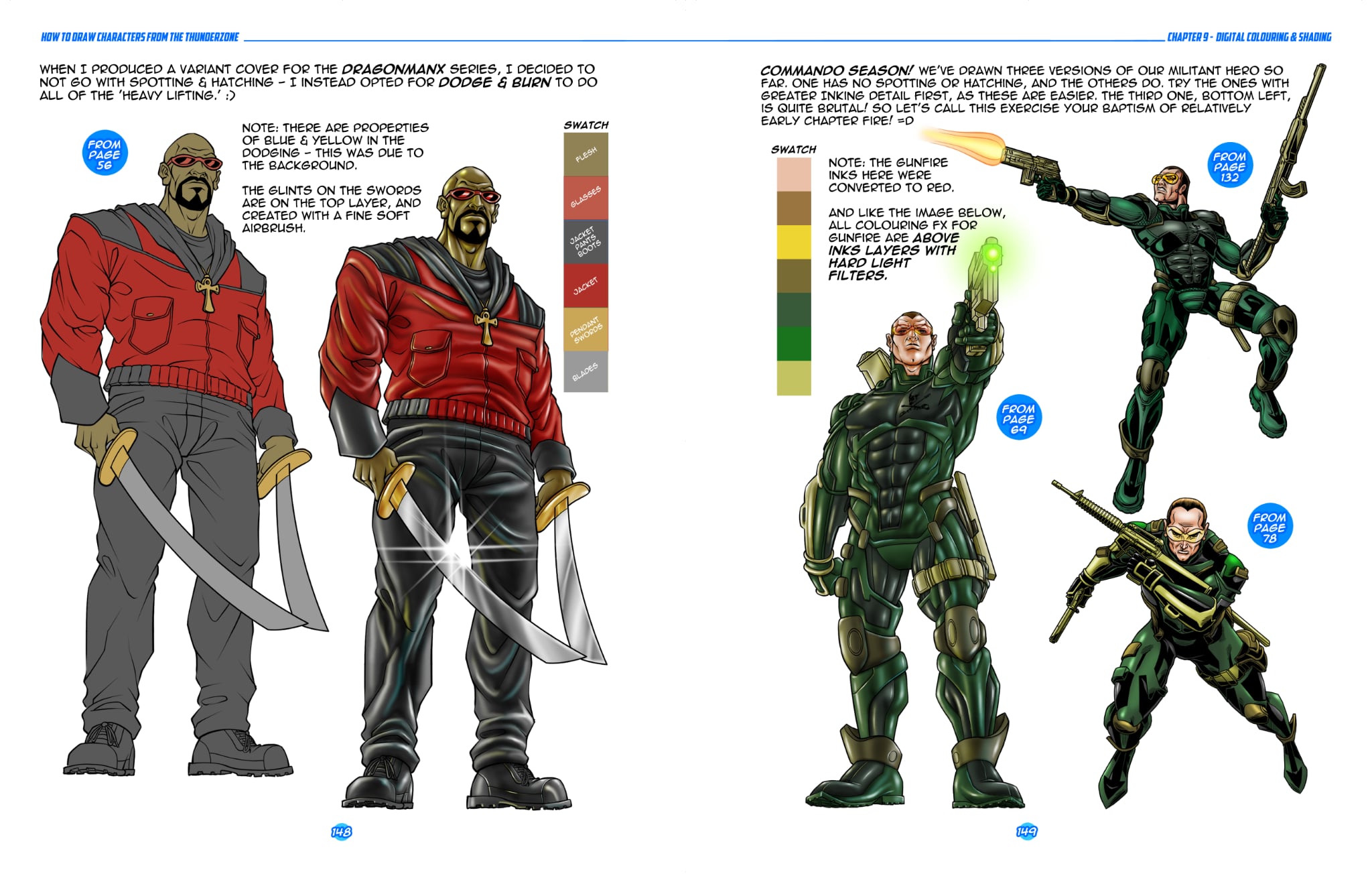
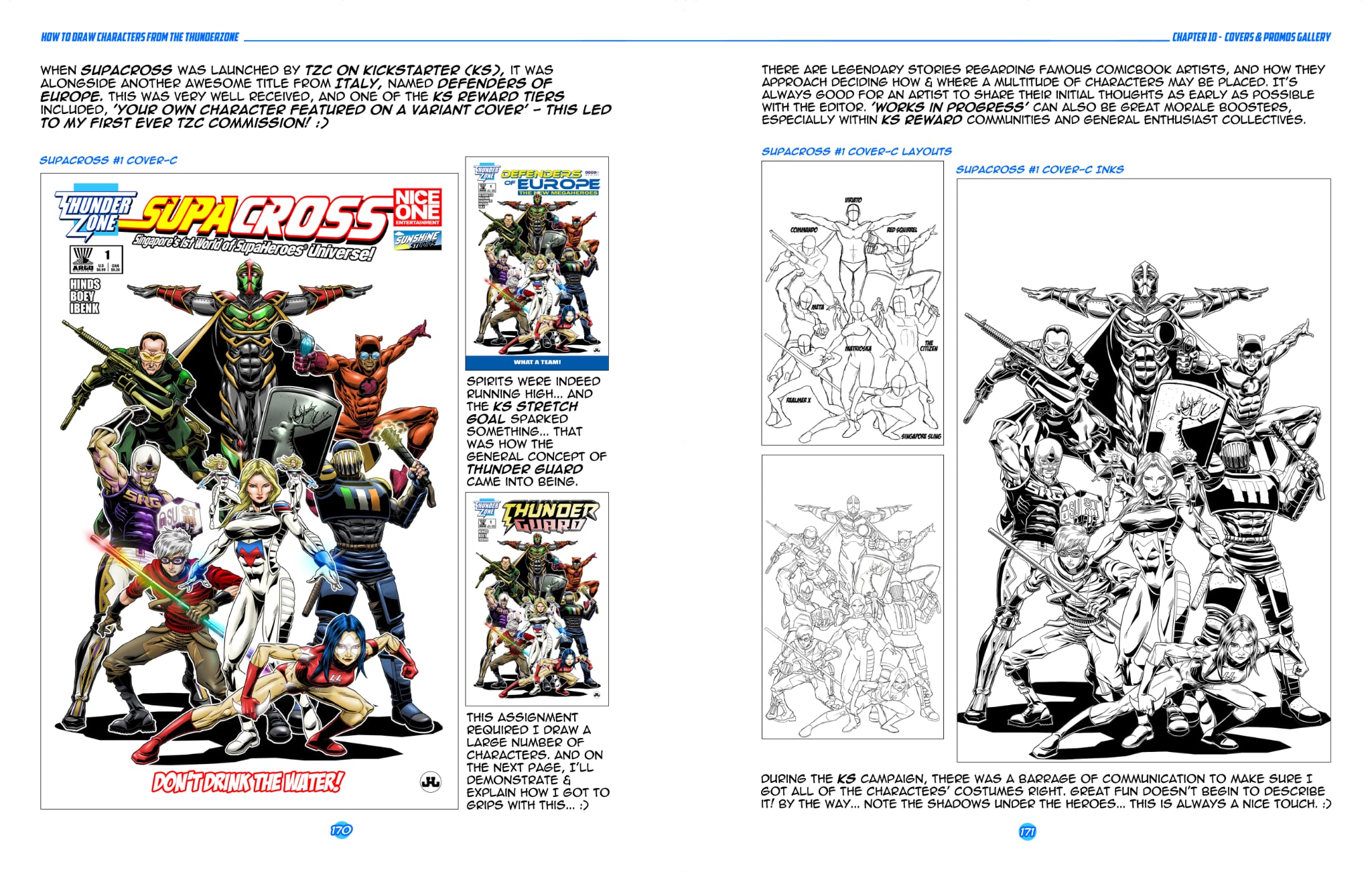
Jerome: Both. Through examining characters from the Thunder Zone Universe, we get into key aspects of character & weaponry props construction – some of the characters are very tricky to draw!
1st: What modern drawing techniques have you included?
Jerome: The quite in-depth lessons in rapid digital colouring, which explicitly outline the use of Celsys Clip Studio Paint – the #1 comic art software from Japan.
1st: Do you address digital artists as well as traditional artists?
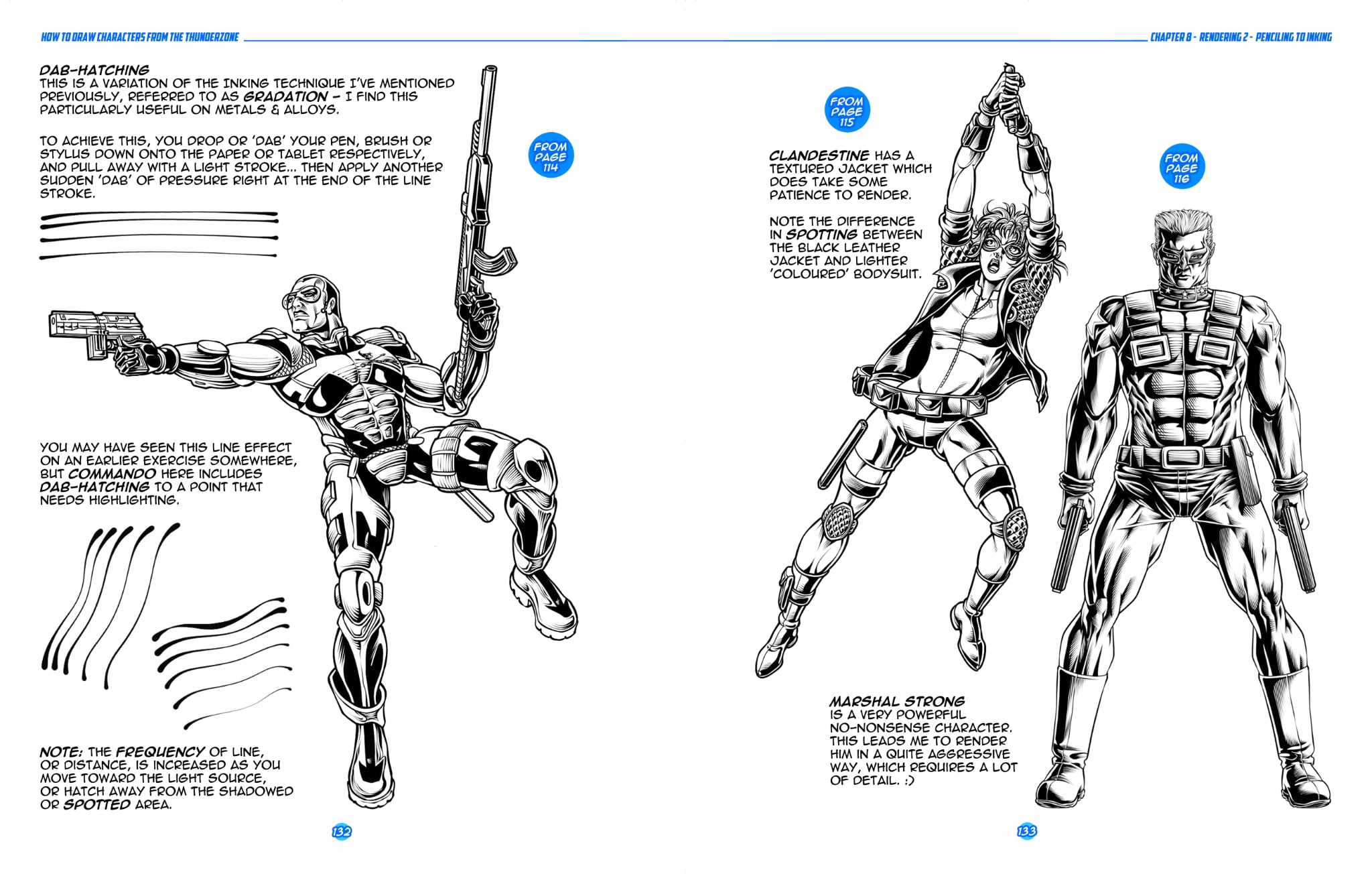
Jerome: Indeed. Beyond the digital colouring application, I demonstrate how to ink in a way that assists any digital colourist, making their lives much easier (which in turn helps any publisher or editor).
1st: What exactly can readers expect inside the activity book?
Jerome: Over 10 chapters, we start with a few exercises in basic sketching, head and face construction, moving onto busts, and eventually full-length characters with weapons. You later return to these exercises to apply lighting via pencils and inking. Later finishing off with digital colouring. Various exercises appear in different chapters, allowing the readers to go back and further the character illustrations.
1st: Do you cover anatomy, expressions, and poses?
Jerome: All of these are covered, and expressions are included within many of the full-length character exercises.
1st: Does the book teach storytelling as well as drawing?
Jerome: No – that’s planned for Volume 2, if the demand is there.
1st: Can complete beginners successfully follow along?
Jerome: Yes.
1st: Which lesson are you personally most proud of?
Jerome: I would say the inking chapter.
1st: Thunder Zone comics have often launched through Kickstarter. Why publish this book directly on Amazon?
Jerome: This book is highly experimental. I’m also not famous. And given that Thunder Zone is known for comics and not art books, it wasn’t readily clear how a KS campaign might fear.
1st: What advantages does Amazon offer for an instructional book?
Jerome: This book is to appeal to non-superhero members of the art community, and Amazon just seemed a very convenient print-on-demand channel to use. The book comes in pre-order Digital Guide Book Edition (available now), and from July 4th, both in soft and hard cover.
1st: Does Amazon allow you to reach a different audience than Kickstarter?
Jerome: Yes. Namely, the more general art public.
1st: How will this activity book help someone become a stronger artist?
Jerome: Process. Comics are all about deadlines. If you have a good working process, you will be faster and more efficient.
1st: What are the biggest mistakes beginning comic artists make?
Jerome: Lack of discipline; confusing fine art with commercial art. Comic art is an excitingly unique fusion of both.
1st: What drawing fundamentals should every artist master first?
Jerome: Anatomy.
1st: How important is practicing every day?
Jerome: Super important if you want to work professionally. And for an artist, be sure to work with a writer and editor. Even if you have your own concept, you will learn much more working outside of your comfort zone. And editors can often point things out that you simply won’t learn off the job.
1st: Can someone become a comic artist without formal art school training?
Jerome: Yes. Practicing the right habits is all it takes. Dedication and artistic intelligence are actually more important than raw talent, especially when it comes to visual storytelling.
1st: How do you encourage readers to develop their own style instead of copying yours?
Jerome: Stay true to why they got into comics. Keep looking at the work of their favourite artists. Style is like handwriting – we are all individual, and the more you draw, the less you will imitate others, because more things will start to influence you over time.
1st: After finishing this book, what skills should readers have that they didn’t have before?
Jerome: Faster techniques in constructing a character, and better pencil application. Inking efficiency will be better, and digital colouring will be much faster.
1st: If readers could remember just one lesson from How to Draw Characters from the Thunder Zone Activity Book, what would you want it to be?
Jerome: Process.
1st: What is the link for the book on Amazon
Jerome: This link is for the Digital Guide Book edition only – the hard copy link will only be available after 12 am July 4th.
https://www.amazon.com/How-Draw-Characters-Thunder-Zone-ebook/dp/B0H27B26T8/ref=sr_1_1?
About Author
