NEW COMICS 4 THIS WEEK (10/07/26)
*All comics will be rated on a scale from 1 to 10*
Absolute Green Lantern # 19 (6.5/10)
Absolute Superman # 24 (8/10)
Adventures of Superman # 501 (Facsimile Edition) (9/10)
Batman # 14 (7.5/10)
Batman # 423 (Facsimile Edition) (9.5/10)
The Deadman # 5 (6.5/10)
The Demon # 1 (8/10)
G.I.Joe: A Real American Hero/Tomb Raider # 1 (8/10)
Jonah Hex And The Shadow of Death # 1 (7.5/10)
JSA # 24 (7/10)
M.A.S.K. # 5 (6.5/10)
Midnight Fantastic Four # 1 (9/10)
Midnight Spider-Man # 1 (10/10)
Midnight X-Men # 1 (9/10)
Sabrina The Teenage Witch # 1 (9.5/10)
Superman: The Stranger # 2 (7/10)
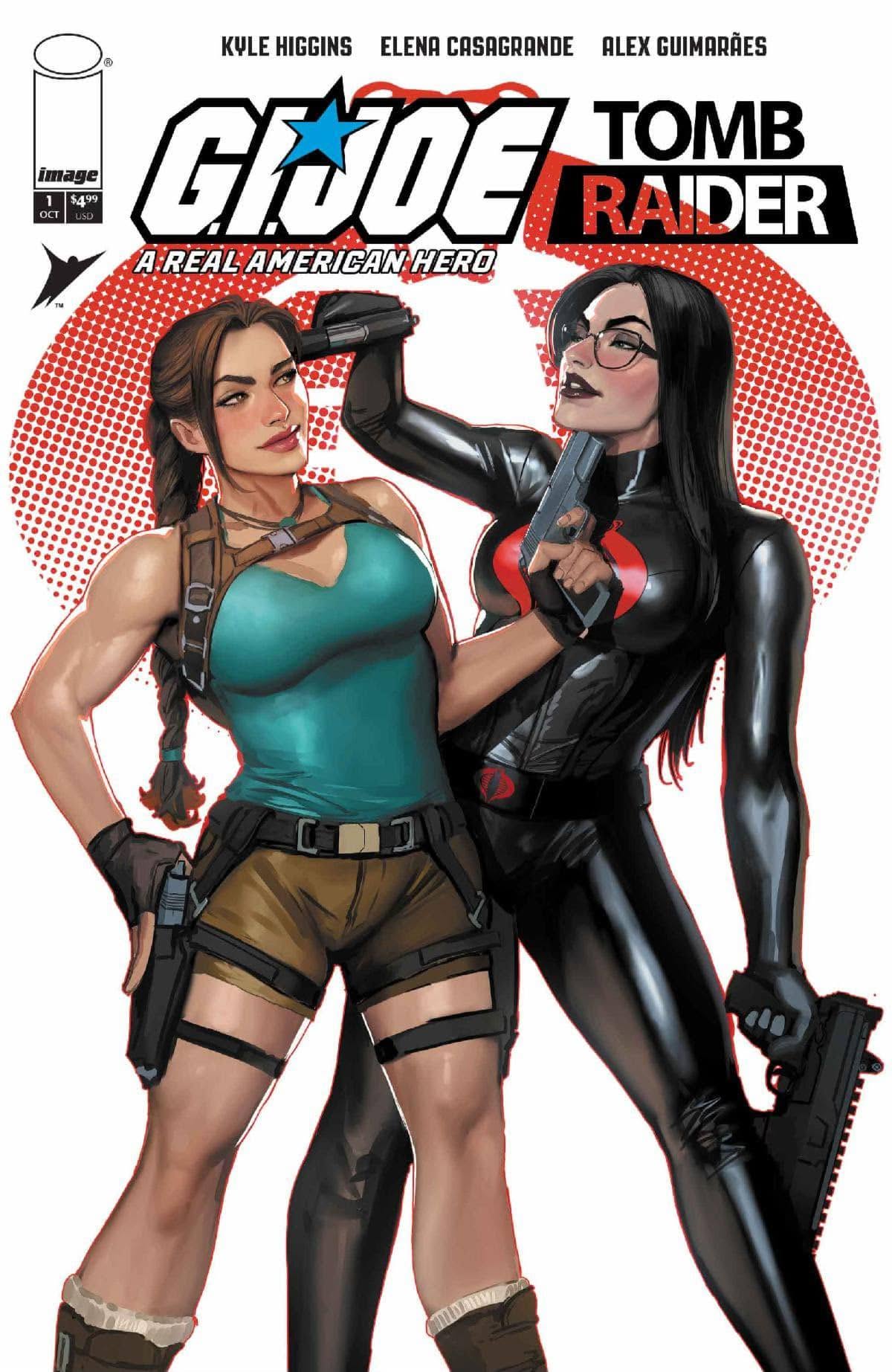 G.I.Joe: A Real American Hero/Tomb Raider # 1– This crossover arrives unexpectedly, but it proves to be highly entertaining, packed with intense, high-stakes moments. The story picks up immediately after Lara Croft’s daring infiltration of Castle Destro in G.I. Joe #330, as she orchestrates an audacious heist on Cobra Island to find the abandoned freighter Arbco Star. A powerful relic, the Dial of Aion, is hidden inside. Knowing she can’t take on Cobra’s heavily fortified base alone, Lara reconnects with Shipwreck to enlist support from an elite Joe squad. Meanwhile, Destro and the Baroness are close behind, determined to claim the artifact for themselves. Writer Kyle Higgins excels at merging Lara Croft’s clue-solving prowess with the military grit of G.I. Joe, making the crossover feel organic rather than gimmicky. The fast-paced action heightens the excitement, and Lara’s dynamic partnership with Shipwreck is a highlight. Artist Elena Casagrande deserves recognition for skillfully maintaining the story’s energy and drama, perfectly complementing Higgins’ script and drawing readers deeper into the adventure. While this crossover might seem unconventional at first glance, the stellar creative team of Higgins and Casagrande delivers an engaging experience that will delight long-time G.I. Joe fans and introduce a new wave of Tomb Raider enthusiasts. In the end, this collaboration doesn’t just work—it elevates both franchises, proving that bold storytelling and creative synergy can lead to unforgettable results.
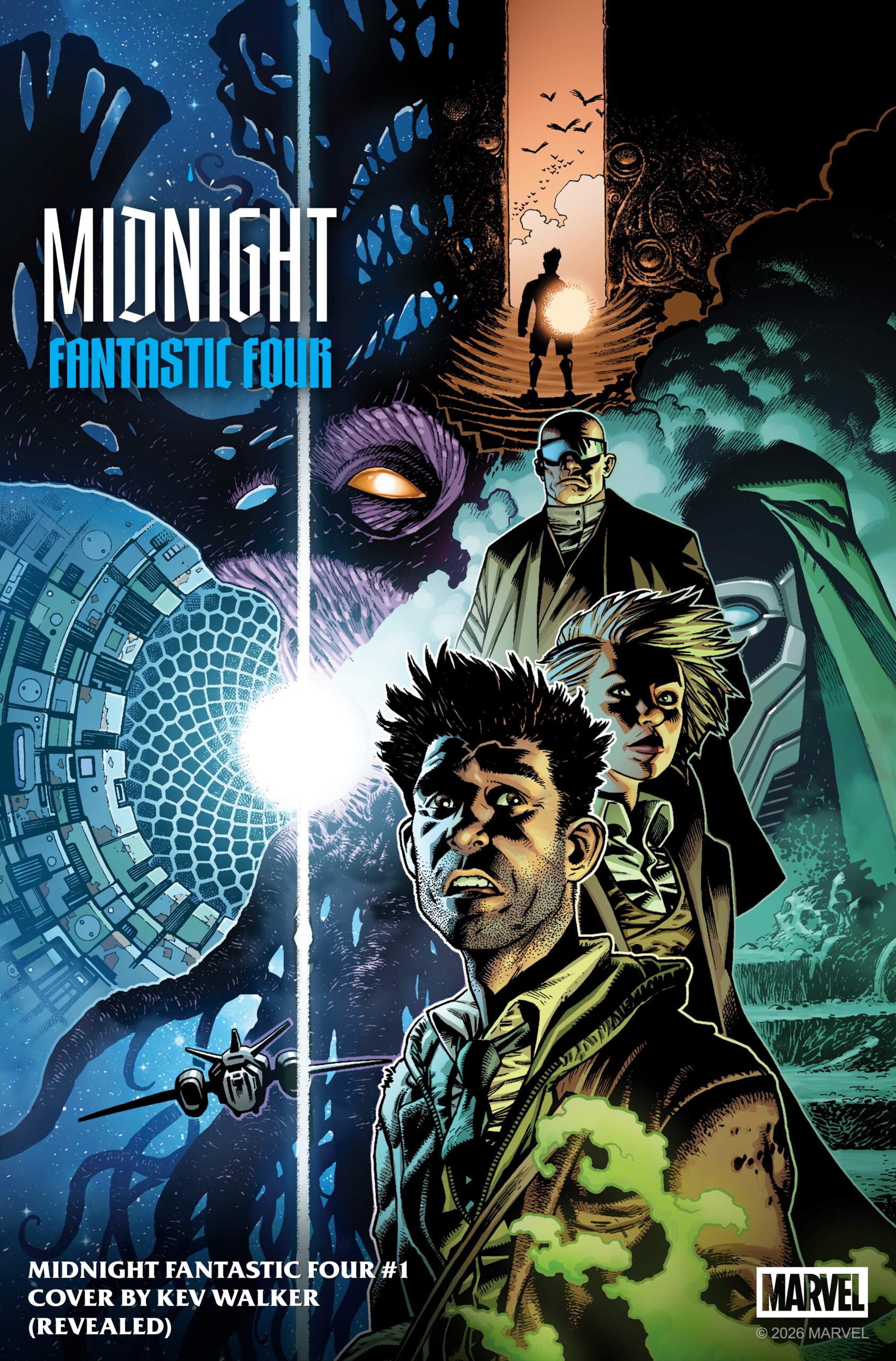 Midnight Fantastic Four # 1– THE MIDNIGHT LINE HAS ARRIVED, introducing Marvel fans to a chilling new horror-inspired alternate universe where familiar heroes are reimagined in unsettling ways. The story opens with a disgraced and unstable Reed Richards, now struggling with addiction. Once a brilliant but reckless visionary, Reed has been fired from the New York Institute of Technology, lost his equipment, and is plagued by severe hallucinations while self-medicating. Obsessed with non-Euclidean math and forbidden dimensions, he persuades Sue Storm (the team’s wealthy financier), Ben Grimm, and Johnny Storm to join him in a desperate break-in to test a newly constructed gateway into the Negative Zone. This reimagining of the Fantastic Four reads like H.P. Lovecraft meets David Cronenberg, transforming an innocent character study into a full-fledged horror experience as writer Benjamin Percy masterfully uses a slow-burn approach, focusing on Reed Richards’ descent into madness. Susan Storm is reimagined as a female Elon Musk, with Ben Grimm as her security advisor and Johnny Storm as a pilot who uses prosthetic legs. While these new takes on the characters are intriguing, Ben and Johnny receive little development in this first issue. Despite limited characterization for some members, Percy excels at building a pervasive sense of dread, hinting that something catastrophic is looming for the team—though it remains unclear when disaster will strike, keeping their new origin tense and alive. Kev Walker’s art excels at bringing the horror elements to life with visceral detail, making him the ideal artistic choice for the series. While this issue lays the groundwork for future storylines, Midnight FF stands out as a darker, grittier reinterpretation of Marvel’s first family. The Midnight Line launches with confidence, proving it is a bold and thrilling new direction for the franchise.
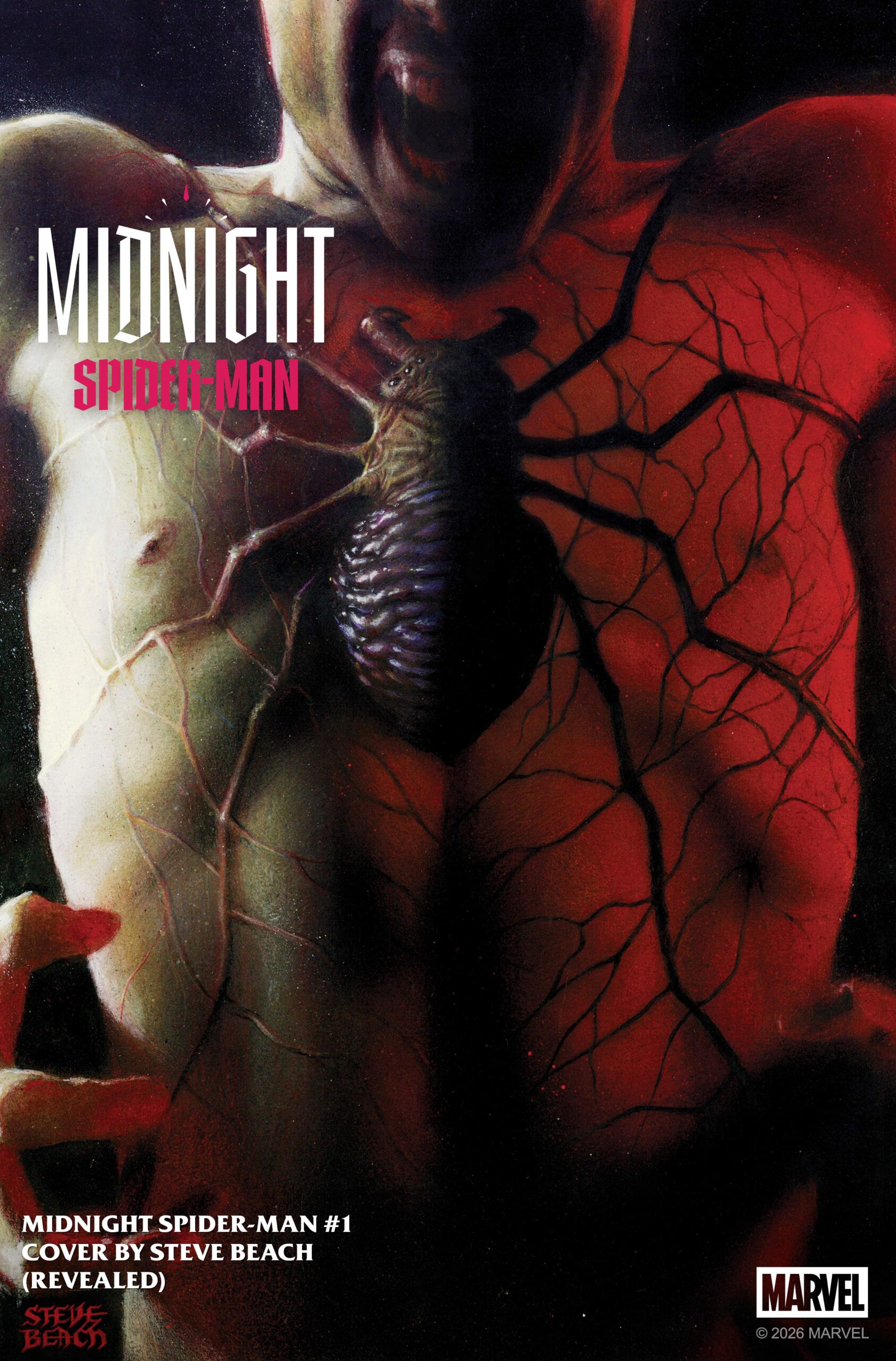 Midnight Spider-Man # 1 – This series could become the flagship of the Midnight line—and rightly so. It creatively replaces the typical radioactive bite with dark corporate experiments and gruesome physical trauma. The story features a sinister Oscorp, which, in its quest for eternal life, intentionally experiments on Peter Parker, transforming him into a grotesque, non-human spider hybrid. Central to the series is Uncle Ben’s warning: “Power Makes Monsters,” a lesson passed down by Peter’s father. As Oscorp uses data from Peter’s transformation to create more human-animal hybrids, Peter must accept his monstrous new form to fight back. Combining body horror with classic Peter Parker traits, this version emphasizes emotional depth—Peter’s empathy and humanity remain strong despite his transformations. Writer Phillip Kennedy Johnson is skillful in reminding readers of Peter’s core virtues, drawing inspiration from David Cronenberg’s 1986 film “The Fly,” which fits perfectly here. SciTronc’s art adopts a manga-inspired gritty style, enhanced by Neeraj Menon’s coloring, giving everything a predatory tone. The iconic “Great Power comes Great Responsibility” phrase is replaced by Richard Parker’s warning, which suits the darker themes, offering a compelling reinterpretation of moral principles within the Midnight Universe—making this series a must-see.
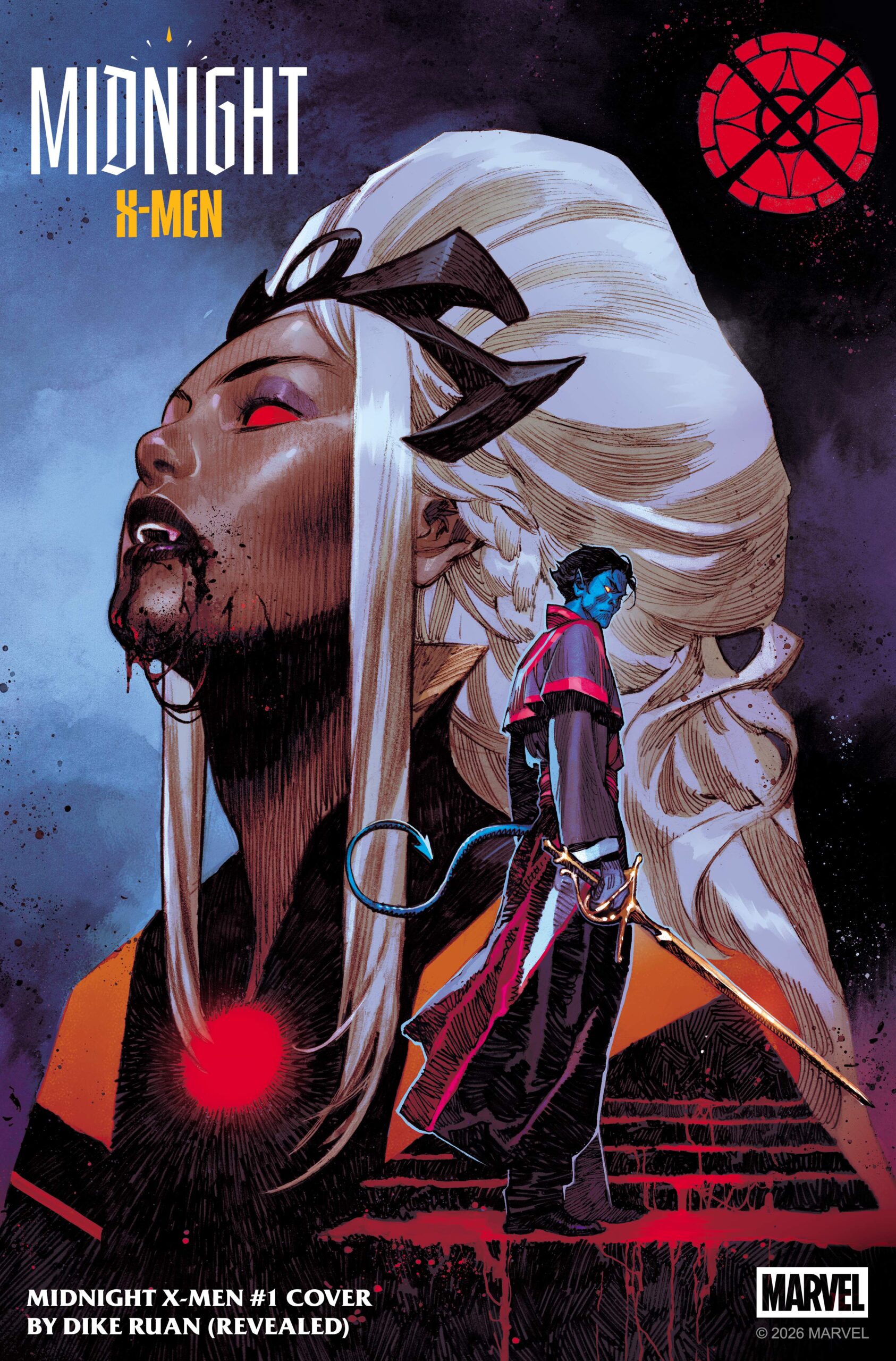 Midnight X-Men # 1– The next title in the Midnight line thrusts the X-Men into a gothic-horror nightmare, transforming New York City into a shadowy battleground stalked by rival vampire clans, humans, and competing mutant factions. After a cataclysmic collapse of peace, society fractures into traditional humans, “normal” mutants, and classic vampires—as well as dangerously unstable, infected vampire mutants. Magneto presides over a sanctuary called “The House of X,” while Gambit leads the “Empyres,” a faction aggressively recruiting and turning unactivated mutants. Meanwhile, Nightcrawler operates as a weaponized “vampire priest” alongside Cardinal Stryker, intent on eradicating vampire mutants. Jonathan Hickman delivers a tense political thriller infused with gothic horror, deftly weaving sociopolitical themes reminiscent of the Krakoa era. He masterfully fleshes out the internal conflicts among the factions, making them feel chillingly authentic and deeply resonant. (As an aside, Cyclops’ appearance in this series is strikingly reminiscent of Coach Beard from “Ted Lasso.”) Hickman’s non-linear timeline demands close attention, as the shifting allegiances and transformations within each faction heighten the intrigue and reinforce the immersive world-building that defines this bold new status quo. Matteo Della Fante’s scratchy, realistic artwork amplifies the horror, making each scene more gripping and unsettling, while Arthur Hesli’s vibrant yet eerie coloring enhances the atmosphere and draws the reader further in. With this series, Hickman once again reinvents the X-Men, making them—vampires or not—more unpredictable and dangerous than ever before. This bold reimagining marks a thrilling and disturbing new era for mutants, promising readers both terror and excitement in equal measure.
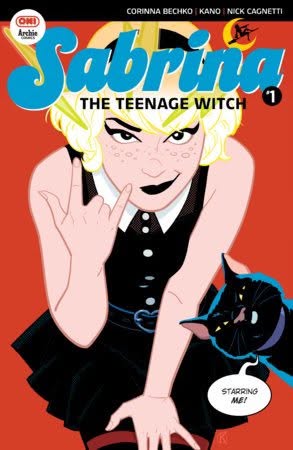 Sabrina The Teenage Witch # 1– The latest Archie/Oni Press relaunch brings Sabrina Spellman back to life with Corinna Bechko and Kano at the helm, offering a take that feels both nostalgic and new. Sabrina is presented as a teenager determined to hone her magical skills, all while juggling the everyday stressors and social dynamics of high school. Her efforts to keep her witch and mortal worlds from colliding are complicated by a strange mystery: the appearance of a dead rat-like creature with an eerily human face. Bechko’s storytelling captures the essence of what makes Sabrina so appealing, infusing the narrative with warmth, wit, and genuine heart. The town of Greendale comes alive, and the sharp, humorous exchanges between Sabrina and the ever-scheming Salem add a dynamic spark. Kano’s artwork perfectly melds the timeless pop sensibility of classic Archie with a modern, energetic twist, making each page visually striking. Notably, the story lets Sabrina balance her dual lives without resorting to grim violence, which keeps the tone lively and inviting. This series isn’t just a bright counterpoint to Marvel’s Midnight books—it’s a triumphant return to what makes Sabrina iconic. By skillfully blending tradition with innovation, Bechko and Kano have crafted an adventure that isn’t just a great starting point for newcomers, but a bold statement that Sabrina Spellman remains one of comics’ most enduring and captivating characters. This is the series that proves Sabrina’s magic is as strong—and as relevant—as ever.
About Author
