
Understanding how paintball markers are powered is essential for safer and more consistent gameplay. The choice of air system—whether CO2 or compressed air—has a direct impact on your marker’s reliability, performance, and overall safety on the field.
While there are multiple air systems available, most recreational players still encounter CO2 as a popular option due to its affordability and availability. Selecting and maintaining the right best paintball co2 bottles or other paintball tanks can make your equipment more dependable, reduce the risk of sudden malfunctions, and prolong the life of your marker. The variety in bottle size and compatibility means knowing exactly how your marker is powered is just as important as what type or brand you own. For instance, if you typically participate in matches paced like aFast and Furious movie, a smaller bottle might improve your mobility, while larger bottles are better suited for longer sessions. The following sections explore the mechanics, choices, and maintenance steps behind what powers every paintball shot.
The basics of paintball marker propulsion
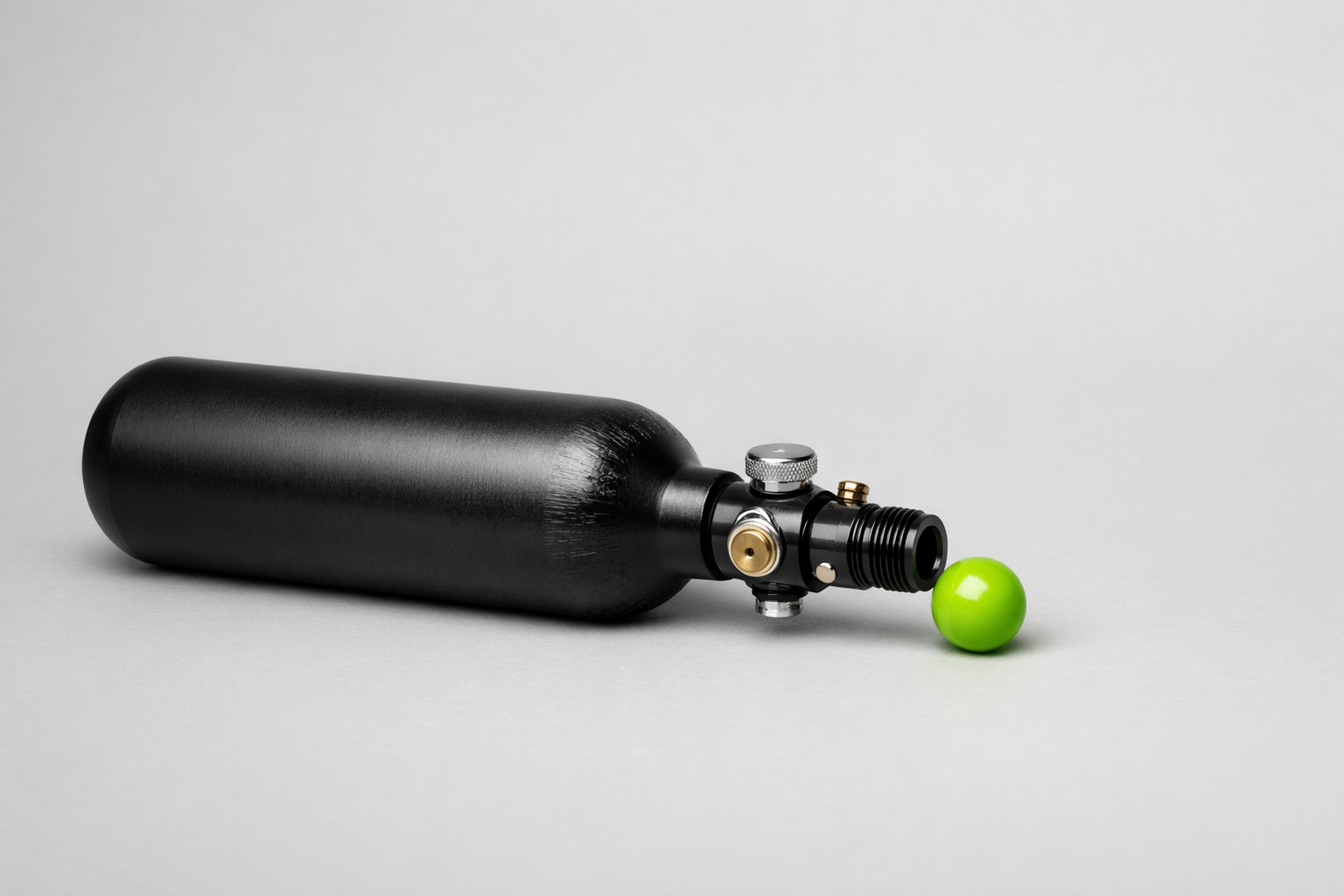
Paintball markers use stored gas to fire paintballs, with the most common sources being CO2 and compressed air (HPA). The marker’s tank, filled with either of these gases, attaches directly to the marker and routes the pressurized gas through a regulator or direct valve system. When the trigger is pulled, the regulator releases a controlled burst of gas, pushing a paintball from the feed into the firing chamber and out of the barrel at high speed. The velocity of each shot is managed by fine-tuning the regulator or adjusting a dedicated velocity screw—something players commonly do at the chronograph station before games to comply with field safety rules. For example, during a recreational game, adjusting your marker for 280 feet per second with a field-supplied tool ensures fair and safe play.
CO2 systems rely on liquid carbon dioxidestored under high pressure. When the marker is fired, liquid CO2 vaporizes, expanding rapidly and powering the shot. This process has made CO2 an accessible and affordable source for paintball tanks. However, because the pressure of CO2 is influenced by the outside temperature, your marker’s velocity can increase on hot days and decrease in cold conditions. A practical example: on a chilly spring morning, you might notice your shots lose range as CO2 pressure drops, a scenario common in outdoor recreational play.
CO2 vs. compressed air: Understanding your options
While CO2 remains widely used due to its low cost and field accessibility, compressed air (also called HPA) has become increasingly popular, particularly for more competitive scenarios. Compressed air tanks provide a stable pressure regardless of temperature, resulting in consistent shot velocity—a key advantage in tournaments where reliability counts. The choice between paintball tanks often depends on your marker’s design, field support, and your personal preferences. For example, if you routinely compete where shot consistency matters, an HPA system could be the upgrade that enhances your competitive edge, though you may need to confirm your local field accommodates air fills.
Compatibility is a crucial consideration. Many entry-level and recreational markers are designed for CO2, while higher-end or newer models are optimized for compressed air. Always check your marker’s manual and talk to your field’s staff to make sure you choose an air system that matches your playing style and equipment compatibility. Using paintball air systems that don’t match your marker’s requirements, or attempting to adapt between technologies without proper fittings, can lead to performance issues or even damage your marker.
Key factors when selecting paintball air systems
Capacity and weight are central factors in choosing the right bottle for your paintball marker. CO2 bottles for recreational use generally come in sizes from 9 to 20 ounces. A player interested in lightweight gear for short, fast games may opt for a smaller bottle, while those engaged in scenario or big-game formats may prefer the extended capacity of a 20-ounce tank. This decision directly ties back to marker balance and how comfortably you can maneuver on the field. Testing the feel of different bottles attached to your marker in your playing stance helps you find a setup that won’t hinder your movement or cause fatigue in longer matches.
When discussing paintball tanks, thread compatibility and overall fit are just as important as size. The majority of bottles and markers today use industry-standard threading, but some older or specialist markers may need adapters. Before you purchase or attach any air system, confirm that both bottle and marker are compatible to avoid unsafe connections or leaks. Checking the snugness and security of your connections is also a basic safety step before every match. Along with visual checks for dents, pitting, or visible wear on bottles, these practical steps keep your air system performing reliably.
Safety, maintenance, and performance tips
Whether you are using CO2 or compressed air, every bottle must comply with certified safety standards, including hydrostatic test dates clearly marked on the tank. Using bottles beyond their certified lifespan increases the risk of rupture and may be rejected at most professional fields. Safety features such as burst disks and safety valves are designed to vent excess pressure; neglecting or tampering with these mechanisms can lead to dangerous malfunctions. Before each use, inspect for damaged valves, loose threads, corrosion, or missing safety features. For example, a player arriving at a weekend tournament should make it a habit to check every bottle’s hydro test markings and ensure all safety valves are intact before heading to the field.
Proper maintenance extends the life and reliability of your bottle. Always transport bottles with valve covers, store them upright in cool, shaded locations, and perform regular checks on O-rings and seals for signs of wear or cracks. Leaks, often signaled by a faint hissing, should be addressed immediately by replacing damaged O-rings or repairing faulty connections. Overfilling—whether with CO2 or compressed air—can cause erratic marker performance and potential component damage, so fill only to manufacturer specifications. After games, promptly inspect bottles and marker fittings so any issues are caught before the next session. This care routine helps ensure your paintball air systems operate as intended every time you play.
About Author
