 The battle between DC and Marvel isn’t just about characters, it’s about philosophy, timing, and who understood readers better at key moments in history. If you look at the 1960s through the 1990s, you can trace a clear pattern of shifting power based on creative freedom, genre trends, and how each company treated its talent.
In the early 1960s, DC was the dominant force in comics. They had the biggest heroes, the most recognizable brands, and the reputation of being “the major leagues.” Characters like Superman, Batman, and Wonder Woman were cultural icons.
DC’s storytelling during this era leaned heavily into science fiction concepts. Alien worlds, alternate dimensions, time travel, and cosmic threats were common. This wasn’t accidental; science fiction was booming in the post-war era, fueled by the space race and Cold War anxieties.
Marvel, by contrast, was the underdog.
 What made Marvel different wasn’t just its characters; it was its tone. Marvel’s heroes had problems. They argued, struggled financially, dealt with relationships, and often made mistakes. While DC’s heroes felt aspirational and larger-than-life, Marvel’s felt human.
That difference mattered.
Marvel didn’t necessarily have the “bigger” heroes, but they had the more relatable ones.
By the 1970s, society was changing. The optimism of the space age gave way to something darker and more uncertain. Audiences became more interested in grounded, gritty stories, as well as genres like horror, kung fu, and urban crime.
This is where Marvel had an advantage.
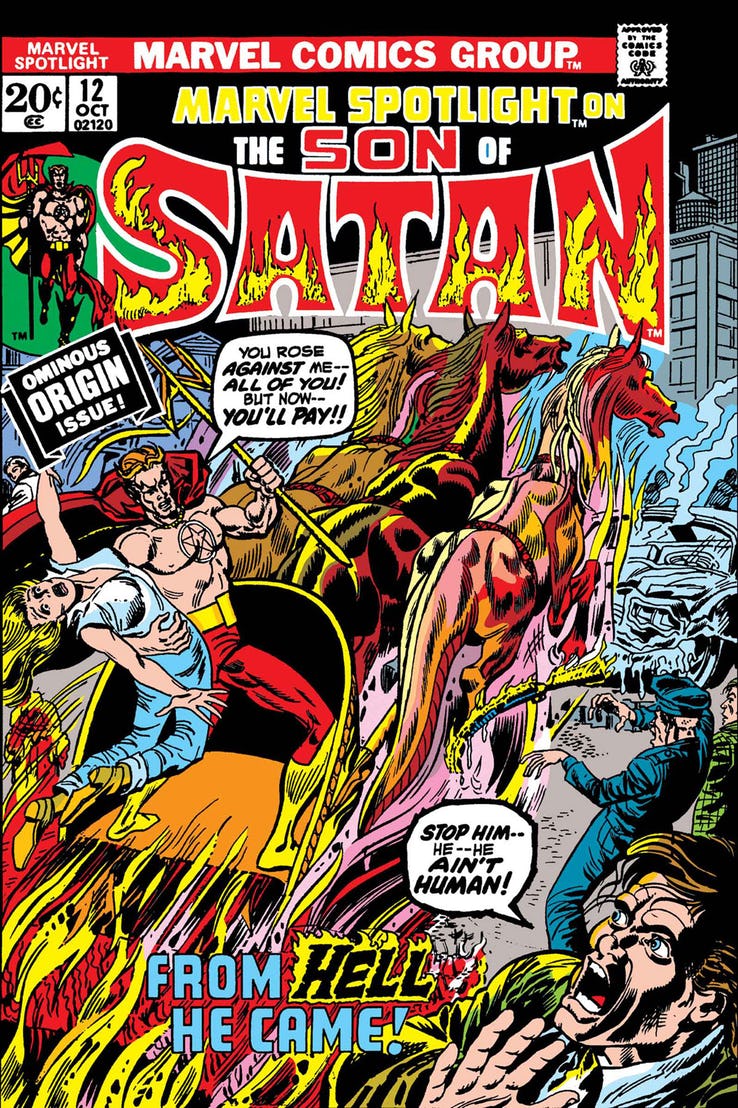 Marvel had already experimented with monster comics before its superhero boom. Titles featuring vampires, werewolves, and other supernatural creatures gave them a foundation to pivot into horror more naturally than DC did.
At the same time, Marvel leaned into trends like martial arts and street-level storytelling. Characters and stories began reflecting the changing cultural landscape.
DC, while still strong, was slower to adapt. Their identity was more tied to traditional superhero storytelling and big sci-fi concepts. They experimented, but Marvel felt more in sync with the moment.
That shift helped Marvel pull ahead creatively and, increasingly, commercially.
One of the most interesting dynamics between DC and Marvel has always been how they treated creators.
 Historically, DC was known for:
- Higher page rates
- More stability
- A reputation as the “top tier” company
Marvel, on the other hand, often paid less but offered something just as valuable: opportunity.
Marvel’s editorial culture, especially in its early decades, was more flexible. New and lesser-known artists and writers were given chances to contribute ideas and shape characters. This openness created an environment where experimentation could thrive.
 As Marvel creators became successful, many eventually moved to DC for better pay and prestige. This created a cycle:
- Marvel hires hungry, unknown talent
- That talent becomes popular
- DC offers more money
- Talent jumps ship
- Marvel hires the next wave
This constant turnover wasn’t a weakness; it was part of Marvel’s engine.
By the 1980s, DC made a major shift.
Instead of just being the “safe” company, DC began actively recruiting top-tier creators and giving them unprecedented creative freedom. This led to groundbreaking work that reshaped the industry.
DC became the place where creators could redefine characters and tell bold, ambitious stories.
Meanwhile, Marvel remained a powerhouse but was more rooted in its established universe and continuity. It still attracted new talent, but DC had become the destination for creators looking to push boundaries.
 So the dynamic flipped:
- DC: Prestige + creative freedom
- Marvel: Energy + new talent
The biggest disruption came in the early 1990s.
A group of superstar artists, who had become major draws at Marvel, left the company to form their own publisher: Image Comics.
This was a turning point.
These artists weren’t just employees; they were brands. Fans followed them, not just the characters. Their departure exposed a major issue: creators didn’t own what they created at Marvel or DC.
Image changed that.
It offered:
- Creator ownership
- Financial control
- Creative independence
 For the first time, top talent could build something entirely their own.
Marvel, which had relied heavily on artist-driven sales during this period, was hit hard. The loss of these creators disrupted its momentum and forced a reevaluation of its business model.
After the rise of Image Comics, Marvel began to adjust its approach.
One noticeable shift was a reduced emphasis on artists as the primary selling point. Instead, Marvel leaned more into:
- Brand recognition
- Character-driven storytelling
- Cross-media synergy (including film and television)
At the same time, the industry itself was changing. The comic book boom of the early 1990s collapsed, and the market contracted.
Marvel faced serious financial struggles during this period, even filing for bankruptcy in the mid-1990s. DC, backed by a larger corporate structure, remained more stable.
 The idea that Marvel has “failed to come up with new heroes or ideas” over the past 20 years is a common criticism, but it’s only partially accurate.
What has changed is how success is measured.
Marvel has:
- Focused heavily on existing intellectual property
- Expanded its reach through movies and television
- Introduced new characters, though fewer have become major icons
At the same time, the comic book market itself has evolved:
- Sales are no longer the only metric of success
- Digital distribution and collected editions matter more
- New ideas often emerge outside the Big Two (in indie comics, creator-owned projects, etc.)
Marvel hasn’t stopped creating, but fewer new characters have broken through in the way earlier ones did.
 If you step back, a clear pattern emerges across decades:
- The company that takes creative risks tends to gain momentum
- The company that plays it safe tends to fall behind
- Talent flows toward opportunity, not loyalty
- Innovation often comes from outsiders, not the establishment
Marvel rose by being more flexible and creator-friendly, while DC relied on prestige and stability. But the story doesn’t end there.
The history of comics is cyclical.
Power shifts. Talent moves. Audiences change.
And every time one company becomes the “establishment,” another rises by doing things differently.
That’s not a flaw in the system; it’s what keeps comics alive.
About Author
