
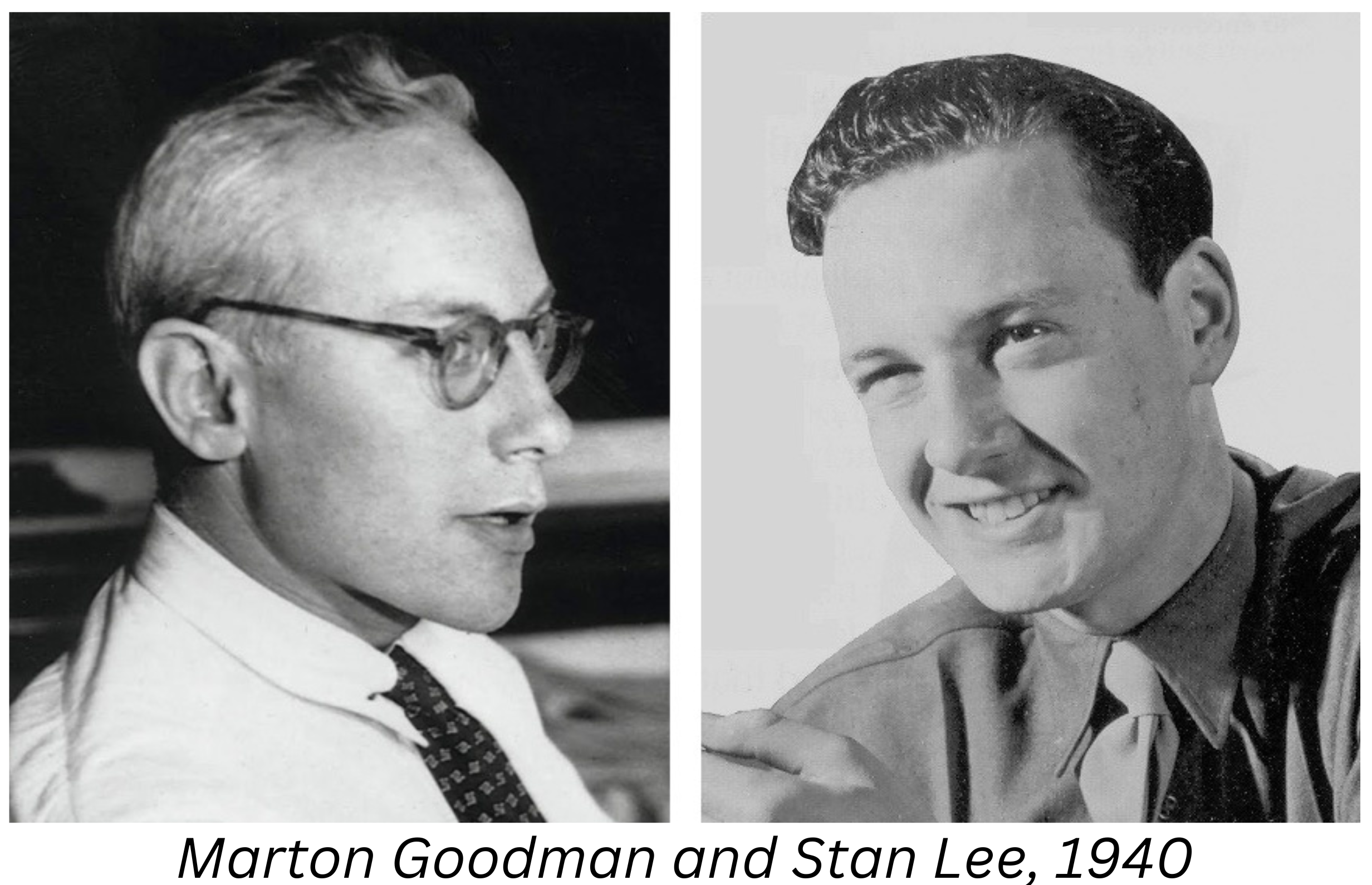
 Over the last few years, I’ve reimagined how I thought of Stan Lee. Too often, fans look at him as if he were in all those Marvel films. Other fans see things in black & white, and their viewpoints don’t change all that much. In the past, I’ve written a couple of columns on Stan Lee. I’m not a person who has hard views on anything and tend to look outside the box.
Part of the problem, with Stan Lee, is that fans with their defined views don’t often look at the context of how things happened or changed. Fans will endlessly debate over the “Marvel Method,” where Lee would give as little as a one-line description for a story and send an artist to draw it. And, fans go into endless debates on how much credit creators should get. It isn’t one day, Stan snapped his fingers and BAM! POW! The Marvel Method happened. It had to do with lots of reasons that I think fans often overlook.
In a lot of ways, the 1950s might have seemed like Murphy’s Law to Lee. You could see a lot of publishers saying, “It can’t possibly get worse, then… it can.” The 1950s started fantastically, but by the time the Comics Code of 1954 was enacted, things were not so fantastic. That pushed some publishers out of business. Then, changing trends made it harder to sell comic books. Some prominent publishers that started at the beginning of the Golden Age—EC Comics, Quality, and Fawcett, Quality—were all gone by the end of the decade.
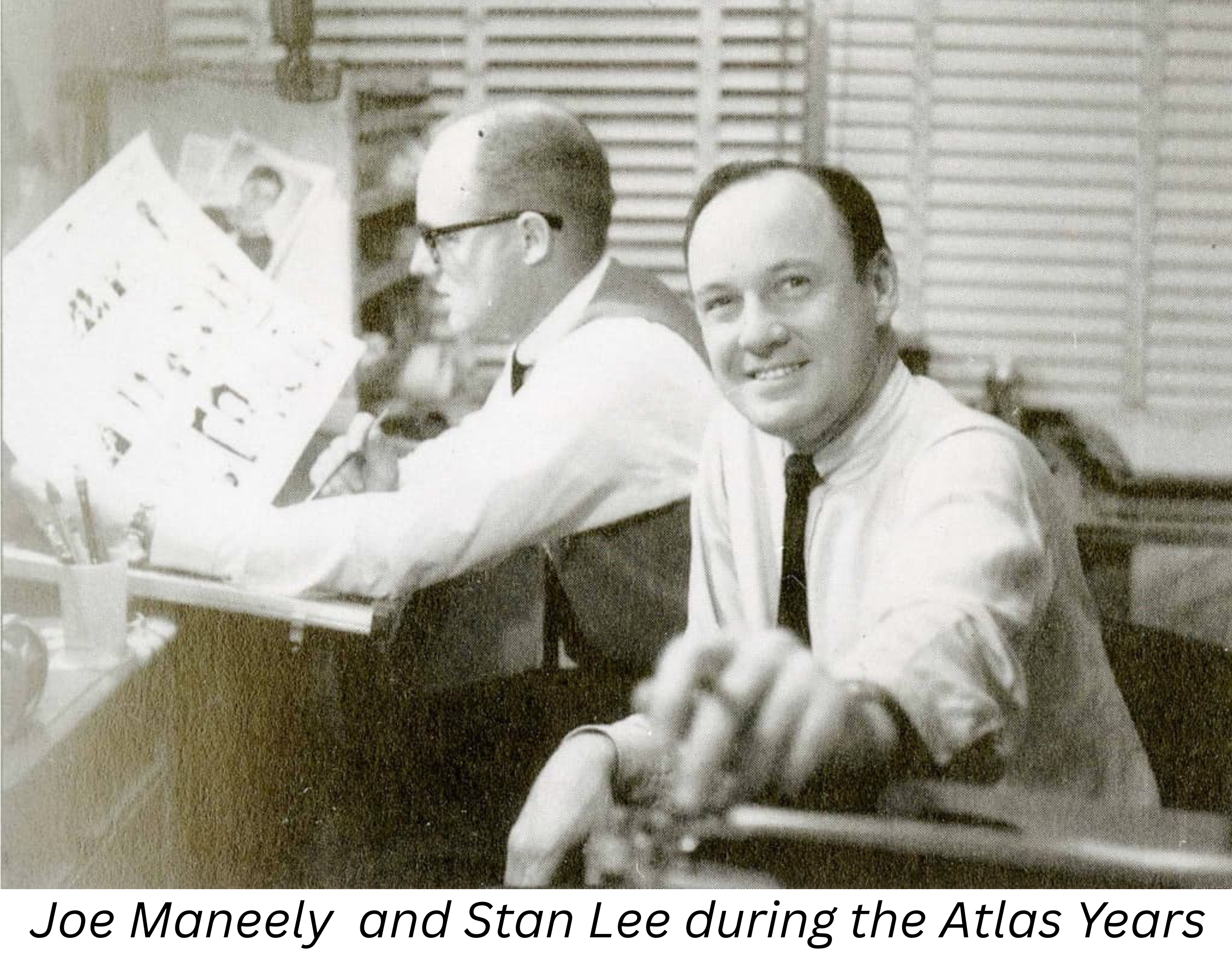 Anyone working at any of the companies had to wonder: “Are we next?” That includes Stan Lee. Then it almost happened, in 1957, in what is sometimes called “The Atlas Implosion. Of all the things that could happen, Atlas’s distributor, American News Company, suddenly went out of business. Atlas went from around 80 titles a month to eight. Here it was stuck there through the 1960s. Lots of creators were let go, with Lee and a small staff barely keeping things going.
Unlike a lot of creators, Lee never envisioned himself in comic books. In 1939, as a teenager, he was hired as an assistant, refilling inkwells, proofreading, erasing pencil marks from artwork, and running lunch errands for the artists. In 1941, at 19, he became the “interim editor” when Joe Simon quit.
He stayed—even at times when the job wasn’t exactly fulfilling for him at times. He often commented on how publisher Martin Goodman used smaller words and kept the stories simple. So the next thing to ask: “Why didn’t Stan find another job?”
Unlike today, people didn’t tend to jump around from job to job. And times were tough. After WW2, 10 million servicemen returned to the workforce, and there was also a recession for a couple of years after the war. Working at a comic book company might not have been Stan’s first choice, but, as they say, “it paid the bills”.
Shortly after the collapse of Atlas, artist Joe Maneely died in a commuter train accident in 1958, Maneely started back in 1949 and became a close friend to Stan Lee. He liked Maneely as a collaborator, valuing his rapid work pace, adaptability, and compelling narrative style. Again, Murphy’s Law was in a way—Lee in the 1950s.
People tend to overlook publisher, Martin Goodman in discussing Stan Lee. Goodman called the shots, and what he wanted was what happened. DCs, Silver Age revival, and the JLA got Goodman interested in heroes again. Still, he had to be convinced to launch the Fantastic Four. And let’s not forget, Goodman wasn’t interested in Spider-Man, which is why the first story was a throwaway in the last issue of Amazing Fantasy.
By 1961, Lee was ready to throw in the towel and find something to do. But within a few issues, the Fantastic Four was a big hit, and the Marvel Age was born. And, all through the 1960s, it felt like Murphy’s Law in reverse: where everything was going right.
 Think about it, you had the Avengers, X-Men, Thor, Iron Man, and Captain America. At the start of the 60s, Marvel was a minor player with around 15% of the comic book market, and by the end of the decade, they were nipping at the heels of market leader, DC Comics. Over the decade, Marvel expanded by around 300%. It isn’t hard to imagine that if someone told Lee in 1960 what 1969 would be like, he’d say something like, “You’re crazy!” I think it would be fair to say that with anyone working at Marvel.
In the early years of the 1960s, Lee, Kirby, Ditko, and the rest were just putting out comics as they had for years. It was a job that put food on the table, and no one even knew if any of the Marvel heroes would be around at the end of the 60s.
Let’s go back to the Marvel Method. To be kind and fair, Martin Goodman had his reasons not give Stan Lee additional help on much of anything. Look at all that Lee was responsible for and how his responsibilities grew exponentially throughout the 60s.
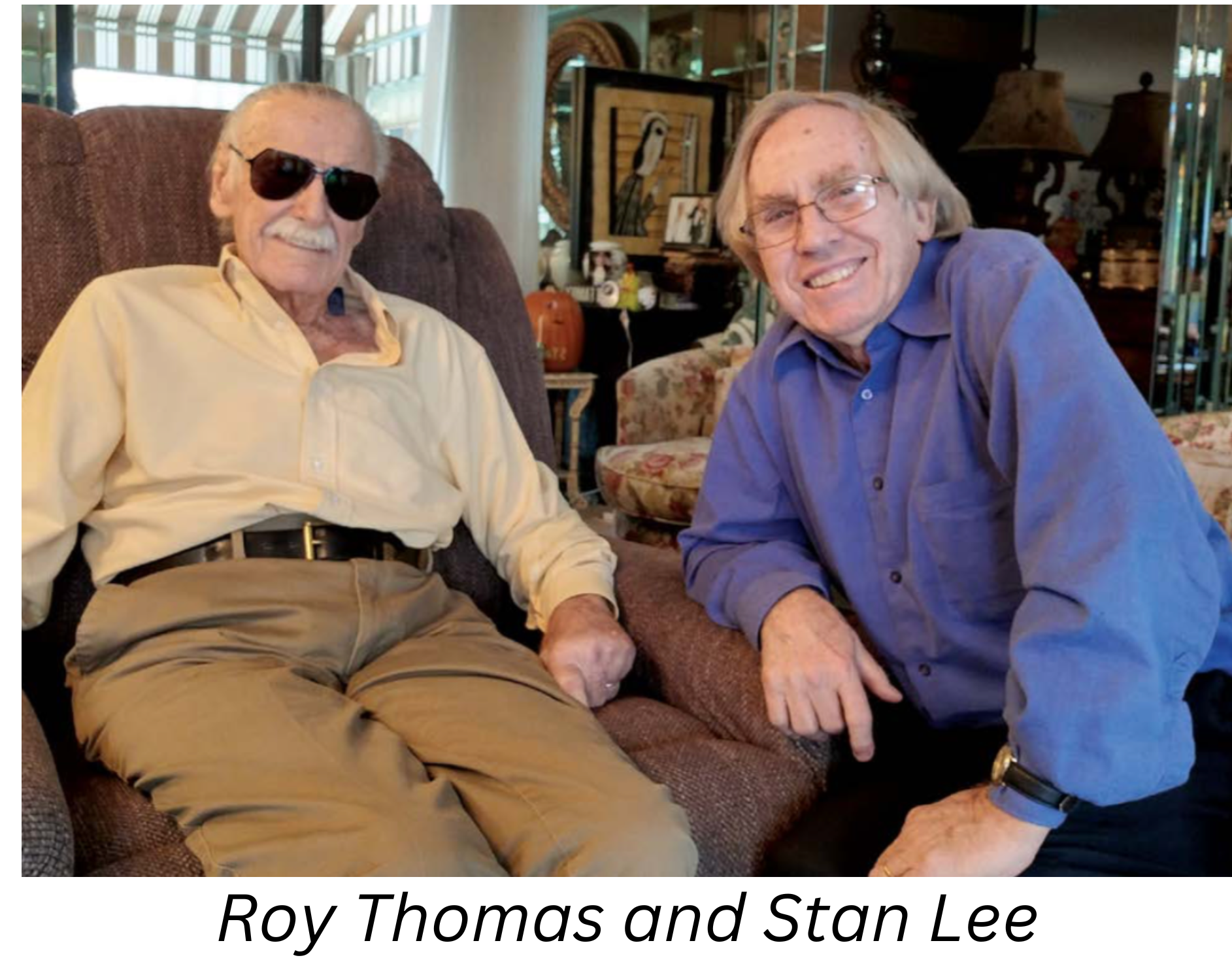
Don’t think I’m making excuses or choosing sides, but you have to admit he was juggling a lot. It was a way to get stories out and make sure creators had worked. It wasn’t until Roy Thomas was hired that Lee finally had some real help. Murphy’s Law in reverse again— Thomas wasn’t just good enough, but far more than Lee could imagine. So good that he succeeded Lee in 1972 and was Marvel’s editor-in-chief for a couple of years. They had a close bond that lasted for the rest of Lee’s life.
Like in the 1950s, Lee just followed the wave of things in the 1960s. Kind of in the same way, but in different ways, you could see Lee saying, “Well, I didn’t see that one coming…”. It’s okay for every fan to have their opinions, and I respect those opinions, but sometimes fans also need to look beyond those opinions. To paint, Lee, or anyone, in black and white isn’t fair to any creator.
About Author
