
Level 99 in one evening sounds tempting. No weeks of training, no endless clicking, just better stats and faster access to bosses. But there’s a catch: reaching max level quickly doesn’t mean your character is ready for everything.
Some RuneScape private servers speed up XP while keeping gear, quests, and rare drops harder to obtain. Others make leveling itself a big part of the game. Understanding that difference helps you choose a server where the progression feels rewarding rather than rushed or painfully slow.
What Does an XP Multiplier Actually Change?
An RSPS can change the experience you earn from combat, gathering resources, and training skills. The multiplier tells you how much XP an action awards compared with the server’s chosen base value.
In OSRS, cutting an oak log gives 37.5 Woodcutting XP. If a server uses that same base and applies a direct multiplier, the rewards look like this:
| XP Rate | XP per Oak Log | XP From 100 Logs |
| 1x | 37.5 | 3,750 |
| 10x | 375 | 37,500 |
| 50x | 1,875 | 187,500 |
You collect the same 100 logs in each example. Only the experience changes.
That’s an important difference. At 50x XP, you can unlock new training methods after far fewer actions, but your inventory doesn’t automatically fill with extra resources.
Level 92 Is Halfway to 99 in XP
RuneScape uses a steep experience curve.
Under the traditional XP table:
- Level 92: 6,517,253 XP
- Level 99: 13,034,431 XP
So level 92 is roughly halfway to 99 in total experience, despite being only seven levels away.
Higher rates reduce the actions required to reach those milestones. They don’t change the underlying XP table unless the server uses custom levels or progression rules.
Fast XP vs. Classic Grind: Where Your Time Goes
The biggest difference appears in what you’re doing after the first few sessions.
| Activity | Fast XP | Classic Grind |
| Early training | Unlock higher-level methods quickly | Spend longer learning lower-level methods |
| Gathering resources | Reach skill requirements with fewer actions | Build larger resource stacks while training |
| Combat progression | Reach level requirements sooner | Spend more time preparing your character |
| Mid-game content | May move through it quickly | More time to explore activities before endgame |
| Long-term progress | Often depends more on equipment and other unlocks | Skill levels remain an important achievement |
Neither approach makes the game automatically easier.
Consider a boss that requires 80 Slayer. A high XP multiplier can help you reach that level quickly. But if you still need a particular weapon, quest unlock, or collection of supplies, those requirements remain.
Fast XP mainly reduces time spent earning experience. The rest depends on how the server handles its other progression systems.
Base XP Rates, Double-XP Events, and Promo Offers
Servers sometimes advertise several kinds of bonuses together. They can look similar on a homepage but work differently in-game.
A permanent XP rate applies according to your chosen mode. A temporary event changes certain rewards for a limited period.
For example, a server might offer:
- 10x base XP: Your normal experience multiplier.
- Double-XP weekend: Potentially 20x during the event if the bonus doubles your normal rate.
- Skill-specific boost: Extra XP only in activities such as Mining or Fishing.
The actual result depends on the stacking rules. Some servers restrict boosts to selected skills or account types.
Promotional codes are a separate category. Sites such as https://www.csgopromocode.com/ collect offers for other gaming services, while an RSPS XP multiplier controls experience earned through gameplay. A registration promotion or free starter pack shouldn’t be confused with the permanent XP rate.
Check Combat and Skilling Rates Separately
A server advertising 25x XP may apply that number only to combat. Non-combat skills could use a lower multiplier.
This matters if you want to train Herblore, Crafting, Construction, or another skill needed for your plans.
Compare the specific rates rather than relying on the largest number in the advertisement.
Real RSPS Modes Show Why Names Can Be Misleading
There is no universal definition of Normal, Classic, or Extreme across private servers. Two projects can use the same mode name for very different progression speeds.
Valorium: Faster XP or a Drop-Rate Bonus
Valorium’s published server description lists several combinations:
| Combat XP | Skilling XP | Advertised Drop-Rate Bonus |
| 1x | 1x | +10% |
| 5x | 5x | +7% |
| 10x | 10x | +4% |
| 25x | 15x | Standard rate |
The trade-off is easy to understand. Its faster mode focuses on reaching levels sooner, while slower modes advertise additional drop-rate benefits.
A drop-rate bonus concerns item drops, though the exact calculation depends on the server’s rules. It doesn’t mean every monster will drop an extra item.
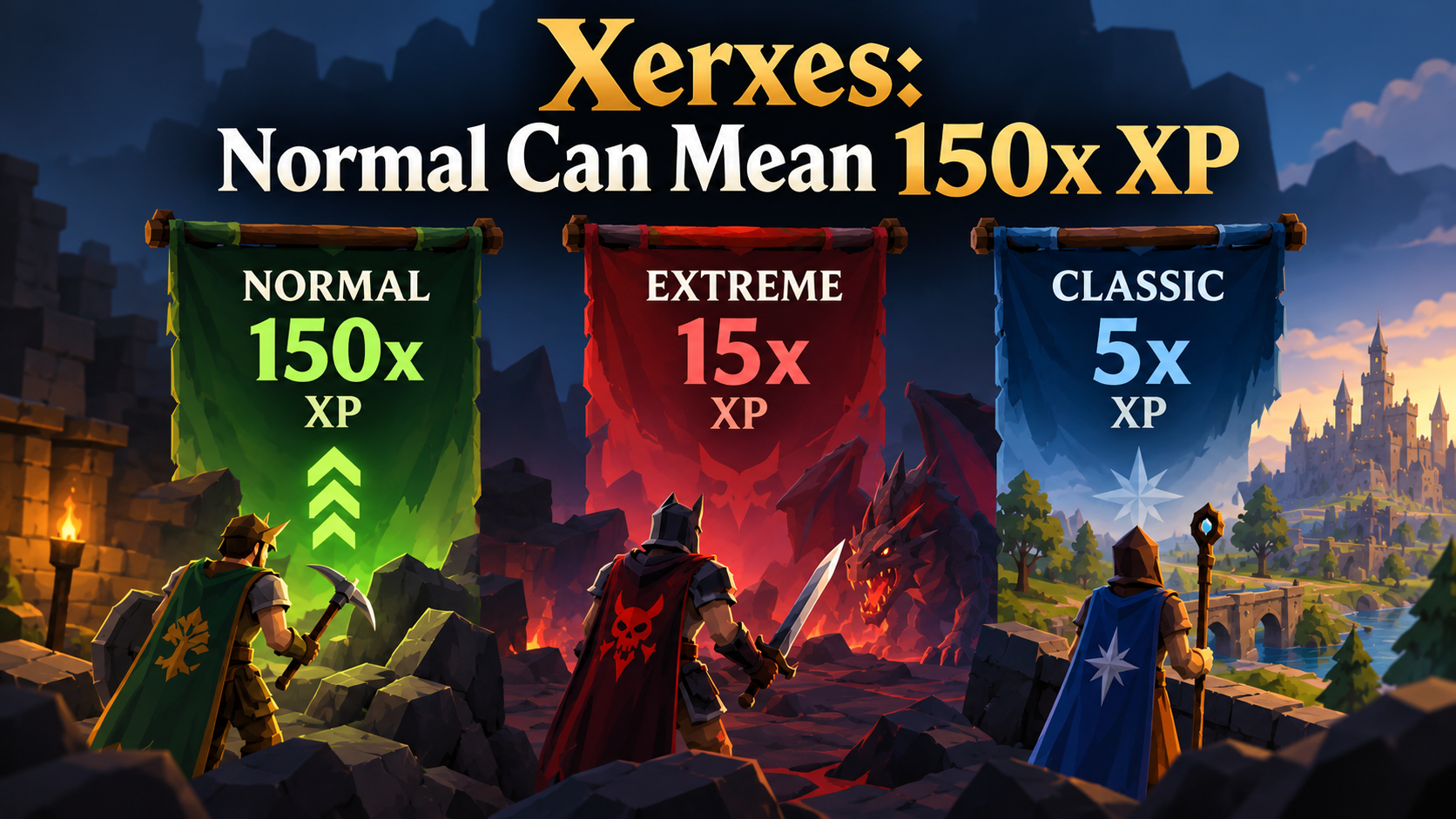
Xerxes: Normal Can Mean 150x XP
Xerxes uses a different system in its published description:
- Normal: 150x XP, standard drop rate.
- Extreme: 15x XP, advertised +5% drop-rate bonus.
- Classic: 5x XP, advertised +10% drop-rate bonus.
Here, a mode called Classic is still five times the stated base experience rate.
These figures come from server-published listings and may change. They illustrate why the rules matter more than the label.
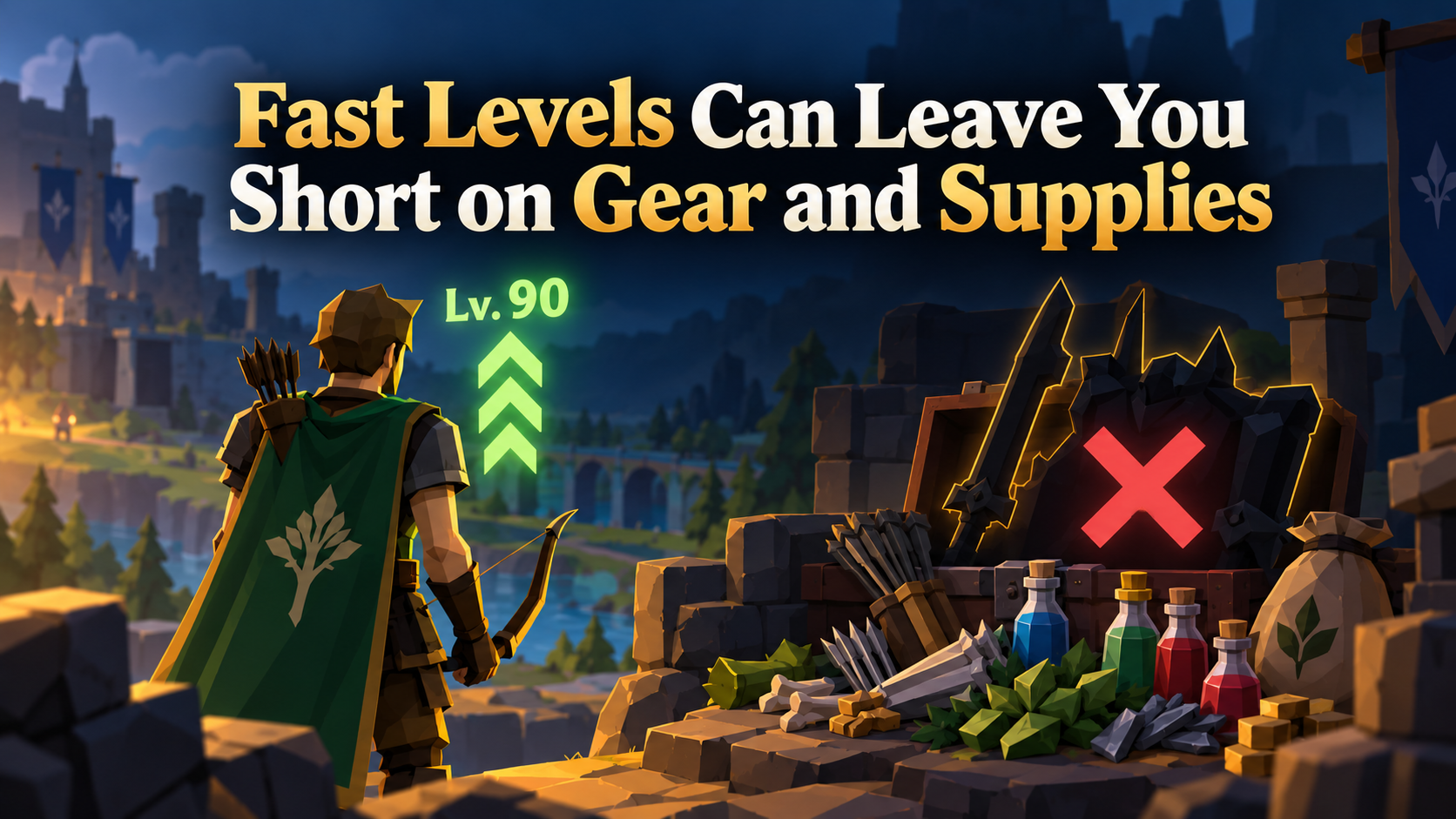
Fast Levels Can Leave You Short on Gear and Supplies
One of the easiest mistakes is treating combat levels as the whole progression system.
Suppose you reach 90 Ranged quickly. Your level allows you to use stronger equipment, but you still need to obtain that equipment.
If important items come from boss drops or crafting, an XP multiplier won’t necessarily help you get them.
The same problem appears in non-combat skills.
Herblore is a useful example. Faster XP can reduce the number of potions you need to make for a level. But when you start fighting difficult bosses, you still need herbs, secondary ingredients, and finished potions.
You saved training time, not necessarily supply-gathering time.
Different Progression Systems Have Different Limits
Look beyond the experience multiplier:
- Equipment: Can you purchase useful weapons, or must you obtain rare drops?
- Slayer: Do levels alone unlock monsters, or do you also need task points and other requirements?
- Quests: Are important areas unlocked through quests?
- Supplies: Are food, potions, and ammunition affordable or easy to gather?
These details determine how long it takes to become ready for high-level content.
A 50x server can still demand many hours of bossing if the items you need have low drop chances.
High XP Can Skip Content You Might Have Enjoyed

Fast leveling changes more than the time required to reach 99. It can also reduce how long you use lower-level activities.
Take Woodcutting. With a large XP multiplier, you may unlock willows, maples, and other trees after only a short period of training. That’s useful when you want to get straight to higher-level resources.
But a slower rate gives those earlier methods more time to matter. You may collect materials for other skills, learn profitable routes, or spend longer completing early achievements. The same applies to combat. If a server moves you through low-level monsters almost immediately, its beginner dungeons and training areas may have little purpose. The better system depends on what comes after those levels.
If a fast-rate server offers plenty of worthwhile high-level activities, skipping early training may be exactly what you want. If most of its content belongs to the early and middle levels, an extreme multiplier could shorten the interesting part of the game.
Why Low XP Doesn’t Always Mean a Harder Server
A slow rate increases the experience you need to earn through training actions. It doesn’t necessarily increase combat difficulty or make every reward harder to obtain. Imagine a server with 1x XP but convenient teleports, cheap equipment, generous shops, and easy boss drops.
Now compare it with a 25x server where valuable gear must be earned through demanding content. The first takes longer to level. The second may require more effort to obtain equipment or complete difficult encounters.
That’s why difficulty and XP rate deserve separate attention. Low XP can make levels feel more valuable, especially if you enjoy skilling and personal milestones. But it works best when training methods, intermediate rewards, and activities remain interesting throughout the journey.
How XP Rates Affect PvP and PvM Players Differently
Both groups benefit from faster experience, but for different reasons.
PvP: Faster Character Builds
PvP players often create characters with specific combat levels.
A pure, for example, may keep Defence low to compete within certain combat-level ranges. A high XP rate helps train the intended skills quickly, but accidental Defence experience can still ruin the build.
XP locking is often more important than the multiplier. Check whether the server lets you prevent experience in selected skills.
Also look at how players obtain basic PvP gear. Quick combat training matters less if rebuilding after a fight requires hours of item farming.
PvM: Earlier Levels, Same Boss Mechanics
For a PvM player, faster experience can reduce the time before Slayer tasks, bosses, and raids become accessible. However, high combat stats don’t replace learning boss attacks or preparing suitable equipment.
If your main interest is bossing, look at the full path to your first difficult encounter: levels, gear, access requirements, and supplies. That gives you a better estimate of the preparation involved than the XP rate alone.
Special Modes Can Change the Calculation
Some private servers offer different rates for Ironman, prestige, and seasonal modes.
These systems matter because they can change how much progress you keep or what you must collect yourself.
- Ironman: Higher XP may reduce training time, but restricted trading means you still need to obtain many resources and items yourself.
- Prestige: Some servers let players reset skills after reaching a level cap in exchange for rewards. Repeating the training process can make a high-rate mode a long-term grind.
- Seasonal modes: Progress may be tied to a limited season or special death rules.
One example is LiveScape’s published seasonal Deadman-style setup. Its advertised XP rates vary between guarded and dangerous areas, with higher combat XP in dangerous zones.
That changes the decision. Training faster can involve taking on more risk.
Always read the mode rules before committing to a character. A large XP multiplier tells only part of the story.
Compare XP per Hour, Not Just the Multiplier
A 10x server isn’t automatically ten times faster to play than a 1x server.
The XP multiplier applies to experience rewards, while real playing time includes movement, banking, preparation, and other actions.
Consider two possible Woodcutting setups.
On the first server, you have a higher XP multiplier but spend time running between trees and a distant bank.
On the second, you earn less XP per log but have a nearby bank and convenient travel options.
The first server may still be faster, but the difference in XP per hour won’t necessarily match the difference between the advertised multipliers.
A Simple Way to Measure Real Training Speed
Use the same short test on each server:
- Start with a skill and record your current XP.
- Train for ten minutes using an available method.
- Include the time spent moving and banking.
- Record how much experience you earned.
- Multiply the result by six for an estimated XP-per-hour figure.
This won’t give you the maximum possible training rate, but it shows what your current setup actually delivers.
For longer sessions, repeat the test at higher skill levels. New training methods and equipment can change the result.
What to Check Before Choosing an XP Mode
Mode selection can be permanent on some servers. Spend a few minutes reading the rules before creating a character.
Use this checklist:
- Permanent choice: Can you change the rate later, and does changing it reset progress or rewards?
- Separate multipliers: Are combat and skilling rates identical?
- Bonus stacking: Do temporary boosts apply to your selected mode?
- Drop-rate trade-offs: Does choosing slower XP provide other benefits?
- Highscores: Do different XP modes compete on separate leaderboards?
- Reset rules: Can prestige, seasonal endings, or death remove earned progress?
You can start comparing candidates through an RSPS top list, then open the server’s own rate guide for precise rules.
For a new RSPS, check recent patch notes too. Developers may change rates, starter rewards, or mode restrictions after launch.
A server that explains its progression system in detail makes it easier to choose an account you’ll enjoy playing.
Which Pace Fits Your Gaming Time?
You don’t need to choose the fastest available mode simply because you have limited time. Think about what you want to achieve during an ordinary session.
- Short sessions focused on PvP. Higher XP helps you prepare characters faster and spend more time fighting. Look for XP locks and easy access to replacement gear.
- Regular sessions focused on bosses. Medium or high XP works well when gear progression and boss access match the leveling speed.
- Long-term skilling and account building. Lower XP makes each level more meaningful and gives you more time to gather resources.
- Self-sufficient progression. Check Ironman restrictions and supply sources first. Faster leveling won’t remove the need to collect items yourself.
The rate should fit the activities you care about, not just the amount of time you spend online.
Key Takeaways: Why Fast XP Doesn’t Always Mean Faster Progression
A 50x XP rate sounds great. But what happens when you reach level 99? You might still need to spend hours farming bosses for better gear. On a 1x server, training takes longer, but that might be exactly what you enjoy.
Before choosing a mode, check how you unlock equipment, access new areas, and earn rewards. Those details can make a bigger difference to your experience than the XP multiplier itself.
About Author
