
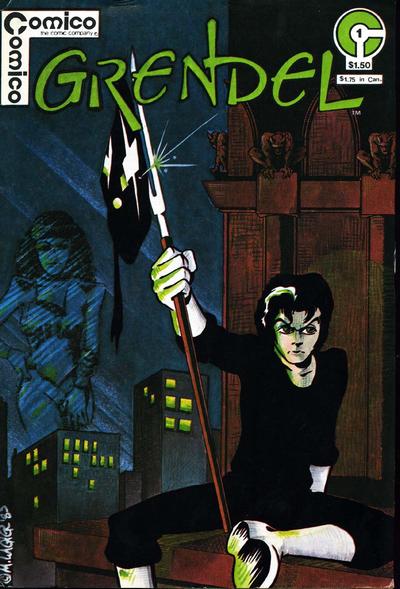
 There are comic book villains, there are antiheroes, and then there is Grendel.
Created by writer and artist Matt Wagner, Grendel began as the identity of Hunter Rose, an elegant, brilliant, and utterly ruthless criminal whose influence would ultimately extend far beyond his own lifetime.
Hunter Rose first appeared in Primer #2, published by Comico in December 1982. The 10-page story, written and illustrated by Wagner, also introduced Grendel’s longtime adversary Argent.
At first glance, Hunter Rose appears to have everything.
He is wealthy, sophisticated and enormously successful. He is a celebrated author and publisher, moving comfortably among society’s elite.
But Hunter Rose is also Grendel.
Behind the distinctive black-and-white mask is an assassin, crime lord and calculating killer who gradually builds a criminal empire.
That contradiction is what makes Hunter Rose so compelling.
He is not a conventional superhero who occasionally crosses the line. Nor is he simply a costumed villain waiting for a hero to stop him.
Hunter Rose is the protagonist.
Readers are invited into the world of a man who is charming, cultured, and frequently fascinating while being unquestionably dangerous.
Hunter Rose was originally Eddie, an extraordinarily gifted child whose intelligence and physical abilities separated him from virtually everyone around him.
As he grew older, achievement came too easily.
Eventually, Hunter discovered something that could challenge him: crime.
Taking the name Grendel, he transformed himself into a masked assassin before expanding his operations into organized crime.
The identity gave Hunter something respectable society could not provide.
Purpose.
Excitement.
Opposition.
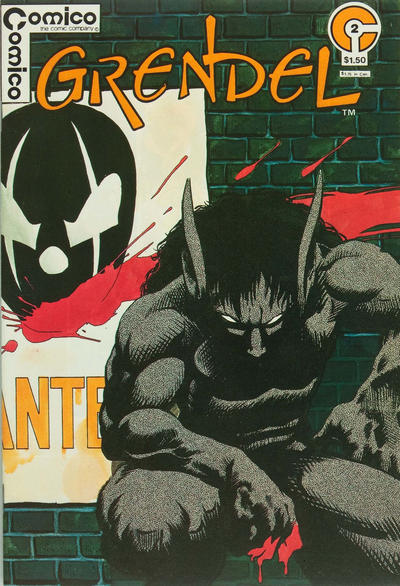 Grendel became both a criminal identity and an expression of Hunter Rose’s darker nature.
Dark Horse has described Hunter as a talented young author who eventually became his city’s most feared assassin and criminal overlord, while later Grendel stories expanded that idea into a much larger examination of violence, authority, and society.
Every great criminal needs an equally memorable adversary.
For Hunter Rose, that was Argent.
Argent is a massive, wolf-like warrior who becomes obsessed with stopping Grendel. The conflict between the two men becomes one of the central elements of Hunter Rose’s life.
Their rivalry works because neither character fits neatly into the traditional superhero formula.
Grendel is unquestionably a killer, yet he is charismatic and intelligent.
Argent is ostensibly pursuing justice, yet he can be frighteningly violent himself.
Instead of a simple hero-versus-villain story, Wagner created two dangerous personalities moving toward an inevitable collision.
Their relationship would become one of the foundations upon which the entire Grendel mythology was constructed.
Although Hunter Rose had already appeared in Primer and the original Grendel series, Wagner later revisited and restructured his story in Devil by the Deed.
The story was serialized as a backup feature in Mage #6 through #14 before being collected. The collected story recounts the rise and fall of Hunter Rose, including his relationships with Argent and his adopted daughter, Stacy Palumbo.
Rather than presenting the story as a conventional action comic, Wagner used an illustrated-text approach that gave Devil by the Deed the feeling of a biography or historical document.
That format proved particularly appropriate for Hunter Rose.
Readers already know that they are examining the life of someone important. The question is not simply what Hunter will do next, but how his actions will continue affecting the world after he is gone.
In 2023, Wagner returned to the material again with Grendel: Devil by the Deed – Master’s Edition, creating new story pages and incorporating elements developed during the decades since the original story. Dark Horse released the book on November 22, 2023, with Wagner writing and drawing, Brennan Wagner colouring, and David Lanphear lettering.
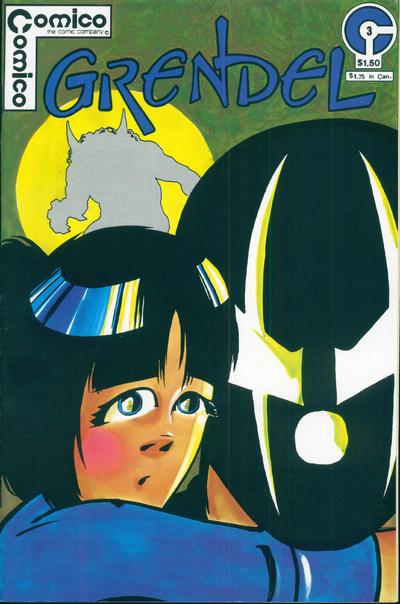 One of Hunter Rose’s most interesting relationships is with Stacy Palumbo.
Hunter becomes Stacy’s guardian after the death of her father.
The relationship reveals something rarely visible beneath the mask of Grendel.
Hunter genuinely cares for her.
That does not redeem him, but it complicates him.
The ruthless killer who can manipulate and murder without hesitation is also capable of affection.
Unfortunately, Stacy also becomes part of the tragedy surrounding Grendel.
Her life connects Hunter Rose directly to the later generations of the Grendel legacy, particularly through her daughter Christine Spar.
The Grendel saga would eventually move far beyond Hunter Rose, but the consequences of his life remain embedded in everything that follows.
Hunter Rose and Argent eventually face each other in their final confrontation.
Hunter dies.
The character’s death was published during the original Devil by the Deed serialization, with the Grand Comics Database placing it in Mage #13 in June 1986.
But killing Hunter Rose did not kill Grendel.
That became the central idea behind Wagner’s expanding mythology.
Grendel would become more than one man.
The identity, or perhaps the force represented by that identity, passes from person to person and eventually becomes something far greater than the story of a single masked assassin.
Christine Spar becomes Grendel.
Others follow.
Centuries pass.
 Eventually, Grendel becomes connected to cultures, armies,s and civilizations.
What began as Hunter Rose’s criminal persona evolves into an exploration of violence itself.
Despite his death, Wagner repeatedly returned to Hunter Rose.
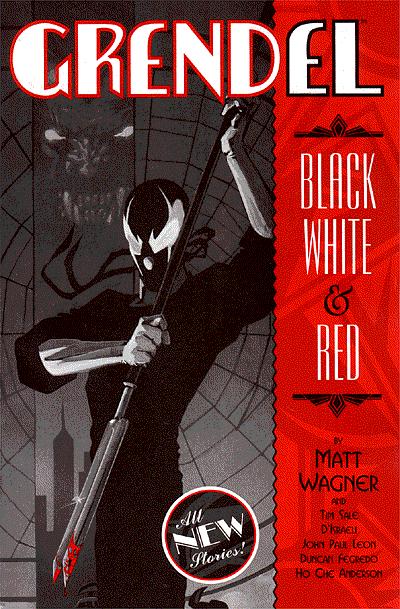
Stories including Grendel: Black, White & Red, Grendel: Red, White & Black and Grendel: Behold the Devil filled in previously unseen episodes from Hunter’s career.
These stories also allowed an extraordinary collection of artists to interpret Wagner’s character.
Dark Horse’s Grendel Omnibus Volume 1: Hunter Rose collects Devil by the Deed, Black, White & Red, Red, White & Black and Behold the Devil, with contributions from creators including Bernie Mireault, Tim Sale, David Mack, Mike Allred, Jill Thompson, Stan Sakai, Kelley Jones, Cliff Chiang, Michael Avon Oeming and many others.
The result is unusual.
Hunter Rose has a remarkably identifiable visual presence despite being interpreted by dramatically different artists.
The black costume.
The white areas around the eyes.
The sharply stylized mask.
The forked weapon.
The rose.
You can change almost everything else, and Grendel is still immediately recognizable.
Hunter Rose even crossed paths with Batman.
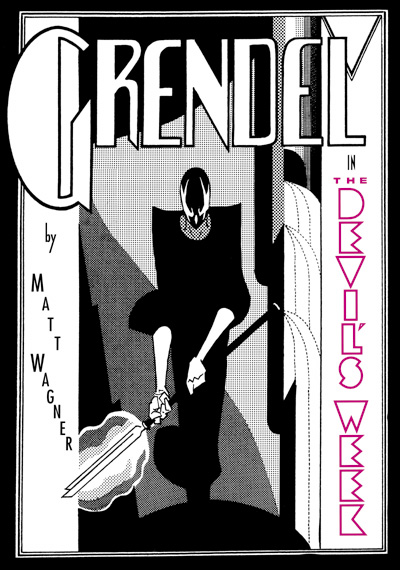
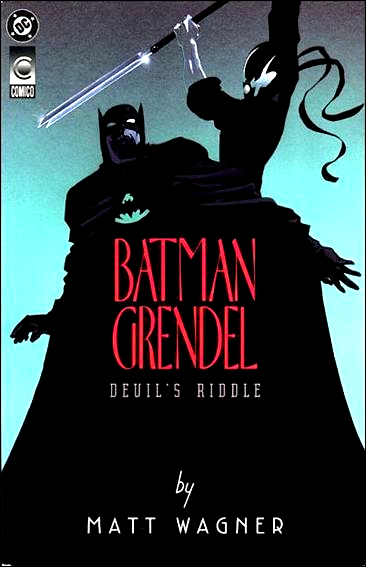
Wagner wrote and illustrated Batman/Grendel, bringing together two characters who function as fascinating opposites.
Both are intelligent.
Both have cultivated frightening nighttime identities.
 Both rely upon extraordinary physical ability and psychological intimidation.
But Batman builds his identity around controlling violence.
Hunter embraces it.
The encounter also demonstrated how easily Hunter Rose could exist beside one of mainstream comics’ most recognizable characters without losing what made Grendel distinctive.
Hunter Rose later crossed paths with another legendary figure of pulp fiction when Wagner produced Grendel vs. The Shadow.
Hunter Rose could easily have remained an interesting early-1980s independent comics villain.
Instead, Matt Wagner turned him into the starting point for something much larger.
Grendel became a concept.
A legacy.
Perhaps even an infection.
Different characters would wear the name and interpret it differently, while Wagner moved the series through crime fiction, horror, superhero comics, science fiction, and social commentary.
Dark Horse describes the larger saga as a centuries-spanning examination of the roots and consequences of violence.
 Yet everything begins with Hunter Rose.
A brilliant young man becomes bored.
He creates another identity.
He begins killing.
He builds an empire.
And somehow, long after Hunter Rose dies, Grendel continues.
That may ultimately be Hunter Rose’s greatest accomplishment and greatest horror.
He created something that could survive without him.
More than four decades after Primer #2, the original Grendel remains one of independent comics’ most distinctive creations.
The devil is dead.
Grendel lives.
About Author
