
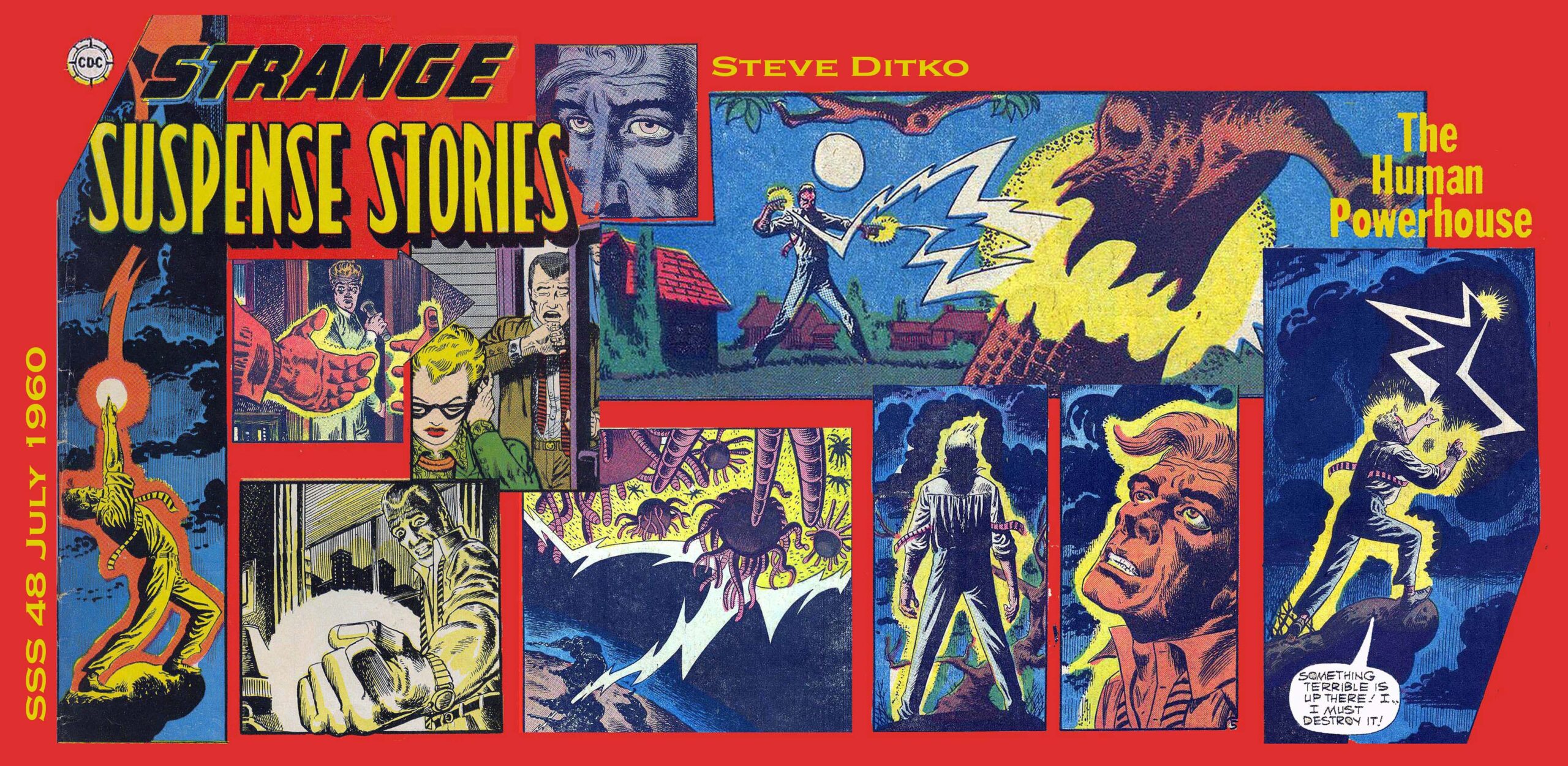
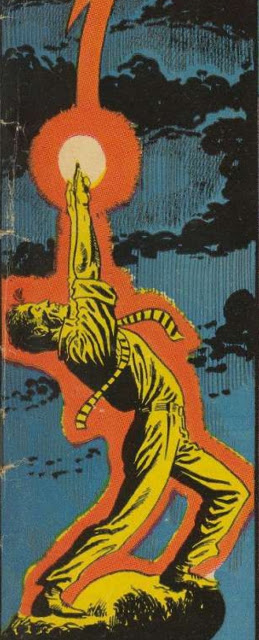
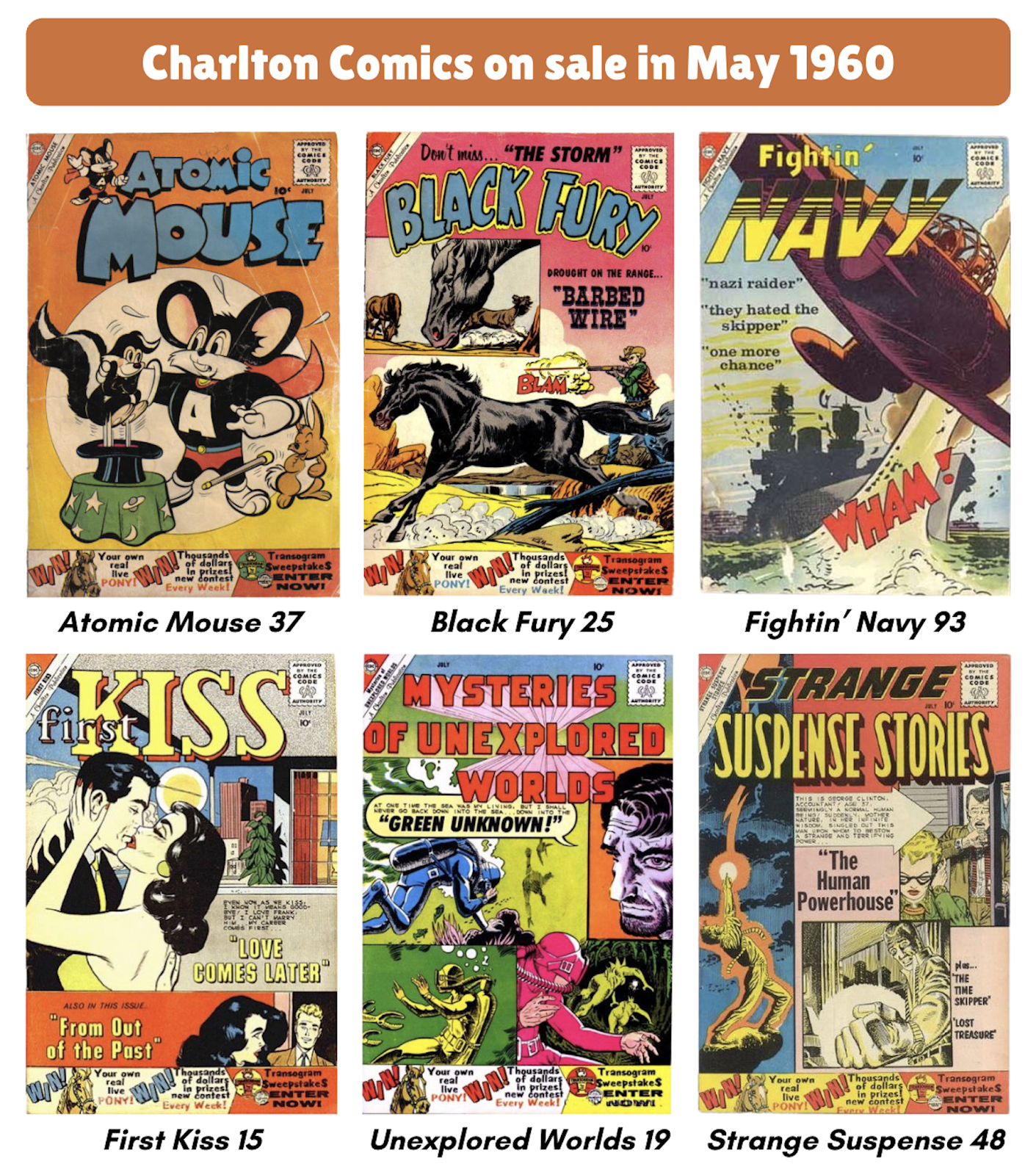
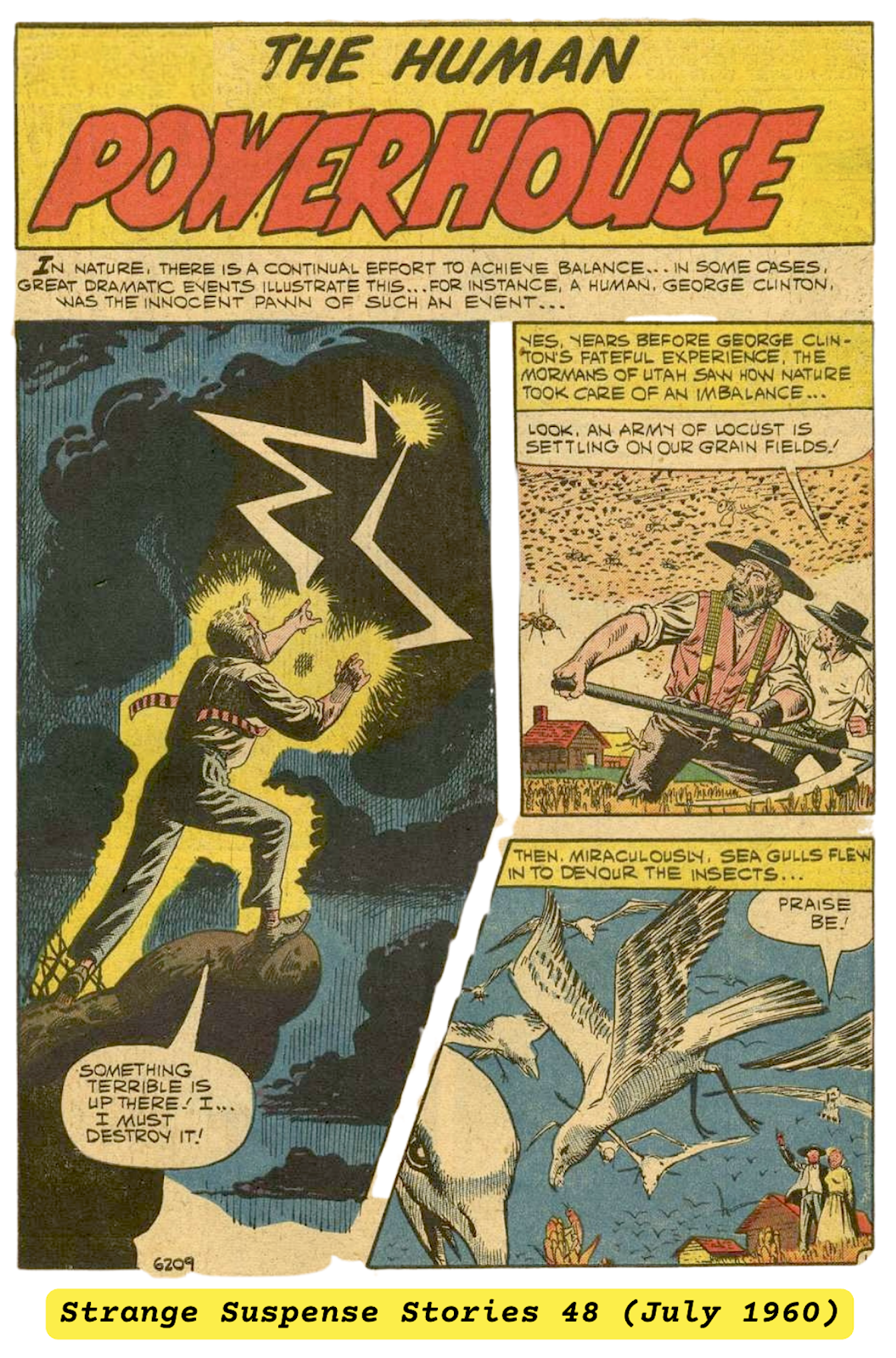
 I remember being particularly entranced by the story The Human Powerhouse (cover-featured in Charlton’s Strange Suspense Stories 48, July 1960), which combined science fiction and superpowers and sprang an alien invasion on us at the end.
Even at 5, I could recognize and appreciate the distinctive, shadow-loving angularity of the art, although I didn’t know the artist’s identity then. I wouldn’t read the odd name of Steve Ditko until a little later, in Marvel Comics credits.
Like the later Marvel Comics villain Electro, accountant George Clinton finds himself mysteriously charged with electrical power, capable of burning down trees and destroying boulders. Then he somehow senses something far out in space, “…a flock of gruesome living entities bearing new and terrible diseases to Earth from another galaxy.”
As Clinton spectacularly discharges all his vast electrical power into the sky to destroy them, some mysterious natural balance is achieved. The story cites the precedent of a plague of crop-destroying locusts in Utah that was suddenly and miraculously devoured by seagulls.
It’s another example of Ditko’s recurring “Hidden Protector” theme, in which some obscure person wields uncanny powers but remains unheralded and unrecognized by those whom he shields from harm.
“Something that I think is important to consider when creating super-powered characters for comics is visual interest — the character itself and/or the execution of the character’s powers needs to be visually interesting,” Robert S. Childers said. “Comics are a visual medium, after all. Tossing off lightning bolts (or fireballs, or otherwise non-specific ‘energy blasts’) can, with some artistic imagination, definitely be visually interesting.”
About Author
