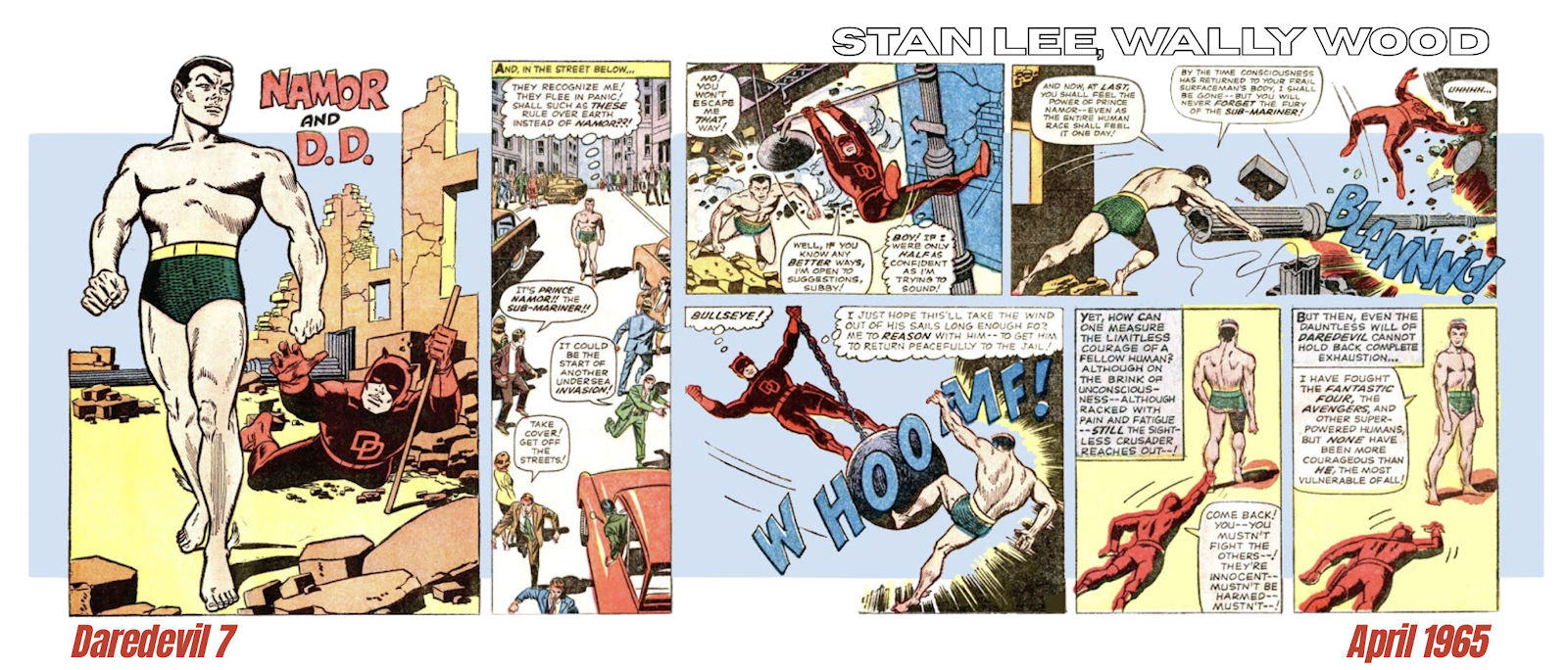
Daredevil knows this is one fight he’s going to lose, and that he’ll probably be killed. But he fights on anyway.
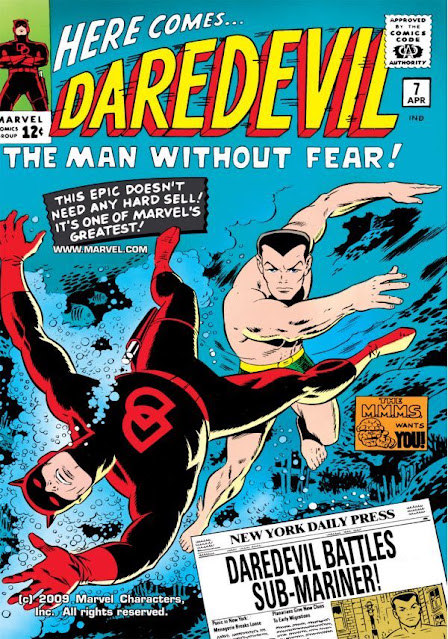
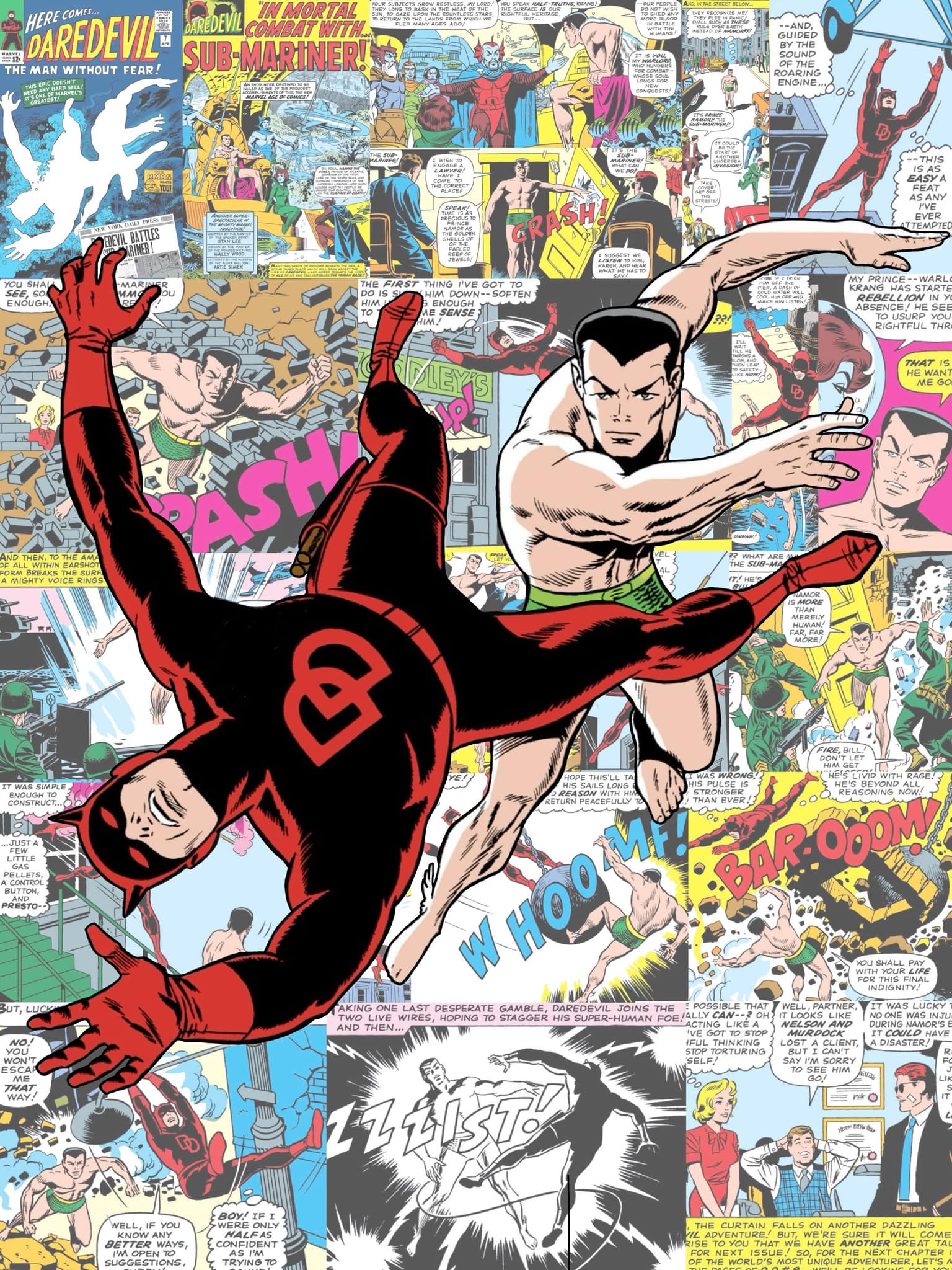
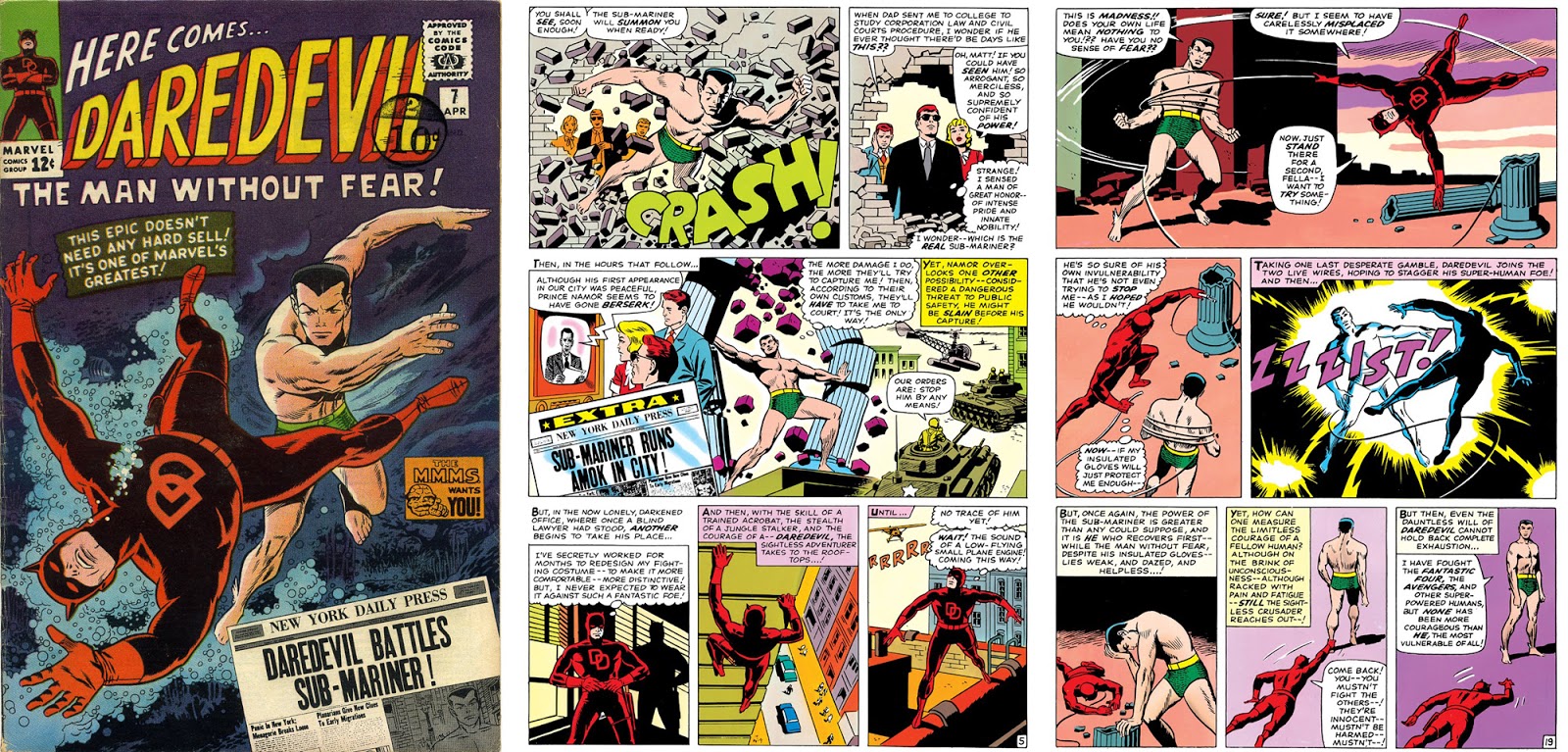
Early Marvel Comics storytelling ascended to a pinnacle in Wally Wood and Stan Lee’s Daredevil 7 (April 1965).
The manic anti-superhero Sub-Mariner had been attacking Manhattan like King Kong on and off since 1939, but during this particular onslaught all the other superheroes — the Fantastic Four, the Avengers, the X-Men, even Spider-Man — were off somewhere else. Only Daredevil stood between Namor and the ordinary citizens who would be harmed.
We readers were aware that Namor’s strength rivaled the Hulk’s, and that, aside from his super-senses, Daredevil was merely a well-trained costumed acrobat. We knew that a fight between them would be like pitting a colorful sports car against a Sherman tank.
This time, Prince Namor chooses to pursue his grievances through the legal system, demanding that attorney Matt Murdock sue the human race for him. Told he’ll be laughed out of court, Namor decides to go on a rampage to force authorities to hear his case.
“Daredevil (is) fighting a two-front battle,” noted comics historian Brian Cronin. “On the one hand, he is trying to convince the army and the authorities to let HIM bring Namor in (to cut down on property damage and injuries to innocents) and on the other hand, he is trying to get Namor to RESPECT the law of the surface world, and if he can’t do that, he will have to do his best to bring in the powerhouse who is a WHOLE lot more powerful than Daredevil.”
The storytelling is satisfying on several levels, including its defiance of the genre convention that superheroes must always finally win their battles.
Not this time, gang.
 Aided by the restrained power inherent in Wood’s art, Daredevil puts up a valiant fight against the Sub-Mariner, delaying Namor from causing more destruction before finally collapsing, battered and beaten, at Namor’s feet.
Desperately, he grabs Namor’s winged ankle and is slowly dragged along behind the inexorable amphibian superman.
“Come back!” Daredevil whispers. “You – you mustn’t fight the others – They’re innocent! Mustn’t be harmed — Mustn’t…”
Namor turns and gazes down at Daredevil.
“I have fought the Fantastic Four, the Avengers and other super-powered humans, but none have been more courageous than he, the most vulnerable of all!”
Touched, Namor abandons his war, flying serenely out to sea.
Note also how the story turns on the consistent, established personality traits of the characters. Daredevil has always been known as the “man without fear,” and in this story neither his super powers nor his fighting ability can save the day. Only his sheer courage prevails.
And beneath the Sub-Mariner’s rage is an underlying nobility that only Daredevil’s act of self-sacrifice manages to reach.
The story makes a strong ethical point — that, if you are to call yourself a real person, a mensch, there are things for which you must stand up even if you know you will be knocked right back down. It’s a moral fact understood by that old man who rises from his knees in the first Avengers movie, defying the evil god whom he knows will destroy him for it.
And the world will be better for this,
That one man scorned and covered with scars
Still strove with his last ounce of courage.
To fight the unbeatable foe.
About Author
