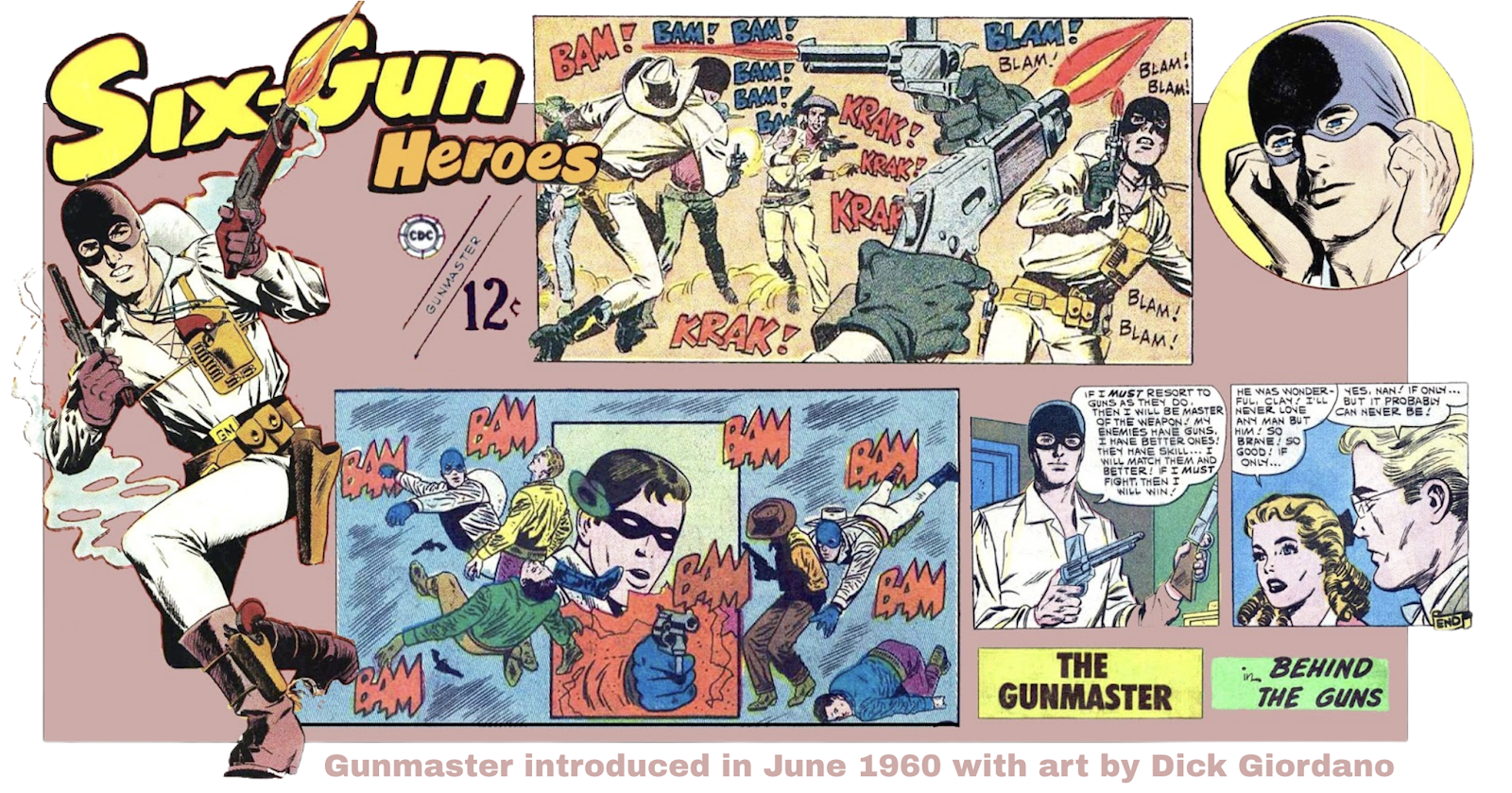
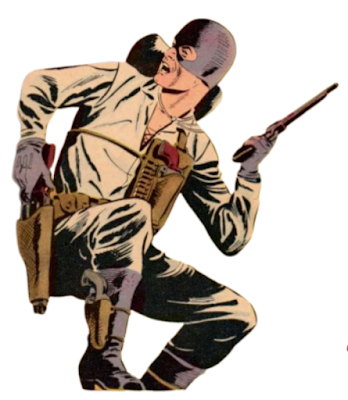
Cross Gunsmoke with Batman and you might well come up with a concept like Charlton Comics’ Gunmaster, a character who debuted in 1960.
Westerns dominated screens big and small during the 1950s, but publishers who were paying attention could see that the superheroes that had launched the comic book industry in the 1940s were on the verge of rebirth. Charlton had already tested those waters three months earlier by introducing Captain Atom in Space Adventures.
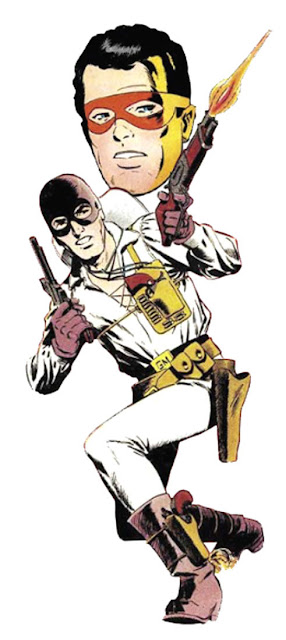 Gunmaster ultimately elbowed aside the Masked Raider, Charlton’s five-year-old Lone Ranger-type hero. Gunmaster, sporting more gadgetry, was closer to the new, jet-age superheroes.
In the late 1950s, superheroes were still thin on the ground, however. I was a fanatic for the genre even then, and beefed up my supply by counting all the masked western heroes as superheroes (which they really were, by my definition).
“Western heroes who wear masks to conceal their identities, like the Lone Ranger, predate comic books — but as the genre grew to prominence in comics, following the drop in popularity of once-dominant superheroes, cowboy heroes with secret identities proliferated in comics like they never had elsewhere, perhaps because that story element had become so familiar to writers that they had an easy time constructing stories around it,” comics historian Don Markstein noted.
“Thus, by the end of the 1940s, Johnny Thunder, the Ghost Rider and more were sporting that superhero trope, with more coming as long as westerns retained their position in the field. In fact, even in the early ’60s, when westerns had pretty much run their course in comics and were giving way to a resurgence of superheroes, new ones such as DC’s Super-Chief (1961) and Marvel’s Two-Gun Kid (1962) were still coming out.”
Successful superheroes usually have a strong emotional rationale for adopting their costumed identity — for example, Spider-Man’s guilt for his failure to prevent his uncle’s death. But Gunmaster, who premiered in Six-Gun Heroes 57 (June 1960), is one of a few superheroes whose motive might be described as hypocrisy.
Unconsciously, Gunmaster managed to mirror contradictory American attitudes about guns: the enthusiasm for their lethal efficiency, and the ambivalence about their deadly effects.
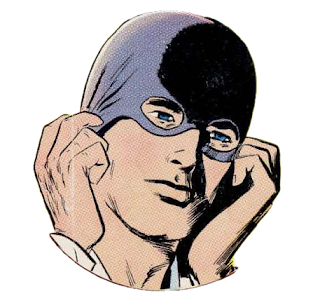 An apprentice in a gun shop, Clay Boone is introduced as a man who is “always spouting peace an’ law an’ talkin’ things over peacefully” because he believes it to be “…the only way the West can grow.”
That earns him the scorn of his employer, Ebenezer Crotch, who calls Boone a coward for refusing to stand up to cattle baron Moss Cantrell, the crooked boss of the town of Rawhide. When Cantrell claims Crotch’s granddaughter Nan as a bride, whether she likes it or not, Boone faces a dilemma: to continue with his philosophy of nonviolence, or to use firearms to save the woman he loves.
Ironically, given his beliefs, Boone is a genius gunsmith, so he retires to his secret cellar gun lab to consider what to do.
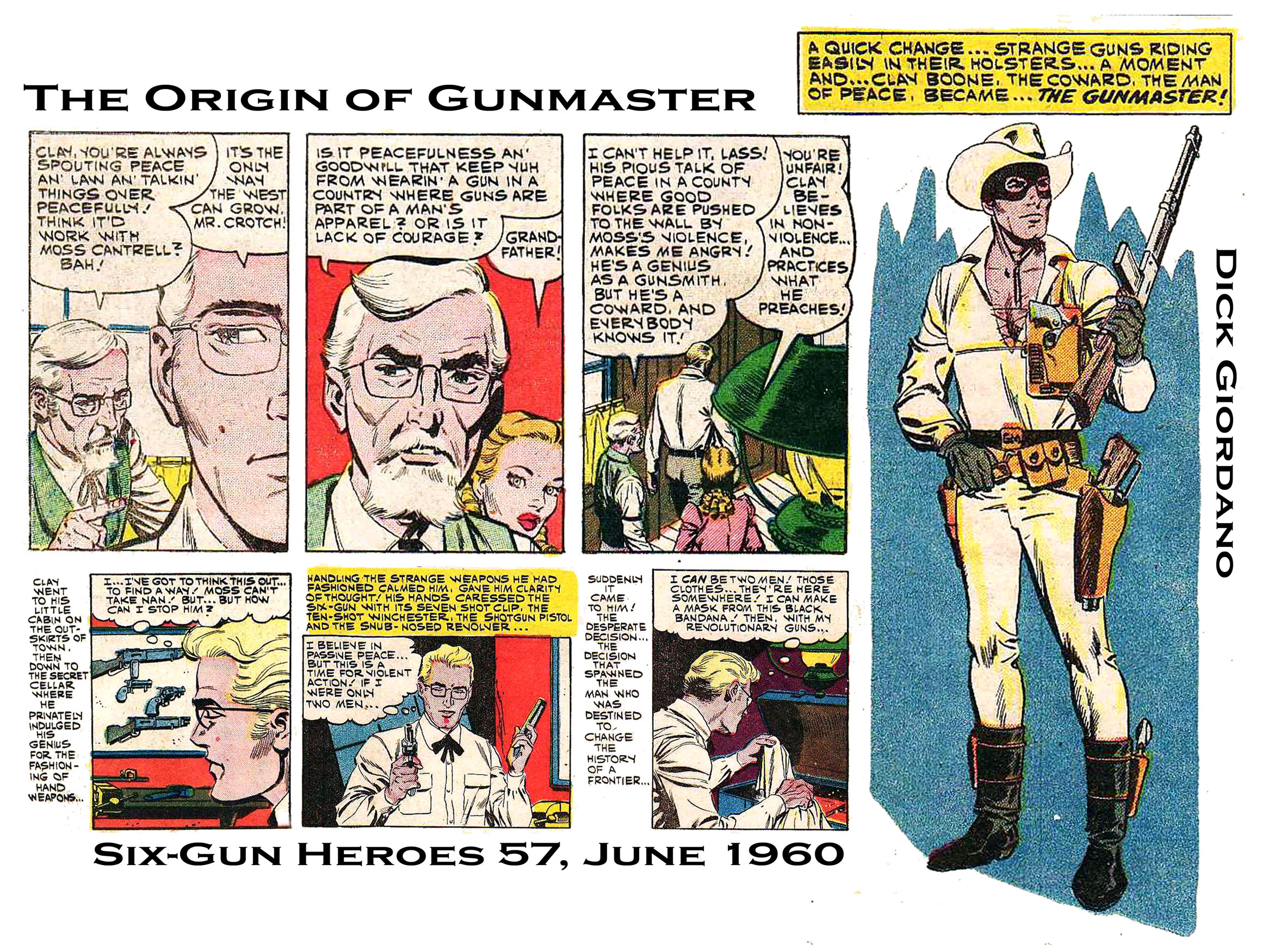
 “Handling the strange weapons he had fashioned calmed him, gave him clarity of thought!” the narration notes. “His hands caressed the six-gun with its seven-shot clip, the ten-shot Winchester, the shotgun pistol and the snub-nosed revolver.”
“I believe in passive peace … but this is a time for violent action!” Boone thinks. “If I were only two men … I CAN be two men! Those clothes, they’re here somewhere! I can make a mask from this black bandana! Then, with my revolutionary guns…”
The mysterious Gunmaster cleans up Cantrell’s gang in a single busy panel, earning the worshipful admiration of Nan and her grandfather.
“He was glorious! A master of men! A master of guns!” Nan exclaims. “Oh, Clay, if you could only be more like him!”
But Clay keeps quiet about his dual identity. In Six-Gun Heroes 60 (Dec. 1960), he muses, not entirely logically, “I believe in peaceful methods! Guns and violence are wrong … if I believe that way, I should abide by my belief! But I’m too weak! In the end, I always resort to the same methods they use!
“If I must resort to guns as they do, then I will be master of the weapon! My enemies have guns, I have better ones! They have skill … I will match them and better!”
Boone became an itinerant gunsmith, traveling from town to town by wagon in a mythic Old West as fantastic as Metropolis or Gotham City.
Of course, much of what we think we know about America’s Old West is wrong — for example, that it was a place without gun regulations. The famed Wyatt Earp — who co-starred with Gunmaster in Six-Gun Heroes, by the way — took away people’s guns by law. Then, when they got drunk, they didn’t have them. Earp’s ordinance #9 was put into effect on April 19, 1881, a regulation forbidding the carrying of weapons, including knives, inside Tombstone city limits.
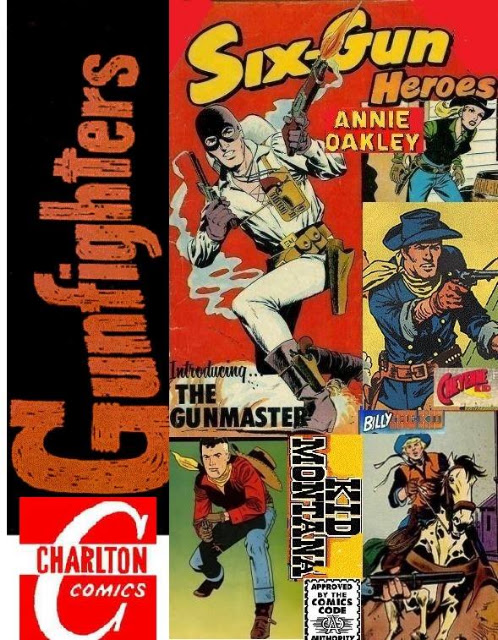 A necessary tool on the frontier, the gun evolved into a potent symbol of personal power in American myth.
“The mythic cowboy … has to have various guns, including revolver, carbine, rifle or shotgun, to back up his virility and toughness, to resolve physical conflicts and to bring order to the frontier,” noted Jeremy Agnew in The Creation of the Cowboy Hero: Fiction, Film and Fact. “A man without a gun would not be able to defend himself in the supposed dangerous world of dime-novel villains and bad men, so the revolver became an essential accessory. The hero has to have great skill with it and be faster on the draw than the villain. The final gunfight is the classic climax of the western novel or film that brings resolution of the plot. A gun was considered to be used well and wisely by the hero, but not by the bad man. As author John Lenihan has pointed out, ‘the heroes were usually those who displayed an expertise at shooting quickly and accurately as well as the wisdom to shoot discriminately and justly.’”
Gunmaster’s lethal gadgetry fit those myths as snugly as an ammo clip.
“Effective with issue 78, the western was modestly revamped to add more tropes associated with costumed crime-fighters,” noted John Wells and Keith Dallas in American Comic Book Chronicle: 1960-64. “For starters, there was a recurring nemesis named Doctor Dynamite who, as his name indicated, employed rolls of explosives in his robberies.” And Gunmaster also met his Robin, Bullet the Gun Boy, whose last name just happened to be “bullet” spelled backwards. The Silver Age could be very odd.
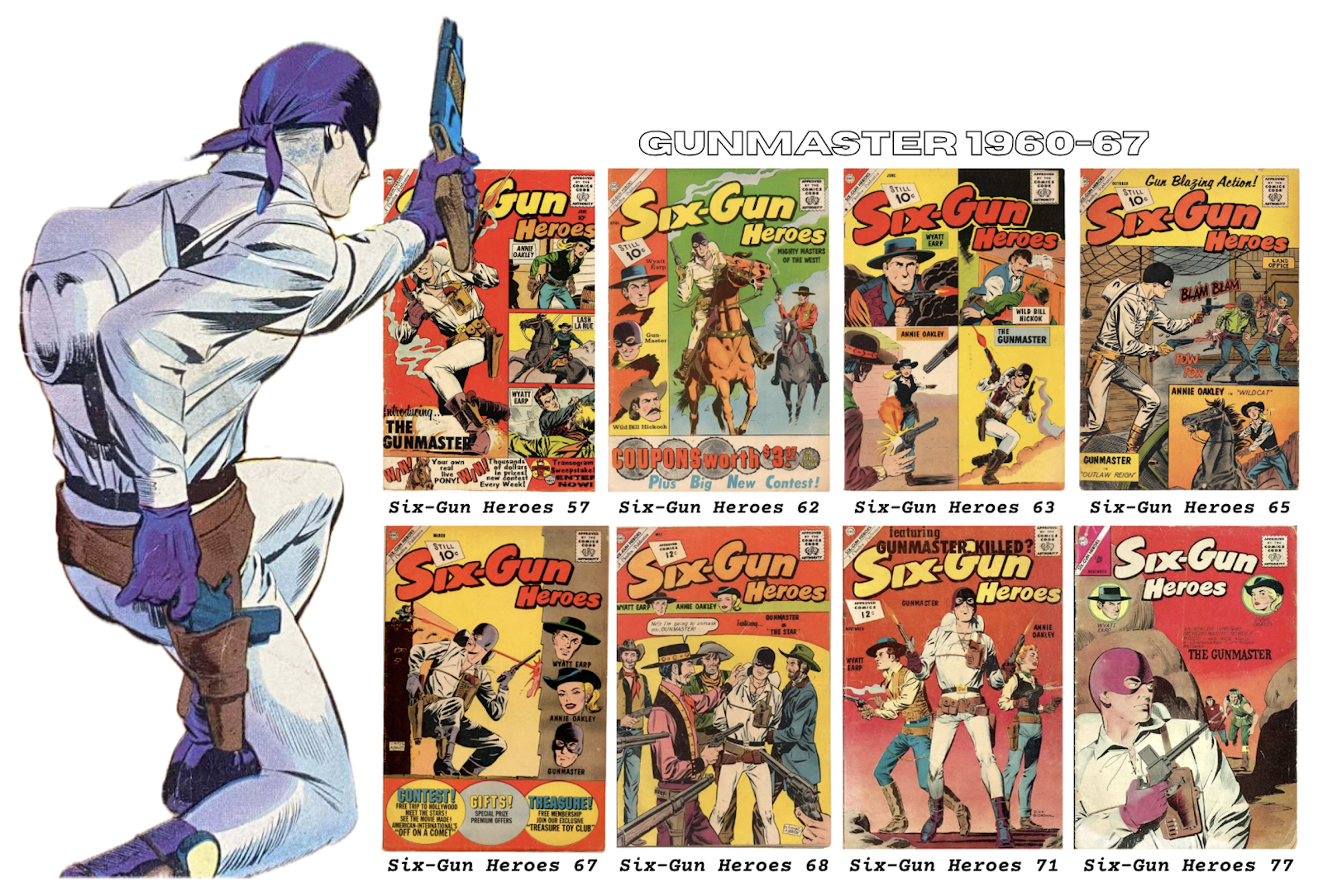
A transitional figure, Gunmaster headlined 26 issues of Six-Gun Heroes, as well as 10 issues of his own title, across seven years.
Ironically, when Gunmaster’s run ended, Charlton had another masked fighter waiting in the wings who would feature a fresh form of mythologized personal power — the newly popular Asian martial arts.
Exit Gunmaster, enter Judomaster.
About Author
