
Although the initial vogue for comic book superheroes died out in the late 1940s and early 1950s, the characters had already made a permanent mark on popular culture, so their return was probably inevitable.
Let’s take a case in point: Tom Terrific. Presented as part of the Captain Kangaroo children’s television show, Tom Terrific was a series of short, silly animated superhero adventures about a boy who could use his funnel-shaped metal “thinking cap” to transform himself into anything he wanted.
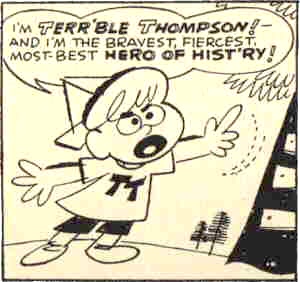
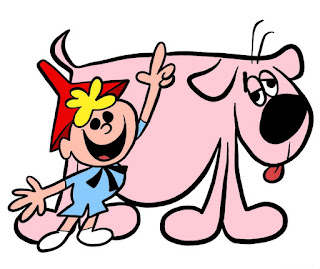 Gene Deitch adapted the Terrytoons feature from his 1950s United Features Syndicate newspaper comic strip, Terr’ble Thompson! All the voices were performed by Lionel Wilson.
Tom Terrific was a kind of meta-wink at the concept of superheroes. Where did he get his powers? Well, where do all comic book superheroes get their powers, really?
Tom’s ability to transform himself into anything derives from the fact that he is a drawing. The fact that Tom Terrific was a pretty sketchy drawing only underlined the point. He was deliberately designed to resemble a child’s drawing in the black-and-white cartoons.
One could hardly find a more pointed metaphor for imagination itself. By thinking, you can become anything you want to be.
 Whether Deitch realized it or not, Tom Terrific is a further comic extension of Jack Cole’s popular creation, Plastic Man in 1941, and a development of that idea in animated cartoons.
Deitch recalled that when he became creative director at CBS-Terrytoons, among his first acts was to hire the now-legendary cartoonist Jules Feiffer, who would become the first person to write a hardcover book about comic book superheroes.
“He was just the man to help me instill new life in that moribund studio,” Deitch said. “I put him in our story department, along with my other new recruits… Jules’ first work for me was on my story team for Tom Terrific!”
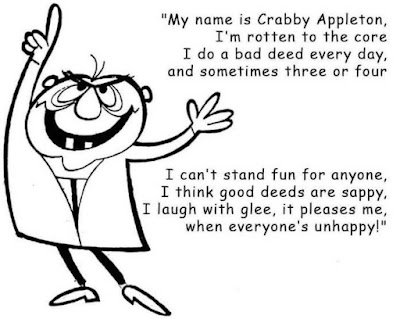 Charming character contrasts were built into the series. Tom, a boy of utterly relentless enthusiasm, was convinced that his pet Manfred was a “wonder dog.” Nothing “Mighty Manfred” did could convince Tom that his droopy-eyed dog was simply lethargic and uninterested in adventure. Manfred’s sardonic comments were a highlight of the cartoons. Billed as “the World’s Greatest All-Around Full-Time Hero,” Tom lived together with Manfred in a treehouse, frequently facing his archenemy Crabby Appleton — a villain who was, of course, “…rotten to the core.”
Other opponents included Mr. Instant, the Instant Thing King, Captain Kidney Bean, Sweet Tooth Sam the Candy Bandit, and Isotope Feeney the Meany.
The changeable champion managed to thwart those baddies without a single punch, too.
“Violence is part of life, and there is no getting away from it,” observed Bob Keeshan, who played Captain Kangaroo. “But there is also gentleness in life, and this is what we have tried to stress in our shows… So I ruled there’ll be no slapstick, no horror, and no violence, no matter how innocently presented.”
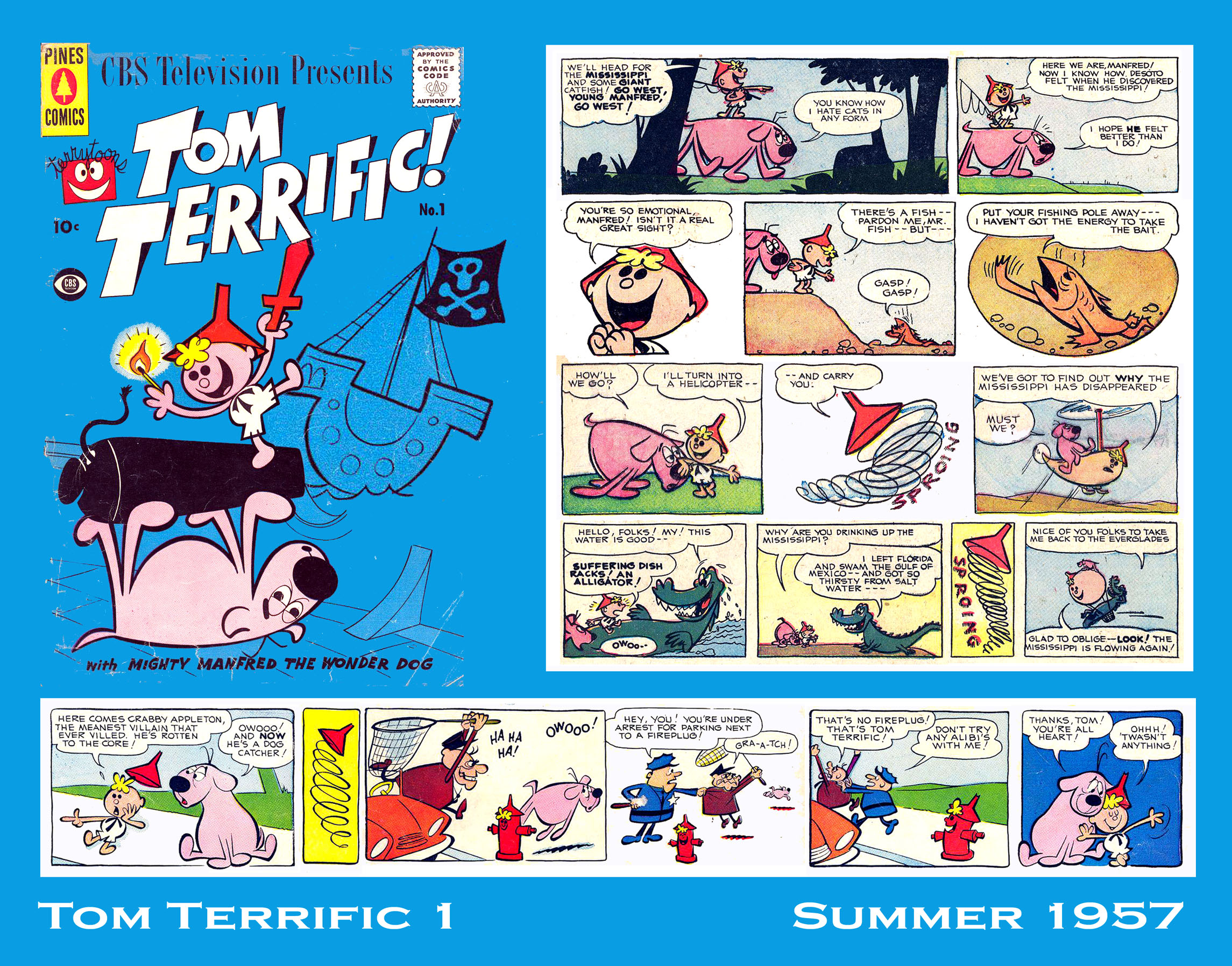
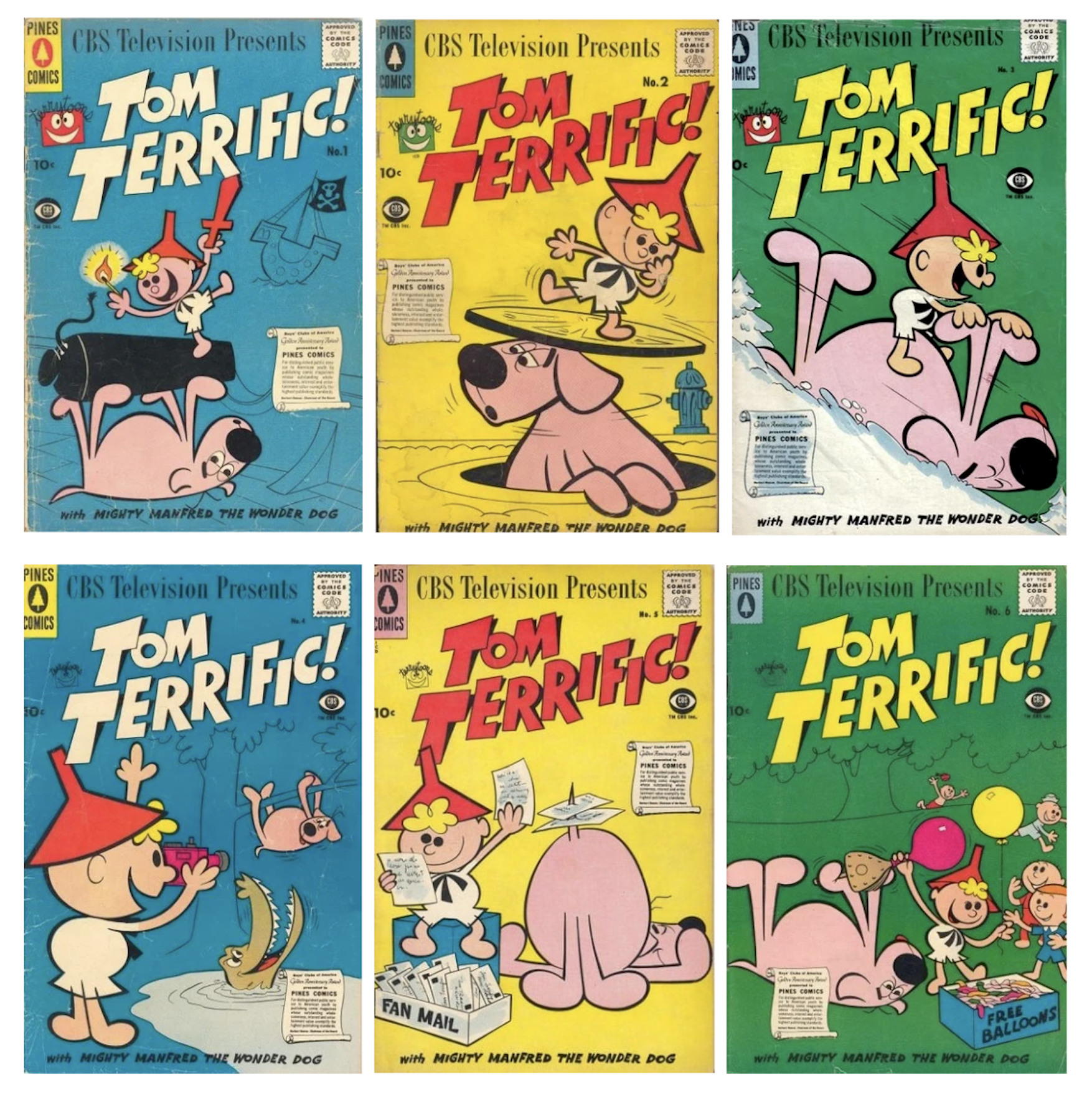
The Captain’s orders weren’t quite so strictly followed when Tom appeared in his six-issue Pines comic book series in 1957-58, however. On the cover of the first issue, the sketchy sprite is shown gleefully firing a cannonball at a pirate ship.
Tom Terrific premiered on June 10, 1957, on Captain Kangaroo, and the episodes were syndicated as 26 half-hour adventures.
“Each story lasted five episodes and was initially presented as a daily cliffhanger on The Captain Kangaroo Show, Monday through Friday, from the beginning in 1957,” noted comics historian Ron Goulart.
About Author
