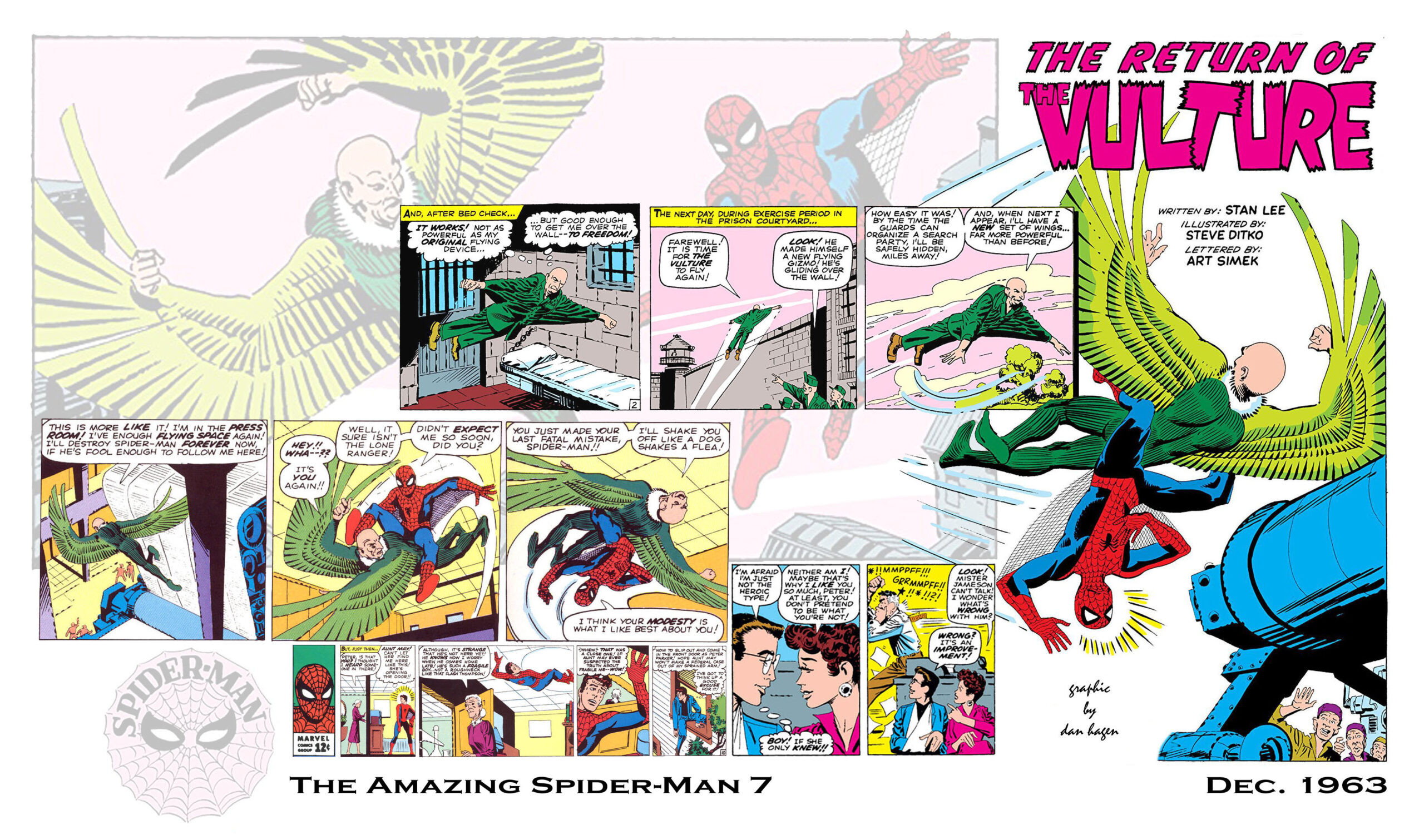
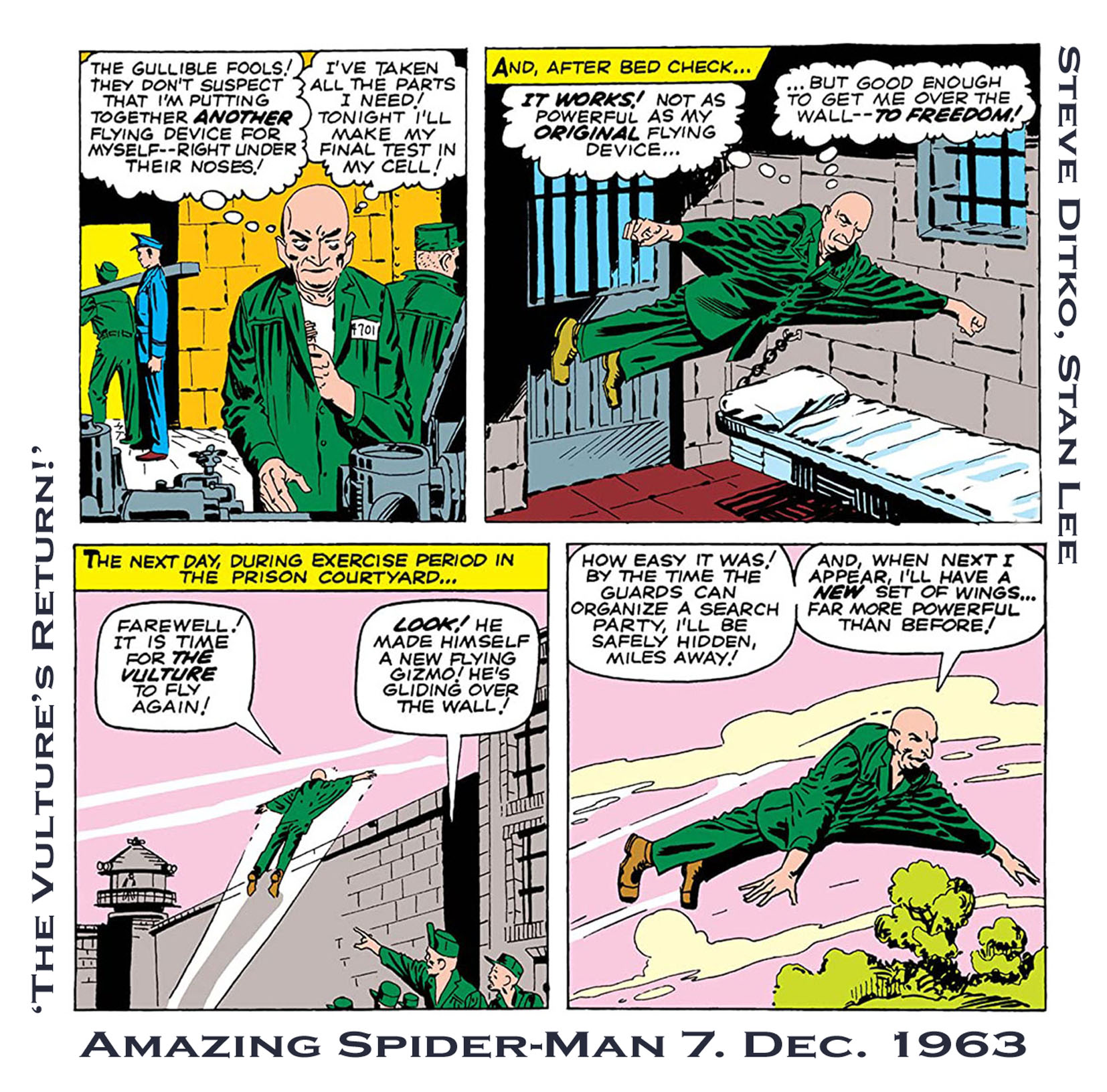
The first old enemy to demand a return bout with Spider-Man was a really old foe — the elderly felon who called himself the Vulture.
As metaphors of energy, action, and freedom, superheroes and super-villains generally skew pretty young — and so, after all, did their original audience. That made artist Steve Ditko and writer Stan Lee’s decision to spotlight a clearly aged villain interesting and visually arresting. Even his name — Adrian Toomes — subtly suggests someone approaching the grave.
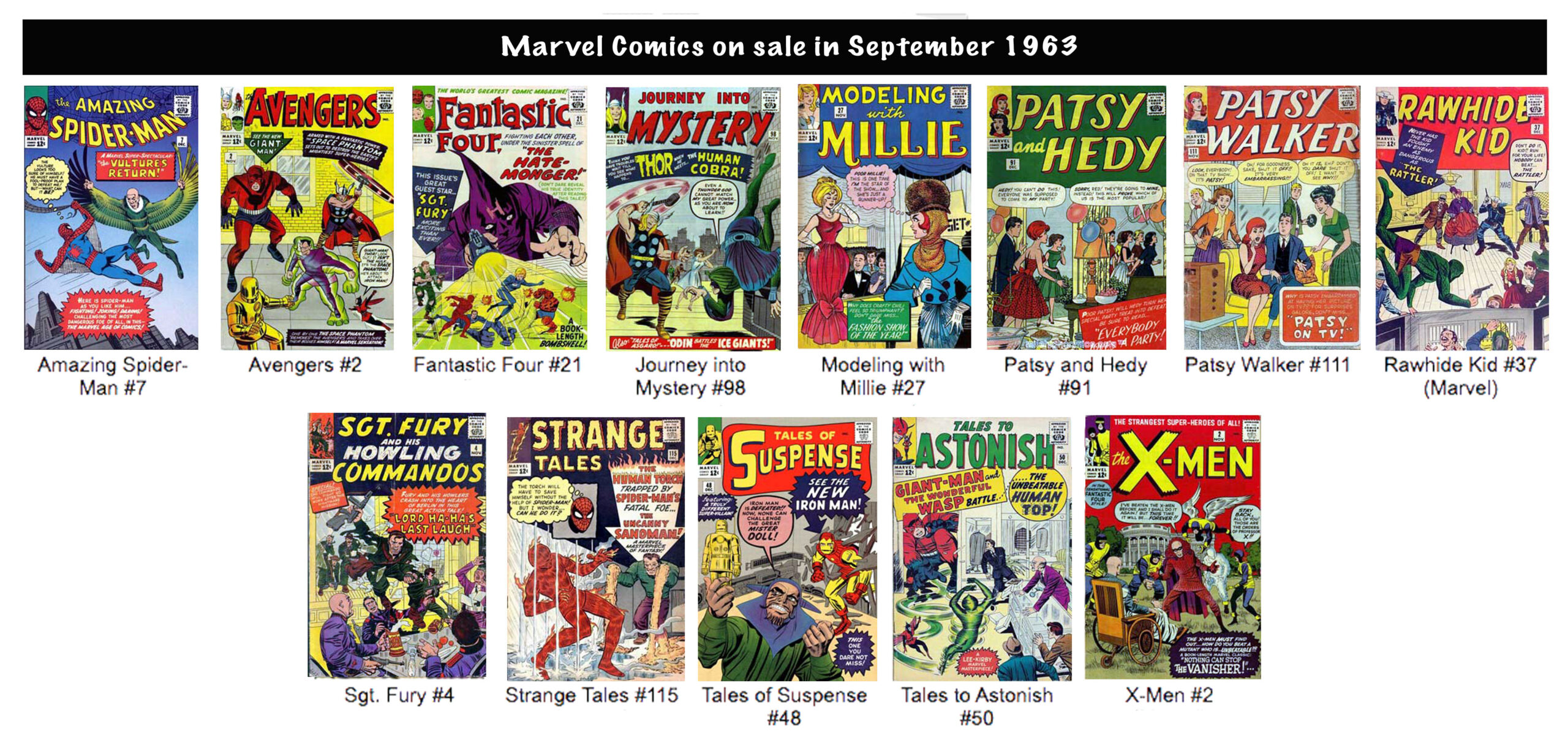
The Vulture’s return in Amazing Spider-Man 7 (Dec. 1963) signaled that Spidey, like Batman and the Flash, would have a rotating rogues’ gallery.
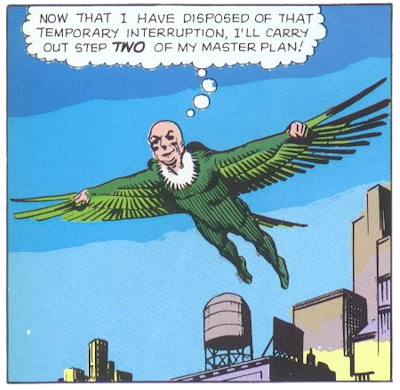
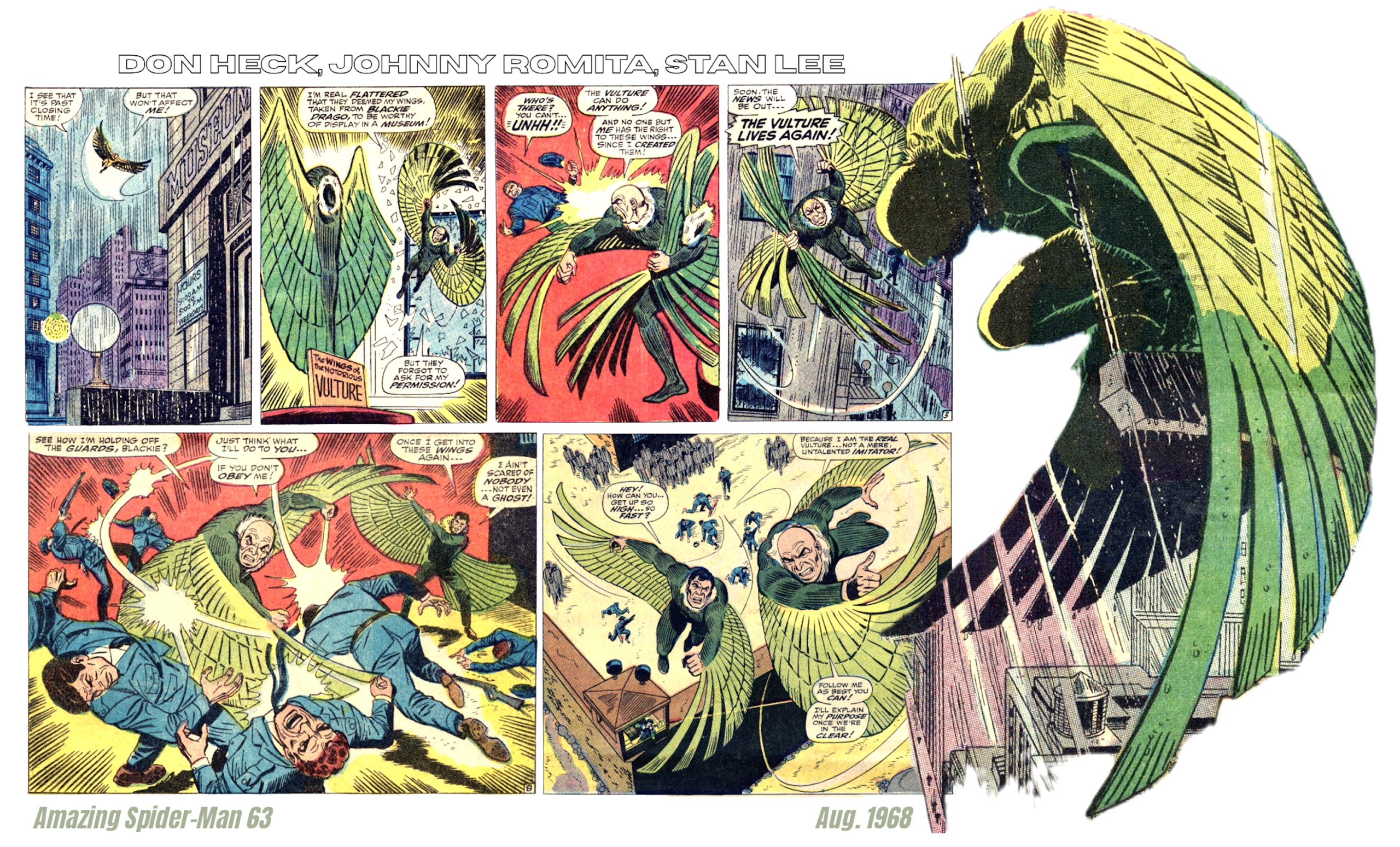
 Flight is a metaphor for freedom, a concept long dear to Ditko’s heart. So it isn’t surprising that he designed flying figures of a particular grace and visual appeal.
Superheroes’ archenemies are often their reversed mirror images, and that may explain part of the idea behind the Vulture — the teenage animal-man hero versus the senior citizen animal-man villain.
Both hero and villain shared attitudes tinged by alienation, bitterness, and isolation. But by his seventh issue, Peter Parker wasn’t quite so bitter. He even managed a happy ending.
That’s because, despite any returning villains, the title wasn’t static. Readers could watch it evolve. Perpetually put-upon Peter Parker was finally getting somewhere with his love interest, Betty Brant, and displaying flashes of light-hearted wit. Lee and Ditko were discovering the right balance between superhero action and soap operatic angst.
As comics historian Don Alsafi observed, the issue continued the nods toward “realism” — or at least verisimilitude — that would make it a beloved title for fans.
“Falling from the sky, he shoots a web line towards a nearby building to catch himself — but misses! He tries again, but doesn’t have time. We share his moment of panic as he continues to plummet to the ground, but by twisting himself and adjusting his fall, he barely manages to land upon a nearby roof, his arm taking the brunt of the impact. Pete’s shaken, though still alive … but he has to go around the rest of the issue with his sprained arm in a sling, even when putting the Vulture back behind bars.
“This kind of injury on the job reminds us that Spider-Man is not one of the invincible breed of heroes, and has to deal with the kind of everyday setbacks and problems that the rest of us have to (sans Vultures, of course).”
“After the Vulture has been defeated, Pete comes back to find the Bugle still in chaos, with Betty hiding out of the action behind a desk,” Alsafi noted. “Sitting down on the floor next to her, the two of them laugh at the bizarre circumstances of the day and share a tender moment, only briefly interrupted by a muffled Jameson, whose mouth Spider-Man has webbed shut. Once again, Stan Lee and Steve Ditko have shown they understand what makes people tick, as the most intimate and poignant times are seldom those of complete solitude, but often just a few shared moments away from the din and chaos of real life — grasped fleetingly, whenever we can.”
 Had the Tobey Maguire movie series continued, John Malkovich would have been the first Vulture on screen, appearing in the fourth Spider-Man film. But two reboots later, the Vulture turned out to be Michael Keaton.
Tom Holland is a high school sophomore Spidey, largely too immature to handle the great responsibilities inherent in great power, but with a lot of heart. That reminds me pleasantly of the earliest Lee/Ditko comic books while also managing to refresh the somewhat overworked superhero genre by marrying it to another popular movie genre: the teenage comedy.
And Holland works well in both genres, an actor whose earnest gestures both charm and ring true. Because young Peter is really out of his depth, the audience’s sense of danger is heightened.
As in the comic book clashes between Spider-Man and the Vulture, 2017’s Spider-Man: Homecoming explored the theme of maturity versus youth.
The villains in these superhero films have been becoming progressively more relatable, building up to Keaton as the Vulture, a working-class antagonist who has what is finally a largely legitimate point of view. He’s right when he tells Peter Parker that, good lad though he is, there are certain sad facts about adult existence that he does not yet understand.
About Author
