
Most Mondays, I try to talk about Archie Comics, but since Archie doesn’t do much with their Mighty Crusaders—it’s kind of hard to find something fresh to delve into. Well, I have been digging through the podcast archives, and I found the video of a show I did a couple of years back, and I put it up on YouTube.
And, for that show, I couldn’t think of a better guest than Rik Offenberger. He’s gotta be the biggest fan of any of the Mighty Crusaders. Rik is also one of the creators behind G-Man Comics. One of the best micro-publishers around, G‑Man Comics is built for fans who crave big action, bold characters, and that classic Bronze‑Age energy. It’s packed with colorful heroes, wild villains, and interconnected stories that feel like discovering a lost comic line from the glory days—only supercharged for today. And in a few weeks, they are not only launching their latest campaign but also reaching a milestone: they will be putting out their 100th issue!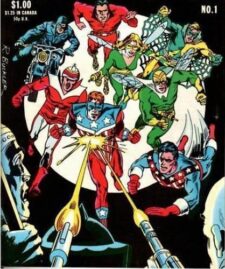
Now, let’s get to what I feel is one of the comics, Rodney Dangerfield! Archie’s Mighty Crusaders have always been one of those teams that seem to slip in and out of the spotlight, yet they’ve been part of the superhero conversation far longer than most readers realize. Long before Archie Comics became synonymous with Riverdale hijinks, the company was publishing costumed heroes under the MLJ banner, and those Golden Age characters—The Shield, The Black Hood, The Comet, The Hangman—form the backbone of what would eventually become the Mighty Crusaders. These weren’t knockoffs or latecomers; they were genuine early‑era superheroes who stood shoulder‑to‑shoulder with the industry’s first wave. The Shield even predates Captain America, and The Comet’s tragic arc remains one of the earliest examples of serialized superhero drama.
By the time the Mighty Crusaders name surfaced in the 1960s, Archie was dusting off its Golden Age icons and giving them a new lease on life. The result was a team book that felt like a bridge between eras—Silver Age optimism wrapped around characters born in the pulp‑heavy 1940s. Later revivals leaned into that legacy even harder. Whether it was the 1980s Red Circle line or the 1990s Impact imprint, the Crusaders always carried the weight of history with them. Every relaunch treated them not as newcomers but as heroes who had already earned their stripes decades earlier.
That’s part of what makes the Mighty Crusaders so fascinating. They’re a superhero team built from characters who survived multiple industry shifts, multiple rebrandings, and multiple generations of readers. They’ve been patriotic symbols, gritty vigilantes, cosmic adventurers, and modernized reimaginings—all while retaining the DNA of those original MLJ creations. When you read a Mighty Crusaders story, you’re not just getting a team‑up book; you’re tapping into one of the oldest superhero legacies outside of the Big Two. Archie’s heroes may not always dominate the shelves. Still, they’ve been here since the Golden Age, quietly proving that longevity isn’t just about popularity—it’s about resilience, reinvention, and the kind of history that refuses to fade.
About Author
