What happens when a centuries-old male warrior finds himself trapped in the body of a beautiful single mother? That was the unusual premise behind one of Malibu Comics’ most distinctive Ultraverse titles, MANTRA!
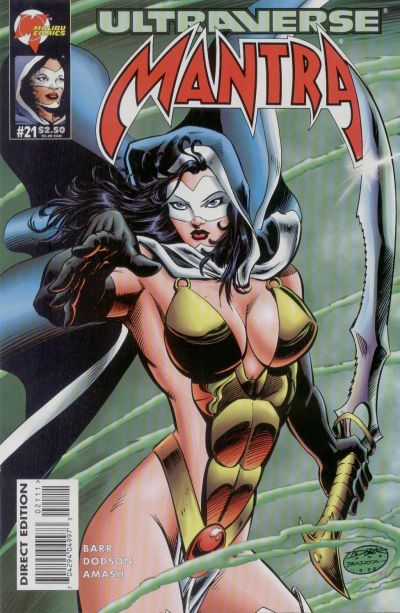
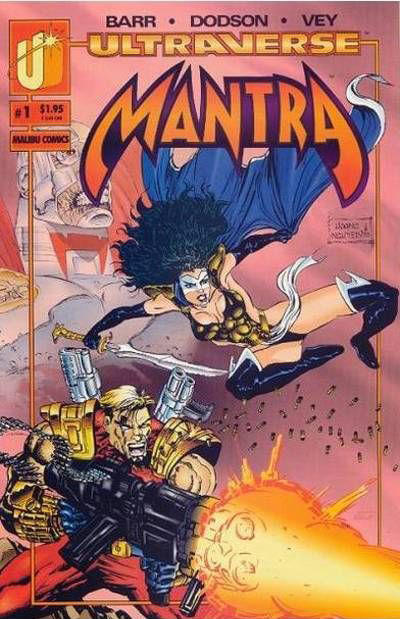 In July 1993, Malibu Comics introduced Mantra, a new superhero series written by Mike W. Barr with artwork by Terry Dodson and Al Vey. Part of Malibu’s ambitious Ultraverse line, Mantra combined superhero action, sword-and-sorcery fantasy, humor, and an exploration of gender roles into a comic unlike almost anything else being published at the time.
The series followed Lukasz, a warrior who had spent approximately 1,500 years fighting in a supernatural war between two powerful sorcerers, Archimage and Boneyard. Whenever Lukasz was killed, Archimage would reincarnate him into another man’s body, allowing him to continue the seemingly endless conflict.
After centuries of combat, Lukasz had become an exceptionally experienced warrior. Unfortunately, his next reincarnation would change everything.
With Archimage’s forces facing defeat, Lukasz found himself transferred into the body of Eden Blake, an attractive woman with two young children, an ex-husband, a job, and an ordinary suburban life.
Suddenly, the hardened warrior had to deal with responsibilities that no amount of battlefield experience could prepare him for. He was no longer simply fighting for survival. He had to learn how to function as a woman, raise two children, and maintain the identity of someone whose life he had unexpectedly taken over.
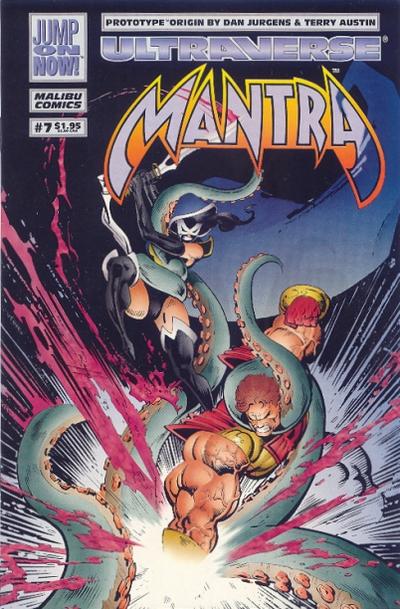 There was another complication. Eden’s body possessed an extraordinary aptitude for magic, something Lukasz had never fully understood during his centuries of fighting.
Taking the name Mantra, Lukasz began developing magical abilities while continuing the battle against Boneyard and his supernatural forces.
The original concept came from writer Mike W. Barr, whose previous credits included Camelot 3000, Batman and the Outsiders, and The Maze Agency. Barr wanted to explore the idea of a character whose entire understanding of life was suddenly reversed.
Rather than simply presenting a male character in a female body as a joke, Barr used the situation to explore relationships, responsibility, identity, and the differences between how men and women experienced the world.
The comic balanced those themes with traditional superhero excitement. Mantra battled supernatural creatures, powerful sorcerers, and dangerous enemies while struggling to understand her new magical powers.
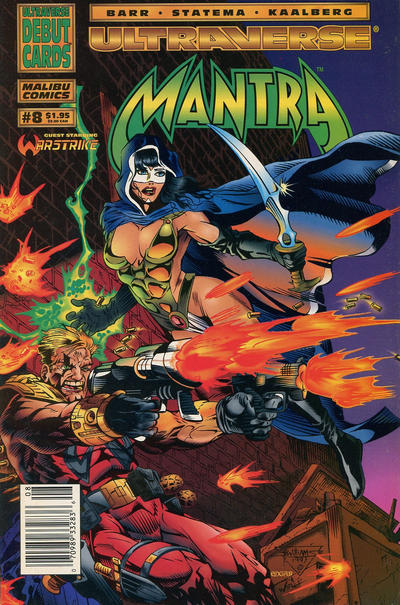 The series also benefited tremendously from Terry Dodson’s artwork. With character design work by Adam Hughes, Dodson helped establish Mantra’s memorable appearance, including her flowing cape, distinctive costume, and magical weapons.
Dodson’s combination of attractive figures, expressive faces, and energetic action sequences made Mantra one of the visually distinctive titles of the early Ultraverse. The series also provided an important early showcase for an artist who would later become widely recognized for his work on Marvel and DC characters.
Mantra’s adventures were closely connected to the larger Ultraverse. Characters such as Warstrike, Prime, and other Ultras appeared throughout the series, while major crossover events expanded the supernatural mythology surrounding her.
The original Mantra series lasted 24 issues, along with a giant-sized special. The character also starred in the two-issue Mantra: Spear of Destiny miniseries in 1995.
By that time, however, the entire Ultraverse was undergoing dramatic changes.
 Marvel Comics acquired Malibu Comics in 1994, placing the Ultraverse under new ownership. In 1995, Marvel launched Black September, a crossover event designed to reorganize the Ultraverse and introduce major changes to its established characters.
Mantra was among those affected.
Following Black September, the identity of Mantra passed from Lukasz to Lauren Sherwood, a previously introduced character who inherited the magical superhero role.
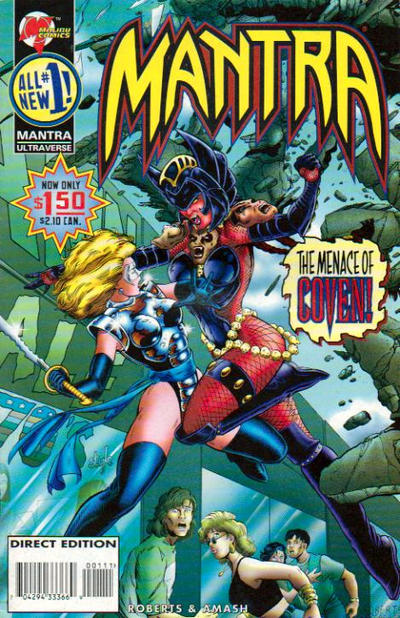
A second Mantra series launched in October 1995, following a special transition issue numbered with an infinity symbol. The new series featured artwork by Dave Roberts and continued exploring the supernatural side of the Ultraverse.
Unfortunately, the relaunch failed to achieve the success needed to sustain the title. The second volume ended with issue #7 in April 1996, bringing Mantra’s regular adventures to a close.
Like most of the Ultraverse characters, Mantra subsequently disappeared from regular publication as Marvel gradually abandoned the line.
 What made Mantra particularly memorable was its willingness to approach familiar superhero conventions from an unexpected direction. Beneath the attractive costume and magical battles was a character forced to reconsider nearly everything he believed about himself and the world.
The combination of fantasy, action, comedy, and personal transformation gave the series an identity distinct from the many superhero titles competing for readers during the early 1990s.
For fans of the Ultraverse, Mantra remains one of the line’s most interesting creations. Mike W. Barr provided an imaginative premise, Terry Dodson delivered memorable artwork, and the resulting series demonstrated the creative possibilities available when independent publishers were willing to experiment with established superhero formulas.
Before Terry Dodson became one of the industry’s most recognizable superhero artists, he helped bring Mantra to life. The series began with a 1,500-year-old warrior trapped in a single mother’s body and became one of the most unusual superhero adventures of the 1990s. Although Mantra has been absent from comic book shelves for decades, the character remains a memorable part of Malibu’s Ultraverse legacy.
About Author
