 During the early 1990s, comic book publishers were introducing new superhero universes in an effort to challenge the dominance of Marvel and DC Comics. While Image Comics was attracting attention with its larger-than-life superheroes, Dark Horse Comics took a different approach, introducing a collection of interconnected characters through an ambitious publishing initiative called Comics’ Greatest World.
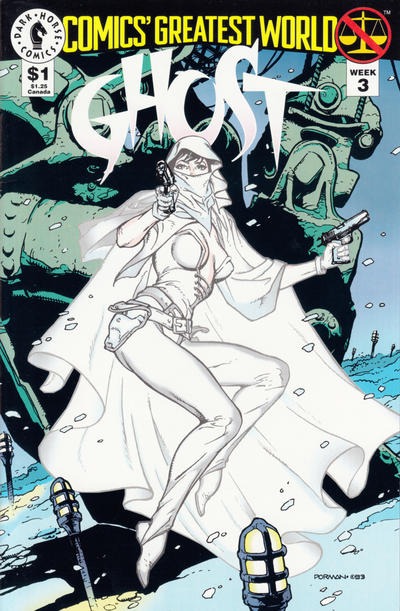
Among the characters introduced during this experiment was Ghost, a mysterious woman dressed in white who possessed supernatural abilities, carried two .45-caliber pistols, and was determined to discover who had murdered her.
Ghost would become one of the most successful and enduring characters to emerge from Dark Horse’s superhero universe, eventually starring in multiple ongoing series, special editions, and crossovers with characters such as Hellboy, Batgirl, and the Shadow.
Combining supernatural horror, hard-boiled detective fiction, and traditional superhero action, Ghost offered readers something different from the brightly colored superheroes dominating the comic book stands.
 In 1993, Dark Horse Comics launched Comics’ Greatest World, an ambitious 16-issue weekly publishing event designed to introduce an entirely new superhero universe.
The comics were divided into four geographical regions, each with its own distinctive characters, atmosphere, and conflicts. The four settings were Arcadia, Steel Harbor, Golden City, and Cinnabar Flats.
Each issue sold for just $1, making the series an affordable introduction to Dark Horse’s growing collection of original superheroes.
The event introduced readers to characters such as X, Barb Wire, Motorhead, Catalyst, and Ghost. Unlike traditional superhero universes, however, the world Dark Horse created was often darker, more violent, and considerably less optimistic.
Ghost made her first appearance in Comics’ Greatest World: Arcadia, Week 3, published in June 1993.
The introductory story was written by Jerry Prosser, illustrated by Adam Hughes, inked by Mark Farmer, colored by Matt Hollingsworth, and lettered by Clem Robins. The character and larger universe were developed through Dark Horse’s collaborative Comics’ Greatest World creative team.
 The story brought Ghost into conflict with another of Arcadia’s costumed vigilantes, the mysterious and violent X. Both characters were pursuing the same criminal, but their very different methods quickly brought them into conflict.
Behind the haunting white costume is Elisa Cameron, a former investigative reporter whose search for the truth apparently cost her life.
Elisa had been investigating the corruption that permeated Arcadia, a city controlled by organized crime, powerful business interests, and dishonest political leaders.
Following her death, Elisa returned as Ghost, a supernatural figure with no memory of the circumstances surrounding her murder.
Her mission was simple: discover who killed her, why she was murdered, and what had happened to her.
Unfortunately, finding those answers would prove far more complicated than she imagined.
Ghost possesses extraordinary supernatural abilities. She can become invisible, pass through solid objects, fly, and teleport. These powers make her extremely difficult to capture or injure.
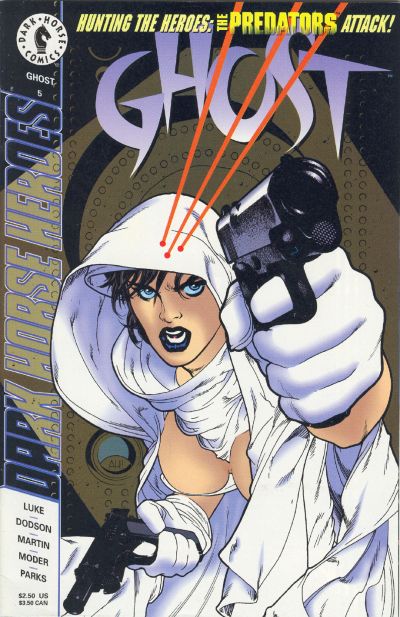 Her signature weapons are a pair of .45-caliber pistols, which she uses against the criminals and supernatural enemies she encounters.
Yet despite her abilities, Ghost is far from invincible. Her missing memories, personal relationships, and uncertainty about her own existence make her a vulnerable and frequently troubled protagonist.
The setting was as important to Ghost’s adventures as the character herself.
Arcadia was a grim, crime-ridden metropolis inspired by classic film noir. Its streets were populated by gangsters, corrupt politicians, mysterious organizations, and supernatural creatures.
The city’s Art Deco architecture and oppressive atmosphere helped establish a distinctive visual identity for the series.
Unlike the traditional superhero cities where costumed heroes regularly saved the day, Arcadia was a place where violence and corruption had become part of everyday life.
Ghost was not interested in becoming the city’s official protector. Her primary concern was discovering the truth about her past, even when that search brought her into conflict with criminals, monsters, and other vigilantes.
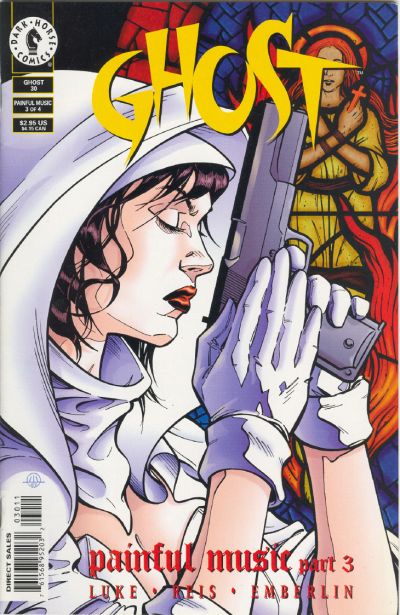 Her investigations frequently forced her to confront the darker aspects of her former life, including a dysfunctional family and relationships that had become entangled in Arcadia’s criminal underworld.
This combination of personal tragedy and supernatural mystery gave the series an identity that separated it from many other superhero comics of the period.
Following her debut in Comics’ Greatest World, Ghost returned in a 1994 special that further explored the character and her mysterious circumstances.
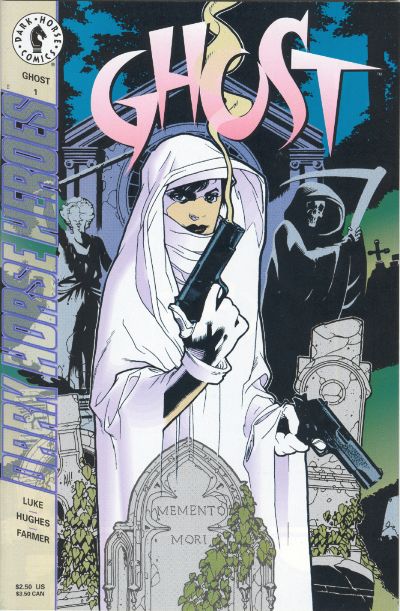
The response encouraged Dark Horse to launch an ongoing Ghost series in April 1995.
Written by Eric Luke, the new series featured artwork by Adam Hughes and inks by Mark Farmer.
Hughes had already established himself as a popular artist through his work on Justice League America and other titles. His distinctive figure work, expressive characters, and ability to combine glamour with dramatic storytelling made him an excellent choice for Ghost.
The opening storyline, Arcadia Nocturne, followed Elisa as she attempted to uncover the truth about her murder while becoming increasingly involved in the city’s supernatural underworld.
The series introduced new enemies, expanded the supporting cast, and explored the complicated relationship between Elisa’s current existence and the life she had apparently lost.
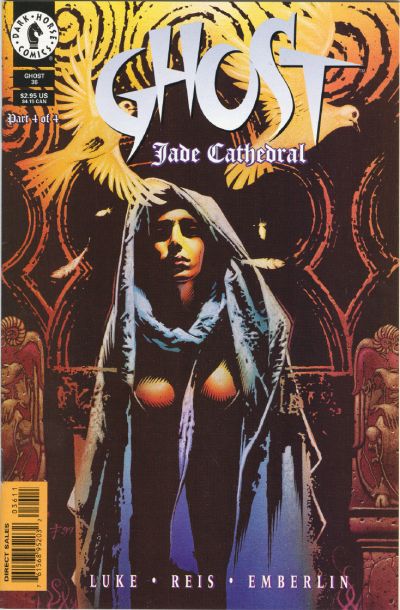 The original ongoing series lasted 36 issues, running from April 1995 through April 1998.
Although Adam Hughes helped establish Ghost’s definitive appearance, several other talented artists contributed to her adventures.
One of the most significant contributors was Ivan Reis, who illustrated numerous later issues of the original series.
Reis would eventually become one of DC Comics’ most prominent artists, working on titles such as Green Lantern, Aquaman, and Justice League.
His work on Ghost demonstrated his ability to handle dynamic action, supernatural imagery, and dramatic character interactions.
Other artists involved with the series included Terry Dodson, Scott Benefiel, Matt Haley, H. M. Baker, and Steve Yeowell.
Each brought a different visual approach to the character, while Eric Luke’s writing maintained the ongoing mystery surrounding Elisa Cameron and her search for answers.
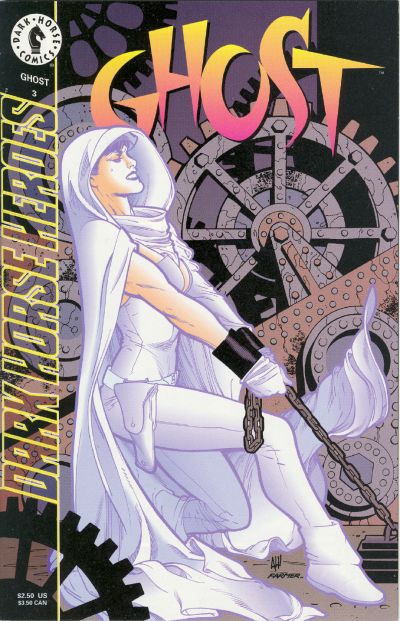
Rather than ending with the conclusion of the first series, Ghost returned in a second ongoing title beginning in September 1998.
 The new series continued her adventures while introducing additional revelations about her origins and expanding the supernatural mythology surrounding Arcadia.
This second volume ran for 22 issues, concluding in August 2000.
Combined, the two original ongoing series gave Ghost 58 regular issues, not counting specials and crossover appearances. That was a substantial publishing history for a character introduced during the early 1990s independent superhero boom.
One of the more interesting aspects of Ghost’s history was her ability to interact with characters from very different comic book worlds.
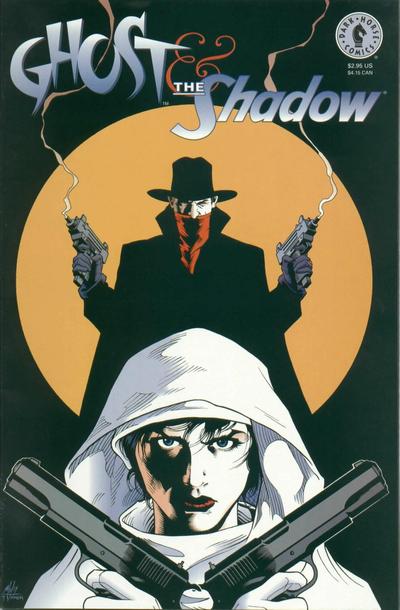
In 1995, Ghost appeared alongside the Shadow, the legendary pulp crimefighter, in Ghost and The Shadow. The pairing brought together two mysterious vigilantes whose adventures combined crime fiction with elements of the supernatural.
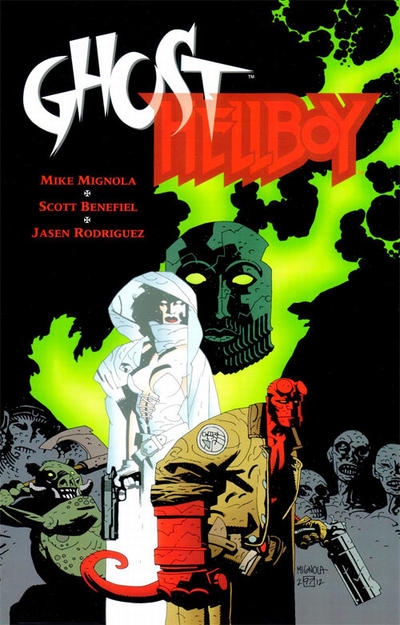
In 1996, Ghost encountered Hellboy in a two-issue crossover written by Mike Mignola. The pairing was particularly appropriate because both characters operated in worlds populated by ghosts, demons, and ancient supernatural forces.
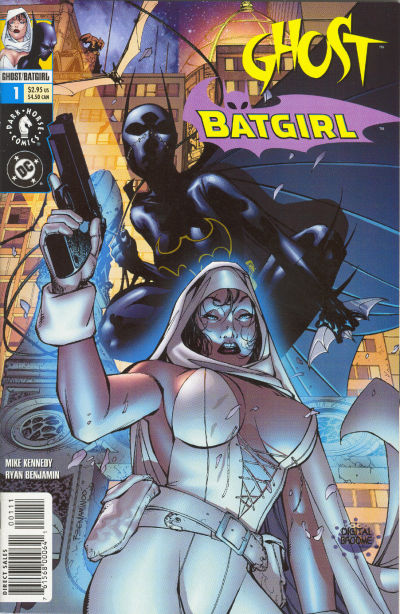
Ghost also crossed paths with DC Comics’ Batgirl in the four-issue miniseries Ghost/Batgirl: The Resurrection Machine, published in 2000.
 These crossovers demonstrated the versatility of the character. Ghost could function in traditional superhero adventures, supernatural horror stories, and hard-boiled crime mysteries without losing her individual identity.
More than a decade after the conclusion of her second ongoing series, Dark Horse brought Ghost back for a new generation of readers.
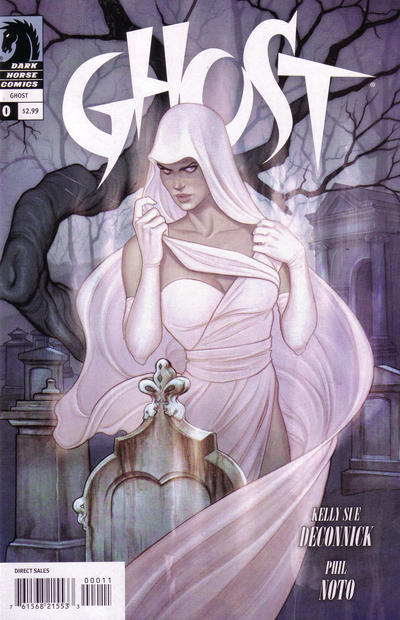
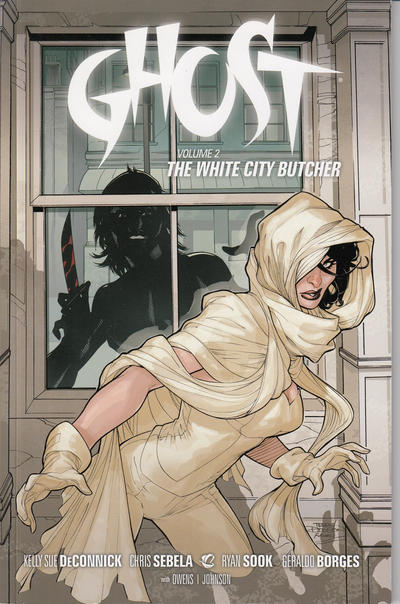
In 2012, writer Kelly Sue DeConnick and artist Phil Noto introduced a new interpretation of the character through stories appearing in Dark Horse Presents.
DeConnick, who would become widely recognized for her work on Captain Marvel and Bitch Planet, approached Ghost as a fresh opportunity to explore the character’s identity and supernatural existence.
The revival led to the miniseries Ghost: In the Smoke and Din, which reintroduced the mysterious heroine while giving new readers an accessible starting point.
The updated version retained the character’s recognizable appearance and supernatural abilities but explored her origins from a different perspective.
 Following the miniseries, Dark Horse launched another 12-issue Ghost series beginning in late 2013. The title continued into 2015.
Although the revival did not restore Ghost to continuous publication, it demonstrated that the character still had creative potential nearly twenty years after her original debut.
What made Ghost unusual was the combination of seemingly contradictory elements.
Her white costume and striking appearance gave her the visual appeal of a traditional superhero, but her stories often resembled supernatural detective fiction.
She was powerful enough to pass through walls and avoid conventional weapons, yet she remained haunted by emotional problems and unanswered questions.
Her mission involved fighting dangerous criminals, but she was motivated less by traditional heroic ideals than by the need to understand what had happened to her.
Unlike many superheroes, whose origins provide a clear explanation for their actions, Ghost’s origin was itself an ongoing mystery.
That difference gave her adventures a distinctive dramatic structure. Readers were discovering the truth about Elisa Cameron at the same time she was attempting to uncover it herself.
The result was a character who could be frightening, sympathetic, violent, and vulnerable, sometimes within the same story.
 Looking back, Ghost represents one of the more successful creations to emerge from the explosion of new superhero universes during the early 1990s.
Many publishers attempted to establish interconnected lines of superhero titles during that period, but relatively few characters remained prominent beyond their initial publishing campaigns.
Dark Horse’s Comics’ Greatest World introduced a substantial collection of original properties, yet Ghost was one of the characters who managed to develop an identity beyond the original event.
Her mixture of supernatural horror, detective fiction, and superhero action gave her a flexibility that allowed different creative teams to reinterpret her over more than two decades.
The contributions of Adam Hughes, Eric Luke, Ivan Reis, Kelly Sue DeConnick, Phil Noto, and numerous other creators helped turn a character introduced in a $1 promotional comic into the star of multiple ongoing series.
 Ghost also illustrates the creative possibilities that existed during the independent comics boom. Publishers such as Dark Horse were willing to experiment with characters who did not necessarily fit the conventional superhero mold.
Elisa Cameron was not simply another masked crimefighter. She was a woman searching for the truth about her own existence while confronting a world filled with corruption, violence, and supernatural danger.
That premise remains compelling today.
For readers interested in rediscovering Ghost, the original Comics’ Greatest World: Arcadia, Week 3, the 1994 Ghost Special, and the two original ongoing series provide an excellent introduction. Dark Horse also collected much of the material in a series of Ghost Omnibus editions.
About Author
