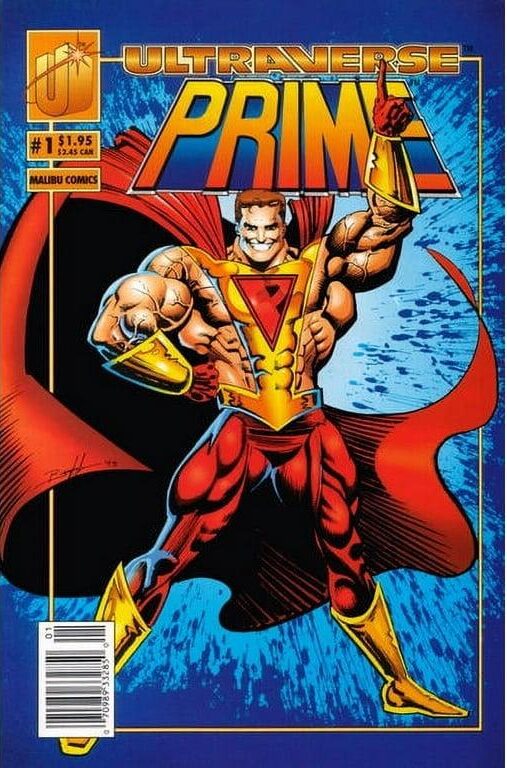
 In 1993, Malibu Comics launched the Ultraverse, an ambitious new superhero universe designed to compete with Marvel, DC, and the rapidly expanding Image Comics. Among its original heroes were Hardcase, Mantra, Prototype, the Strangers, and the Night Man. But one character stood out as perhaps the most recognizable symbol of the entire line.
His name was Prime.
At first glance, Prime appeared to be everything readers expected from a traditional superhero. He was impossibly muscular, extraordinarily powerful, nearly invulnerable, and capable of flying through the skies. His massive physique and colorful costume suggested a hero who belonged alongside Superman, Captain Marvel, and the other great powerhouses of comic book history.
But Prime had a secret that made him fundamentally different from those familiar heroes.
Inside that enormous superhero body was a thirteen-year-old boy.
And unlike the traditional boy-turned-superhero stories, becoming Prime did not automatically give Kevin Green the wisdom, maturity, or experience necessary to handle his extraordinary abilities.
That was the central idea behind one of the Ultraverse’s most fascinating characters.
Kevin Green was an ordinary adolescent dealing with the familiar problems of growing up. School, friendships, family relationships, romantic feelings, and the awkward transition from childhood to adulthood were all part of his everyday life.
But Kevin was anything but ordinary.
Unknown to him for much of his childhood, he was the product of secret genetic experimentation intended to produce superpowered individuals.
Kevin’s abilities allowed him to generate a massive, biologically created adult body around himself. This transformation turned him into Prime, an immensely powerful superhero possessing incredible strength, durability, and the ability to fly.
Unlike Billy Batson, who magically transforms into Captain Marvel, Kevin physically produces a new body around himself.
The distinction is important.
Prime is not simply Kevin transformed into an adult. The adult superhero is essentially a biological shell containing Kevin’s smaller, adolescent body.
And that shell has a limited lifespan.
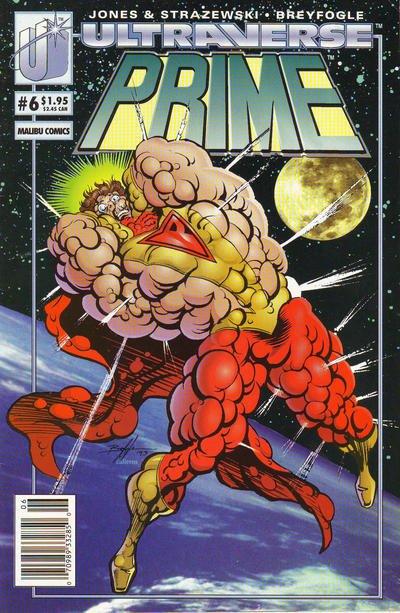
When Prime’s body begins to break down, it deteriorates into an unpleasant organic substance, forcing Kevin to abandon it and eventually create another.
It was a grotesque twist on the classic superhero transformation, perfectly suited to the Ultraverse’s more unconventional approach to familiar comic book concepts.
The result was a superhero who looked like the ultimate adult authority figure but still thought, reacted, and frequently made mistakes like a teenager.
Every major superhero universe needs its iconic powerhouse.
DC Comics has Superman. Marvel has characters such as Thor and the Hulk. When Malibu launched the Ultraverse, Prime filled that role.
He possessed the strength and visual presence necessary to stand alongside the most powerful characters in comics.
Yet the creators deliberately complicated that familiar archetype.
Prime was not a seasoned hero with years of experience. He was a boy who had suddenly acquired extraordinary physical power without understanding its consequences.
Kevin’s fantasies about heroism were shaped by the comic books and popular culture he had grown up enjoying.
 Like countless young readers, he imagined that being a superhero meant defeating villains, rescuing innocent people, and earning the admiration of the public.
Actually possessing those abilities was another matter entirely.
Kevin quickly discovered that having tremendous strength did not automatically make someone a good hero.
His decisions could have serious consequences. His emotions could influence how he used his powers. His need for acceptance and recognition could lead him into dangerous situations.
Prime represented the ultimate adolescent fantasy, but the series was willing to examine the problems that would accompany that fantasy becoming reality.
In many ways, that made him one of the more psychologically interesting characters introduced during the early 1990s superhero boom.
One of the greatest attractions of the original Prime series was the artwork of Norm Breyfogle.
By 1993, Breyfogle had already established himself as one of the most recognizable Batman artists of his generation.
His dynamic storytelling, dramatic compositions, and distinctive character designs had made his work on Batman and Detective Comics particularly memorable.
When he joined Malibu Comics, he brought that same energy to Prime.
Breyfogle’s interpretation of the character was enormous, with exaggerated muscles, powerful limbs, and a physical presence that made him look almost impossibly strong.
But the artwork was about more than simply drawing an oversized superhero.
Breyfogle understood the importance of visual storytelling.
Prime’s massive body could dominate a page, while Kevin’s smaller, vulnerable form provided an immediate contrast. His illustrations emphasized the difference between the seemingly invincible adult superhero and the inexperienced boy trapped inside.
The transformations were particularly memorable.
Rather than presenting Kevin’s change as a clean, magical process, Breyfogle illustrated the strange biological nature of Prime’s powers.
The result could be disturbing, almost resembling a scene from a science fiction horror story.
Breyfogle handled the pencils and inks on the original issue, with Paul Mounts providing colors. His work helped establish Prime’s visual identity and made the series one of Malibu’s most recognizable titles.
Beneath the superhero battles and larger-than-life action, Prime was fundamentally a story about growing up.
Kevin Green faced many of the same problems as other teenagers, but his extraordinary powers made those difficulties considerably more complicated.
His attraction to girls, insecurity about his appearance, desire for approval, and confusion about adult behavior were all reflected in his adventures as Prime.
For Kevin, becoming a powerful adult offered an apparent escape from the limitations of adolescence.
As Prime, he could be admired, respected, and feared.
But having an adult body did not mean he understood adult relationships or responsibilities.
This sometimes produced uncomfortable situations that highlighted how badly Kevin misunderstood the world around him.
The series could be humorous, tragic, or disturbing depending on the circumstances.
Kevin’s efforts to behave like a mature superhero frequently revealed just how young he really was.
His greatest weakness was not some exotic mineral or mysterious energy.
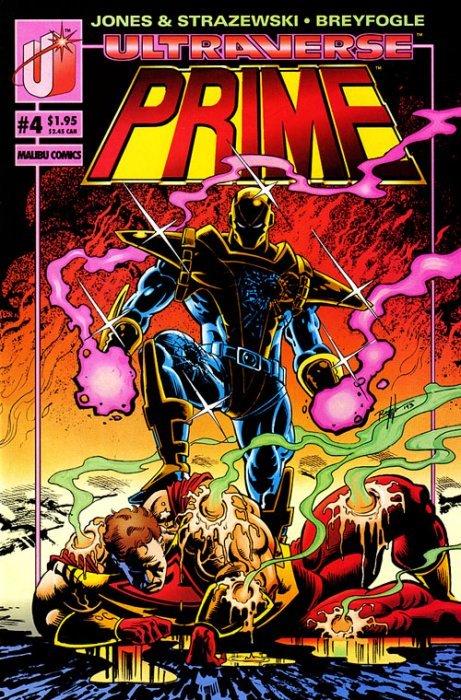 It was his own immaturity.
That idea gave the character a vulnerability that no amount of physical strength could overcome.
As the series progressed, readers learned more about the origins of Kevin’s extraordinary abilities.
Prime was connected to a secret program of genetic experimentation designed to create superhuman soldiers.
The scientists responsible had attempted to manipulate human biology, seeking to produce individuals with extraordinary abilities.
Kevin was one of the rare successful results.
The revelation transformed his story from a simple superhero fantasy into something considerably darker.
His powers were not a miraculous gift.
They were the consequence of scientific experimentation carried out without his consent.
The biological instability of Prime’s body reflected the unnatural circumstances of his creation.
Kevin was not merely struggling to understand his powers. He was also confronting the disturbing possibility that his entire life had been shaped by people who viewed him as an experiment rather than a human being.
The conflict between scientific ambition and individual humanity became an important element of the series.
And it raised a question that the Ultraverse frequently explored.
Just because someone possesses extraordinary abilities, does that mean other people have the right to control them?
One of Malibu Comics’ greatest strengths was its commitment to building a genuine shared superhero universe.
From the beginning, the Ultraverse was designed so that its characters existed within the same world and could influence one another’s stories.
Prime was an important part of that concept.
His adventures brought him into contact with other Ultras, including Hardcase, Prototype, and members of the Strangers.
These encounters helped establish the relationships and conflicts that made the Ultraverse feel like a connected world rather than a collection of unrelated titles.
Prime eventually became associated with Ultraforce, the universe’s premier superhero team.
Ultraforce brought together some of Malibu’s most recognizable heroes, including Hardcase, Prototype, Topaz, and others.
The team concept also provided an opportunity to examine Prime’s personality in a new environment.
Kevin might possess more raw power than many of his fellow heroes, but that did not necessarily make him qualified to lead them.
Other members had greater experience, better judgment, and a deeper understanding of the responsibilities associated with their abilities.
Prime’s interactions with other superheroes reinforced one of the series’ central themes.
Power and maturity are not the same thing.
For a shared universe that was trying to establish its own identity, Prime was particularly useful because he combined an immediately recognizable superhero archetype with an unconventional personality.
He could participate in enormous battles while still maintaining a story built around personal growth.
By 1994, the American comic book industry was undergoing significant changes.
The extraordinary sales boom of the early 1990s was beginning to collapse, and publishers across the industry were facing difficult financial decisions.
Malibu Comics had established a recognizable superhero universe, but maintaining its publishing operations in an increasingly difficult marketplace was becoming a challenge.
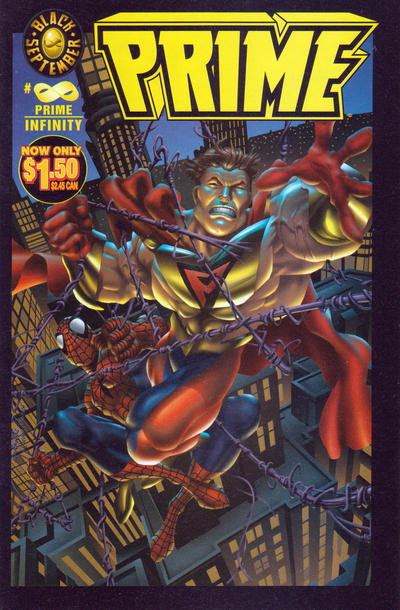 In November 1994, Marvel Comics acquired Malibu.
The purchase placed the Ultraverse and its characters under the control of one of the industry’s largest publishers.
At first, Marvel continued publishing the Ultraverse titles and even developed crossovers involving characters from both universes.
Prime was among the characters who benefited from the increased exposure.
But the acquisition also marked the beginning of the end for the original Ultraverse.
In 1995, Marvel initiated the Black September event, which dramatically altered the Ultraverse and relaunched several titles.
Prime was among the books given a new beginning.
The original series concluded with issue #26 in August 1995, and a second volume followed, running for 16 issues through 1996.
Unfortunately, the relaunch was short-lived.
By the end of 1996, the Ultraverse had effectively disappeared from comic book shelves.
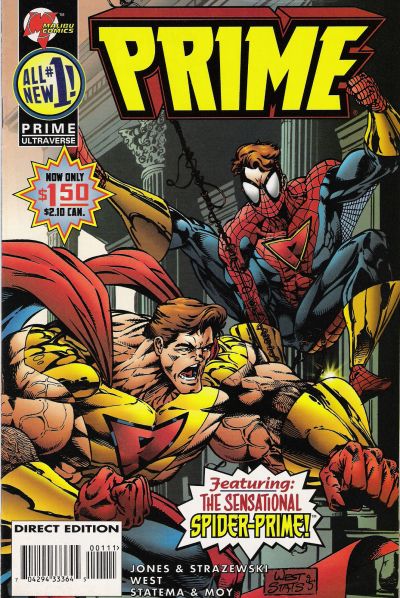
One of the most fascinating aspects of Prime’s later publishing history was the opportunity to interact with established Marvel characters.
After Marvel acquired Malibu, the company explored the possibilities of bringing its two superhero universes together.
The result included crossover stories that connected Ultraverse characters with familiar Marvel heroes.
Prime’s encounters with the Marvel Universe were particularly interesting because he had originally been created as Malibu’s counterpart to the traditional superpowered heroes who dominated Marvel and DC.
Now he could stand alongside some of those very characters.
The crossovers offered readers an opportunity to compare the Ultraverse’s younger, less experienced heroes with the established champions of Marvel.
 For Kevin Green, these encounters presented an especially unusual situation.
He had spent much of his life imagining what it would be like to become a superhero.
Now he was meeting characters who represented the fulfillment of those fantasies.
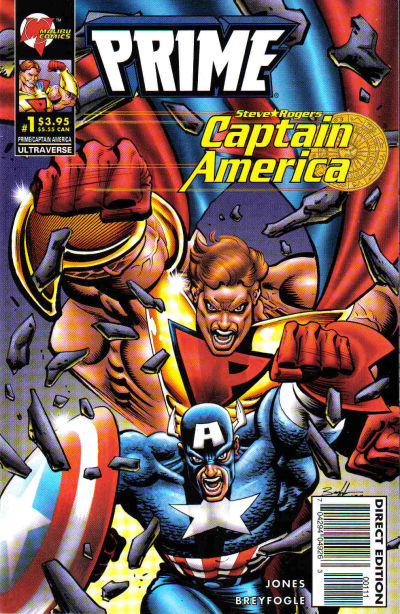
The larger Marvel/Ultraverse crossover initiative culminated in events involving teams such as the Avengers and Ultraforce, including the Avengers/Ultraforce and Ultraforce/Avengers specials of 1995.
Unfortunately, these developments were not enough to guarantee the Ultraverse’s survival.
The universe gradually disappeared from publication, leaving numerous characters and ongoing storylines without a lasting resolution.
The early 1990s produced an enormous number of new superheroes.
Many were designed around exaggerated physiques, powerful weapons, elaborate costumes, and increasingly violent attitudes.
Prime certainly fit the visual style of the era.
His muscular body was so exaggerated that he could easily have appeared alongside the most extreme superhero creations of the period.
But that appearance was deliberately misleading.
Prime was not a hardened warrior, an experienced vigilante, or a cynical antihero.
He was a kid.
That simple distinction gave the series a personality that separated it from many of its contemporaries.
Kevin Green did not always know what he was doing.
He could behave selfishly, misunderstand situations, and make decisions based on childish fantasies.
He also genuinely wanted to help people.
His desire to become a hero was sincere, even when his understanding of heroism was deeply flawed.
That combination of extraordinary physical power and ordinary adolescent insecurity made him both entertaining and surprisingly relatable.
The character also served as an interesting variation on the Captain Marvel concept.
Billy Batson traditionally becomes an idealized adult superhero through magic. Kevin Green becomes a grotesquely exaggerated version of adult physical perfection through genetic manipulation.
Where Billy’s transformation often emphasizes the wonder of childhood imagination, Kevin’s transformation explores the difficulties of growing up too quickly.
The similarities between the characters are obvious, but their stories ultimately approach the concept from different directions.
More than three decades after his debut, Prime remains one of the most memorable characters created for Malibu Comics’ Ultraverse.
His distinctive appearance, unusual powers, and complicated personality helped establish him as one of the line’s flagship heroes.
The character also benefited enormously from the talents of his original creative team.
Gerard Jones and Len Strazewski developed stories that explored the psychological implications of a child possessing extraordinary physical abilities.
Norm Breyfogle provided an unforgettable visual identity that made Prime instantly recognizable.
Later artists and writers expanded the character’s adventures, introducing him to a wider range of situations and connecting him more deeply to the Ultraverse.
Unfortunately, Prime also represents one of the great missed opportunities in modern superhero publishing.
Marvel Comics has owned the Ultraverse properties for decades, yet the company has made little use of its characters since the original line ended.
Prime, Hardcase, Mantra, the Night Man, Prototype, and the other Ultras remain an intriguing collection of superheroes whose stories were never fully explored.
The Ultraverse had developed its own mythology, relationships, and distinctive approach to superhero storytelling.
With Prime at its center, it offered readers something familiar enough to understand immediately but different enough to feel genuinely new.
There is still something appealing about the idea of a thirteen-year-old boy who can transform into one of the most powerful beings on Earth.
The concept has the simplicity of a classic superhero origin but also provides nearly unlimited possibilities for character development.
Kevin Green could grow older, become more experienced, and develop a better understanding of what it means to be a hero.
His abilities could change as he matures.
His relationships with other Ultras could evolve.
And the mysterious circumstances surrounding his creation could provide new conflicts and adventures.
Unlike many characters whose entire appeal depends upon a particular costume or gimmick, Prime has a concept capable of supporting stories across different generations.
The original series was unmistakably a product of the 1990s, but its central themes remain relevant.
Adolescence is still a time of insecurity, confusion, and self-discovery.
Young people still dream of becoming stronger, more confident, and more capable of controlling their own lives.
And the idea that great power requires maturity and responsibility remains central to superhero storytelling.
Prime simply approached those ideas from a particularly unusual direction.
When Malibu Comics launched the Ultraverse in 1993, it promised readers a new generation of superheroes.
Prime was among the best examples of what the company hoped to accomplish.
 He looked like a traditional superhero, possessed extraordinary abilities, and could participate in the enormous battles readers expected.
But underneath the muscles and colorful costume was a character whose greatest struggles were not always against supervillains.
They were against his own fears, insecurities, and misunderstandings.
That was what made Prime more than another Superman imitation.
He was a child trying to become the hero he imagined himself to be.
And sometimes, despite having all the power in the world, growing up was the hardest challenge of all.
About Author
